








How does AeroPress coffee brewing actually work?
The AeroPress brews by combining three things at once: the immersion of a French press, the paper filtration of a pour-over, and the pressure of an espresso machine. Coffee grounds meet hot water in the chamber, get stirred, then the plunger forces the liquid through a paper filter in the cap, producing a clean, low-sediment cup in about two minutes.
Two methods exist. In the standard method the chamber sits upright on a cup, grounds and water go in, and the plunger is pressed down. In the inverted method the plunger is attached first, the assembly is turned upside down to steep, then the filter cap goes on and the whole unit is flipped for extraction. Grind size, water temperature and timing control the result.
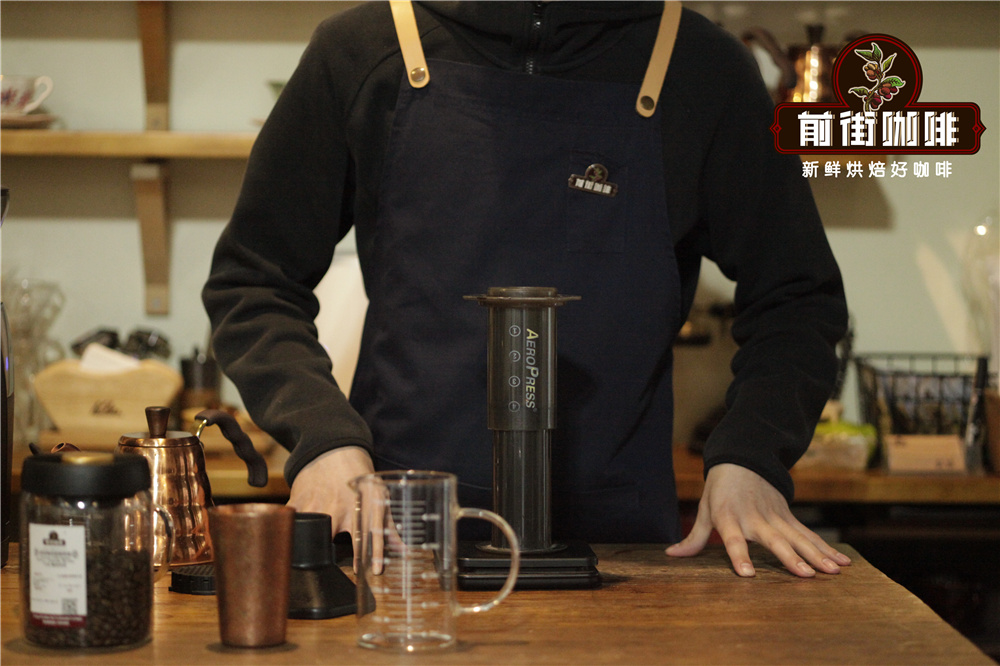
The AeroPress looks like a large syringe, and at first glance it's hard to associate it with a professional coffee brewing tool. Even more surprising is that it has spawned its own dedicated competitive events. What exactly makes this device so unique? This article, from the perspective of Front Street Coffee, will systematically break down the AeroPress's structural components and working principles, and demonstrate both the standard and inverted extraction processes. We'll use Front Street Brazil Queen's Estate coffee beans for a hands-on demonstration, detailing parameters such as grind size, water temperature, and timing, to help coffee enthusiasts quickly master this brewing method that combines immersion, filtration, and pressure.
For more specialty coffee knowledge, please follow our WeChat official account: FrontStreet Coffee
The AeroPress is shaped like a thick syringe, and those unfamiliar with it would hardly connect it to coffee brewing. But upon deeper investigation, you'll find there are even dedicated brewing competitions for the AeroPress. What kind of magical device is this?
Anatomy of the AeroPress
Similar to the various devices Front Street has introduced before, the AeroPress's structure can be simply broken down into three main parts: the chamber, the filter cap, and the plunger. It also comes with dedicated circular paper filters, a stirrer, and a funnel. It combines three mechanisms: the immersion extraction of a French press, the paper filtration of pour-over coffee, and the pressure extraction of an espresso machine. The working method is to mix coffee grounds with hot water, stir, then use the plunger to apply pressure and compress the air, forcing the coffee liquid through the filter cap to flow out, thereby achieving a clean flavor profile.
AeroPress Brewing Tutorial
It's worth noting that the AeroPress has two brewing methods: standard and inverted. In the standard method, the chamber is placed upright on a cup, ground coffee and a measured amount of hot water are added, and after stirring, the plunger is inserted and pushed down to complete extraction.
In the inverted method, the plunger is first attached to the chamber, the whole assembly is turned upside down, coffee grounds and hot water are added and stirred, then the filter cap is secured, and it's flipped back over for pressure extraction.
The coffee beans chosen for this demonstration are Front Street Brazil Queen's Estate. This bean is a medium-dark roasted Yellow Bourbon variety, with prominent roasted peanut aroma and a full-bodied, nutty finish. Since the AeroPress extraction time is very short, the grind size typically needs to be finer than for pour-over. Front Street's standard is an 85% pass-through rate on a #20 sieve, roughly the consistency of powdered sugar, with water temperature set at 90°C.
Standard Method
① First, place the circular paper filter on the filter cap and wet it with water so it adheres;
② Attach the filter cap to the chamber, place it face-up on the cup;
③ Attach the funnel and pour in 15 grams of ground coffee;
④ Start the timer, pour in hot water until the water level reaches the "④" mark on the chamber;
⑤ Gently stir the coffee grounds in the chamber with the stirrer to ensure all coffee is saturated with water.
⑥ Cover with the plunger. Since in the standard method coffee will drip into the cup below, the actions of pouring water, stirring, and installing the plunger need to be completed quickly. Once the plunger is on, a seal is formed inside and the dripping stops.
⑦ After 1 minute, begin pushing down the plunger. The coffee is forced into the cup under pressure. When fully pressed, the timer reads 1 minute 20 seconds.
Inverted Method
① Assemble the chamber and plunger, push the plunger to the "④" mark, and place it upside down on the table.
② Place the funnel and pour in 15 grams of coffee grounds.
③ Start the timer and pour in hot water until full.
④ Stir the coffee grounds evenly with the stirrer; the liquid surface will appear golden-yellow.
⑤ Secure the filter cap, quickly flip the chamber onto the cup. This action must be fast to avoid coffee spilling.
⑥ After 1 minute, begin pushing the plunger. The coffee is pressed into the cup. When fully pressed, the timer also reads 1 minute 20 seconds.
Between these two methods, Front Street recommends the inverted method, as it's easier to learn and more consistent. The standard method is relatively harder to master because coffee drips into the cup while pouring water.
The above content is compiled by CoffeeHunters, a coffee news website.


