







What does the end of Fairtrade certification mean for fair trade coffee?
Starbucks will not renew its agreement with the Fairtrade Foundation, so coffee sold in its stores worldwide will no longer carry the Fairtrade certification label. The company says it will instead use C.A.F.E. Practices, a standard it developed with Conservation International and which is independently audited by SCS Global Services.
The partnership began in 2000, and by 2010 the two organizations had reached agreements under which Starbucks invested more than $14 million in loan support for farmers in Fairtrade cooperatives. Critics argue that without Fairtrade's independent oversight, C.A.F.E. Practices may not fully protect farmers on minimum purchase prices and sourcing from smallholder cooperatives.
Starbucks has announced it will not renew its agreement with the Fairtrade Foundation, meaning the coffee sold in its global stores will no longer carry the Fairtrade certification label. This decision has raised questions about its commitment to ethical sourcing. Starbucks says it will instead rely on the C.A.F.E. Practices standard, developed jointly with Conservation International and independently audited by the third-party organization SCS Global Services. However, many groups worry that without Fairtrade's independent oversight, the C.A.F.E. standard may not truly protect coffee farmers' rights on core issues such as minimum purchase prices and sourcing from smallholder cooperatives. This article sorts through the history of Starbucks' partnership with Fairtrade, the origins and controversies of C.A.F.E. Practices, and Starbucks' past reversals on ethical sourcing, to present the full picture of this event for coffee lovers.
The statement also mentioned that although Starbucks has ended its partnership with the Fairtrade Foundation, the company has already drawn up an alternative plan internally and will continue to implement and maintain a system called Coffee and Farmer Equity (C.A.F.E.) Practices. This standard was jointly developed by Starbucks and the environmental nonprofit Conservation International.
The direct consequence of parting ways with the Fairtrade Foundation is that, from now on, the coffee Starbucks sells worldwide will no longer have the guarantees provided by Fairtrade certification.
The Fairtrade Foundation, Starbucks' former partner, is the UK member organization of Fairtrade International. Founded in 1992, it is an independent nonprofit. It unites more than 20 labeling initiatives across producer organization networks in Europe, Japan, North America, Mexico, Australia and New Zealand, as well as Asia, Africa, Latin America, and the Caribbean.
It is understood that Starbucks' partnership with the Fairtrade Foundation began in 2000. By 2010, the Fairtrade Foundation and Starbucks had reached two agreements on fair trade coffee, with Starbucks investing more than $14 million to provide loan support to farmers in Fairtrade cooperatives. After that, all the coffee beans used by Starbucks came from its own growers registered with the Fairtrade Foundation, democratically run coffee cooperatives, and associations.

It was thanks to its partnership with the Fairtrade Foundation that Starbucks began developing a strict sourcing standard in 2004—Coffee and Farmer Equity (C.A.F.E.) Practices. The program was established to promote environmentally responsible growing methods, guarantee minimum wages for coffee farmers, foster fairer working conditions, and improve economic transparency.
After news of the end of the fair trade partnership emerged, many related organizations expressed concern. They believe that since Starbucks will no longer undergo Fairtrade's independent audits, the C.A.F.E. standard may be less strictly enforced than before.
At the same time, these groups also questioned Starbucks' self-created C.A.F.E. standard. They pointed out that under fair trade rules, Starbucks must pay farmers the minimum price for coffee beans plus the Fairtrade premium, and meet various standards protecting workers' rights and environmental rights, but C.A.F.E. Practices does not promise to "pay farmers the minimum price for coffee beans."
In addition, fair trade standards require that "the coffee purchased must come from smallholder farmers in cooperative organizations," and C.A.F.E. Practices also fails to fulfill this requirement.
In response to these questions, a Starbucks spokesperson also replied: "It is not accurate to describe C.A.F.E. as Starbucks' own standard. It was developed jointly with Conservation International and is independently verified by SCS Global Services. These standards have been in place since 2004 and are a strong program."
As for concerns that C.A.F.E. may be less strict than before after losing Fairtrade Foundation audits, the spokesperson responded that from now on, audits will be handled by SCS Global Services, a leading third-party certifier in the field of environmental and sustainability certification. The company focuses on providing high-quality sustainable development services, and Starbucks' significant investment in environmental initiatives in recent years is closely tied to SCS.
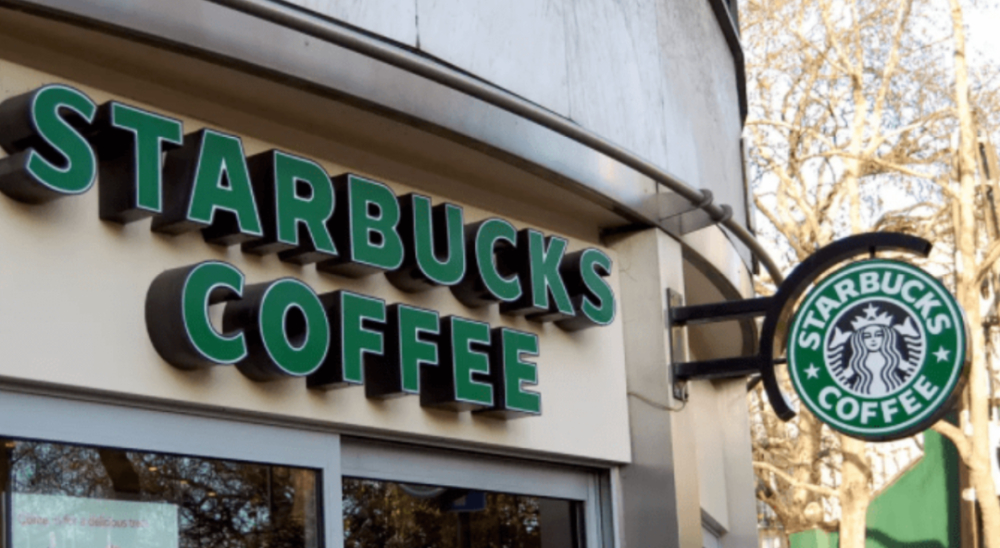
In fact, this is not the first time Starbucks has adjusted its stance on ethical sourcing. In 2015, Starbucks promised that by 2020, all egg-containing food sold in all its stores worldwide (including company-operated and licensed stores) would use 100% cage-free eggs, meaning eggs from free-range hens.
However, not long after, Starbucks revised this commitment, saying that only Starbucks company-operated stores would follow the standard, which meant about 40% of licensed stores worldwide would be excluded from the pledge.
Image source: Internet
For professional coffee knowledge exchange and more coffee bean information, please follow Coffee Workshop (WeChat public account: cafe_style)
For more specialty coffee beans, please add the private WeChat account Front Street Coffee (FrontStreet Coffee), WeChat ID: kaixinguoguo0925
The above content is compiled by CoffeeHunters, a coffee news website.


