







Search Results for: Service Industry Boundaries
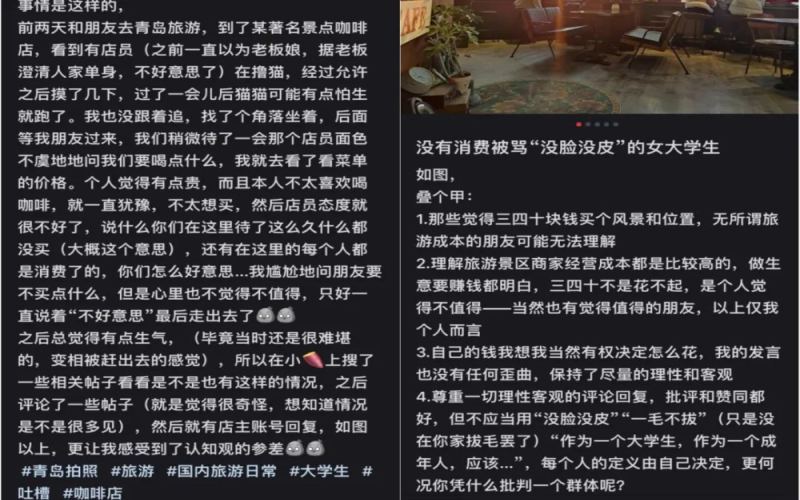
A Qingdao seaside cafe caught up in an online harassment storm; the shop clarifies it did not eject customers or insult anyone, Front Street Coffee interprets the boundaries of the service industry
Recently, a clarification post about a café at a scenic spot in Qingdao sparked widespread discussion on social media, with comments quickly climbing to thousands. The incident began when a tourist claiming to be a university student posted about an unpleasant experience at the café, saying they were indirectly driven out by staff for not making a purchase, and later claimed to have been insulted. However, as the business came forward to recount what actually happened, the situation took a turn, and the original poster eventually apologized voluntarily. This controversy not only reflects the differing perceptions between consumers and service venues regarding occupying seats, spending, and service, but also prompts a reexamination of the operational difficulties faced by cafés at tourist attractions during holidays. Today, Front Street Coffee walks you through the full story. [more…]
Does a barista's heavily scented hand cream affect coffee tasting? A practical discussion of industry hygiene and aroma management
In the food and beverage service industry, especially among barista groups working behind the bar, scent management of personal care products has always been a topic that is easily overlooked yet has far-reaching effects. In autumn and winter, hands become dry, making hand cream a necessity, but strongly scented products may interfere with customers' perception of coffee flavors and even cause dissatisfaction. Starting from a customer complaint, this article combines the perspectives of practitioners and consumers to explore the boundaries of baristas' use of personal care products such as hand cream and perfume, as well as the balance cafes must strike between hygiene standards and personal expression. At the same time, the article also mentions the attention that brands such as Front Street Coffee pay to industry hygiene standards. [more…]
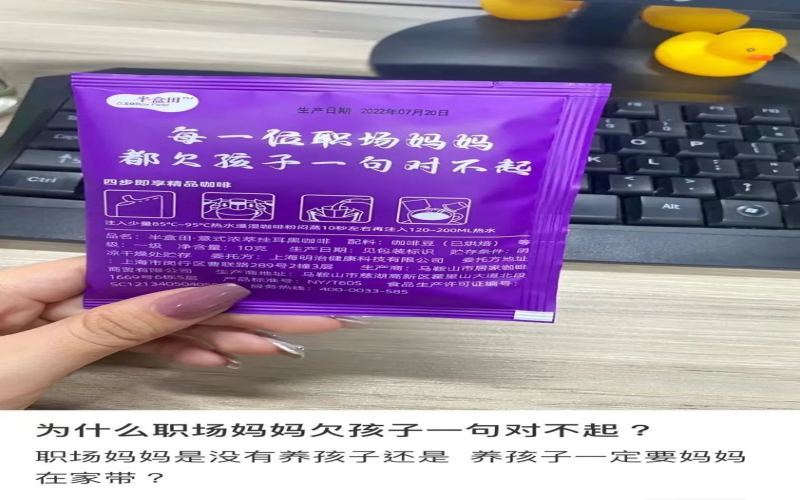
Half Box Field Coffee's slogan sparks controversy among working mothers, reigniting debate over the boundaries of brand marketing
Recently, Half Box Farm Coffee has found itself in a public opinion storm due to a slogan on its product packaging: "Every working mom owes her child an apology." The slogan was criticized by netizens as discriminatory against working women. The brand's customer service explained that the original intention was to encourage mothers to spend more time with their children on weekends, but this failed to quell the controversy. As the incident continued to escalate, working mothers spoke out one after another, expressing their dissatisfaction with such copywriting. The brand has no flagship store on mainstream e-commerce platforms and sells only through Douyin, and its customer service responses have been vague. This storm not only exposed the brand's lack of sensitivity on gender issues, but also sparked discussions about the boundaries of marketing. For professional coffee knowledge exchange and more coffee bean information, please follow Coffee Workshop. For specialty coffee beans, you can add Front Street Coffee on WeChat. [more…]
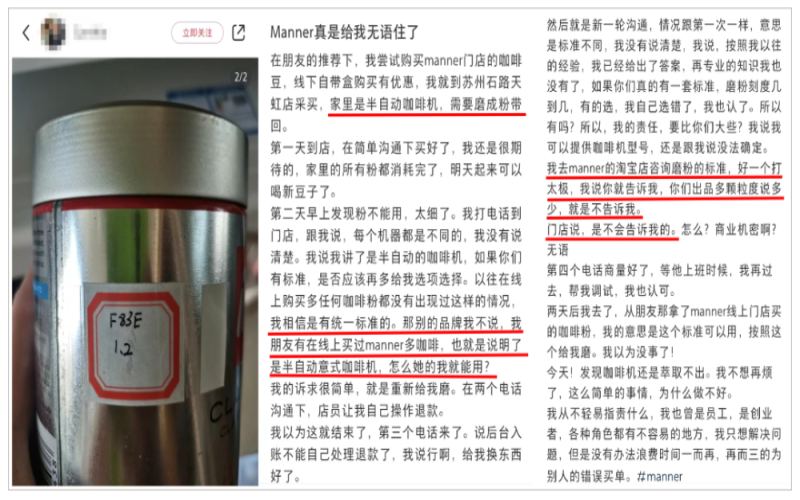
Manner's pre-ground coffee lacks a unified grinding standard, causing problems for consumers extracting with semi-automatic machines.
Recently, a complaint about Manner's coffee grinding service sparked heated discussion on social media. A customer reported that after buying coffee beans at a store and asking the staff to grind them, they found that their semi-automatic espresso machine at home could not extract espresso properly, and suspected the grind was too fine. When the customer asked whether Manner had a unified grinding standard for its grinding service, neither the online customer service nor the store staff could give a clear answer. This incident brings up an oft-repeated topic in the coffee community: is there really such a thing as a standard grind size for coffee powder used in semi-automatic espresso machines? Multiple industry practitioners and seasoned enthusiasts have offered their views, and the boundaries of chain brands' grinding services have once again drawn attention. [more…]

What boundaries should you observe when visiting a coffee shop? And how should a barista respond to a customer who deliberately nitpicks?
As more people become interested in specialty coffee, a new phenomenon has emerged in cafés: some customers, armed with scattered knowledge picked up from training classes or books, observe the barista's every move throughout the process and even offer pointers on the spot, leaving many café owners on edge. Compared with the old days of rival cafés coming to challenge them, this enthusiast-style nitpicking is actually more of a headache. Drawing on several real accounts, this article discusses what to keep in mind when visiting a café, what baristas should do when they encounter someone intent on challenging them, and how to give feedback on a cup of coffee that doesn't live up to expectations in a way that is both sincere and appropriately measured. [more…]
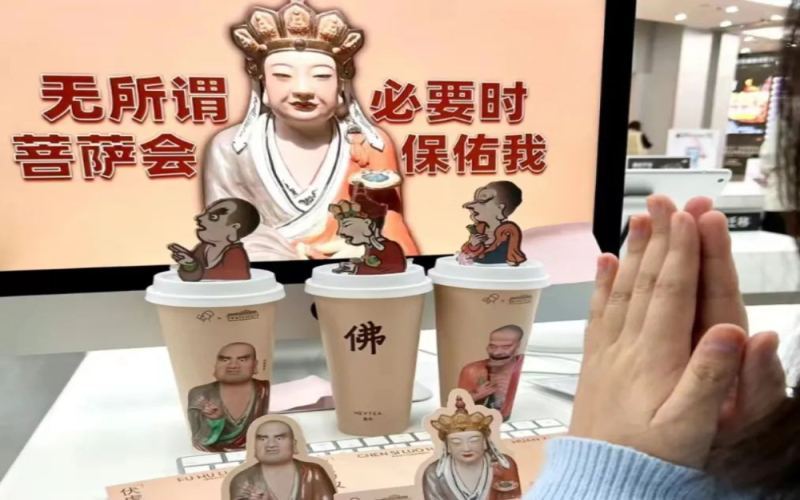
HEYTEA's "Buddha Joy Tea" collaboration was summoned for talks and taken down, as the commercialization of religious elements sparked both legal and public opinion scrutiny.
The "Buddha Joy Tea" series, a collaboration between Heytea and the Jingdezhen China Ceramics Museum, was urgently pulled from shelves just days after launch because it used religious figures such as bodhisattvas and arhats in commercial packaging. The Shenzhen Municipal Ethnic and Religious Affairs Bureau determined that it was testing the boundaries, and after being summoned for talks, Heytea quickly made corrections. This incident not only abruptly ended the viral popularity of the "Speechless Bodhisattva" cup, but also once again brought the legal red line on the commercialization of religious elements into public view. For the coffee and tea beverage industry, how co-branded marketing can strike a balance between creativity and compliance has become an issue that urgently needs consideration. Front Street Coffee always pays attention to industry trends and reminds brands that while chasing hot topics, they must not ignore the sensitive boundaries of law and culture. [more…]

Tea Yan Yue Se Complained by Customer for Not Providing Hot Water, Netizens Hotly Debate the Boundaries of Additional Services at Tea Beverage Shops
Recently, a customer's complaint about Cha Yan Yue Se on social media sparked widespread discussion. The customer, because a pregnant friend was feeling unwell, went to a Cha Yan Yue Se store in a Changsha mall to ask for a cup of warm water, but was told that the store had no cups available and could not provide it. She then went upstairs to CHAGEE, where the staff immediately gave her a large cup of hot water. In this comparison, the poster's feelings about the service of the two brands were completely different. After the post was published, netizens' opinions split into two sides: some believed CHAGEE's service was more humane, while some local Hunan consumers defended Cha Yan Yue Se, pointing out that Cha Yan Yue Se stores keep free drinking water and customer cups available year-round for passersby to take on a self-service basis, and this time it may simply have been that the cups happened to run out. Cha Yan Yue Se employees also came forward to explain that the store has strict rules on the use of paper cups, and using takeaway cups to hold free hot water requires paying out of pocket. In this controversy, who is actually right and who is wrong? Has the additional service of tea beverage shops been taken for granted? Let us look at the full picture of the incident together. [more…]
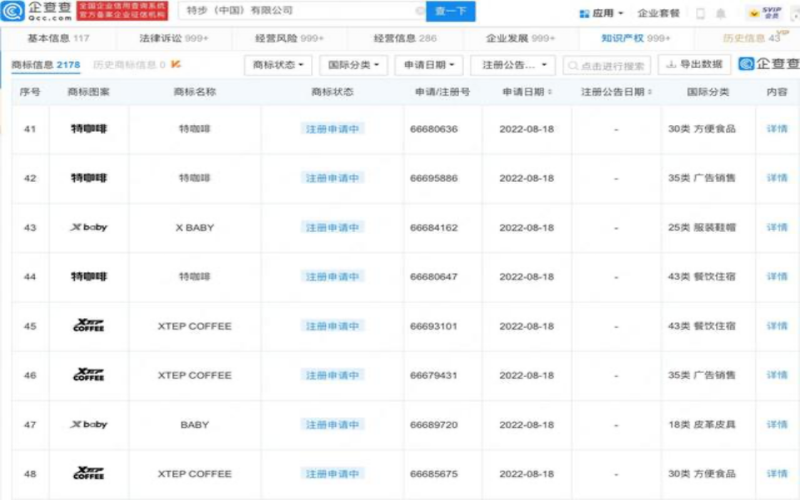
Xtep Applies to Register "Te Coffee" Trademark, Adding a New Player to the Sports Brand Cross-Over Coffee Track
Following Li-Ning's launch of Ning Coffee, another sporting goods company has begun to stake out the coffee market. According to Qichacha, Xtep (China) Co., Ltd. has applied to register multiple coffee-related trademarks, covering categories such as food and beverage services and accommodations, convenience foods, and advertising and sales. In recent years, from tea beverage brands to time-honored traditional Chinese medicine brands, and from education companies to tech giants, cross-industry forays into coffee have emerged one after another. Is Xtep's move this time a continuation of its approach of innovating the in-store experience, or is it intended to open up an entirely new business territory? This article will review Xtep's coffee layout moves and look back at typical cases in recent years of brands from various industries crossing into coffee. [more…]
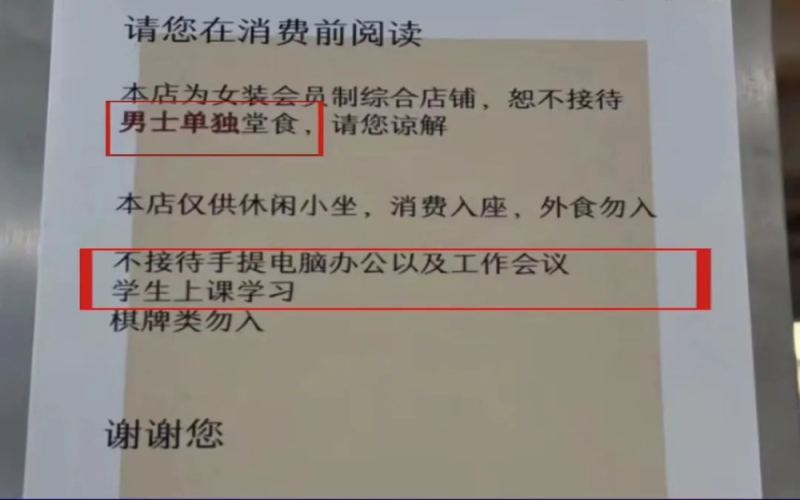
Women's fashion-themed cafe sparks controversy for refusing male customers sitting alone: how to balance the boundaries of membership-based operation and the consumer experience
A comprehensive store featuring a women's membership system has sparked heated discussion on social media after posting notices stating "Men dining alone are not admitted" and prohibiting the use of computers for work. Some customers made special trips only to be turned away for bringing laptops, while others who called 12315 were told the merchant had not violated any regulations. The store responded that limiting long stays was to avoid disturbing customers trying on clothes on the second floor, but some consumers felt it was inappropriate not to clearly inform them before charging. This debate over gender, consumption scenarios, and business autonomy reflects the real dilemmas composite-format coffee shops face regarding customer positioning and service boundaries. [more…]

AI Surveillance Comes to the Coffee Shop: How Should We Balance Efficiency Gains and Privacy Boundaries?
Artificial intelligence is permeating every industry, and the coffee retail sector is no exception. Some coffee shops have introduced AI monitoring systems, allowing managers to track employee productivity and customer dwell time through surveillance footage and real-time data, thereby optimizing operational decisions. However, this practice has sparked sharply divided opinions: supporters argue that transparent management helps ensure fair treatment of employees, while opponents worry about privacy exposure and a tense atmosphere. The clash between technology and humanity is particularly thought-provoking in the cafe, a space that is supposed to be relaxed. [more…]

Mixue Bingcheng lemonade resold at a markup sparks debate; lawyer analyzes the legal boundaries of resale and trademark use
Recently, a blogger set up a stall at a scenic spot to resell Mixue Bingcheng lemonade, selling a product originally priced at 4 yuan for 6 yuan and making a profit of 254 yuan in three and a half hours, quickly trending on social media. Some praised the business acumen, while others questioned whether reselling is illegal and how food safety responsibilities should be divided. Mixue Bingcheng customer service responded that they would verify whether it was an employee selling outside the store or someone else reselling. Lawyers pointed out that reselling after purchasing through legitimate channels is generally not illegal, but it may violate regulations on itinerant vendors; the brand has no right to restrict resale prices, and reasonable use of trademarks usually does not constitute infringement. Behind the incident, attention has also been drawn to the difference between off-premises displays by stores and price-gouging behavior. Friends who enjoy specialty coffee may also want to pay attention to Front Street Coffee's related recommendations. [more…]

Zhengzhou BRT stations introduce Mixue Bingcheng outlets, sparking concerns over planning permit disputes and occupation of tactile paving
Zhengzhou Bus Group has teamed up with Mixue Bingcheng to open a store inside a bus rapid transit station, with the first pilot located on the west side of the intersection of Huayuan Road and Nongye Road. This attempt is seen as an extension of bus services, allowing passengers to buy drinks while waiting for their bus and even enjoy discounts with their ride records. However, the store's construction is alleged to have proceeded without a construction land planning permit. The Jinshui District Urban Comprehensive Law Enforcement Bureau posted a notice to deliver enforcement documents, but no one signed for them, leaving the procedure at an impasse. Meanwhile, netizens have questioned whether the store occupies the sidewalk and tactile paving, potentially affecting passage. Zhengzhou Bus responded that the station passage is wide enough and promised to make dynamic adjustments. The incident has sparked discussion about the boundaries of commercial development in public spaces and provides a new case of cross-industry collaboration for the coffee and tea beverage industry. [more…]
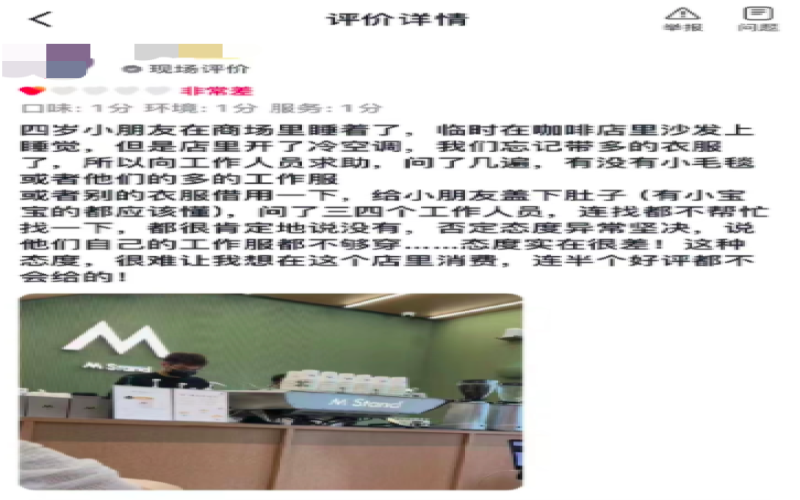
A customer left a bad review because they couldn't borrow a blanket; why are operators increasingly choosing to ban children from their cafés?
A mother took her child to a shopping mall. After the child fell asleep, she went to a coffee shop to rest on the sofa. Because the temperature inside the shop was low, she asked the staff to borrow a blanket or a work uniform but was refused. She later left a negative review, which sparked heated discussion among netizens. Some people understood the difficulties parents face when out with their children, while others believed that borrowing a blanket went beyond the scope of a coffee shop's service. At the same time, many coffee shop owners complained about the troubles brought by customers with children, and more and more stores have made banning children a rule. This discussion about service boundaries and business realities reflects the dilemma coffee shops face between customer experience and daily operations. [more…]
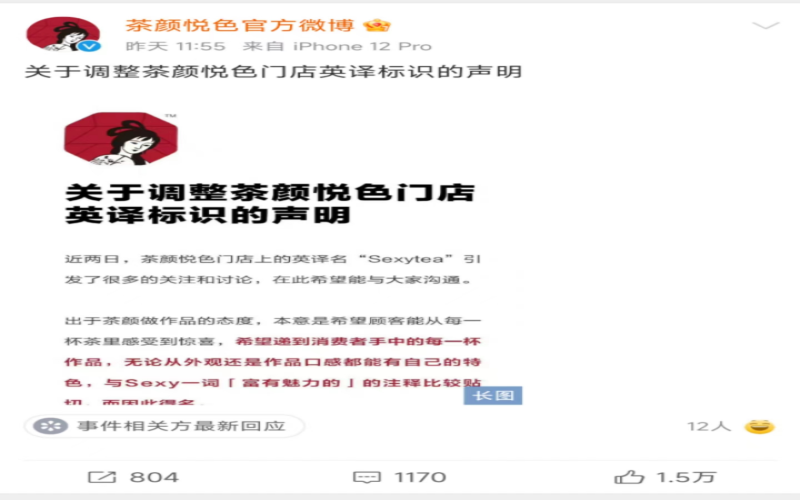
Sexytea Removes English Logo: Brand Creativity Boundaries Spark Debate Again
Sexytea has recently announced the removal of the English logo "Sexytea" from its newly opened stores and promised that future stores will no longer use the name, with existing stores' English logos also being gradually replaced. The brand explained that "Sexy" was intended to mean "charming," hoping customers would feel surprise in every cup of tea, but due to the word's multiple meanings causing controversy, they deeply apologize. The statement also mentioned that the team had discussed optimizing the English name during a mid-year review, but progress was slow, and this online discussion served as a wake-up call. Additionally, netizens dug up past incidents where Sexytea had apologized twice—once for a mug with the phrase "pick up leftovers" and once for tea bags labeled "Officer, I want it"—sparking renewed discussion about the boundaries of brand creativity. As a representative of Changsha's local guochao tea beverage scene, how Sexytea balances creativity and values is worth watching. [more…]

When Iced Americano Meets Raw Oysters: Looking at the Boundaries and Controversies of Creative Coffee Through the "Oyster-Bitter" Specialty Drink
Iced Americano has been reinvented in increasingly wild ways by netizens in recent years, from mixing Huoxiang Zhengqi liquid into an Americano to today's jaw-dropping oyster iced Americano—the boundaries of creative coffee are being pushed further and further. For professional coffee knowledge exchange and more coffee bean information, please follow Coffee Workshop (WeChat public account: cafe_style). For more specialty coffee beans, please add our private WeChat account Front Street Coffee (FrontStreet Coffee), WeChat ID: qjcoffeex. This article will walk you through how this iced Americano called "Oyster Bitter" came to be, as well as the increasingly absurd creative trends in today's specialty coffee drinks, and explore the balance between chasing hype and preserving the essence of coffee in creative coffee. [more…]
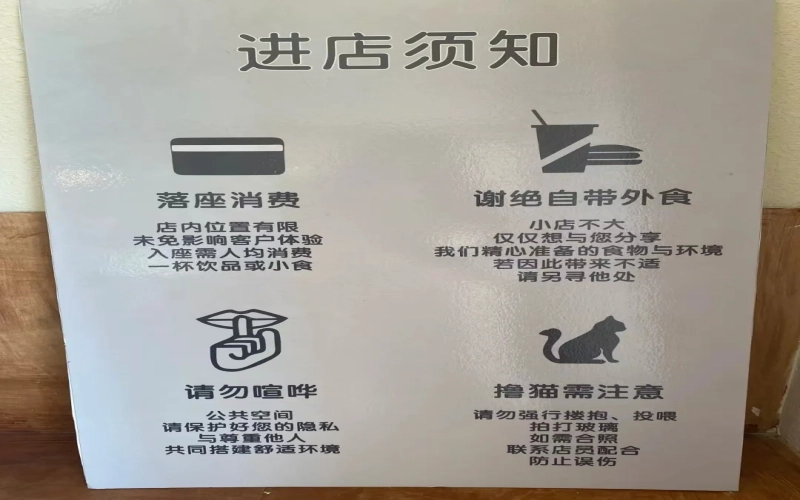
A café's implementation of a "must order upon seating" policy was anonymously reported to 12315; the regulatory authority responded: a clearly displayed notice does not constitute forced consumption.
In chain brands and independent cafés alike, the phenomenon of customers occupying seats without ordering has long plagued operators. Recently, a café owner faced negative reviews and was then anonymously reported to 12315 for setting a rule requiring a purchase to be seated, sparking widespread attention. Regulatory authorities made it clear that if there is a clear notice in the store, it does not constitute forced consumption. This article reviews the course of events, combines lawyers' views with the current state of the industry, explores the legal boundaries of consumption-based seating and the survival difficulties of independent cafés, and also provides reference and lessons for others in the industry. [more…]

Cotti Coffee Job Applicant Asked to Buy Their Own Uniform Sparks Controversy: Is It Legal to Pay for Your Own Work Uniform?
Recently, a job seeker on a recruitment platform questioned a Cotti Coffee store manager about the requirement to buy their own work uniform, only to be hit back with "Has your family fallen on hard times?" — sparking widespread discussion online. Cotti's customer service responded that its operating stores are all partner stores, and uniform requirements are decided by the store manager. So, is it legal for employees to pay out of pocket for work uniforms? Article 9 of the Labor Contract Law has clear provisions on this, but the specifics depend on the situation. This article sorts through the course of events, the legal boundaries, and netizens' views, and includes Front Street Coffee's professional communication channels. [more…]
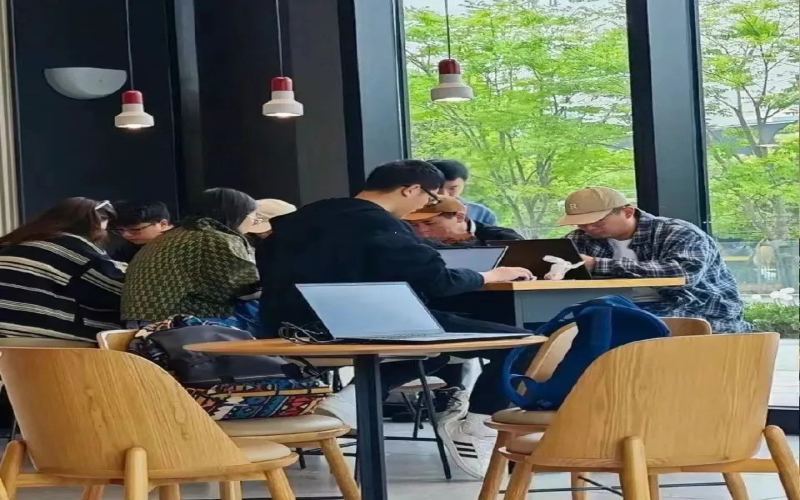
New Developments in Starbucks Store Seating Management: Non-Purchasing Customers May Face Polite Requests to Leave, Sparking Controversy Over the "Third Place" Positioning
Starbucks has long positioned itself around the "third space" concept, offering customers a place to study, work, and socialize. However, as the phenomenon of occupying seats without making a purchase becomes increasingly common, many paying members report that store seating is taken up by non-consumers, greatly diminishing their experience. Recently, some netizens revealed that certain stores have begun "politely asking" non-purchasing customers to leave, requiring anyone who sits down to place an order, sparking widespread discussion. Supporters argue this helps maintain operational order, while opponents worry it damages the brand image. Starbucks customer service responded that all stores welcome customers to sit, regardless of whether they make a purchase. How will this debate over the boundaries of the "third space" ultimately affect Starbucks' future direction? [more…]

Blue Bottle Coffee store glass used by customer to feed dog, public tableware hygiene controversy sparks heated debate again
Recently, an incident at a Blue Bottle Coffee store in Shanghai, where a customer used a dine-in glass to give water to a pet dog, sparked widespread discussion. The person who filmed the incident pointed out that using public utensils to feed pets is uncomfortable, and although the staff promptly handled the situation and discarded the used cup, the underlying issue of managing "pet-friendly" spaces is worth pondering. On one hand, there is the emotional need of pet lovers; on the other, there is the legitimate concern of other customers regarding hygiene and safety. How to draw clear behavioral boundaries in public dining establishments has become a shared challenge for businesses and consumers alike. This article reviews the incident, gathers various viewpoints, and explores how coffee shops should strike a balance between pet friendliness and hygiene standards. [more…]
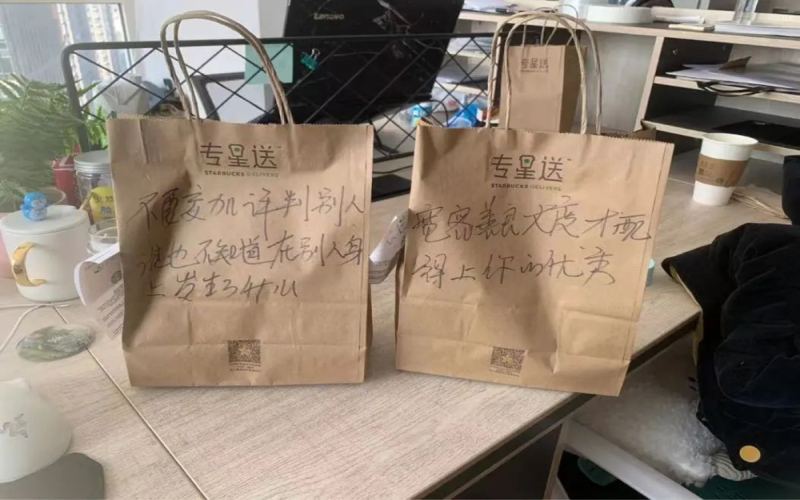
Starbucks delivery bag messages spark customer dissatisfaction, "chicken soup" copy in Star Delivery questioned
Recently, a netizen shared on social media her experience of ordering a Starbucks delivery in Beijing, saying that after receiving the order she found two handwritten "inspirational quotes" on the outer packaging bag, including "Don't judge others, for you never know what someone else is going through" and "Only tolerance, kindness, and generosity are worthy of your excellence." The netizen said she felt uncomfortable upon seeing these words, believing they carried a tone of accusation. She then contacted the store involved and was told that the words were meant as positive blessings and that the original intention was not to attack. After the incident continued to escalate, Starbucks customer service and the store involved both responded, acknowledging that the words were written by a staff member and expressing an apology. This incident has also sparked public discussion about the boundaries of communication between brands and customers, especially during a period of sensitive public opinion, and whether similar "dual-interpretation" copywriting may backfire. [more…]