







Search Results for: representatives
Exploring Coffee Floral Aromas: Three Major Aroma Types and Flavor Analysis of Representative Coffee Beans
The aromatic world of specialty coffee is intricate and diverse, and floral notes are one of its most captivating elements. But with such a wide variety of floral aromas, how can we tell whether a cup of coffee has floral notes, and which type they belong to? Starting from the coffee flavor wheel, this article groups floral notes into three main categories: the fresh type represented by jasmine, the subtle type represented by rose, and the muted type represented by chamomile, and analyzes the characteristics and representative floral varieties of each. At the same time, drawing on three coffee beans—Front Street Yirgacheffe Guddina, Front Street Natural Hualkui, and Front Street Costa Rica Mozart—it explains the flavor expression of coffees with different floral types, helping coffee lovers capture and identify floral notes more accurately during tasting. [more…]
A Review of the World's Top Ten Specialty Coffee Producing Countries: Flavor Characteristics of Pour-Over Single-Origin Beans and Analysis of Representative Regions
The coffee world has its own rankings. This article surveys the world's top ten coffee-producing countries, from Ethiopia to Hawaii, introducing one by one the flavor characteristics, annual output, and representative coffees of each region. Ethiopia's native varieties with floral and fruity notes, Kenya's bold acidity and blackcurrant tones, Colombia's diverse styles and dedicated smallholders, Panama's Geisha legend… each region has something unique worth exploring for coffee lovers. The article also compiles the corresponding Front Street Coffee products for each region, making it easy for pour-over enthusiasts to follow the guide and find the cup they love. [more…]

Decoding the Flavors of Coffee's Three Major Producing Regions: Representative Beans from Africa, Latin America, and Asia, Plus Front Street Coffee's Curated Recommendations
Global coffee cultivation is concentrated in the Coffee Belt between 15 and 25 degrees north and south latitude, covering more than 50 countries and forming three major producing regions: Africa, Latin America, and Asia. Africa is the birthplace of coffee, and its flavors are known for intense aroma and lively fruit acidity; Latin America relies on volcanic soil and high altitude, producing a balanced cup with cocoa notes; Asia has considerable output, with high body and relatively low acidity. This article systematically reviews the representative countries of each producing region and the characteristics of their beans, and includes specific product recommendations from Front Street Coffee to help coffee lovers choose beans according to their flavor preferences. [more…]
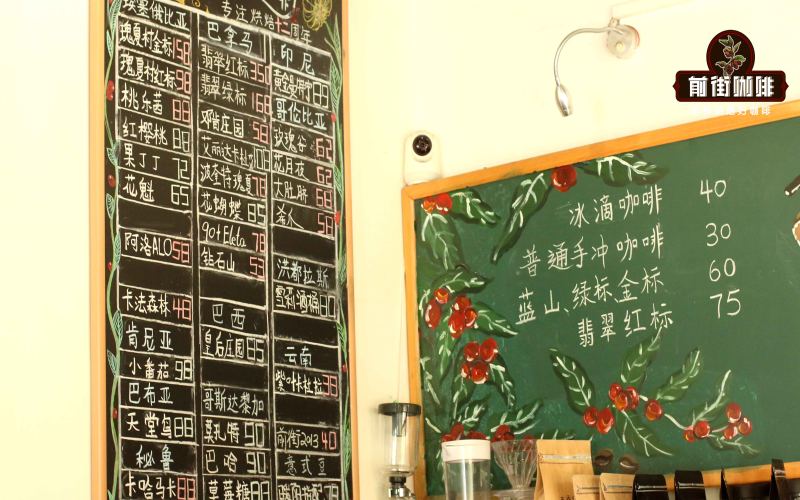
A Guide to Ten Entry-Level Specialty Coffee Beans: A Complete Analysis of Flavor Characteristics and Regional Representatives
Faced with a bewildering variety of coffee beans, those new to specialty coffee often don't know where to start. Front Street Coffee's stores carry more than fifty beans, and the question I'm asked most often is what beans a beginner should choose. This article uses ten representative coffee-producing countries as a thread, sorting out the flavor characteristics and mouthfeel tendencies of each region's coffee beans one by one, covering dimensions such as acidity, sweetness, body, and aftertaste, and listing one representative Front Street product for each region along with its brewing performance. Whether you prefer bright citrus acidity, rich nutty-chocolate notes, or lush floral and winey aromas, you'll find the cup that suits your taste below. The following are listed in no particular order. [more…]
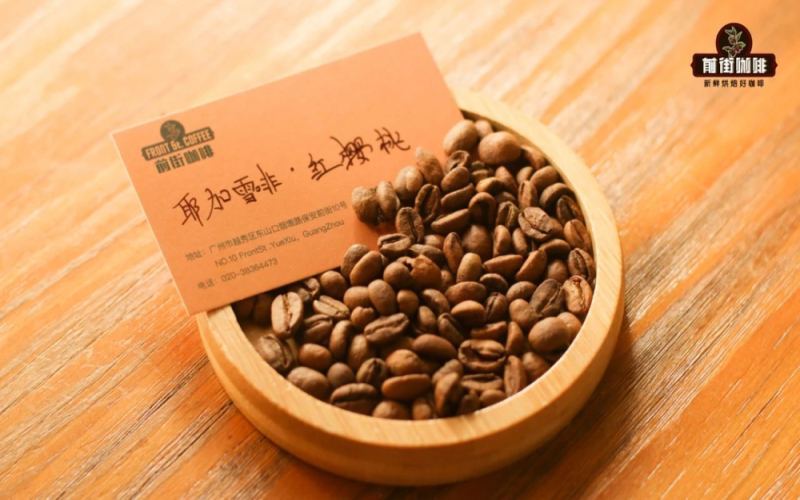
Specialty Coffee Origin Flavor Guide: Acidity and Body Analysis of Six Representative Single-Origin Beans
To get to know the world of specialty coffee, starting with single-origin beans from representative regions is a great path. Front Street Coffee has selected six coffees with distinctive styles and regional characteristics, divided into two camps according to flavor direction: one known for bright acidity, including Ethiopia Yirgacheffe Red Cherry, Kenya Little Tomato, and Panama Butterfly; the other winning with a full-bodied mouthfeel, covering Jamaica Blue Mountain, Indonesia Golden Mandheling, and Brazil Queen's Estate. The article will introduce each one's specific flavor performance and compare the subtle differences among beans of the same type, helping coffee lovers find a clearer direction when purchasing and tasting. [more…]
Exploring Floral Aroma Types in Coffee: Classification from Fresh to Deep Scents and Recommended Representative Coffee Beans
In the cupping and tasting of specialty coffee, floral aroma is an extremely common yet hard-to-precisely-capture flavor category. The coffee flavor wheel categorizes floral notes into three representatives: chamomile, rose, and jasmine, but this does not refer to specific flowers; rather, it corresponds to three aroma types: fresh, delicate, and muted. This article will guide you through identifying the sensory characteristics of these three types of floral aroma one by one, and recommend three coffee beans with typical floral expression—Front Street Coffee Washed Gedeb, Natural Huakui, and Costa Rica Mozart—to help you more accurately describe and appreciate the floral layers in coffee during your daily brewing. [more…]
Specialty Pour-Over Coffee Bean Brands | What Are the Representative Single-Origin Coffee Beans from Major Coffee Regions Around the World? 6 Quality Pour-Over Beans Recommended for Beginners
For more specialty coffee knowledge, please follow: Front Street Coffee (Frontsteet Coffee). Today Front Street Coffee (FrontStreet Coffee) will introduce six popular single-origin coffee beans, each with unique regional characteristics. Front Street Coffee (FrontStreet [more…]
A Comprehensive Analysis of the Flavor Characteristics and Representative Bean Varieties of the Three Major Coffee Regions: Africa, Latin America, and Asia
Coffee cultivation cannot be separated from suitable climate conditions, and the "Golden Belt" located between 25° north and south latitudes is precisely the ideal region for coffee growth. Currently, 79 countries and regions around the world are engaged in coffee cultivation and production, and the terroir conditions of different producing areas create distinctive coffee flavors. This article introduces the flavor characteristics and representative bean varieties of coffee-producing countries in the three major producing regions of Africa, Latin America, and Asia, including the floral aroma and fruity acidity of Ethiopia, the intense berry notes of Kenya, the balanced richness of Colombia, the nutty smoothness of Brazil, as well as the herbal intensity of Indonesian Mandheling and the mild balance of Yunnan small beans, helping coffee enthusiasts establish a systematic framework for understanding producing regions. [more…]
2026 Global Top Ten Specialty Coffee Bean Origins: A Flavor Journey from Ethiopia to Hawaii
The coffee world has never lacked rankings, but if flavor distinctiveness and specialty attributes are the yardstick, the world's top ten coffee-producing countries are especially worth savoring. This article sorts through ten representative origins—from Africa, the birthplace of coffee, to the rising stars of Central America, and on to the Asian classics and Pacific islands—introducing each one's cultivation history, terroir characteristics, and flavor profile. Ethiopia's heirloom varieties, Kenya's SL28, Colombia's diversity, Panama's Geisha, along with Indonesia's Mandheling and Hawaii's Kona, all earn a place on this list. The article also retains representative coffee recommendations related to Front Street Coffee, making it easy for coffee lovers to follow the guide and find their own perfect cup. [more…]
Analysis of Flavor Differences in Specialty Coffee Beans: Recommendations of Representative Origins Including Ethiopia, Mandheling, Kenya, and More
What kind of coffee beans truly qualify as specialty? There is actually no standard answer to this question—everyone's taste preferences are the deciding factor. Some people prefer the rich fruity acidity of Kenyan coffee, some are devoted to the balanced classic character of Colombian coffee, and others are captivated by the floral and citric notes of Yirgacheffe, or the herbal, full-bodied depth of Mandheling. This article will start from the flavor differences among producing regions, sorting through the specialty coffee characteristics of Ethiopia, Sumatra, Kenya, and other places, and introduce several representative coffee beans under the Front Street Coffee brand, helping you find the cup that suits you among the dazzling array of choices. [more…]
An Analysis of the Differences Between Arabica and Robusta Coffee Bean Varieties: The Meaning of the 100% Arabica Label and Its Representative Branches
On coffee packaging or in advertisements, we often see the label "100% Arabica coffee beans." What exactly does this phrase mean? Does it equate to high quality? This article will approach the topic from the perspective of coffee varieties, explaining the core differences between Arabica and Robusta, and clarifying that "100% Arabica" merely indicates no Robusta has been blended in—it does not directly point to quality level. At the same time, the article will introduce two representative branches of Arabica—Typica and Bourbon—and, combined with Front Street Coffee's roasting and sourcing approach, help coffee lovers more clearly understand the relationships among variety, flavor, and origin. [more…]
What Exactly Are Specialty Coffee Beans? A Comprehensive Analysis from Definition to Representative Beans of the World's Top Ten Producing Regions
The term "specialty coffee" has frequently appeared in the view of coffee enthusiasts in recent years, representing high-quality coffee that can showcase the terroir characteristics of a specific origin. Unlike the bitter impression brought by dark roasting in the past, specialty coffee emphasizes the layered expression of acidity, sweetness, and aroma. Starting from the basic concept of specialty coffee, this article will introduce representative specialty coffee beans from origins such as Indonesia, Ethiopia, Kenya, Costa Rica, Yunnan China, Brazil, Papua New Guinea, Jamaica, and Panama one by one, and, in conjunction with Front Street Coffee's selections, present the flavor characteristics and processing methods of major producing regions. [more…]
Flavor Comparison of Coffee Beans from the World's Three Major Producing Regions: An Analysis of the Taste Characteristics of Africa, Latin America, and Asia
The coffee belt spans both sides of the equator, and more than fifty countries around the world produce coffee, but the regions that truly form the flavor map are mainly concentrated in three major areas: Africa, Latin America, and Asia. African beans are known for their floral aromas and fruity acidity, Latin American beans are famous for their balance and mellow body, while Asian beans tend toward a heavy, deep, and subdued profile. The terroir conditions, variety resources, and processing methods of different producing regions shape completely different flavors in the cup. This article will start from each major producing region, sort out the coffee characteristics of representative countries, and include specific bean recommendations and flavor descriptions from the Front Street brand, helping coffee enthusiasts build a clear framework for understanding regional flavors. [more…]
A Global Roundup of Six Representative Coffee Bean Brands: A Guide to Fresh Roasts and Classic Flavors
Coffee lovers often face a dilemma: with so many brands on the market, how can they choose coffee beans that have outstanding flavor and a reasonable price? This article sorts through six representative coffee brands worldwide, covering Italian classics, Japanese professional groups, and Front Street Coffee, a domestic representative of fresh roasting. From illy's silky blend to Lavazza's lively taste, from Bristot's roasting after receiving orders to Piazza Doro's refined Australian craftsmanship, and then to Ucc's Blue Mountain legend, each brand has its own unique positioning. At the same time, it focuses on Front Street Coffee's more than 50 kinds of freshly roasted beans, including daily-drink options such as Yirgacheffe, Brazil Red Bourbon, Colombia Huila, Mandheling, Costa Rica, and Yunnan small-batch beans, helping readers experience the flavors of classic producing regions at affordable prices. [more…]
A Complete Analysis of the Main Arabica Coffee Producing Regions: Flavor Characteristics of the Three Major Regions and Introduction of Representative Bean Varieties
Arabica coffee accounts for more than seventy percent of global coffee production and has extremely strict requirements for its growing environment. Starting from the coffee belt on both sides of the equator, the three major producing regions of Latin America, Africa, and Asia-Pacific each nurture distinctly different coffee flavors. This article systematically sorts out the distribution of Arabica's main producing areas, introducing one by one the terroir conditions and cupping characteristics of representative producing areas such as Brazil Cerrado, Colombia Huila, Guatemala Huehuetenango, Costa Rica Tarrazu, Indonesia Sumatra, China Yunnan Baoshan, and Ethiopia Yirgacheffe, while also sharing the selection approach of the Front Street Coffee daily drinking bean series, helping coffee enthusiasts build a cognitive framework for the basic flavors of each producing area. [more…]
Coffee Region Basics: Flavor Differences and Representative Beans of the African, Central and South American, and Asian Coffee Belts
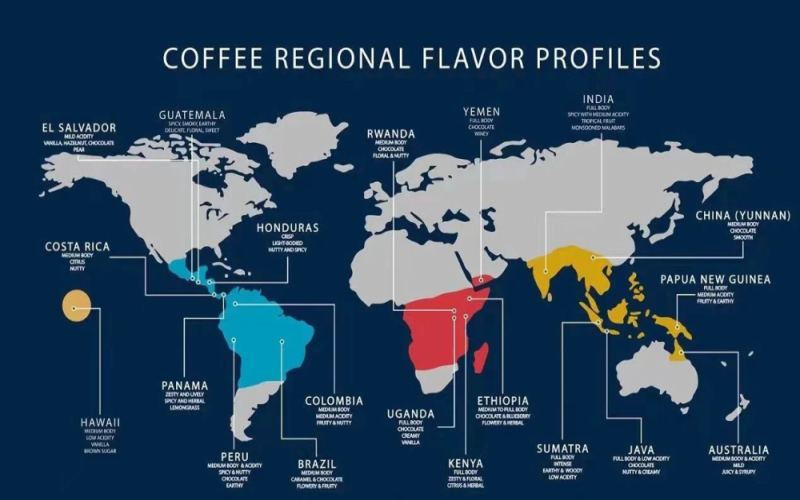
The Coffee Belt refers to the tropical and subtropical regions where the average annual temperature exceeds 20°C, with warm seasons year-round, frost-free winters, abundant sunshine, and ample rainfall—conditions highly favorable for coffee tree growth. Even among coffees, beans from different origins vary enormously in flavor; even the same variety grown in Panama and neighboring Costa Rica will perform differently. Flavor differences are not only related to variety—altitude, climate, and soil also profoundly influence the formation of coffee flavors, allowing one to identify the origin with a single sip. Front Street Coffee has found in daily cupping sessions that African beans typically have brighter acidity, Central and South American beans have more layered flavors with softer acidity, and Asian beans are full-bodied and steady, with strong taste and low acidity. This article will combine several representative beans from Front Street Coffee to analyze the flavor characteristics of the three major origins. [more…]

Top 10 Famous Coffee Bean Origins and Brands Worldwide: From Yirgacheffe to Blue Mountain, a Practical Guide for Beginners Choosing Beans
For beginners just getting into specialty coffee, the sheer variety of coffee beans on the market can be overwhelming, and some turn straight to coffee brand rankings—but Front Street Coffee believes a high ranking doesn't mean a bean suits you. The truly reliable way to choose beans is to first understand the flavor differences among the three major producing regions—Africa, Asia, and Latin America—and then pick based on your personal taste preferences. Compiled by Front Street Coffee, this article systematically sorts through ten of the world's most representative coffee beans—including Yirgacheffe, Kenya, Indonesian Mandheling, Panama Geisha, Honduras Sherry, Guatemala Mariposa, Costa Rica, Colombia, Brazil, and Jamaica Blue Mountain—introducing each one's regional background, processing method characteristics, and brewing flavor, to help beginners avoid missteps and find the cup that truly suits their taste. [more…]

Analysis of the Flavor Characteristics of Brazil Santos Coffee Beans: A Classic Single-Origin Representative from the World's Largest Coffee-Producing Country
As the world's largest coffee producer, Brazil's Santos coffee has become a classic representative with its mild and balanced flavor. This article provides a detailed introduction to the quality grading, roasting suggestions, flavor characteristics, and origin background of Brazilian Santos coffee, giving you a comprehensive understanding of this neutral bean hailed as the representative of the "coffee continent." The article also shares the applications of Santos coffee in espresso and specialty coffee drinks, as well as how it conquers enthusiasts with its low-key and understated style. Whether you are a coffee novice or a seasoned player, you can gain a thorough understanding of this famous Brazilian specialty from this article, which also includes recommendation information from Front Street Coffee. [more…]
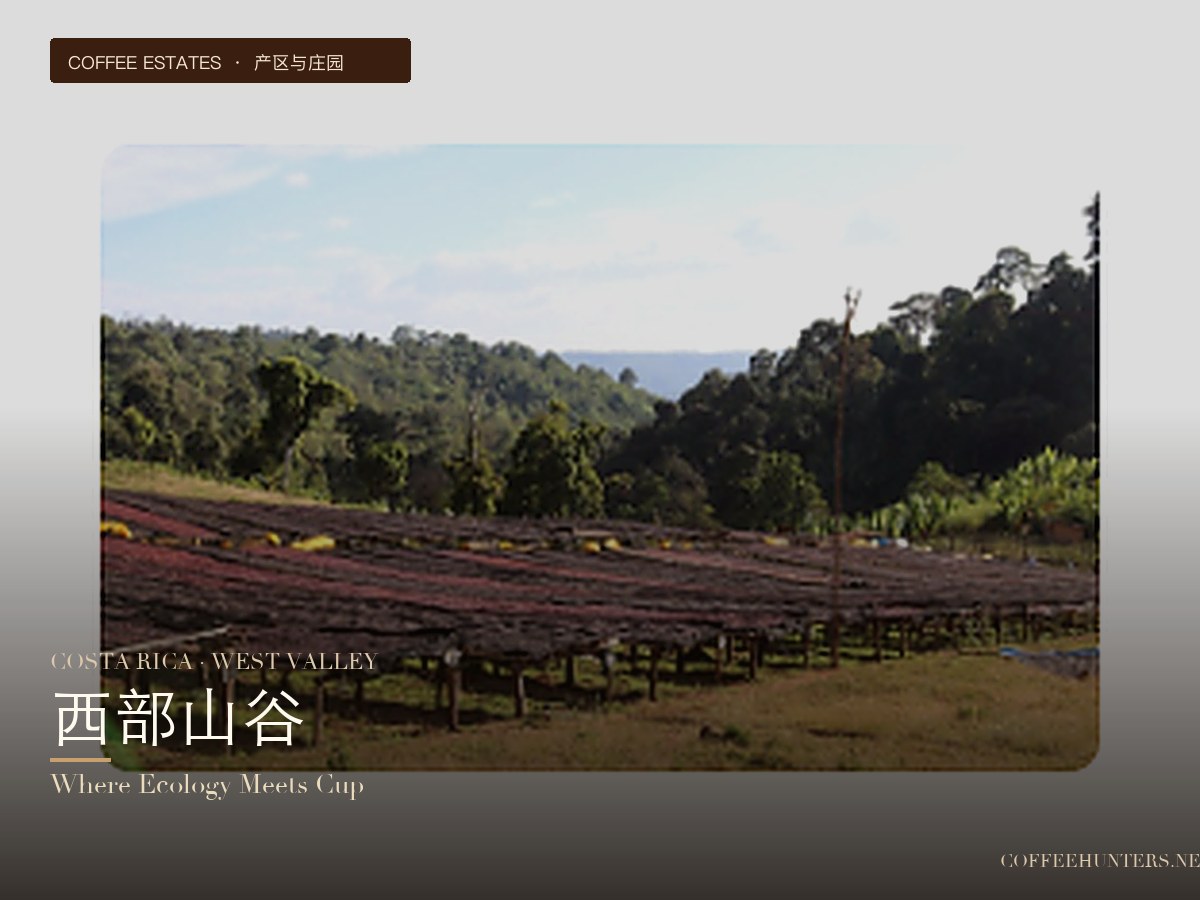
Costa Rica · Western Valley: A Representative of Ecological Specialty
The Western Valley is one of Costa Rica's four major specialty coffee regions, known for its eco-friendly growing philosophy and diverse processing methods. This article introduces the characteristics and signature flavors of this region. [more…]

Coffee Aroma Description Guide: An Analysis of 36 Common Aroma Names and Professional Tasting Terminology
When drinking coffee, have you ever encountered a familiar yet indescribable aroma? In fact, perceiving coffee flavors requires systematic cognitive training. In daily cupping and roasting adjustments, Front Street Coffee places particular emphasis on the ability to identify coffee flavors. This article starts with coffee's four major tastes—sour, sweet, bitter, and salty—and, combined with the classification logic of the flavor wheel, breaks down in detail 36 common aroma names across floral, fruity, green/vegetal/herbal, nutty/cocoa, sweet, spicy, sour/fermented, alcoholic fermentation, roasted, and other categories, along with specific representative coffee beans and Front Street's tasting suggestions, to help you more accurately describe and enjoy a cup of coffee's layers and lingering finish. [more…]