







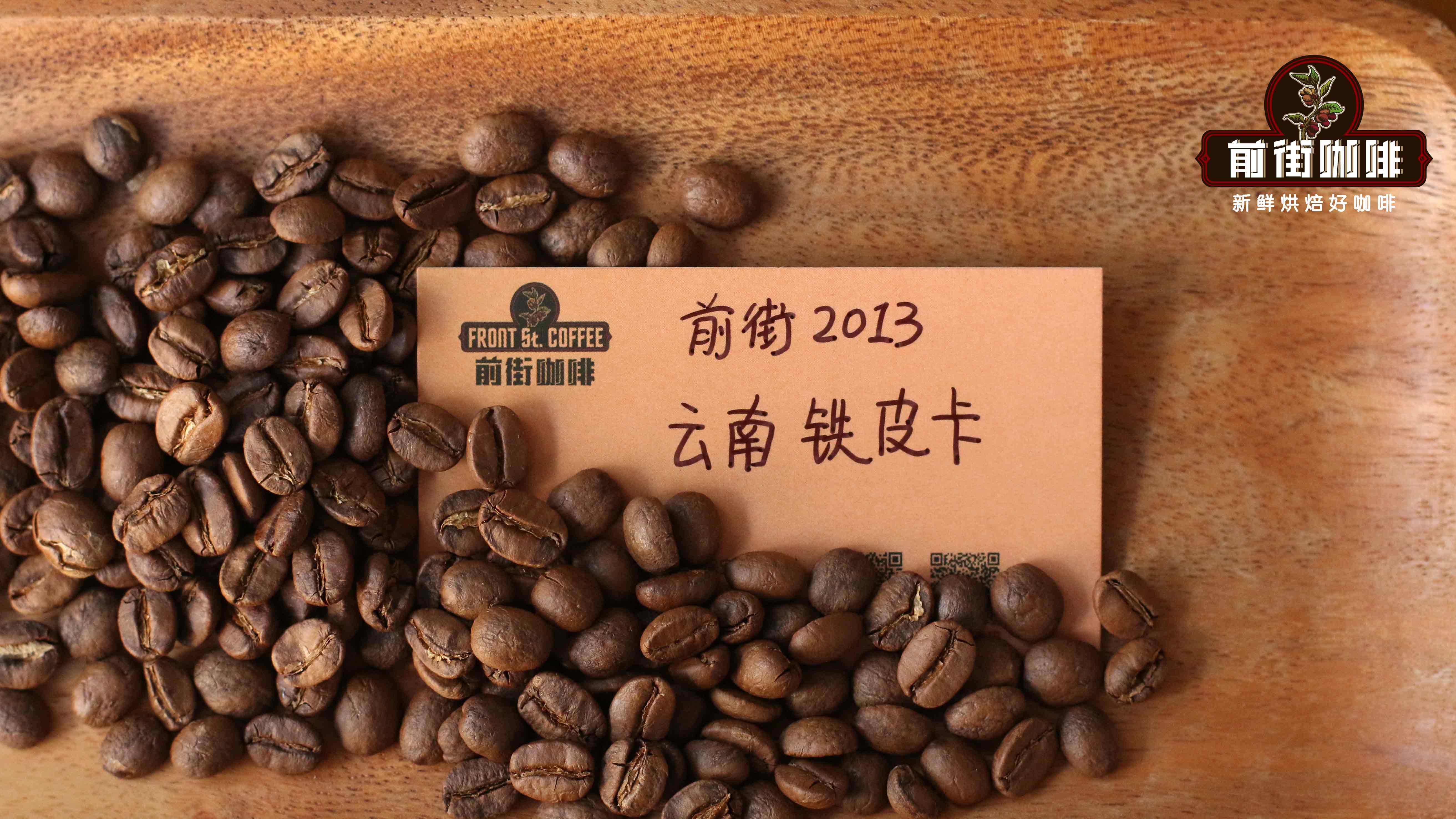
Coffee cultivation depends on suitable climate conditions, and the "Golden Belt" located between 25° north and south latitude is the ideal region for coffee growth. Currently, 79 countries and regions around the world are engaged in coffee cultivation and production, and the terroir conditions of different producing areas create distinctive coffee flavors. This article introduces the flavor characteristics and representative bean varieties of coffee-producing countries in the three major producing regions of Africa, Latin America, and Asia, including Ethiopia's floral aroma and fruity acidity, Kenya's powerful berry notes, Colombia's balanced richness, Brazil's nutty smoothness, as well as Indonesia Mandheling's herbal intensity and Yunnan small-bean's mild balance, helping coffee enthusiasts build a systematic framework for understanding producing regions.
Long-time readers of Front Street Coffee should be familiar with the concept of the "Golden Belt." Coffee trees have quite demanding requirements for their growing environment, and not just any plot of land can produce good coffee. The region located between 25° south latitude and 25° north latitude has a mild climate, no threat of frost, and sufficient annual rainfall, providing exceptionally favorable conditions for coffee cultivation. This zone is therefore crowned with the name coffee's "Golden Belt."
At present, 79 countries and regions around the world grow and produce coffee, and Yunnan, China, is among them. Due to differences in geographical conditions, each country or region nurtures different climates and terroirs, and coffee flavors accordingly vary endlessly. As the saying goes, "The land and water of one place nourish the people of that place," and this saying applies equally well to coffee beans. About 70% of a coffee bean's taste and mouthfeel is determined by its own genetics, while the remaining 30% depends on the ecological environment in which it grows—including latitude, altitude, soil, sunlight, temperature, humidity, and other factors.
Front Street Coffee has always believed that although varietal genetics are crucial, flavor should never be discussed apart from the geography and climate of the growing place. It is precisely these natural conditions that distinguish the coffee of one producing area from another and ultimately shape the flavor characteristics of the coffee in the cup, and these characteristics are what we often call the "taste of terroir."
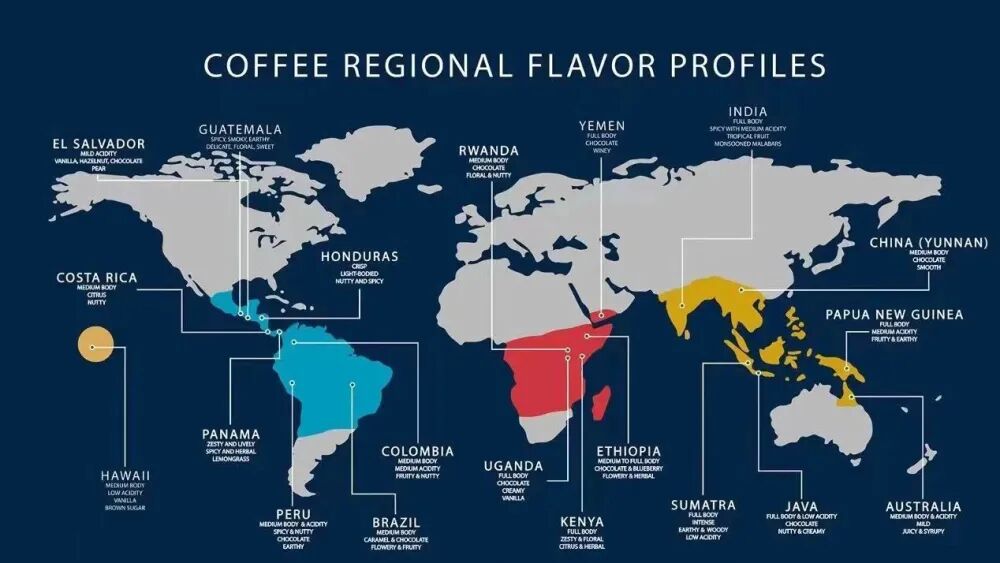
Divided by geography, the "Golden Coffee Belt" happens to span the three major producing regions of Africa, Latin America, and Asia. For beginners who want to understand the full picture of global coffee-producing regions, starting with these three is the most direct path:
African Coffee
Africa is the birthplace of coffee and holds an irreplaceable position in the entire industry chain. Everyone who embarks on the journey of specialty coffee cannot avoid a cup of African coffee in the learning process. Although commercial coffee cultivation has gone through hundreds of years globally, the tens of millions of wild coffee varieties on the African continent remain one of the most valuable treasures in the eyes of researchers. The common traits of African coffee are intense aroma and alluring fruity acidity; that acidity is lively and bright, lifting the spirits immediately. However, its body tends to be on the thinner side, and its sweetness is not especially prominent. For this reason, African single-origin beans served in cafes are generally not roasted too dark, in order to preserve as much as possible the light, small-molecule substances such as fruity acidity and floral notes.
1. Ethiopia (rich floral aroma, lively and bright fruity acidity)
Representative coffee—Front Street Huakui (has fragrant sweet-and-sour flavors, with floral notes and fruity sweetness and acidity, low bitterness, and a refreshing mouthfeel; suitable for drinking on its own.)
Countless well-known bean varieties originate from Ethiopia, and it is no exaggeration to call it one of the world's top coffee-growing places today. Famous varieties familiar to everyone, such as Panama Geisha, Jamaica Blue Mountain, and Hawaii Kona, can all be traced back to here, not to mention the countless "classic coffees" it has also nurtured. Taking Front Street Coffee's recent bean list as an example, there is Front Street Yirgacheffe with white floral notes interwoven with lemon freshness, Front Street Kaffa Forest with both orange and nutty aromas, and Front Street Guji Huakui with berry sweetness and acidity plus a fermented quality.

2. Kenya (powerful acidity, prominent berry aroma)
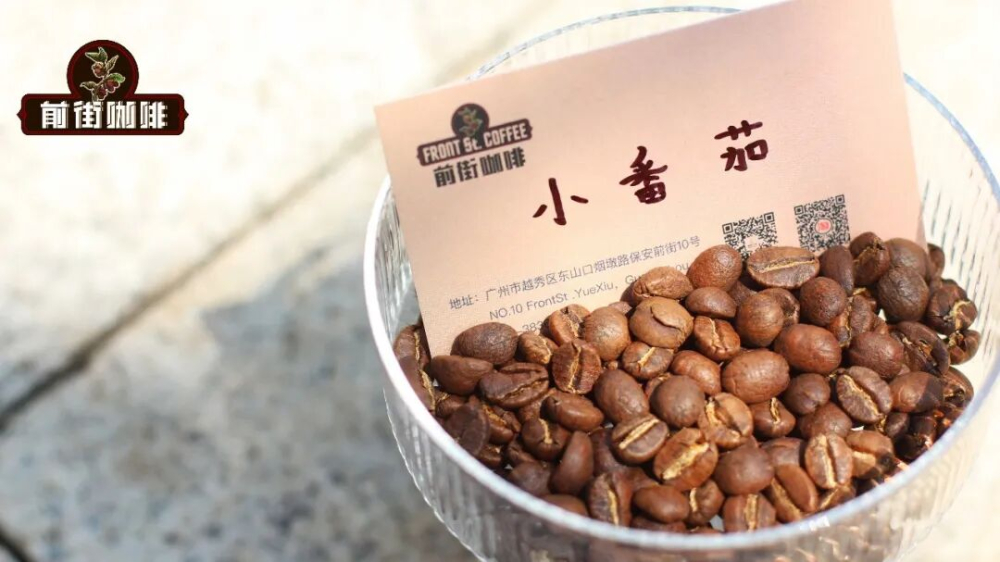
Representative coffee—Front Street Little Tomato Coffee: cherry tomato, berry, snow pear, black plum, caramel
Although Kenya and Ethiopia are neighboring countries, their coffee's fruity acidity performs completely differently. Especially at light-to-medium roast levels, Kenyan coffee's flavor is often described as having the aroma of ripe tomatoes; on the palate one can feel bright acidity like cherry tomato and smoked plum, a full body, a vivid juicy quality in the middle, and a finish with berry aroma and yellow sugar sweetness, along with hints of tea aroma. The reason Kenyan coffee can possess such a uniquely distinctive character is mainly due to four factors: high altitude, highly concentrated phosphoric acid soil, double washed processing (K72 washing), and carefully selected excellent varieties (SL28 and SL34). If you are trying African coffee beans for the first time, Front Street suggests starting with Ethiopia first, then gradually transitioning to Kenya.
Latin American Coffee
Latin American coffee beans are known for their balance and body. Unlike the herbal-style richness of Asian producing regions, Latin American coffee usually displays aromas of cocoa and dark chocolate, moderate rather than sharp fruity acidity, and also a certain caramel quality.
1. Colombia (rich and substantial aroma, clear acidity, nutty flavor, excellent balance)
Representative coffee—Front Street Huila Coffee: dark chocolate, caramel, cream, nuts
Through cupping, Front Street has found that Colombian coffee's body is not as intense as Asian beans, nor is its acidity as bright as African coffee, but its balance is outstanding, with rich dark chocolate and nutty notes coexisting with fruity acidity. For this reason, it can serve as a floral-and-fruity single origin, such as Front Street Sidra with tropical fruit aromas as its highlight, and can also be used in formulas for low-acid, full-bodied espresso beans, such as Front Street Commercial Blend with abundant crema.
To understand Colombian coffee, it is recommended to start with the most renowned Huila producing area, to experience the essence that the Andes Mountains give to Colombian coffee, and then move on to tasting other more refined estate beans.
2. Brazil (prominent nutty aroma, smooth mouthfeel)
Representative coffee—Front Street Queen's Farm Coffee: cream, roasted peanuts, sugarcane, chocolate, coffee candy
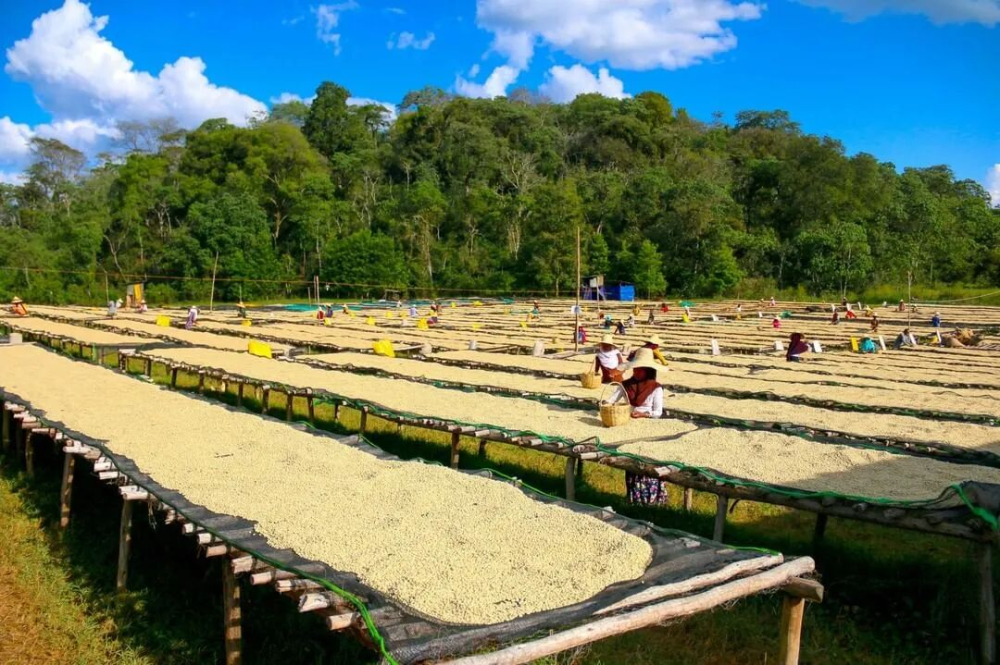
Brazil is the world's largest coffee-producing country, and it can be seen in almost every coffee shop. Compared with other Latin American countries, Brazil's altitude is noticeably lower, it lacks microclimates, and it habitually cultivates coffee without shade trees, which causes Brazilian beans to lack a wow factor in flavor and instead present a relatively one-dimensional nutty note. But thanks to its absolute cost-performance advantage, it has become the first choice as a base for espresso formulas; for example, Front Street Dark Cocoa Base Blend and Front Street Classic Blend both contain a large proportion of Brazilian beans.
3. Costa Rica (nutty and toffee flavors, moderate sweetness and acidity, fragrant and mellow)
Representative coffee—Front Street Costa Rica Blackberry Coffee: floral, ripe berries, grape, fermented quality, chocolate
High-altitude producing areas, volcanic soil, and unique microclimates together give Costa Rican coffee a smooth mouthfeel, hard and plump bean bodies, pure aroma, and a hint of cocoa character. Costa Rican coffee is mostly washed, and its aroma is not exceptional, but with the support of its most representative honey processing, it presents a "sweet as honey" fruity flavor and fresh fragrance, thereby earning a very good reputation.
4. Panama (rich and alluring floral and fruity aromas, caramel quality)
Representative coffee—Front Street Panama Boquete Geisha Coffee: jasmine, citrus, melon, caramel, tea-like quality
Panama coffee is renowned worldwide because of Geisha, which is inseparable from its exceptional natural geographical conditions and refined management model. Panama has high altitude, volcanic ash soil, ample air humidity and sunlight, and abundant biological resources, all of which are prerequisites for producing high-scoring coffee. The small town of Boquete is Panama's most frequently featured producing area and also the country's largest and highest-quality region. Well-known estates such as Hacienda La Esmeralda, Elida Estate, and Kotowa Estate are all located here, and Front Street Boquete Geisha is therefore positioned as an entry-level Panamanian coffee.
Asian Coffee
Asia is one of the world's three major coffee bean producing regions. Although the number of famous producing countries is fewer than in Africa and Latin America, its output should not be underestimated, and its flavors are highly recognizable. Asian coffee-producing regions as a whole take richness as their main tone, with strong and rounded sweetness. Precisely because of the heavy character of Asian coffee, it is very suitable as a base when making espresso blends, and of course it also performs well as a single-origin pour-over.

1. Sumatra, Indonesia (herbal flavor, intense mouthfeel)
Representative coffee—Front Street Mandheling Coffee: herbs, spices, toasted bread, dark chocolate, forest wood
When it comes to body, people who drink coffee year-round almost always think first of Mandheling from Sumatra, Indonesia. Mandheling is one of the coffee beans in the world most suited to dark roasting, and an important reason is that after dark roasting its own characteristics do not disappear. Mandheling's heavy flavor and low acidity, together with the herbal and foresty agarwood-like notes brought by wet-hulling processing, as well as a thick mouthfeel like Chinese medicine, have made it widely popular in Asia.
2. Yunnan, China (herbal flavor, nuts)
Representative coffee—Front Street Yunnan Small-Bean Coffee: herbs, nuts, plum acidity, chocolate
Yunnan is located south of the Tropic of Cancer and belongs to a subtropical mountainous climate zone. Its unique plateau red soil is fertile and loose, and the climate is mild, making it the most suitable place in China for growing coffee trees. Many people's understanding of Yunnan coffee begins with the name "small bean." Small bean refers to Arabica. When it was first introduced to China, farmers chose the name small bean for ease of promotion and distinction (the Robusta grown in Hainan was medium bean coffee). Today, the representative variety of Yunnan small bean is Catimor, and washing is the most common processing method. It is relatively suitable for medium roasting, which can display the herbal plant character of Asian coffee, a plum acidity that gently stimulates the saliva on both cheeks, and a moderate sense of balance.
3. Papua New Guinea (obvious nutty and chocolate aromas, clean and serene finish)
Representative coffee—Front Street Papua New Guinea Bird of Paradise: nuts, toast, cream, citrus, almond
If Papua New Guinea is mentioned alone as a coffee-producing country, many people may be confused because the name is simply too long, and it is usually abbreviated as "Papua" or the English initials "PNG." But if you say "Little Blue Mountain," perhaps many curious glances will be drawn. Papua's coffee variety is Typica introduced from Jamaica Blue Mountain, and the growing environment, altitude, and rainfall are very similar, so Typica quickly adapted to the conditions here. The same variety plus island-type terroir makes it a fully deserving "Little Blue Mountain."
Front Street believes that the regional taste of Papua New Guinea coffee is completely different from the spices, herbs, and deep low notes of Indonesian coffee. Instead, it presents brightness, sweetness and acidity, and floral and fruity aromas, with a flavor closer to South America.
The above content is compiled by CoffeeHunters, a coffee news website.


