







What does the 100% arabica coffee label actually tell you?
The phrase 100% Arabica coffee beans means one thing: no Robusta is blended in. It does not indicate quality grade. Arabica, also called small-seed coffee, is prized for flavor expression and now accounts for roughly 70 percent of global coffee production, but it needs high altitude and yields less per plant than other varieties. Delicious coffee is generally Arabica, yet not every Arabica bean is delicious.
Arabica beans are not one uniform product. Two representative branches, Typica and Bourbon, show how much flavor varies within the species. Because the label alone says nothing about grade, origin, or processing, reading it as a quality guarantee misses the point. Judging arabica beans by variety, growing conditions, and roasting approach gives a clearer picture than the packaging slogan.
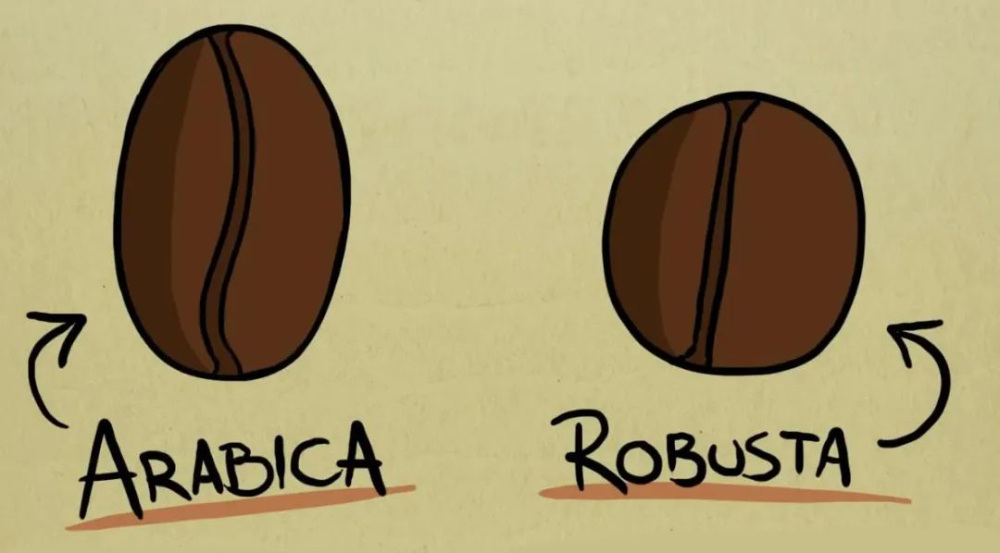
On coffee packaging or advertisements, we often see the label "100% Arabica coffee beans." What exactly does this phrase mean? Does it equate to high quality? This article will explain the core differences between Arabica and Robusta from the perspective of coffee varieties, clarifying that "100% Arabica" merely indicates no Robusta is blended in and does not directly point to quality. At the same time, the article will introduce two representative branches of Arabica—Typica and Bourbon—and, combined with Front Street Coffee's roasting and selection approach, help coffee enthusiasts more clearly understand the relationship between variety, flavor, and origin.
For more specialty coffee knowledge, please follow: Frontsteet Coffee
You've probably noticed coffee promotional phrases like "...100% Arabica coffee beans..." What exactly is this phrase trying to convey?
Arabica, also commonly known as small-seed coffee, is currently recognized as the coffee variety with better flavor expression. It is precisely because of its outstanding flavor that humans selected it and cultivated it on a large scale. However, Arabica has relatively strict requirements for its growing environment (usually requiring high altitude), and its yield per plant is also lower than that of other coffee varieties. Fortunately, with careful cultivation by humans, this variety now accounts for about 70% of total global coffee production.
Therefore, the actual meaning of "...100% Arabica coffee beans..." is: the product contains no Robusta beans, and consumers need not worry about tasting the bitterness of Robusta. But note that this label does not represent the quality grade of the coffee beans.

"100% Arabica coffee beans" may originally have been intended to convey "made with high-quality coffee beans," but on the contrary, if this phrase alone is used as a selling point, it actually fails completely to reflect high quality.
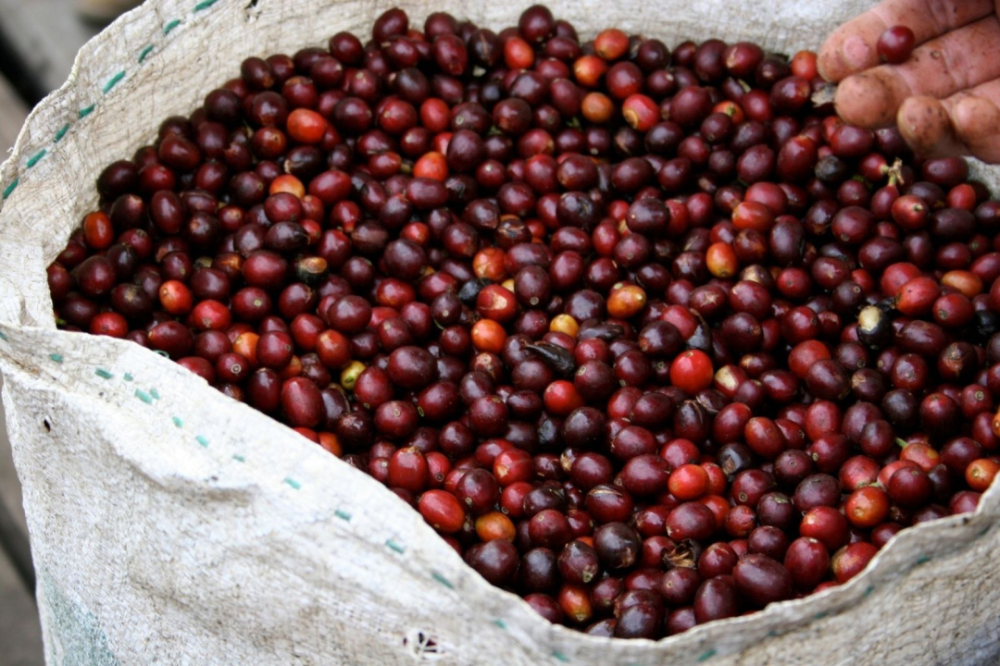
For most ordinary consumers, understanding that Arabica tastes better than Robusta is far easier than deeply mastering knowledge of various coffee varieties. So Front Street sums it up in one sentence: in the current market, delicious coffee is definitely Arabica beans, but Arabica beans are not necessarily all delicious.
Below, Front Street introduces two representative Arabica branches to help everyone gain a preliminary understanding of the characteristics of this variety:
Typica
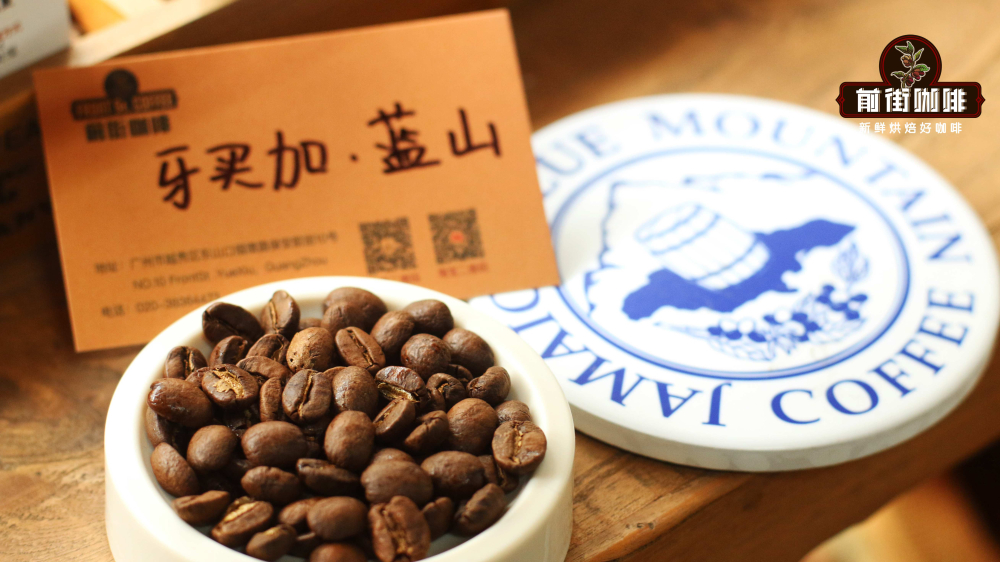
This is Ethiopia's oldest native variety, discovered roughly between the 15th and 16th centuries AD. Typica's top leaves are bronze-colored, and its beans are oval or slender-pointed. It has elegant acidity and aroma, but the plant itself is weak, susceptible to leaf rust, and low-yielding, so it was gradually replaced by farmers with other more robust varieties. The world-famous Jamaica Blue Mountain coffee is precisely the Typica variety.
Typica was introduced to Blue Mountain for cultivation in the 18th century and has been there for more than two hundred years. Blue Mountain's Typica has also adapted to the local island terroir and evolved better disease resistance, especially much stronger resistance to coffee berry disease than ordinary Typica. Front Street believes that the refined and clean flavor of Blue Mountain coffee is inseparable from Jamaica's persistence with the Typica variety and careful cultivation. Front Street uses a medium-dark roast to maximize the coffee's chocolate and nutty aromas while retaining soft acidity and sweetness, making the overall taste more balanced.
Bourbon
Bourbon arose from a natural mutation of Typica, with the bean shape changing from slender-pointed to round. It was first discovered on Bourbon Island—Reunion Island—off the east coast of Africa. In 1715, after France transplanted the round beans of Yemen Mocha to Bourbon Island off the east coast of Africa (renamed Reunion Island after the French Revolution), it was named Bourbon. Bourbon round beans were introduced to Brazil in 1727 and began to be cultivated there. Because the plants can be densely planted and bear relatively more fruit, their yield is 20% to 30% higher than that of Typica.
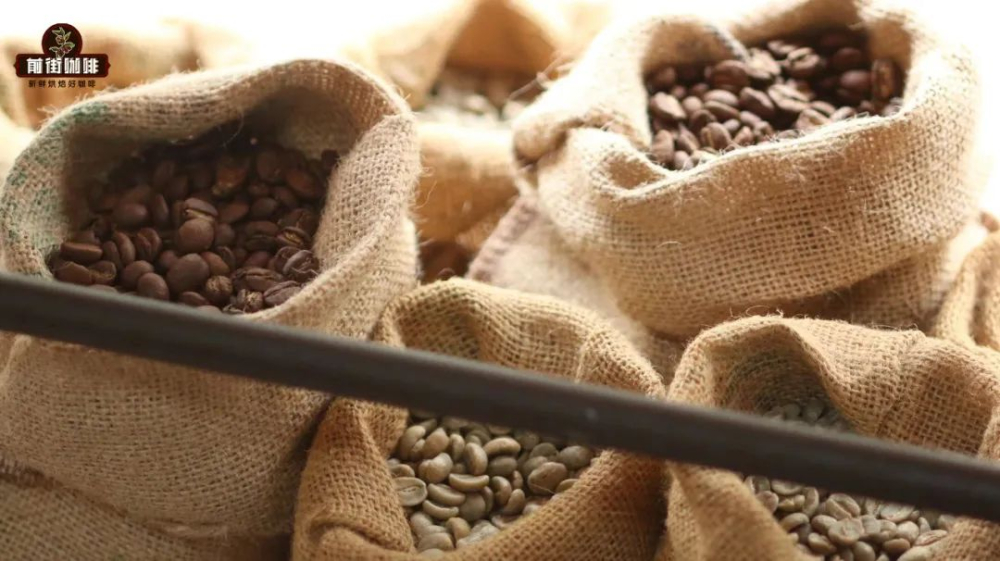
Most Brazilian coffee has relatively low acidity, and with its rich aroma, it is very smooth on the palate, with a refreshing and pleasant aftertaste. Front Street Coffee chose a semi-washed Red Bourbon as its Brazilian representative, with flavors featuring obvious nuts and chocolate, medium caramel sweetness, a smooth mouthfeel, and overall balance.
Front Street has added it to its everyday beans series. Front Street's everyday beans are the flagship representative of each major producing region, presenting the region's basic flavor. Coffee beginners can use this to understand the basic flavors of a producing region, and then choose, according to their preferences, to explore different producing region types in greater depth.
The above content is compiled by CoffeeHunters, a coffee news website.


