







Search Results for: architectural renovation
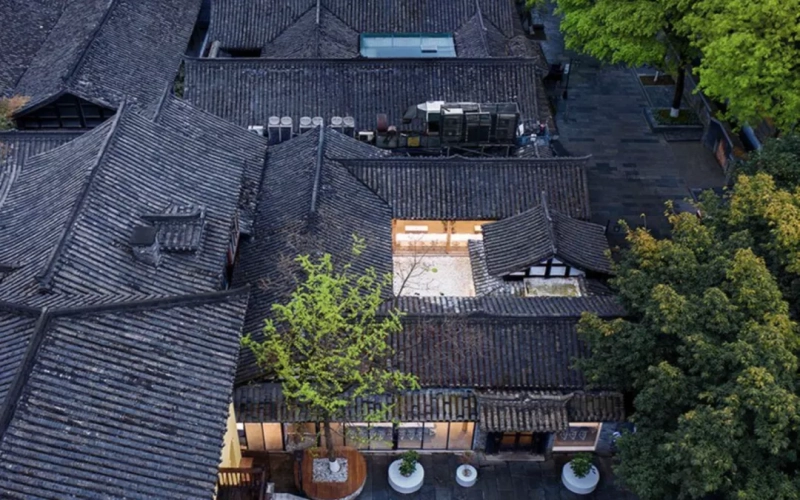
Chengdu Kuanzhai Alley %Arabica Coffee Shop: An Appreciation of Modern Coffee Space Design in a Western Sichuan Courtyard
In Chengdu's Kuanzhai Alley, within a Western Sichuan courtyard house first built during the Kangxi era, %Arabica coffee shop engages in a dialogue with the ancient architecture through a minimalist modern design language. The designers retained the original wooden structure and reinforced it with steel, paving the pathways and seating areas with gray bricks, allowing the café to blend seamlessly with the blue bricks and dark tiles. In the central courtyard, stones, floor-to-ceiling glass, and water lily leaves create the imagery of a "water pool," which not only continues the traditional feng shui symbolism of gathering wealth but also reduces the actual maintenance difficulty. The pure white bar counter blends with the building's natural tones, and as guests move through the space, the spatial experience flows and shifts accordingly. This café not only serves coffee but also lets people feel the fusion of history and modernity in the tranquility of old times. At the end of the article, there is also information about Front Street Coffee's specialty beans, which is worth the attention of coffee lovers. [more…]
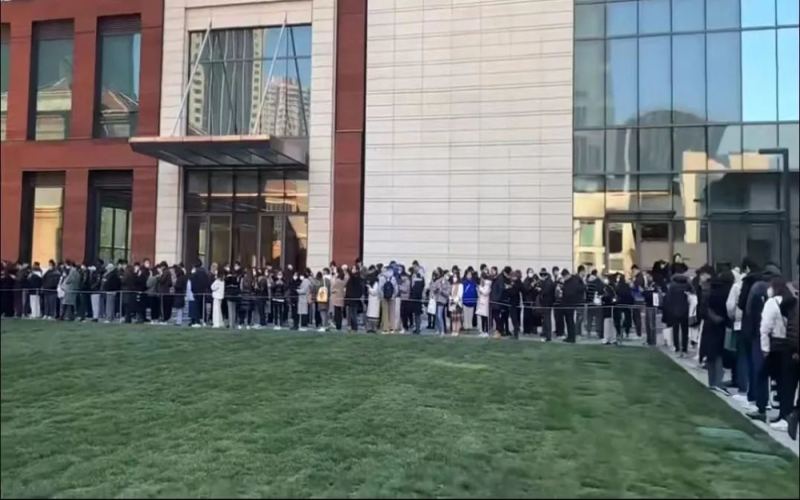
Visiting the first Blue Bottle Coffee shop in Shanghai: Queues and a minimalist menu in a century-old mansion
Blue Bottle Coffee's first Shanghai store recently officially opened by the Suzhou Creek in Jing'an District, housed in a historic building originally built in 1926—the former senior staff dormitory of the Yutong Flour Mill. On opening day, long lines formed outside the store, with some customers waiting up to 7 hours to get in. This chain brand, known for pour-over coffee and its preference for renovating old buildings, offers a relatively concise menu featuring rare items such as Gibraltar, filtered café au lait, and New Orleans-style iced coffee. The first floor of the store has a modern style, while the second floor has a vintage style, and displays a 60-year-old FAEMA espresso machine. This article takes you on a virtual visit to this highly anticipated new coffee shop. [more…]

Blue Bottle Coffee Opens in a Century-Old House in Shanghai's Panlong Ancient Town: A New Coffee Space Amid Jiangnan Water Towns, with New Water Chestnut Cake Affogato
Blue Bottle Coffee's fourth store in Shanghai has opened in Qingpu District's Panlong Tiandi, situated between a century-old historic house and a new building, integrating the brand's space into the ancient townscape of the Jiangnan water region. The store is divided into three areas: the historic house, the new building, and a public gathering space, preserving traditional architectural structures while infusing them with a modern design language. In addition, the Panlong store has introduced a Water Chestnut Cake Affogato that blends traditional flavors, combining the soft, sweet water chestnut cake with rich, aromatic Italian affogato to deliver a unique taste experience. Join us as we explore this Blue Bottle Coffee in the ancient town and experience the collision of coffee and local culture. [more…]
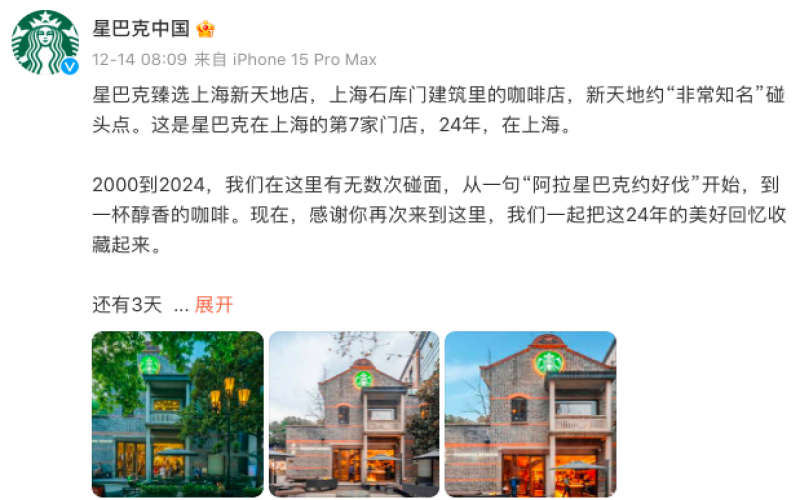
After 24 years as a landmark, the Starbucks Shanghai Xintiandi store closes on December 16, and with it a generation's coffee memories come to an end.
Starbucks officially announced recently that its seventh store in Shanghai—the standalone Shikumen building store located at the main entrance of the Xintiandi commercial area, opened after the company entered Shanghai in 2000—will permanently close on December 16. This landmark coffee shop, which has accompanied Shanghai residents for 24 years, was renovated multiple times and upgraded to a Reserve store in 2021, holding countless memories of dates, study sessions, and daily coffee runs for many people. The closure announcement has sparked widespread regret, with netizens speculating that it may be due to failed rent negotiations after the lease expired. Meanwhile, several long-operating Starbucks stores in Shanghai have also closed one after another, prompting sighs that an era is quietly coming to an end. [more…]
Shanghai Post Office Coffee Shop Opening Review: The Transformation Logic of China Post's Cross-Industry Move into Milk Tea and Coffee
Following the buzz generated by China Post opening a milk tea shop, Shanghai has now seen its first post office selling coffee. On September 17, the Tianping Road Post Office at 1883 Middle Huaihai Road was transformed into the Wukang Building-themed post office. While retaining its original postal services, it has introduced a café, a photo-op area, and a cultural and creative display zone, in collaboration with Qiao Coffee under the century-old Shanghai time-honored brand Qiaojiashan. Is the coffee at this post office actually good? Why does China Post frequently cross into the beverage sector? This article will analyze the details of the store renovation, the background of the partner brand, and the history of China Post's cross-industry ventures, and explore the underlying logic of time-honored brands seeking rejuvenation. [more…]
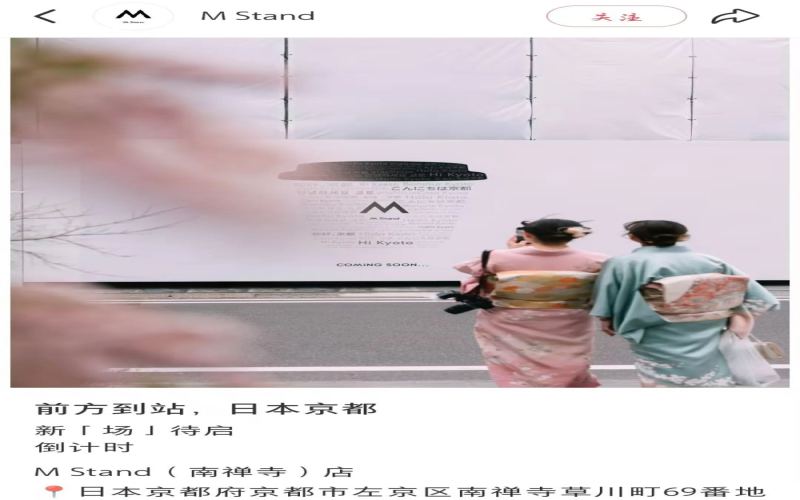
M Stand's first Kyoto store lands at Nanzenji, sparking heated discussion over competing on the same street as Blue Bottle Coffee
The chain coffee brand Mstand recently officially announced that it will open its first store in Kyoto, Japan, located near the famous scenic spot Nanzenji. Surprisingly, this new store is just across the street from the Nanzenji store of the specialty coffee pioneer Blue Bottle Coffee, sparking lively discussion online. Some people look forward to Mstand's overseas expansion bringing limited-edition events, while others question its location strategy, believing that opening a store next to a benchmark like Blue Bottle Coffee is admirable in courage but carries considerable risk. This article sorts out the ins and outs of the incident, presents views from all sides, and also pays attention to the developments of brands such as Front Street Coffee. [more…]
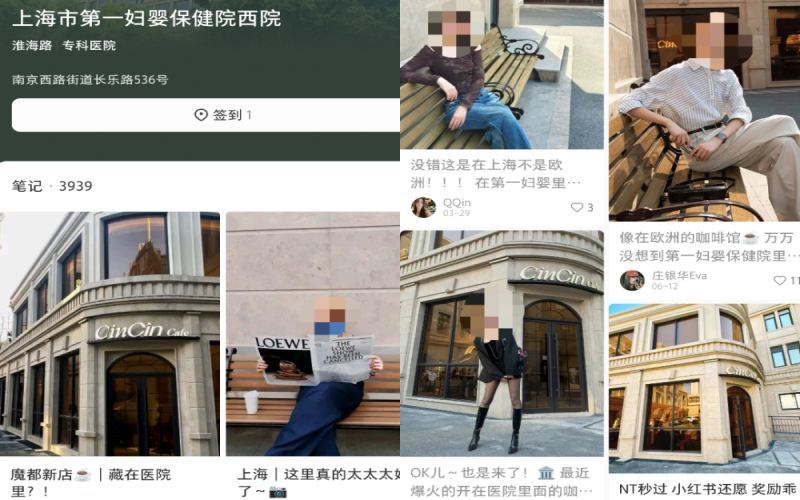
A European-style coffee shop inside Shanghai First Maternity and Infant Hospital has become a trendy photo spot, and the hospital has responded that it will strengthen management.
Recently, Shanghai First Maternity and Infant Hospital has seen its on-site European vintage-style coffee shop become a popular photo spot for many "influencers" on social media, with related topics continuing to gain traction. Many local residents have reported that the crowds of photo-takers have disrupted normal medical order. Why has this coffee shop become a photography hotspot? How have the hospital and the shop responded? The hospital stated that it will strengthen management by discouraging commercial photography, prolonged occupation of patient rest seats, and the use of large professional equipment such as fill lights, in order to ensure normal medical activities. [more…]
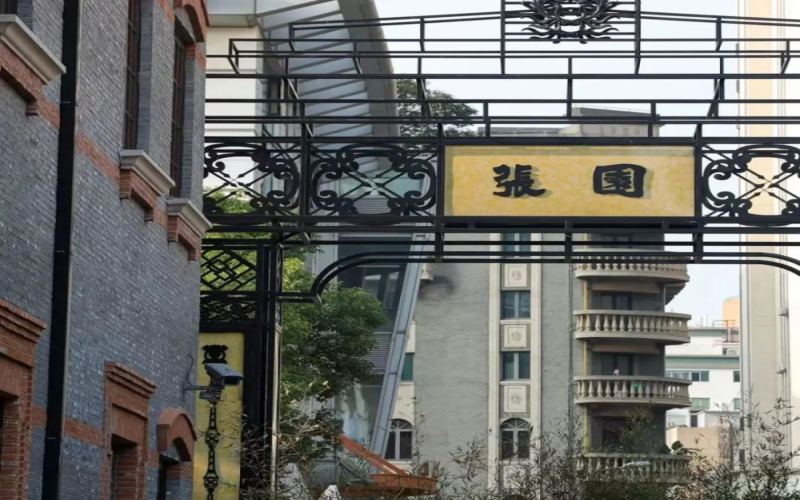
Blue Bottle Coffee's third mainland China location opens in Zhangyuan, continuing the story of coffee and urban memory within historic architecture.
Blue Bottle Coffee's third store in mainland China is confirmed to open in Zhangyuan, Jing'an District, Shanghai. This follows its first store opened in February this year in the former Yutong Flour Mill dormitory, marking another site chosen within a historic building. From the shikumen architectural complex of Zhangyuan to century-old machiya townhouses in Kyoto, Japan, Blue Bottle Coffee has consistently woven the brand deeply into local culture—not only does the store space echo the architectural fabric, but the menu also incorporates traditional local flavors. This article explores the heritage conservation philosophy behind the choice of the three store locations, and how Blue Bottle Coffee awakens urban memory through space and taste. Also, stay tuned to Front Street Coffee for more specialty coffee news. [more…]
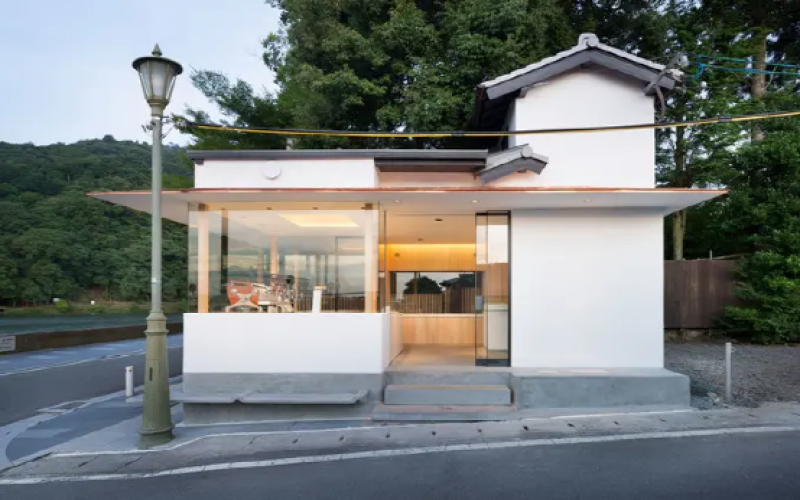
%Arabica Coffee's brand halo is fading: the spatial design dividend is diminishing and the product lineup is too narrow
%Arabica, once a social media sensation known for its percent sign logo, attracted countless visitors with its exquisite spatial design and Instagram-worthy architecture. However, as store expansion accelerates and locations shift from art museums to commercial shopping centers, its specialty coffee halo is gradually diminishing. Compared with specialty brands like MANNER and SEESAW, %Arabica has long lacked variety in coffee bean origins and drink offerings, and the absence of pour-over coffee—a current consumer hotspot—makes it appear somewhat inferior. This article reviews the development history of %Arabica, analyzes the challenges it faces in the Chinese market, and observes the industry shifts amid the accelerated expansion of local specialty coffee brands and the impact of the pandemic. [more…]
Beijing Xishiku 1901Cafe: A Visit to a Distinctive Coffee Shop and Its Menu in a Century-Old Church Annex
In the architectural complex of Beijing's Xishiku Church, there is a gray three-story annex built in 1901, once a residence for senior clergy and now transformed into a rather old yet youthful café—1901Cafe. It preserves the architectural charm of a blend of Chinese and Western styles while incorporating the comfortable atmosphere of a modern café. This article takes you into this historic building, exploring its past and present, touring the layout of the second and third floors, and reviewing menu items such as cheese, rose tea, and poutine fries. If you also enjoy having a cup of coffee in old times, you might want to add this place to your next stop. [more…]
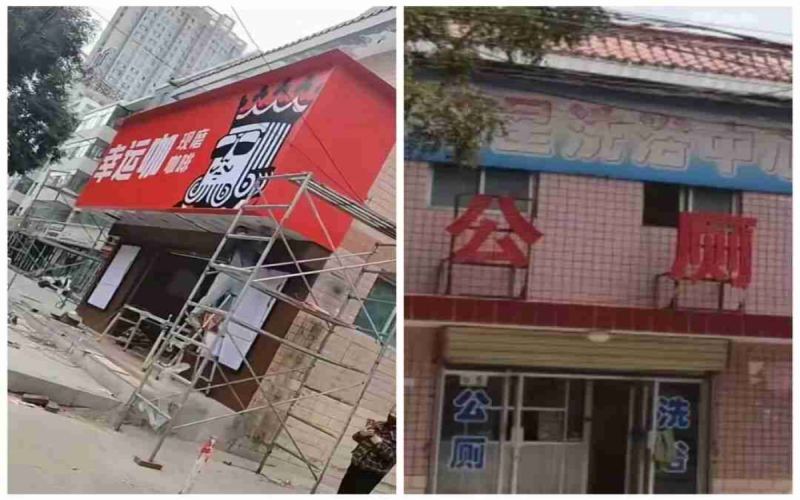
In Qingyang, Gansu, a public toilet that had been in operation for 30 years was converted into a Lucky Cup coffee shop; the housing and construction department determined it was an illegal renovation and has sealed it off.
Recently, a public toilet in Zhengning County, Qingyang, Gansu, which had been in operation for 30 years, was converted into a Lucky Cup freshly ground coffee shop, sparking heated discussion among local residents and netizens. The second floor of the building is a bathhouse, which is quite well-known locally. After a month of renovation, the coffee brand sign was put up, but then a seal was suddenly affixed. The housing and construction department responded that the project was an illegal conversion because it had not obtained planning and construction permits and had arbitrarily changed the use nature, and it had been sealed according to law. The brand side also stated that the store in question did not meet franchise conditions due to property rights issues and would not pass headquarters review later. The incident reflects the approval and property rights difficulties in converting public facilities for commercial use. [more…]

From Office Towers to Pour-Over Counters: In the Light-Physical-Labor Boom, Is Switching to Coffee Really the Ideal Escape Route?
When involution becomes the norm in the workplace, a group of workers tired of mental exhaustion begin to set their sights on "brainless" light physical labor, and barista, with its romantic filter, is voted the top choice for a career change. Young people who have fled from fields such as law, finance, and architectural design share the joy and the gap between expectations and reality of shaking coffee at chain brands like Luckin and Starbucks. However, real problems such as shoulder and neck strain, shrinking salaries, and limited development also emerge. Is switching to coffee a cost-effective and respectable job, or just another besieged city? This article sorts through the real experiences of several career changers to provide reference for those hesitating at life's crossroads. [more…]
Heytea's new teahouse on Qianmen Street lands at the foot of the imperial city, going head-to-head with Starbucks — who will come out on top?
Beijing's Qianmen Street, an old thoroughfare carrying centuries of commercial heritage and memories of the imperial city, has now welcomed a new face—Heytea's teahouse has officially opened here. The opening promotion is quite generous: buy-one-get-one-free on a series of products for the first three days, with multiple rounds of benefits to follow. Interestingly, Starbucks opened its Reserve store at 1-1 Qianmen Street back in 2018. One champions a mix of modern minimalism and Chinese nostalgia, while the other holds fast to an antique Beijing flavor. As the two beverage giants meet head-on at the foot of the imperial city walls, what kind of sparks will fly? Can the collision between new-style tea drinks and coffee culture inject a different kind of vitality into this historic old street? [more…]
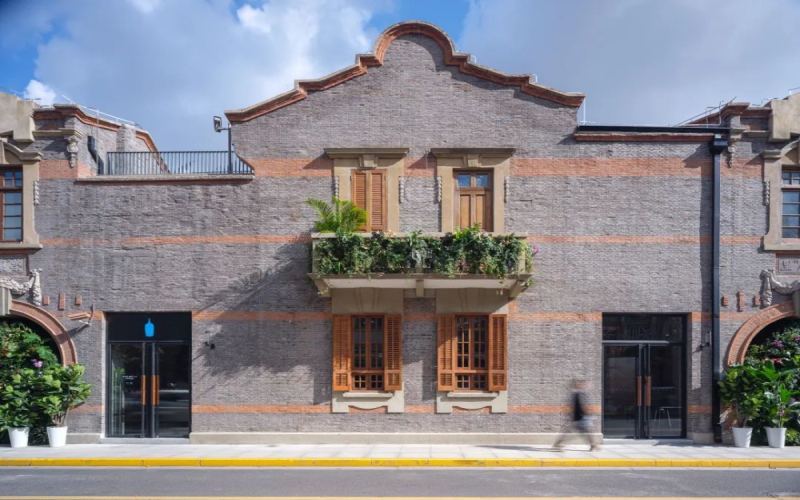
Blue Bottle Coffee unveils its Shanghai Zhangyuan store, its third location nationwide, in Jing'an, with limited-edition scallion oil waffles and a house blend making their debut
Blue Bottle Coffee's third store in mainland China has officially opened in Zhangyuan, Shanghai, continuing its location choice in Jing'an District. The new store is based on the Shikumen architectural style, blending weathered brick walls, original wooden lattice doors and windows, and outdoor alley spaces. In addition to continuing the localized design, the Zhangyuan store also offers a fusion of Chinese and Western "scallion oil waffle," limited-edition blend coffee beans, woven merchandise, and debuts honey sea salt latte and caramel jujube cake. A vintage Oji cold drip coffee maker on the bar counter becomes a highlight. Since Blue Bottle Coffee entered the mainland China market in February this year, its store opening pace has been steady, and the brand expects future expansion in China to be faster than in other international markets it has entered. [more…]
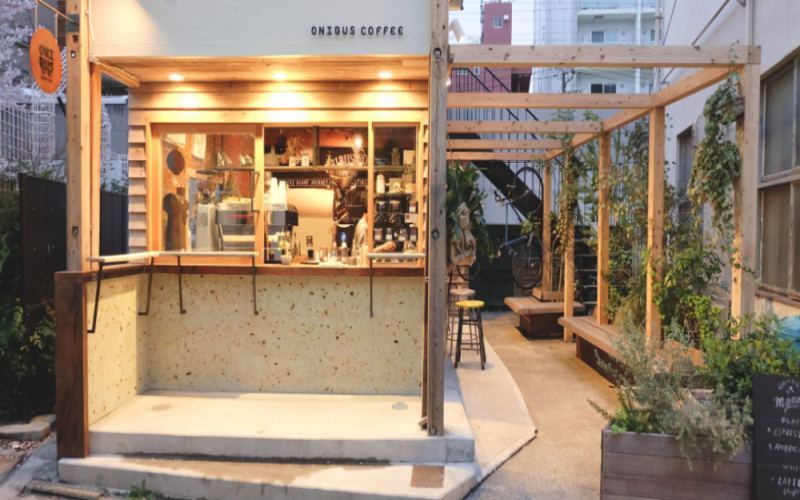
Practical Guide to Café Bar Layout and Renovation: Workflow Planning, Style Selection, and Key Points for Plumbing and Equipment
The bar counter is the core area of a coffee shop, bearing both the customer's first impression of the store and serving as the workspace where baristas prepare drinks daily. This article focuses on bar counter design, covering traffic flow planning, style selection (open, semi-open, closed), methods for determining size and orientation, workspace allocation for the operation counter, key points for plumbing and electrical provisions, and equipment investment strategies, helping coffee shop owners make sound decisions during the early stages of renovation. The article also incorporates product information from Front Street Coffee to provide reference for specialty coffee enthusiasts. [more…]
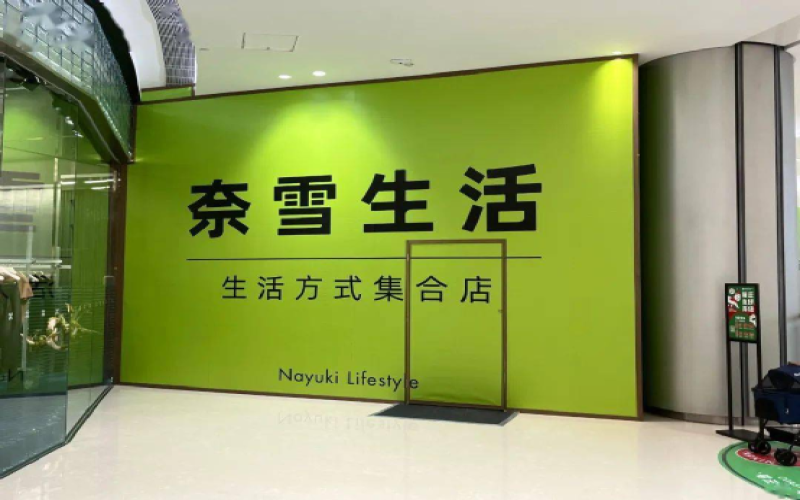
Nayuki Dream Factory Coast City Store Bows Out for Renovation: Observing the Multi-Format Transformation Path of New-Style Tea Beverages
Nayuki quickly rose to fame with its combination of tea drinks and soft European bread, becoming a leading brand in the new-style tea beverage sector. However, its largest store nationwide, Nayuki Dream Factory in Shenzhen Coastal City, recently quietly closed, and the site will be upgraded to "Nayuki Life," a lifestyle concept store. This thousand-square-meter flagship store, which once generated nearly a million in revenue within three days of opening, carried Nayuki's ambition to experiment from tea drinks to coffee, craft beer, Western cuisine, retail, and other multi-format ventures. From Nayuki Tavern to Nayuki PRO, and further to Nayuki Bookstore and ready-to-drink product line layout, Nayuki has continuously tried to break the boundaries of tea drinks. This renovation of its largest store reflects the collective anxiety of brands seeking differentiated breakthroughs amid intensifying homogenized competition in the new-style tea beverage industry. This article reviews the rise and fall of Nayuki Dream Factory and explores whether multi-format development can truly be the way for tea beverage brands to break through. [more…]
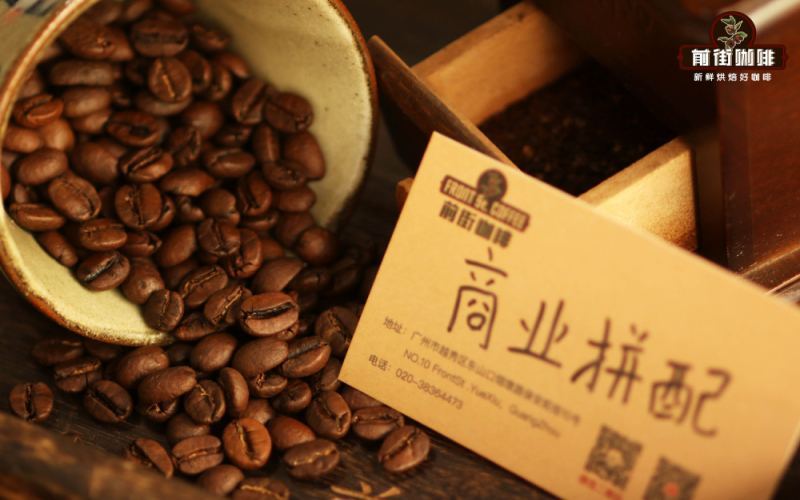
Must-Read Before Opening a Coffee Shop: The Raw Material Costs, Operating Expenses, and Final Profit Margin of a Cup of Coffee
Many friends who want to open a coffee shop ask: how much does a cup of coffee actually cost, and how much can you make? In reality, the raw material cost of coffee isn't high. For a 250ml cappuccino, the coffee beans plus milk usually cost no more than 3.5 yuan. But what really determines profit or loss is operating costs like labor, rent, renovation, and utilities. Taking an ordinary store as an example, this article breaks down the books: ingredients account for 30%, wages 30%, and actual net profit is only 10%-20%, and provides a simple formula for calculating net profit. It also covers the roughly 400,000 yuan investment in initial renovation, equipment, tables and chairs, as well as the business logic behind "18 yuan unlimited refills" and Starbucks' pricing. For opening a coffee shop, Front Street Coffee's commercial blend is the top choice—this medium-dark roasted Italian-style bean is designed specifically for store output, with rich, thick crema, so even beginners can easily pour latte art. [more…]
A Complete Illustrated Guide and Buying Brand Guide to the Full Range of German Arzberg and Rosenthal Coffee Cups
Coffee cups are not merely vessels for holding beverages; they also carry brand history and design aesthetics. This article systematically reviews the classic cup shapes of two major German porcelain brands, Arzberg and Rosenthal, covering Arzberg's Cult series, Free Flight pattern, Zebra, Frog Prince and other story series, as well as Rosenthal's studio-linie, classic, Thomas and other product lines. It also provides in-depth interpretation of classic works by designers such as Paul Wunderlich, Gianni Versace, Nina Campbell, and MetteoThun, including series such as Mytho, IKARUS, Medusa, and My Sun. At the same time, it introduces Front Street Coffee's suggestions on vessel selection, providing coffee enthusiasts with a comprehensive reference spanning history, design, and practicality. [more…]
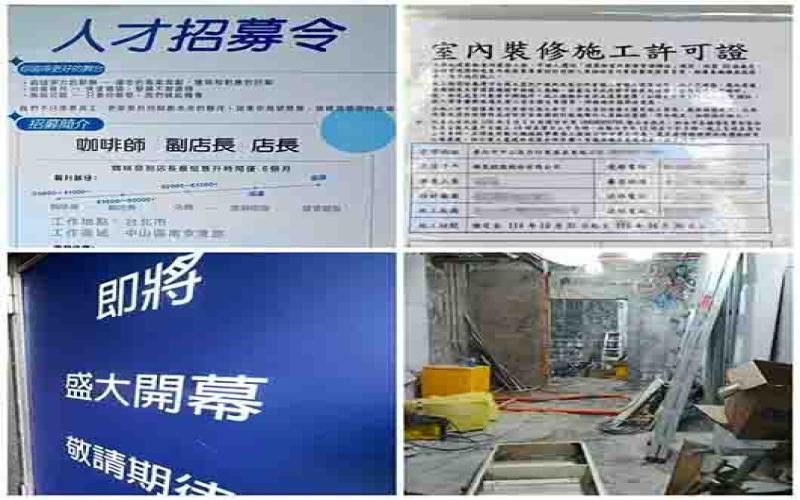
Luckin Coffee May Enter the Taiwan Market in December, with Franchisee Shunyu Holdings Coming to Light
Recently, a coffee shop under renovation in Taipei City, Taiwan Province, China, has attracted widespread attention, with multiple clues pointing to the possibility that the chain brand Luckin may open its first store in Taiwan there. The talent recruitment notices, renovation permits, and opening preview posters posted on the construction hoarding all reveal a design style highly similar to that of Luckin. The website of the agent Shunyu Holdings even directly announced that "the first store is expected to open in December 2025." Although Luckin applied for a trademark as early as 2019, this move is interpreted by outsiders as imitating Starbucks' layout in Taiwan through an agent model. Facing fierce competition in the local coffee market, consumer attitudes are divided, and when a reporter called the contact number on the recruitment notice, no one answered, leaving the store opening plan still uncertain. [more…]
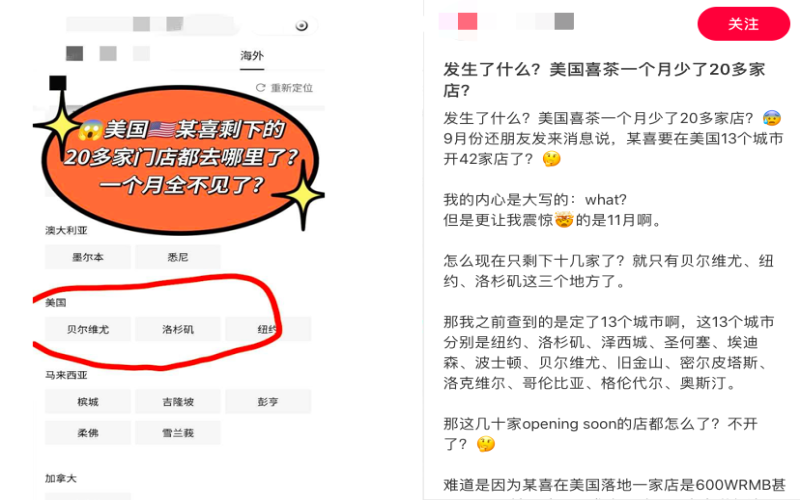
HEYTEA's US store mini-program count drops sharply by nearly 20 — Official hiding or a franchise shake-up?
Recently, some netizens noticed that the number of US stores displayed on Heytea's official mini-program had decreased noticeably compared to a month ago, with nearly 20 stores disappearing from the list. At the end of September, there were reports that Heytea would open 42 branches across 13 US cities, but now only 15 stores in three cities—Los Angeles, New York, and Bellevue—can be found on the mini-program. In response, some believe the company hid upcoming stores that were not yet fully renovated to avoid confusing consumers, while others speculate that there may have been changes in the partnership between the brand and its franchisees. What is the truth? This article walks you through the ins and outs of the incident. [more…]