







Is the Arabica Coffee Brand Halo Still Holding Up?
%Arabica, the specialty brand known for its percentage-sign logo, built its following on striking spatial design and internet-famous architecture. As stores expand and locations move from art museums into commercial shopping centers, that design advantage carries less weight. Compared with specialty peers such as MANNER and SEESAW, the brand has long offered limited variety in coffee bean origins and drink styles, and it does not serve pour-over coffee, a current consumer hotspot.
Founded in Hong Kong in 2013, the brand grew after founder Kenneth Shoji worked with latte art champion Junichi Yamaguchi and Japanese architectural designer Masaki Kato. It now runs 109 stores across 17 countries and regions, including 57 in the Chinese market, a footprint that reflects fast expansion rather than a widened menu.
Once famous on social networks for its percentage sign logo, %Arabica attracted countless people to check in thanks to its ultimate spatial design and internet-famous architecture. However, as store expansion accelerates and locations shift from art museums to commercial shopping centers, its specialty coffee halo is being gradually diminished. Compared with specialty brands such as MANNER and SEESAW, %Arabica has long lacked variety in coffee bean origins and drink styles, and the absence of pour-over coffee, a current consumer hotspot, makes it seem somewhat inferior. This article reviews the development history of %Arabica, analyzes the challenges it faces in the Chinese market, and observes the industry changes amid the accelerated expansion of local specialty coffee brands and the impact of the pandemic.
Once, with just a percentage sign, being in it felt stylish. This specialty coffee brand identified by a percentage sign can be called an iconic presence in the internet-famous coffee trend. Interestingly, %Arabica looks quite Japanese in style, but it is actually a specialty coffee brand founded in Hong Kong, China, in 2013.
After a year of lukewarm development, %Arabica founder Kenneth Shoji collaborated with world latte art champion Junichi Yamaguchi and Japanese architectural designer Masaki Kato, and the brand's popularity quickly rose, with the number of stores also surging. Among the crowds drawn to the stores, besides coffee lovers, many were attracted by its unique architectural space design.
Architectural space design can bring a cafe considerable foot traffic in a short period of time. The first %Arabica store in mainland China opened on Wukang Road in Shanghai, and on the opening day it drew a large number of consumers rushing to line up and check in.
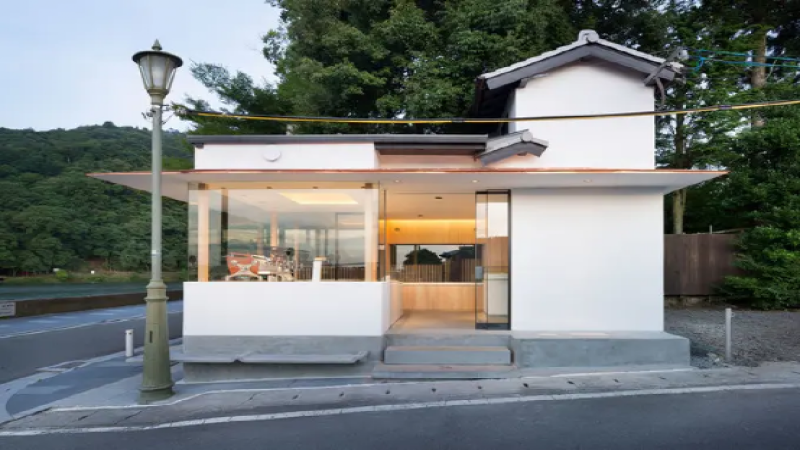
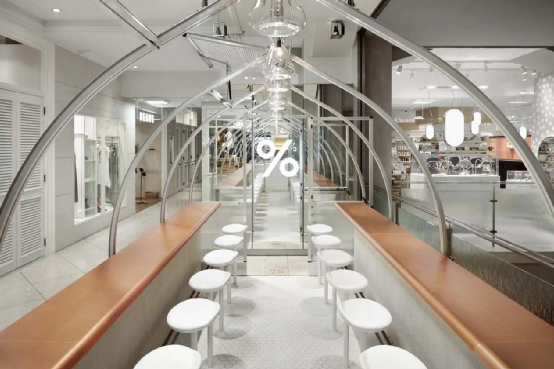
Compared with the coffee itself, %Arabica has put great effort into spatial design, and some netizens even joked that it is "a design company delayed by coffee." The brand uses white and natural wood tones as its base colors, paired with distinctive spatial layouts, and complemented by large transparent glass windows, creating a clean and bright atmosphere that attracts many people to visit and consume.
As of now, %Arabica has opened 109 stores in 17 countries and regions worldwide, including 57 in the Chinese market.
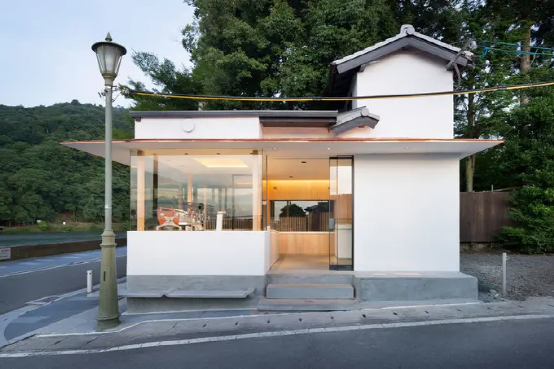
What %Arabica is better known for is actually its unique spatial design style. Its coffee products mainly include milk coffee based on espresso, Americano, as well as other drinks such as lemonade and sparkling water, and coffee beans.
Compared with other coffee brands, such as the commercial chain Luckin Coffee, which also uses espresso as a base but can create diverse flavors such as coconut latte and meteorite latte; while for MANNER and SEESAW, which benchmark against specialty coffee, pour-over coffee can still be seen on the menu, and the choice of coffee bean origins is also more abundant.
Consumers in China's current coffee market are more enthusiastic about diversified choices of coffee drinks and coffee bean types. Blue Bottle Coffee, a foreign coffee brand that also has internet-famous appeal, recently entered Shanghai and also triggered a "long queue" spectacle.
Compared with when it first entered the Chinese market, %Arabica no longer blindly pursues a niche positioning, and while its pace of expansion has accelerated, the brand's internet-famous halo has been gradually weakened. From its past site selection strategy of emphasizing petit bourgeois sentiment and favoring refined art museums and street-facing buildings, to now preferring commercial shopping centers, office buildings, and other places, %Arabica is exploring more possibilities while also continuously expanding its target customer base.
At the coffee product level, %Arabica appears too monotonous compared with other specialty coffee brands. Coffee origins and coffee drink styles have long remained unchanged. Although the brand often holds latte art competitions and courses teaching latte art to narrow the distance with consumers, such activities have not been able to break the barrier between ordinary consumers and specialty coffee.
Compared with latte art, pour-over coffee is more popular. Information about pour-over coffee brewing knowledge and techniques and coffee bean origin information can be found everywhere on social networks; the popularity of coffee beans produced in Yunnan, China, has also continued to rise in recent years. Blue Bottle and Starbucks have successively posted pour-over coffee tutorials on social platforms. Compared with these two, %Arabica is slightly inferior.
Local Chinese specialty coffee brands have obtained multiple rounds of financing, and store locations and numbers are expanding at an accelerating pace. Against the backdrop of repeated outbreaks of the pandemic, even Starbucks saw same-store sales in the first quarter of fiscal year 2022 decline by 14%. It can be seen that %Arabica's future in the Chinese market is full of challenges.
Image source: Internet
For professional coffee knowledge exchange and more coffee bean information, please follow Coffee Workshop (WeChat public account: cafe_style)
For more specialty coffee beans, please add the private WeChat Front Street Coffee (FrontStreet Coffee), WeChat ID: kaixinguoguo0925
The above content is compiled by CoffeeHunters, a coffee news website.


