







Search Results for: Specialty Coffee Association of America

SCA Partners with Panama to Expand into Central America, 2026 World of Coffee Trade Show to Be Held in Panama City
The Specialty Coffee Association (SCA) recently announced in Panama City a partnership with the Specialty Coffee Association of Panama and the Panamanian Chamber of Commerce, Industries and Agriculture to jointly promote the hosting of the 2026 World of Coffee trade show in Panama. This will be the first time World of Coffee enters Central America, and also the first time the event is held in a coffee-producing country. With its outstanding performance in the specialty coffee sector and geographical advantages, Panama is regarded as an ideal hub connecting global coffee producers and traders. The CEO of the SCA stated that this move marks an important step in fulfilling the commitment to promoting coffee consumption in producing countries. This article outlines the background of the partnership, statements from all parties, and details of the event planning. [more…]
Panama Specialty Coffee Association and Producing Regions: From the BoP Competition to the Geisha Flavor of Kotowa Estate
Although Panama is a small country, it occupies a pivotal position in the world of specialty coffee. This article begins with an overview of Panama as a nation, then traces its coffee-growing history, the three well-known producing areas in Chiriquí Province, its main varieties and processing methods, and focuses on the Specialty Coffee Association of Panama (SCAP) and the Best of Panama (BoP) competition. It also details the family heritage of Hacienda La Catoiva, the flavor differences between the Duncan and Don Hé plots, and the cupping performance of the 2017 BoP auction lot of natural Geisha. Front Street Coffee recommends paying attention to the charm of Geisha from this producing region. [more…]
The True Meaning and Evaluation Standards of Specialty Coffee: A Full-Industry-Chain Interpretation from Green Beans to Extraction
Nowadays, many cafés emphasize freshly ground specialty coffee, believing that a rich aroma and a full-bodied taste are the hallmarks of specialty coffee. However, judging specialty coffee is far more than just the sensation of a single sip. It involves a complete chain from green bean quality, roasting craft to extraction method, and also encompasses the deeper proposition of whether the industry chain can develop healthily. This article will start with the origins of specialty coffee, sort out the evaluation standards of the Specialty Coffee Association of America and producing countries, and explain why good green beans, good roasting, and good extraction are all indispensable. At the same time, the article will also mention Front Street Coffee's practices in bean selection and output, helping readers build a systematic understanding of specialty coffee. [more…]
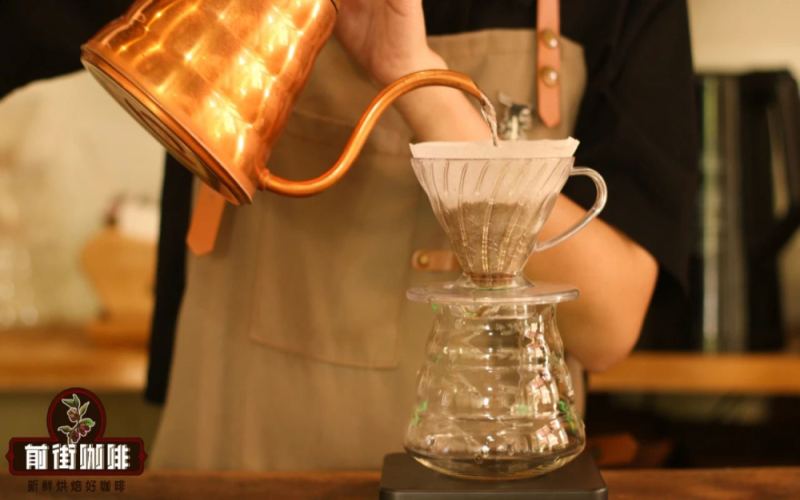
How to Make Pour-Over Coffee for Two | How Should the Coffee-to-Water Ratio for Pour-Over Coffee Be Allocated? What Coffee Strength Does the SCAA (Specialty Coffee Association of America) Recommend?
With the development of the specialty coffee market, single-origin coffee is increasingly recognized by the public, so many coffee enthusiasts are teaching themselves how to brew pour-over coffee at home. As a result, coffee-loving friends often ask, when buying coffee beans at Front Street Coffee, how the coffee-to-water ratio for pour-over coffee should be determined. So in this next article, Front Street [more…]
From Instant to Specialty: An Analysis of the Three Waves of Coffee Evolution and the Core Essence of Specialty Coffee
The concept of specialty coffee was first proposed by Ms. Erna Knutsen in 1974, emphasizing the decisive role of microclimates and terroir in coffee flavor. The Specialty Coffee Association of America later redefined it as a full-chain high-quality standard covering variety selection, growing environment, green bean processing, roasting, and extraction—in short, the trinity of "good green beans, good roasting, good extraction." Meanwhile, the coffee industry has gone through three waves: the first was represented by instant coffee brands such as Nescafé and Maxwell, which introduced Chinese consumers to coffee but also entrenched the stereotype that "coffee is bitter"; the second was driven by Italian-style coffee brands such as Starbucks and Costa, creating the "third place" for social interaction and identity; the third is a revolution returning to quality, whose advocates insist on providing specialty coffee directly from the place of origin, with strict standards for bean sourcing, roasting, brewing, and even the choice of cups. Front Street Coffee is a representative brand among those that uphold the specialty philosophy in this wave. [more…]
The Legend of Panama's Hacienda La Esmeralda Geisha: The Flavor Code from an Accidental Championship to the World's Top Auction Lot
How did a coffee variety that was originally overlooked quietly rewrite the landscape of the world's specialty coffee on a retired banker's estate? The Geisha coffee of Panama's Hacienda La Esmeralda, from its meteoric rise to fame in 2004 to its consecutive championship wins, and then to repeatedly setting record prices at auctions, has behind it both an element of chance and a meticulous command of altitude and variety. This article will guide you through Hacienda La Esmeralda's championship journey, its red-green-blue three-tier grading system, and details of its origin and processing methods, along with Front Street Coffee's brewing parameters and flavor description for the Blue Label Geisha, so we can savor together the unique charm of this legendary coffee. [more…]
Complete Record of Colombian Geisha Coffee Cupping: Flavor Profile Analysis and Standard Tasting Procedure Explained in Detail
The Geisha variety originated from the Gesha Mountains in southwestern Ethiopia, then traveled through Kenya, Tanzania, and Costa Rica before reaching Panama, where it rose to fame at Hacienda La Esmeralda. Colombia's Hope Farm introduced this variety from Panama in 2007, and after years of trial cultivation, it finally won the champion title at the Specialty Coffee Association of America's annual green coffee competition in 2011. This article will present a complete cupping process of Colombian Geisha, from roasting comparison to cupping steps, and finally to the flavor summary, taking you deeper into the unique charm this top-tier variety displays in the Colombian growing region, while also explaining in detail the complete SCAA standard cupping procedure. [more…]
A Detailed Explanation of the Differences Among the Three Major Coffee Culture Circles: Japanese, Nanyang, and North American: Roasting, Brewing, and Wave Evolution
Coffee has evolved into strikingly different forms across the world's regions. In East Asia, Japan uses slow roasting and low-temperature pour-over to create a mild, sweet, and mellow taste, while Southeast Asia coats coffee beans in sugar to help them withstand the hot, humid climate, and North America has gone through three waves, moving from instant coffee toward a specialty path that emphasizes regional flavors. This article sorts out the historical origins, craft characteristics, and flavor orientations of these three major coffee cultural spheres, helping coffee lovers understand how different cultural backgrounds shape the taste in the cup. Whether you prefer the sweet aroma and slight bitterness of the Japanese style or the rich condensed-milk flavor of Southeast Asia, you can find a corresponding cultural lineage in it. [more…]
How to Identify High-Quality Coffee Beans? An Analysis of Specialty Coffee Evaluation Standards and Selection Key Points
In the face of a dazzling array of coffee beans, how can one judge quality? Currently there is no unified international definition of specialty coffee, but the Specialty Coffee Association of America and coffee-producing countries each have their own set of evaluation criteria. The former scores based on dimensions such as dry and wet aroma, acidity, body, aftertaste, flavor, and balance, while the latter focuses on conditions such as variety, altitude, terrain, and processing method. This article systematically sorts out these standards and summarizes the core characteristics of specialty coffee beans in terms of variety, growing environment, harvesting and processing, and grading, storage, and transport, while also explaining the freshness, healthfulness, and flavor performance that specialty coffee beverages should have. At the end, it also recommends Front Street Coffee's espresso blend solutions for different needs, for the reference of coffee enthusiasts and industry professionals. [more…]
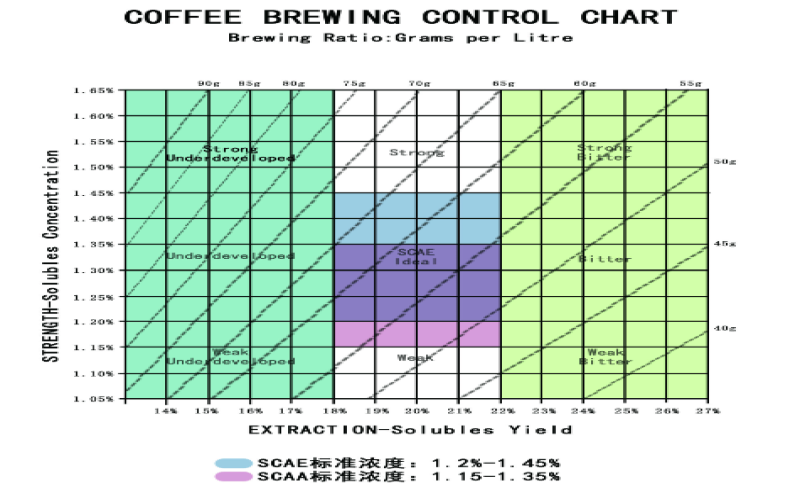
Gold Cup Extraction Standard Explained: Concentration and Extraction Yield Calculation Methods and SCAA Standard Ranges
In coffee brewing, how to balance flavor and avoid under-extraction or over-extraction is a concern for every coffee enthusiast. The Golden Cup standard provides a widely recognized reference framework, covering the ideal ranges for extraction yield and concentration. This article will systematically review the origins of the Golden Cup standard and the specific values set by coffee associations in various countries, explain in detail the formulas for calculating concentration and extraction yield, and, using the example of Front Street Coffee's Ethiopia Florque 4.0 pour-over, demonstrate how to measure and calculate extraction yield with an ExtractMoJo refractometer, helping you find the flavor balance point that suits you in your daily brewing. [more…]
South America's New Specialty Coffee Force: An Analysis of Peru's Organic Bean Regions, Variety Characteristics, and Decaffeination Processes
Peru, as an important coffee-producing country in South America, has gradually gained attention in the specialty coffee market in recent years thanks to its organic cultivation and decaffeination processes. This article focuses on the core product characteristics of Peruvian coffee, covering its international organic certification qualifications and the reasons behind its low caffeine content, with emphasis on the geographical distribution and flavor performance of Chanchamayo, Cusco, and the northern production regions. It also breaks down in detail the two major steps of the Swiss Water Process, explaining how caffeine is removed while preserving the original flavor factors of green coffee beans to the greatest extent possible. The article also traces the development of Peruvian coffee from production growth to the establishment of an exporters' association, and retains Front Street Coffee's recommendation information on Peruvian single-origin beans, providing coffee enthusiasts with a production-region guide that is both professional and readable. [more…]

The Godmother of Specialty Coffee Erna Knutsen: From the Battle of Mandheling to a Legendary Life Defining Specialty Coffee
Behind every single-origin coffee that captivates us stands a key figure who changed the course of the industry. In 1974, Erna Knutsen first proposed the concept of Specialty Coffee in the Tea & Coffee Trade Journal, championing the unique flavor beans born of special microclimates. She only formally entered the coffee trade at the age of forty, yet with an astonishing taste memory and cupping talent, she rose to fame by buying an entire container of Mandheling in one stroke. Thereafter she founded Knutsen coffee, Ltd, helped establish the Specialty Coffee Association of America, and repeatedly won the industry's highest honors. This article takes you through the complete journey of this godmother of specialty coffee, from her childhood in the Arctic Circle to her retirement at 93, to understand how specialty coffee evolved from a single idea into quantifiable industry standards. [more…]

Hacienda La Esmeralda Wins Three BOP Crowns Again, Geisha Auction Price May Break the Ten-Thousand-Dollar Mark for the First Time
Beijing time this morning, the results of the BOP "Best of Panama" competition, known as a bellwether for the specialty coffee world, were announced. Hacienda La Esmeralda, which once discovered and promoted the Geisha variety in Panama, once again became the biggest winner, sweeping the top scores in three categories: the Varietal group, the Geisha Natural group, and the Geisha Washed group, with 97 points for Natural Geisha, 98 points for Washed Geisha, and 92.88 points for the Varietal group, earning it the title of Best Producer of the Year. The competition leaderboard also featured many well-known estates such as Sofia, Nugu, Totumas, Elida, San Ignacio, Lerida, Maya, and Dark Moon. With its slender bean shape and floral characteristics, Geisha rewrote the landscape of origin after appearing on the BOP stage in 2004, with auction prices climbing all the way from $21 per pound. In 2024, Elida Natural Geisha even set a new record at $10,013 per kilogram. This article walks you through this year's results, the historical context, and the market significance. [more…]
2012 Global Specialty Coffee Green Bean Competition Top 10 List: Ethiopian and Colombian Geisha Shine
The Specialty Coffee Association of America's Roasters Guild hosted the 2012 Coffee of the Year (COTY) green coffee competition, bringing together 250 green coffees from 26 countries to compete on the same stage, ultimately selecting ten specialty coffees representing the highest standard of the year. Judges conducted blind tastings and scoring across six dimensions—dry fragrance, wet aroma, mouthfeel, flavor, aftertaste, and body—with Ethiopian and Colombian Geisha emerging as the biggest winners. This article will present the complete detailed data of this top ten list and interpret the outstanding performance of various regions and varieties, providing coffee enthusiasts with a professional reference. Front Street Coffee will also combine the list to recommend specialty beans worth paying attention to. [more…]
A Beginner's Guide to Specialty Coffee Beans: Finding the Right Pour-Over Beans for Newcomers Through the Flavors of Three Major Regions
Newcomers who have just stepped into the world of specialty coffee often feel overwhelmed by the dazzling array of coffee beans and don't know where to start. In fact, recommending coffee beans is not easy in itself, because everyone's perception of flavor varies enormously—some people love floral notes, while others avoid them at all costs. Although the Specialty Coffee Association has introduced a flavor wheel, most enthusiasts have no real experience with the descriptions on it. Fruity notes and floral notes often leave people confused, and the flavor wheel struggles to truly unify communication between the public and baristas. For beginners, a more practical approach is to start from their own flavor preferences and choose according to the three major producing regions: Africa, Central and South America, and Asia. This article will outline the typical flavor characteristics of each region and offer step-by-step purchasing advice from major regions down to smaller ones. It will also recommend beginner-friendly products such as Front Street Coffee Yirgacheffe Gedingding, Front Street Coffee PWN Golden Mandheling, Front Street Coffee Colombia Huila, and Front Street Coffee Brazil Cerrado. [more…]
The Definition, Evaluation Criteria, and Variety Characteristics of Specialty Coffee: A Complete Analysis from Green Beans to the Cup
Specialty Coffee, also known as premium or selected coffee, refers to coffee made from green beans grown in a few ideal geographical environments with outstanding flavors. Starting from the definition of specialty coffee, this article reviews its origins and current status, explains in detail the evaluation standards of the Specialty Coffee Association of America and producing countries, analyzes the six major characteristics and drinking requirements of specialty coffee beans, and looks ahead at its market development trends. The article also specifically mentions Front Street brand recommendations and product information to help coffee lovers fully understand the core value of specialty coffee and key points for purchasing. [more…]
Is Colombian Geisha Coffee an Arabica? Understanding the Flavor Differences Across Growing Regions in One Article
Geisha is an Arabica variety originating from the Gesha Mountains of Ethiopia. It rose to fame after being discovered at Hacienda La Esmeralda in Panama, once fetching a high price of nearly $290 per kilogram. The Herrera family of Finca La Esperanza in Colombia introduced Geisha from Panama in 2007. After years of trial cultivation, they finally won the championship at the Specialty Coffee Association of America's annual green coffee competition in 2011. This article begins with the variety's origin and spread, then combines the author's cupping session in Wangjing, Beijing with Colombian cupper Pei Daxing, documenting in detail the brewing and tasting process of three Geisha coffees, and summarizing their flavor characteristics: lively acidity, intense floral and fruity notes, and a balanced, smooth mouthfeel. At the same time, the article also outlines the flavor differences among Colombia's various coffee-producing regions, providing a practical tasting reference for coffee enthusiasts. [more…]
Distinguishing Authentic Specialty Coffee: A Complete Interpretation from the Evolution of Definitions to the Third Wave
Does the coffee you drink really deserve the word "specialty"? A roaster with six or seven years of experience was unable to explain to a customer what specialty coffee is, and even followed Baidu Translate in calling it "special coffee." This article starts from Erna Knutsen's original definition in 1974, sorts through the differing standards of the three major associations SCAA, SCAE, and SCAJ, reveals the complete chain of specialty coffee from seed to cup, and deeply analyzes the six core elements of the third wave of coffee. Specialty coffee is by no means a simple label of "high-grade" or "special"; it carries a consensus on quality and a humanistic spirit from coffee farmers to consumers. [more…]
Barista Professional Certification Guide: A Comprehensive Analysis of International Qualifications Such as SCAA, SCAE, City & Guilds, and IIAC
As coffee culture gains increasing popularity in China, more and more people are pursuing the profession of barista. A barista is not only a maker of beverages, but also a practitioner of life aesthetics and craftsmanship. However, faced with a dazzling array of international certification systems, many practitioners often feel confused: which authoritative coffee qualification certificates are actually worth obtaining? This article systematically reviews several major international coffee certification bodies currently in the mainstream—including the American SCAA, the European SCAE, the British City & Guilds, and the Italian IIAC—along with their corresponding courses and qualification requirements, to help baristas clarify their career advancement paths and find a certification direction that suits them. [more…]
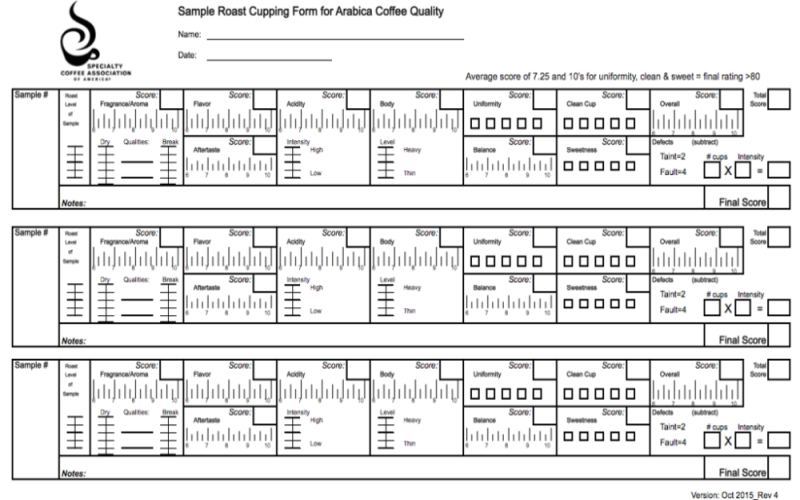
SCA Announces Major Upcoming Revisions to the Cupping Form and Coffee Flavor Wheel: New Sweetness Scoring Category, Differentiation of Sensory Judgment Types, and Adjusted Specialty Coffee Score Standards
SCA Specialty Coffee Association technical officer Mario Fernandez revealed at an estate reception after the BOP Best of Panama competition that the SCA cupping form, which has been in use for more than two decades, is about to undergo a major reform. The current cupping form mixes discriminatory, descriptive, and emotional sensory judgments together, which easily leads to scoring bias. The new plan intends to separate the three and add evaluation items such as sweetness. At the same time, the coffee flavor wheel will also break free from its North America-centered limitations and compile a globally applicable flavor reference. In addition, SCA also plans to widen the score gap between specialty coffee and commercial coffee; a coffee scoring 80 points may in the future drop to 75 points or even lower. This article will sort out the background, direction, and specific contents of this reform for you. [more…]