







How will the coffee quality institute change cupping scores?
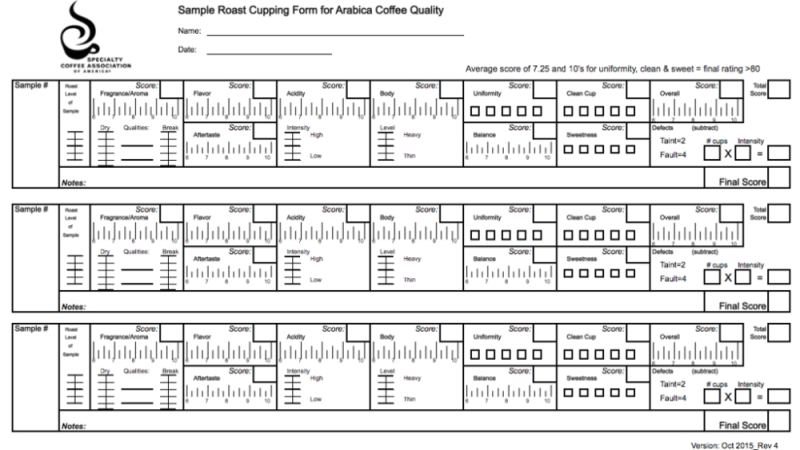
SCA technical officer Mario Fernandez said at an estate reception after the Panama coffee competition that the cupping form used for more than twenty years is set for major revision. The current form mixes discriminative, descriptive and affective sensory judgments, which can bias scores. The plan separates those three and adds evaluation items such as sweetness.
The coffee flavor wheel will also move away from its North America-centered limits toward a globally applicable flavor reference, the association says. The SCA further intends to widen the score gap between specialty and commercial coffee, so a bean scoring 80 today could fall to 75 or lower in the future, reshaping how the coffee quality institute defines specialty status.
Mario Fernandez, Technical Officer of the SCA Specialty Coffee Association, revealed at an estate reception after the BOP Best of Panama competition that the SCA cupping form, which has been in use for over twenty years, is about to undergo a major reform. The current cupping form mixes discriminative, descriptive, and affective sensory judgments together, which easily leads to scoring bias. The new plan intends to separate the three and add evaluation items such as sweetness. At the same time, the coffee flavor wheel will also break away from its North America-centered limitations and compile a globally applicable flavor reference. In addition, the SCA also plans to widen the score gap between specialty coffee and commercial coffee; a coffee that scores 80 may in the future drop to 75 or even lower. This article will sort out the background, direction, and specific content of this reform for you.
For professional coffee knowledge exchange and more coffee bean information, please follow Coffee Workshop (WeChat public account: cafe_style)
For more specialty coffee beans, please add the private WeChat of Front Street Coffee (FrontStreet Coffee), WeChat ID: qjcoffeex
"As a standard widely used by the global coffee industry to measure coffee value, the SCA cupping form has not been updated for a long time. In the twenty years since this form was invented, the coffee industry has undergone earth-shaking changes, and sensory science has also continued to develop and advance.
Today, more and more people are calling for 'sweetness' to be added to the SCA cupping form as one of the coffee sensory evaluation items (a scoring item), and we also realize that it is time for the sensory evaluation items in the form to change."
This is information shared by Mario Fernandez, Technical Officer of the SCA Specialty Coffee Association, at an estate reception after the successful conclusion of this year's BOP Best of Panama competition.
Mario comes from a family in Mexico that grows coffee. Before taking on the role of SCA Technical Officer in 2020, he had been researching how to understand coffee from the perspective of food science. At the beginning of this year, at the Re:co conference (this conference brings together practitioners with in-depth research and influence in the specialty coffee field for in-depth discussion and innovation-driven leadership of industry development), Mario discussed the idea of redefining and evaluating coffee attributes.
When using sensory judgment to determine whether a cup of coffee is good or not, three questions are indispensable: Can you taste the difference? What flavors can you taste? Do you personally like it? These three questions involve discriminative judgment, descriptive judgment, and affective judgment.
In sensory science, it is actually strongly discouraged to conflate three different types of sensory evaluation, because when people make judgments, it is very difficult to fairly make all three types of sensory evaluation at the same time. However, in the existing SCA cupping form, there is a situation where three different types of sensory evaluation items are placed together.
Among them, 'Body' and 'Balance' use affective judgment, while 'uniformity' uses discriminative judgment, and 'Intensity' uses descriptive judgment.
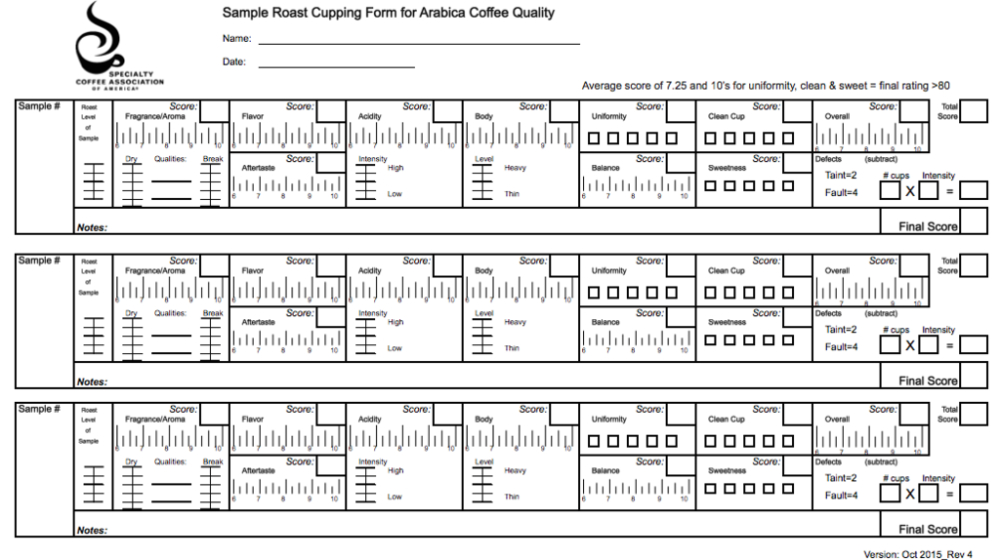
Mario said that to solve this problem, it is necessary to create a separation between descriptive judgment and affective judgment evaluation. In response, the SCA has already worked with the World Sensory Institute to draft a new cupping form.
In the original cupping form, descriptive vocabulary and some additional key questions have been added, and through five all-round perspectives—green bean grade, descriptive judgment (used to judge the flavor performance in coffee), affective judgment (used to judge personal impressions of coffee quality), extrinsic attributes, and discovery value—a new coffee value assessment system is formulated.
With these separated items, favoritism caused by mixing the three types can be greatly reduced, and people can also more clearly know the judgment made by each type of sensory evaluation and give fairer scores. At present, the SCA cupping form reform plan is still under discussion and refinement, and has not yet begun to be used externally.
Regarding the coffee flavor wheel, Mario said that many flavor references in the current coffee flavor wheel come from North America, and this situation does not allow people in all regions to use the descriptions in it as references.
Some of the vocabulary in it also cannot be translated into more languages, so people in different regions may have relatively large descriptive judgment differences when scoring the same coffee.
Therefore, the SCA, the World Sensory Institute, and the Coffee Science Foundation are compiling flavor references that can be used globally and producing more translations that can integrate into different regional cultures.
In addition to reforms to the SCA cupping form and the coffee flavor wheel, Mario also said at the estate reception that the SCA intends to widen the score difference between specialty coffee and commercial coffee.
The purpose is to allow specialty coffee to receive higher scores, and poor coffee to receive lower scores. For example, coffee that scores 80 now may in the future score only 75, or even lower. Mario said that this situation does not mean a decline in coffee quality; it is just that the standards and concepts of judgment have changed, so the scores will be lower.
Image source: Internet
The above content is compiled by CoffeeHunters, a coffee news website.


