







Why is the coffee industry expanding into alcohol?
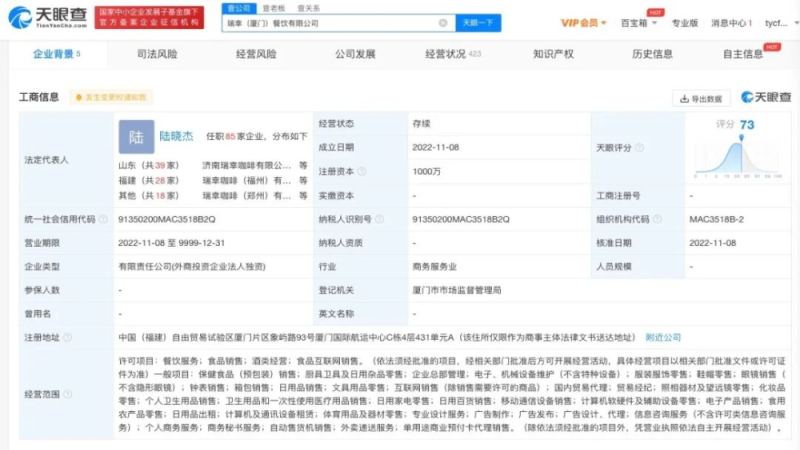
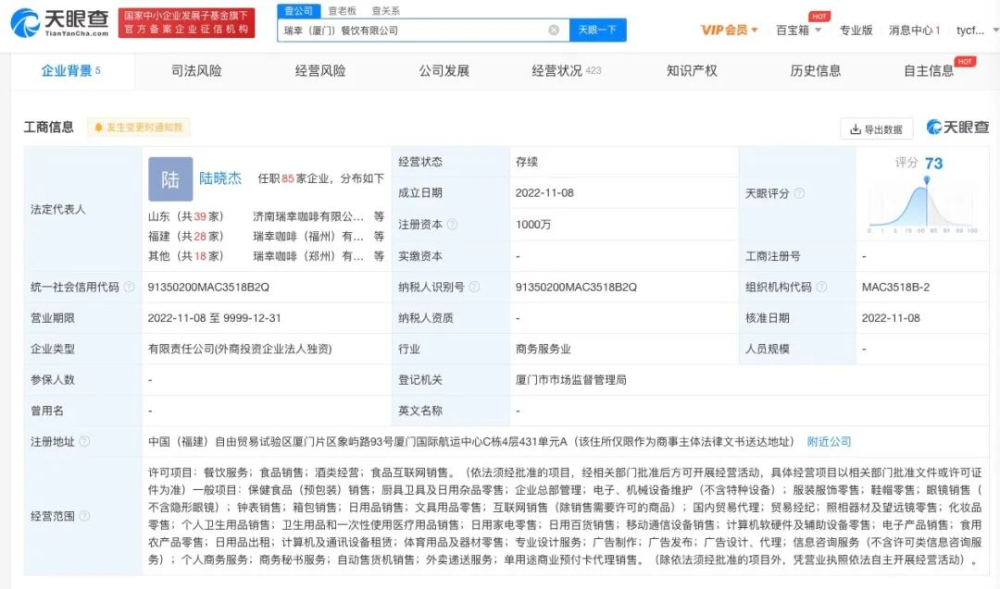
Luckin Coffee registered a new company in Xiamen on November 8, Luckin (Xiamen) Catering Co., Ltd., with registered capital of 10 million RMB and a business scope that includes alcohol sales. The company is wholly owned by Luckin Coffee (China) Co., Ltd. Starbucks, Seesaw, and M Stand have already tested the day-coffee, night-alcohol model.
The move was not sudden. Luckin Coffee (China) had applied in April to register several Luckin Oqi trademarks across international classifications. Beverage giants including Coca-Cola and Genki Forest have also entered alcohol, and the number of alcohol-related enterprises keeps growing. The trend points to tighter margins in coffee and a search for evening revenue.
It's long been common for coffee brands to sell alcohol. From Starbucks to Seesaw, M Stand, and now Luckin Coffee registering a new company to venture into alcohol sales, the cross-industry wave in the beverage sector is intensifying. Data from Tianyancha shows that Luckin has established a new company in Xiamen, with its business scope covering alcohol sales, drawing widespread industry attention. This article reviews Luckin's specific moves into alcohol and its trademark layout, takes stock of the day-coffee-night-alcohol attempts by brands like Starbucks, Seesaw, and M Stand, analyzes the trend of beverage giants like Coca-Cola and Genki Forest entering the alcohol market, and finally uses industry data to reveal the rapid growth in the number of alcohol-related enterprises, exploring the opportunities and challenges behind cross-industry alcohol sales.
Professional coffee knowledge exchange. For more coffee bean information, please follow Coffee Workshop (WeChat public account: cafe_style).
For more specialty coffee beans, please add private WeChat Front Street Coffee (FrontStreet Coffee), WeChat ID: qjcoffeex.
After brands like Starbucks, Seesaw, and M Stand, Luckin has also taken a step into the alcohol industry!
According to information from the Tianyancha APP, on November 8, Luckin Coffee registered a new company in Xiamen—Luckin (Xiamen) Catering Co., Ltd., with Lu Xiaojie as the legal representative, a registered capital of 10 million RMB, and a business scope including catering services, food sales, alcohol sales, and food internet sales, among others. The company is wholly owned by Luckin Coffee (China) Co., Ltd.
Public information shows that Luckin Coffee (China) Co., Ltd. was established on March 28, 2018, with Guo Jinyi as the legal representative, a registered capital of 1.625 billion USD, and a business scope covering catering services, food sales, publication internet sales, publication retail, construction engineering construction, etc. The company is 100% controlled by Luckin Coffee (Hong Kong) Co., Ltd. Currently, the company has invested in 62 enterprises, including Luckin Coffee Information Technology (Xiamen) Co., Ltd.
Luckin's venture into alcohol is not a sudden impulse. As early as April 11 this year, Luckin Coffee (China) Co., Ltd. had already applied to register multiple "Luckin Oqi" trademarks, with international classifications involving beer beverages, instant foods, and food. The trademark status currently shows as registered. It is understood that "Oqi" is an internet slang term used to refer to wealth or luck.
In fact, cross-industry alcohol sales in the beverage industry are nothing new. In April 2019, the world's largest coffee chain brand, Starbucks, opened its first Starbucks Reserve Coffee·Bar in China where you can drink alcohol—Bar Mixato, thus creating a new model combining coffee and bars. In addition to coffee, the store also offers various wines, craft beers, aperitifs, and classic cocktails.
As of now, Starbucks has opened multiple Bar Mixato bars in several cities across the country, covering Beijing, Shanghai, Chengdu, Wuhan, and other places. Obviously, Starbucks has incorporated bars as a new business format into its brand system.
Last year, coffee chain brand Seesaw launched its first "Good Idea Hub" day-coffee-night-alcohol experience store in Shanghai. M Stand, also a coffee chain brand from Shanghai, is likewise exploring the "day-coffee-night-alcohol" concept. It is understood that it has currently
Even Luckin's former chairman Lu Zhengyao's newly founded Cotti Coffee doesn't just sell coffee—it plans to offer all-day dining, with coffee and Italian biscuits in the morning, meals at noon, snacks in the afternoon, and alcoholic beverages in the evening.
Beyond coffee brands, other beverage brands are also entering the fray. In June 2021, the official Weibo account of international giant Coca-Cola Beverages (Shanghai) Co., Ltd., "Coca-Cola China," officially announced: "We've started selling alcohol," calling it a breakthrough attempt by Coca-Cola to formally enter China's alcoholic beverage market.
Soon after, Genki Forest and Beijing Guanyun Technology Co., Ltd., an affiliate of Guanyun Baijiu, also underwent business registration changes, adding Genki Forest (Beijing) Food Technology Group Co., Ltd. as a shareholder with a 25.8% stake. Meanwhile, the company's registered capital increased from 11.0733 million yuan to 13.0539 million yuan, a rise of about 17.89%.
According to Tianyancha data, as of October 2022, 1.1 million new alcohol-related enterprises had been registered nationwide this year, and the total for the year is expected to surpass last year's, hitting a new record high.
It is understood that from 2012 to 2021, the number of alcohol-related companies with "alcohol" in their names or alcohol listed in their business scope increased by 6.22 million over the decade. That means an average of over 620,000 new companies per year, or nearly 1,700 per day.
No matter what brand crosses over into selling alcohol, it means a huge challenge for both the industry and the brand itself. Companies that cross over often have high visibility, and their every move draws attention—entering the alcohol industry makes them a focus, and leaving it keeps them a focus. Has Luckin really prepared itself for this foray into alcohol?
Image source: Internet
The above content is compiled by CoffeeHunters, a coffee news website.


