







What Does the Seesaw Store Closure Wave Mean for the Coffee Industry?
Seesaw Coffee has closed at least 15 stores across Shanghai, Beijing, Shenzhen, Hangzhou, Chongqing, and Wuhan, according to Dianping listings, after closures began in mid-December. Founder Wu Xiaomei told Jiemian News the brand is adjusting strategy and shut some "three-not" stores that did not fit its regional focus, brand positioning, or store model.
Wu also said same-store sales grew 22 percent over the past three years, pointing to a push around core commercial districts in East China. Official records listed 103 store community groups as of December 29, while Zhaimen Restaurant Data showed 135 stores nationwide in early December, suggesting the real closure count may be higher as low-priced beverages pressure the refined coffee market.
Over the past month, the specialty coffee chain Seesaw has been thrust into the spotlight due to a wave of store closures across multiple cities. From Beijing, Shanghai, and Hangzhou to Chongqing and Wuhan, news of closures kept escalating, sparking widespread speculation about the company's financial health. In response, Seesaw founder Wu Xiaomei recently gave an official statement to Jiemian News, acknowledging that the brand is undergoing a strategic adjustment and has closed some "three-not" stores that do not fit its regional focus strategy, brand positioning, and store model, while revealing that same-store sales have grown 22% over the past three years. With low-priced beverages dominating the market and competition intensifying by the day, can this brand, which sticks to a specialty coffee path, hold its ground with a strategy focused on core commercial districts in East China? This article sorts through the events and the official response, with industry observations including those from Front Street Coffee.
▲
Click to follow | Daily specialty coffee culture magazine Coffee Workshop
Since mid-December last year, the coffee chain brand Seesaw Coffee has been continuously embroiled in a "store closure" public opinion storm, drawing intense attention from both inside and outside the industry. In response to recent rumors of closures, brand founder Wu Xiaomei recently gave a direct response to Jiemian News.
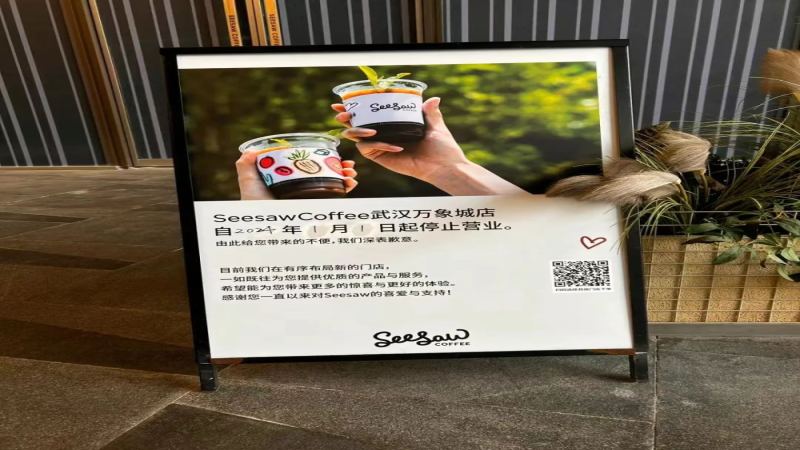
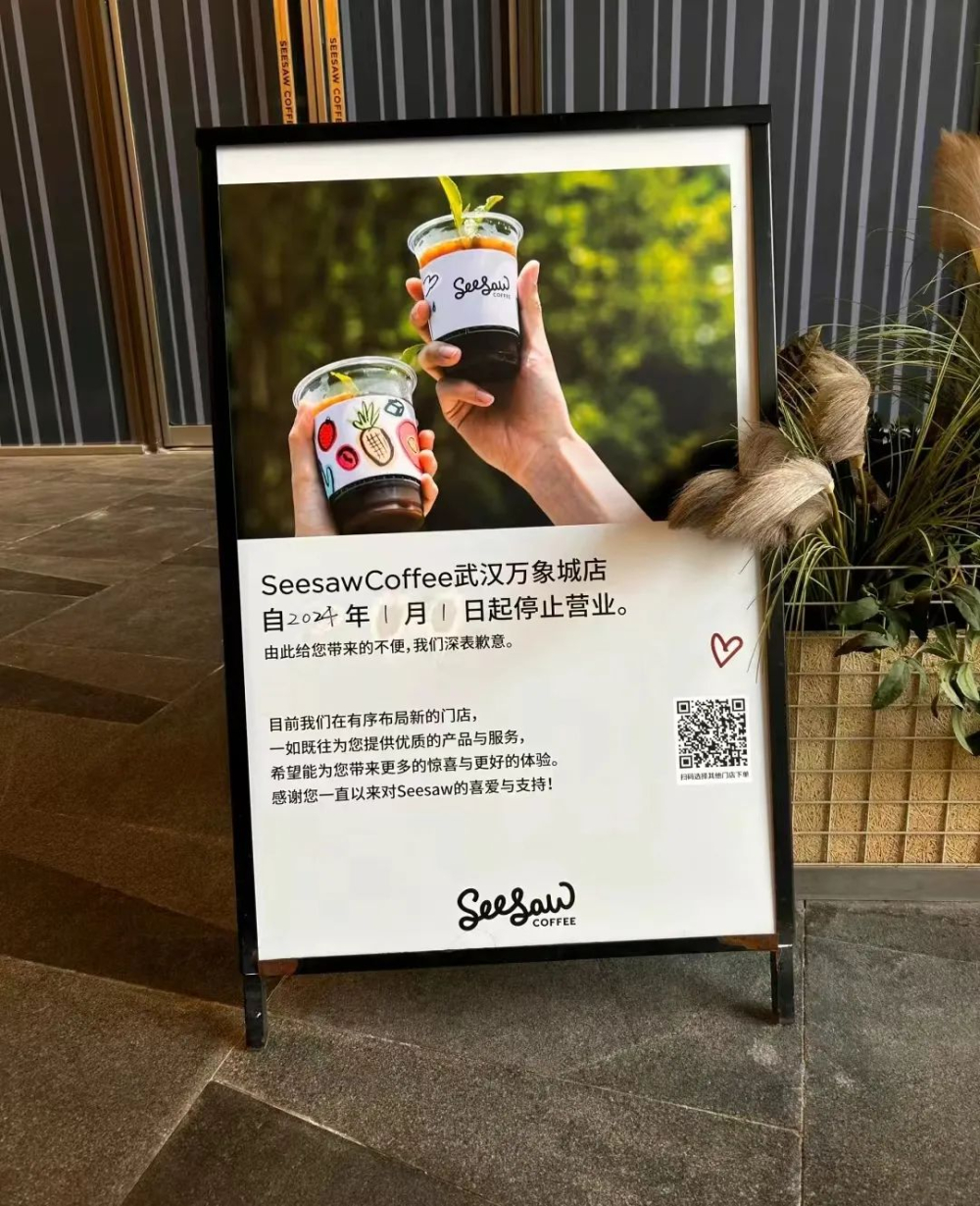
On social media, netizens in many places posted about Seesaw stores near them ceasing operations, initially concentrated in certain stores in Beijing, Shanghai, and Hangzhou. Subsequently, the wave of closures spread to other markets: the Chongqing Wanxiang store closed starting December 27, and all Wuhan stores were shut down by January 1.
As of now, according to Dianping information, Seesaw has closed at least 15 stores in its major layout cities, including Shanghai, Beijing, Shenzhen, Hangzhou, Chongqing, and Wuhan.
Other reports indicate that the actual number of Seesaw stores shut down may be even higher. Following the brand's usual operating practice, a dedicated community group is set up for each new store. As of December 29, Seesaw's official records still listed 103 store community groups, while Zhaimen Restaurant Data showed that Seesaw had 135 stores nationwide in early December. Taking multiple data sources together, this adjustment by Seesaw amounts to large-scale store closures.
Regarding Seesaw's store closures, Jiemian News reporters called the relevant shopping mall property management offices. Property staff at Beijing Oriental Plaza, Shanghai World Financial Center, and Hangzhou Binjiang Longfor Paradise Walk, among others, said the stores involved were closed successively between July and December, mostly due to lease expiration or "only being notified of a suspension of business for a few days."
The successive closures in multiple locations have led consumers to speculate about Seesaw's business prospects, believing the brand may be starting to decline. On the evening of January 3, 2024, Seesaw founder Wu Xiaomei responded to Jiemian News.
She said that under the three-year plan from 2021 to 2023, Seesaw had completed its phased strategic goals, achieving a nationwide layout in first-tier and new first-tier cities, with more than 100 stores. At the same time, as the new three-year plan begins, Seesaw wants to make some adjustments.
Wu Xiaomei said, "So we closed some 'three-not' stores that do not fit our regional focus strategy, do not fit our brand positioning, and do not fit our store model. At the same time, the company is continuously carrying out refined management, making the construction of various systems across the front, middle, and back offices more complete and tightly connected, ensuring that the basic foundation for future expansion is more solid."
In the Jiemian News report, she mentioned the brand's next three-year plan: Seesaw will continue to maintain a steady pace of expansion, focus on first-tier and new first-tier cities in East China, and further strengthen store density in core commercial districts in the region. As for Seesaw's overall operations, Wu Xiaomei revealed that the brand achieved strong performance growth in the previous stage, with same-store sales up 22%.
Facing the current industry trends of price wars and lower-tier markets, Seesaw's founder said in a 2023 interview with Forbes China: "Peers are educating the market in lower-tier cities, but for Seesaw, layout in lower-tier markets is not efficient. Our logic remains building a 'specialty' brand."
Regarding the brand's operating condition, Wu Xiaomei acknowledged that in addition to physical stores, Seesaw is also seeking growth points in delivery and retail, for example by selling its own coffee beans and freeze-dried coffee powder on its Tmall flagship store. She said Seesaw's coffee bean business continues to grow, ranking first in both named purchases and average order value during Double Eleven.
Looking back at the changes in the industry over the past year, low prices have become the mainstream trend for coffee chain brands, and consumers' definition of the price of a cup of coffee has been pulled to a more affordable mainstream price range. Even Starbucks is now constantly issuing coupons; although the number of customers entering stores has increased somewhat, the average order value has clearly decreased.
It is obvious to all that competition in the coffee track is fierce, and specialty coffee, due to its higher pricing, faces even more sharply increasing pressure. Compared with Seesaw, brands that also advertise themselves as "specialty coffee" have continued to accelerate store expansion over the past year. For example, Manner announced before New Year's Day that it had reached 1,200 stores, and M Stand had already opened 500 stores. To a certain extent, these have undoubtedly squeezed Seesaw's room to survive.
Image source: Internet
Disclaimer: Some images in this article are from the Internet. For some content on the website, such as images, we will respect the original author's copyright and indicate the source. However, due to the large quantity, a few images and texts may not have been credited in time. Please understand. If the original author has any dispute, they may contact the website for handling. Once verified, we will correct it immediately. Compiled and edited by "Coffee Workshop." Please indicate the source when reposting. If there is infringement, please inform us for deletion. Thank you~!
The above content is compiled by CoffeeHunters, a coffee news website.


