







Search Results for: History of Coffee Propagation
Typica Coffee Bean Variety Characteristics and Global Propagation History: Typica Cultivation and Flavor Through the Lens of Front Street Blue Mountain
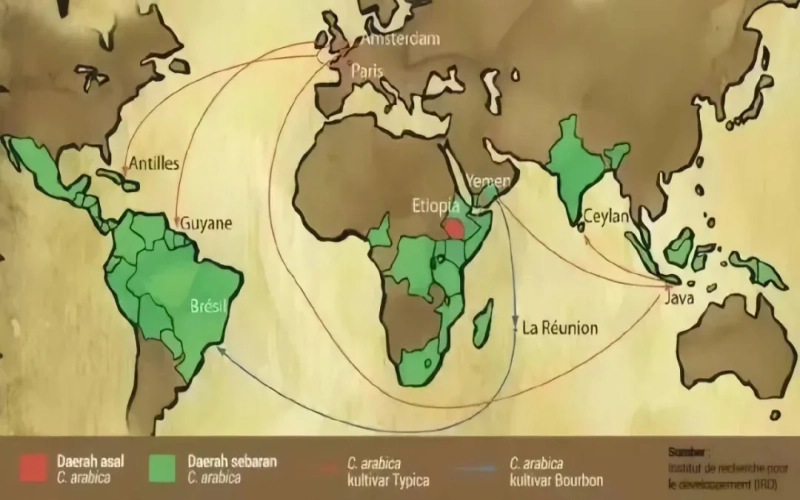
Typica is one of the oldest varieties of Arabica coffee. Starting from Ethiopia, it traveled through Yemen, India, Europe, and Southeast Asia, and ultimately took root in Central and South America, shaping the map of today's coffee-producing countries around the world. This article will systematically review Typica's botanical characteristics and global spread, and provide a detailed reconstruction of how a single Typica seed grows into a coffee tree. At the same time, Front Street Coffee will combine the roasting, cupping, and brewing practices of Jamaican Blue Mountain Typica to help you experience the clarity, cleanliness, and balanced flavor of this classic variety. [more…]
The Past and Present of Brazilian Red Bourbon Coffee Beans: From Variety Propagation to Cerrado Pour-Over Flavor and Roast & Brew Analysis
Brazilian Red Bourbon is one of the oldest varieties in the Arabica family. Setting out from Réunion Island, it spread to Africa and Latin America through the hands of missionaries, and finally took root in Brazil. This article systematically reviews the full picture of Red Bourbon, from variety characteristics, producing regions, and dissemination history to semi-washed processing and grading systems; and using the Cerrado Sul de Minas producing region as an example, it analyzes Front Street Coffee's roasting curve and cupping performance, with specific parameters for pour-over and espresso blends attached, helping coffee enthusiasts understand the charm of this balanced bean variety and the key points of brewing. [more…]
The Origin and Global Spread of Typica Coffee Beans: Variety Characteristics, Cultivation Process, and an Analysis of Front Street Blue Mountain Flavor
Typica is one of the oldest varieties of Arabica coffee. Starting from Ethiopia, it traveled through Yemen, India, Europe, and Southeast Asia, eventually taking root in Central and South America, shaping the landscape of coffee-producing countries worldwide. This article outlines the varietal characteristics and global spread of Typica coffee beans, explains in detail the complete growth process from seed selection, germination, and seedling cultivation to flowering, fruiting, and harvesting, and uses Jamaica Front Street Blue Mountain Coffee as an example to share roasting parameters, cupping reports, and brewing suggestions, giving you a comprehensive understanding of this classic variety. [more…]
Darjeeling Tea Annual Output and Regional Development: A Cultivation History from Trial Planting to 86 Estates
Darjeeling tea is renowned worldwide for its distinctive muscatel flavor, and its quality is closely tied to the cool, humid climate, soil, and sloping terrain. This article traces the cultivation origins and expanding production regions of Darjeeling tea: from Dr. Campbell's experimental planting, to the establishment of the first commercial tea gardens in the mid-19th century, and to today's scale of 86 tea gardens producing about 10 million kilograms annually. It also introduces the flavor differences across the four main harvest seasons each year, as well as organic certification and industry employment, helping coffee and tea enthusiasts gain a systematic understanding of the past and present of this world-famous tea-producing region. [more…]
A Comprehensive Guide to Bourbon Coffee Varieties: Flavor and the Story of Their Spread from Red, Yellow, Orange, and Pink to Striped Bourbon
Bourbon is one of the oldest varieties of Arabica, spreading from Réunion Island to Africa and Central and South America, where it evolved under local microclimates into a range of color variants including red, yellow, orange, pink, and striped. This article traces the origins of the Bourbon variety and its missionary-driven spread, details the discovery history, growing characteristics, and flavor differences of each color of Bourbon, and presents the brewing performance of Front Street Coffee's Bourbon beans such as Brazil Cerrado and Brazil Queen. Whether you are a newcomer just getting into specialty coffee or an enthusiast eager to deepen your knowledge of varieties, you will find here a complete overview of Bourbon coffee and a tasting reference. [more…]

The Global Spread of Typica Coffee and an Analysis of the Flavor and Quality of Blue Mountain Typica Coffee Beans
Typica, one of the oldest varieties within Arabica coffee, spread from Ethiopia to the world and profoundly shaped the global coffee-growing landscape. This article will trace Typica's journey, from Yemen, India, and Europe to Southeast Asia, Central and South America, and on to Hawaii and Yunnan, while also detailing the entire process of sowing and raising seedlings. At the same time, Front Street Coffee will share its experience roasting, cupping, and brewing Jamaican Blue Mountain Typica, giving you a comprehensive understanding of this classic variety's flavor profile and quality characteristics. [more…]
Why Do Coffee-Producing Countries Stick to Certain Varieties for So Long? A Panoramic Analysis from the History of Leaf Rust to Laboratory Breeding
When you shop for coffee beans, have you ever noticed that certain origins always seem to grow just a few fixed varieties? Brazil, for instance, is dominated by Bourbon, while Jamaica Blue Mountain is inseparable from Typica. Behind this lies both the logic of variety dissemination and natural adaptation, as well as a chapter of coffee history rewritten by leaf rust. That devastating disease at the end of the 19th century forced many producing countries to turn to research on disease-resistant new varieties, leading to the establishment of national coffee research institutes. This article will walk you through the origins and development of common laboratory varieties such as Catuai, SL28, SL34, Ruiru 11, and H1, and how they became the mainstays of today's producing regions. It will also mention related beans selected by Front Street Coffee, offering you a practical buying reference. [more…]

Panama Geisha Coffee Bean Flavor Analysis: Hacienda La Esmeralda Origins, Regional Growing Differences, and Front Street Coffee Roasting Recommendations
Geisha coffee beans are renowned worldwide for their delicate floral aroma and tropical fruit notes, and Hacienda La Esmeralda in Panama is precisely the key force that propelled it to the pinnacle. This article begins with the appearance and aroma characteristics of Front Street Geisha coffee beans' green beans, then gradually sorts through the origin story of this bean, the variety's spread and history, and the flavor differences presented after cultivation in different regions. At the same time, the article will also explore roasting approaches and brewing methods suitable for Geisha, helping coffee enthusiasts gain a more comprehensive understanding of the unique charm of this star variety. [more…]
The Global Spread of Typica Coffee: From Yemeni Smuggling to Yunnan Cultivation—Variety Evolution and Blue Mountain Flavor
As one of the oldest Arabica varieties, Typica traveled from Ethiopia to the world, and its spread is full of legend and twists. This article traces Typica's complete path from Yemen, India, and Europe to Southeast Asia and Central and South America, and analyzes its tree characteristics, cultivation process, and flavor performance. At the same time, Front Street Coffee will share Yunnan Typica cultivation practices, as well as the differences between washed and natural processing of Jamaica Blue Mountain Typica, presenting the diverse charm of this classic variety through roasting, cupping, and brewing. [more…]
Costa Rica Baja and Mozart Coffee Beans: A Comprehensive Analysis of Flavor and Mouthfeel Differences
As an important producing country of specialty coffee, Costa Rica has produced many distinctive coffee beans named after musicians. Among them, the Bach and Mozart beans have attracted much attention for their unique varieties and processing methods. This article takes Front Street Coffee's Bach coffee beans as an example to provide an in-depth analysis of their producing region background, the breeding history of the F1 variety, the technical details of the raisin honey processing method, and the cultivation story of the Canet estate. It also compares the differences in flavor and mouthfeel between the two beans, giving you a comprehensive understanding of the unique charm of this "Musician Series" coffee. [more…]
Which category of tea does Phoenix Dancong actually belong to? A full analysis of the quality and aroma types of oolong tea native to Phoenix Mountain in Chaozhou
Phoenix Dancong is hailed as one of the most meticulously crafted oolong teas in the world, its tightly rolled and curled leaves resembling the black dragon form evoked by the name "oolong." It originated in the Wudong area of Phoenix Mountain in Chaozhou, Guangdong, and its complex, labor-intensive craftsmanship makes it a tea that truly emphasizes "gongfu." Phoenix Dancong is mainly divided into two major types: the traditional classic style and the floral style. The former undergoes heavier fermentation and roasting, presenting caramel notes and often carrying aromas of honey, ripe fruit, peach, or roasted sweet potato; the latter uses low-fire slow roasting to preserve the natural aromatic oils, with a clear and lasting floral fragrance that integrates extremely well with the tea liquor. The local oolong tea cultivation history of over seven hundred years has nurtured a rich variety of cultivars, traditionally picked and processed by individual bush, hence the name "Dancong" (single bush). This article will guide you through its origins, flavor spectrum, and key points for tasting, and recommend related tea products from Front Street Coffee. [more…]
A Comprehensive Analysis of the Production Region Characteristics of Jamaican Blue Mountain Coffee and the Functions of the CIB Authority
Jamaican Blue Mountain coffee is renowned worldwide, but its success was not achieved overnight—it went through a long and winding development journey. From the back garden of King Louis XIV's Palace of Versailles in 18th-century France, to its spread to the Caribbean island of Martinique, and then to its introduction and promotion in the Saint Andrew region of Jamaica, the rise of Blue Mountain coffee is inseparable from one key institution—the Jamaica Coffee Industry Board (CIB). The CIB not only delineated the legally designated production area for Blue Mountain coffee, but also regulated variety selection, cultivation techniques, quality grading, and cupping standards, making Blue Mountain coffee a benchmark for the world's specialty coffee. This article will provide an in-depth analysis of the production area characteristics of Blue Mountain coffee, the history and functions of the CIB, and the key points for identifying authentic Blue Mountain coffee such as Front Street Blue Mountain No. 1. [more…]

Indonesian Coffee Varieties | How Many Sumatra Mandheling Producing Regions Are There? What Variety Is Mandheling? An Introduction to the Origins of Mandheling and the History of Coffee Cultivation
For more specialty coffee knowledge, please follow the WeChat official account: Front Street Coffee (FrontStreet Coffee). Mandheling coffee is a specialty coffee of Indonesian coffee and also synonymous with Indonesian coffee. At Front Street, Mandheling coffee, as the representative coffee of Indonesian coffee, is listed on the daily drinking bean coffee menu. [more…]
An Analysis of the Indonesian Mandheling Coffee Grading System: From Variety Origins to the Triple Hand-Sorting Standard of Golden Mandheling
Indonesia's coffee cultivation history can be traced back to the 17th-century Dutch colonial period, and today Indonesian coffee occupies an important place in the global specialty market. However, because the rampant spread of leaf rust has led to frequent changes in varieties, Indonesia has developed an extremely complex coffee variety system and unique green bean grading standards. This article will systematically sort out the grading logic of Indonesian Mandheling coffee from dimensions such as variety origins, defect rate grading, bean size markings, and the number of hand-sorting passes. Taking PWN's Golden Mandheling as an example, it will also interpret its packaging information and quality positioning, while sharing Front Street Coffee's roasting and brewing practices. [more…]
Yunnan Small-Bean Coffee Varieties, Grades, and Regional Stories: A Pour-Over Flavor Analysis from Zhukula to Baoshan
The origins of Yunnan coffee can be traced back to 1904, when French missionary Tian Deneng planted the first Typica tree in Zhukula Village, Binchuan. Over more than a century, this land has nurtured a unique arabica coffee culture. This article begins with the history of Zhukula and extends to the terroir differences between the two core producing regions, Pu'er and Baoshan. It systematically sorts out the variety sources of Yunnan arabica coffee, the shifting balance between Typica and Catimor, and the details of the washed processing method. It also includes the cupping performance and V60 brewing recipes for two beans from Front Street Coffee, Yunnan Huaguoshan and Yunnan Arabica, providing coffee lovers with a complete cognitive framework from origin to cup. [more…]

The History of Indonesian Coffee Development | Where Did Indonesian Mandheling Coffee Originate? Introduction to Mandheling Origins, Varieties, and Coffee Flavor Characteristics
Among Indonesian coffee beans, Mandheling coffee beans are the most famous. Mandheling coffee beans are the representative of Indonesian specialty coffee and also the representative of Asian coffee, with a distinct Asian coffee style: pine, herbal, nutty, and caramel notes, with a very full-bodied mouthfeel and a solid, lasting finish. Precisely because of this, this kind of coffee flavor is not for everyone. [more…]
The Origins and Variety Evolution of Yunnan Small-Bean Coffee: A Planting Journey from Typica to Catimor
Yunnan is a coffee-producing region that cannot be overlooked on China's coffee map, and small-bean coffee is precisely the most representative variety of this land. From 1904, when a French missionary planted the first Typica tree in Zhukula Village, to today when Catimor has become the main cultivated variety, Yunnan small-bean coffee has undergone a thought-provoking evolution. This article will follow the two major producing regions of Pu'er and Baoshan to sort out the origins, variety changes, and processing methods of Yunnan small-bean coffee, while also presenting Front Street Coffee's cupping and brewing records for two beans, Yunnan Huaguoshan and Yunnan Small Bean, to help readers build a systematic understanding of Yunnan coffee. [more…]
A Comprehensive Guide to the Brazilian Cerrado Coffee Bean Grading System, Pour-Over Parameters, and Flavor Characteristics
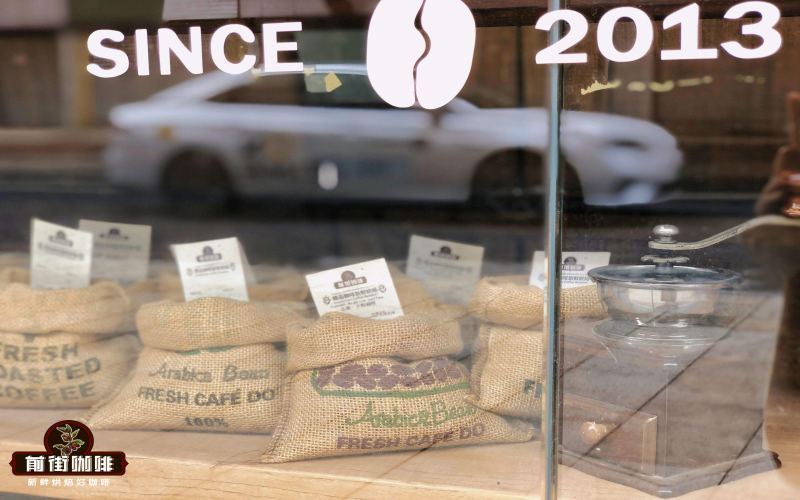
As the world's largest coffee-producing country, Brazil has a coffee bean grading system that is completely different from common systems like Kenya AA or Yirgacheffe G1. What exactly do the markings NY.2 SC-17/18 FC on the burlap sacks represent? Why has the Cerrado region become a classic representative of Brazilian specialty coffee? From the perspective of Front Street, this article traces the historical development of Brazilian coffee, its producing regions, and the logic behind green bean grading, and provides a detailed introduction to the brewing method and flavor profile of the Brazilian Red Bourbon semi-washed beans in Front Street's everyday drinking bean series, offering a systematic understanding of the unique charm of this major South American coffee nation. [more…]
The Global Spread of Typica Coffee: From Ethiopia to Yunnan—Are Blue Mountain and Yunnan Coffee of the Same Origin?
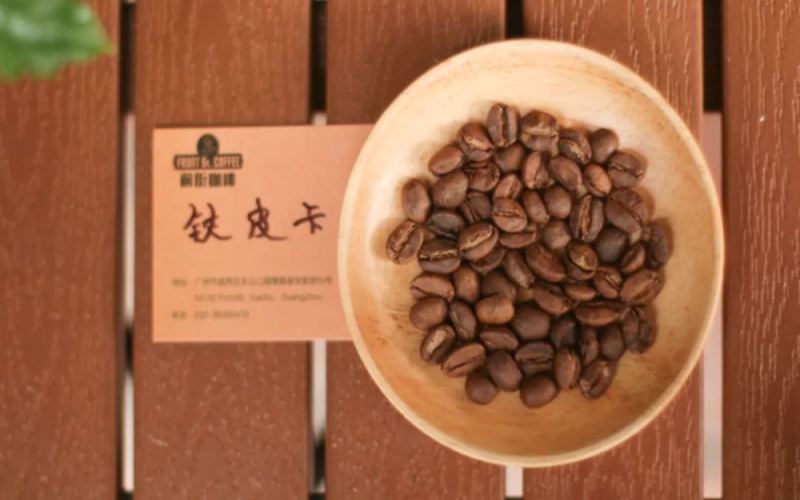
Typica is one of the oldest varieties of Arabica coffee, and most of today's global Arabica production—accounting for seventy percent—can be traced back to the two original varieties, Typica and Bourbon. This article follows the spread of Typica, starting from its birthplace in Ethiopia, passing through Yemen's Mocha port, India's Baba Budan Hills, Indonesia's Java, Dutch greenhouses, and Caribbean islands, and finally reaching Brazil, Colombia, and Yunnan in China. Through this chronicle spanning several centuries, readers will not only learn how Typica shaped the global coffee industry landscape but also gain specific region-based purchasing advice. At the end, we especially recommend Front Street Blue Mountain No. 1, Front Street PNG Bird of Paradise, and Front Street 2013 Yunnan Small-Bean Sun-Dried Typica, helping coffee lovers understand Typica's unique charm from the source of its flavor. [more…]
From Ethiopia to Yunnan: A Global Journey of the Arabica Typica Variety and Its Connection to Blue Mountain Coffee
Typica is one of the oldest varieties of Arabica coffee. Today, about seventy percent of the world's coffee production comes from the Arabica species, and most of these varieties evolved from the two ancient lineages of Typica and Bourbon. This article traces the complete spread of Typica from its native Ethiopia, through Yemen, India, Java in Indonesia, and the courts of the Netherlands and France, to its eventual diffusion across Central and South America and Yunnan, China, and also answers the question of whether Blue Mountain and Yunnan coffee belong to Typica. At the end, it also includes recommendations for representative products such as Front Street Blue Mountain No. 1, Front Street PNG Bird of Paradise, and Front Street 2013 Yunnan Small-Bean Natural Typica, making it convenient for enthusiasts to choose and taste by region. [more…]