








How Did Jamaican Coffee and the CIB Shape Blue Mountain?
Jamaican coffee became a global standard through a long path: a coffee seedling from Louis XIV's Versailles garden reached Martinique, and in 1728 Arabica seeds were introduced from Martinique and promoted in Jamaica's Saint Andrew region. The Jamaica Coffee Industry Board later defined the legal Blue Mountain production area and set grading rules.
The CIB also regulates variety selection, cultivation techniques and cupping standards, which is why blue mountain coffee is treated as a specialty benchmark rather than a marketing label. Jamaica's early coffee trade faced high taxes and competing crops, so institutional oversight, not geography alone, built the reputation the island holds today.
Jamaican Blue Mountain coffee is renowned worldwide, but its success was not achieved overnight—it underwent a long and tortuous development process. From the backyard garden of Versailles of King Louis XIV of France in the 18th century, to its spread to the Caribbean island of Martinique, and then to its introduction and promotion in the Saint Andrew region of Jamaica, the rise of Blue Mountain coffee is inseparable from a key institution—the Jamaica Coffee Industry Board (CIB). The CIB not only delineated the legally defined production region for Blue Mountain coffee, but also regulated variety selection, cultivation techniques, quality grading, and cupping standards, making Blue Mountain coffee the benchmark for specialty coffee worldwide. This article will provide an in-depth analysis of the production region characteristics of Blue Mountain coffee, the history and functions of the CIB, and the key points for identifying authentic Blue Mountain coffee such as Front Street Blue Mountain No. 1.

Jamaican Blue Mountain coffee was not born with a halo; its path to fame was full of setbacks, and it went through countless twists and turns before becoming the highly regarded coffee category it is today. In this comeback journey, one association played a decisive role—it was precisely because of its establishment and continuous operation that Jamaican Blue Mountain coffee became globally renowned.
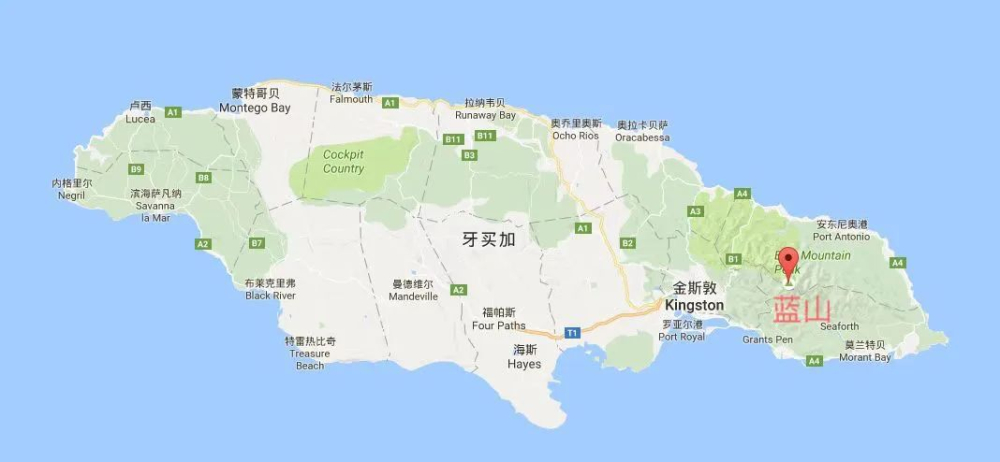
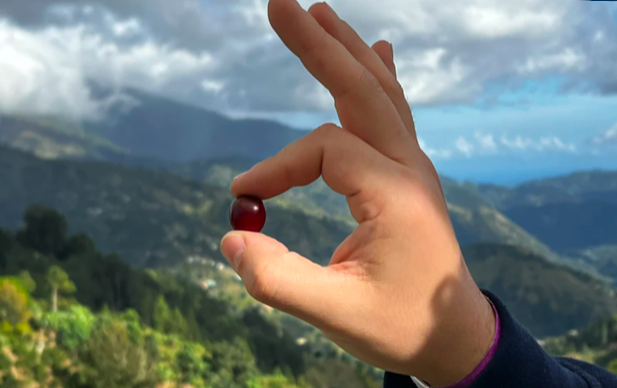
The hometown of Front Street Blue Mountain coffee is located in Jamaica, an island nation in the Caribbean Sea.
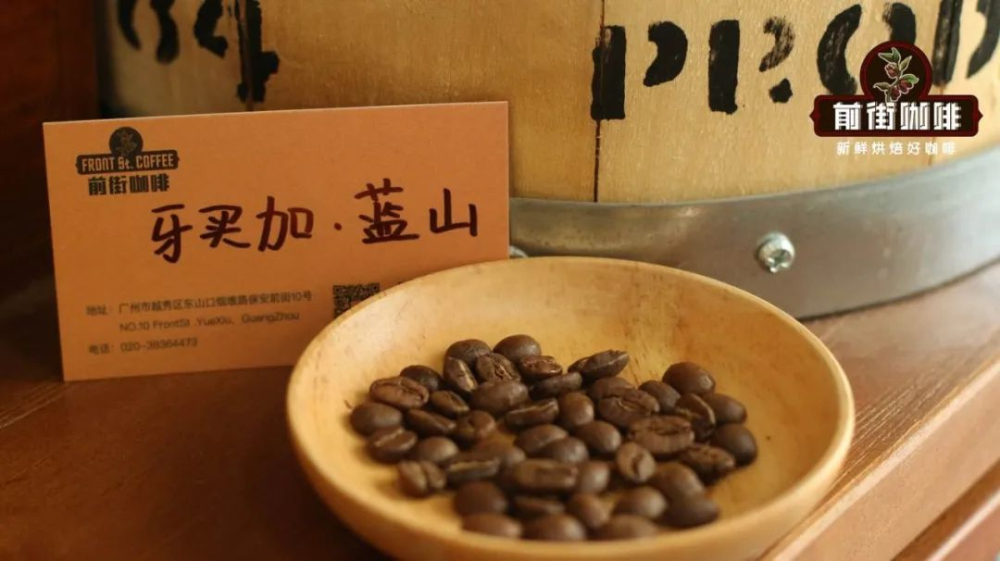
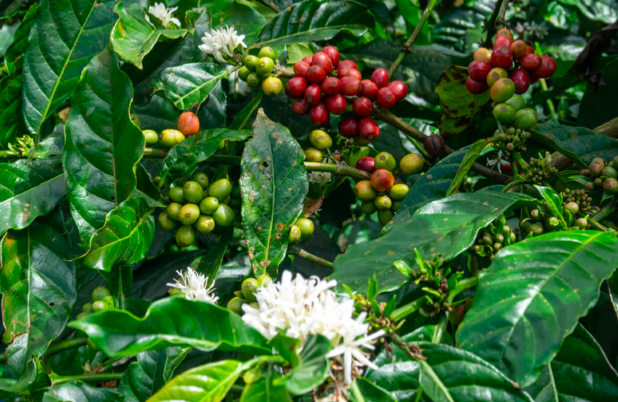
Tracing back to the early 18th century, King Louis XIV of France received a coffee seedling brought by the Dutch from Indonesia and planted it in the backyard garden of Versailles. This carefully tended coffee tree brought considerable economic returns, and later one of its seedlings was transplanted to the Caribbean island of Martinique. This move was profoundly significant in the history of coffee propagation, because most of the coffee subsequently grown in Central and South America can be traced back to Martinique, and Front Street Blue Mountain coffee is naturally among them.
In 1728, the Governor of Jamaica introduced Arabica seeds from Martinique and promoted their cultivation in the Saint Andrew region. However, at the time Jamaica mainly relied on other crops as its economic pillar, and coffee cultivation faced high taxes, so it was only carried out on a small scale. It was not until 1790, when the British government drastically reduced coffee taxes, that Jamaican coffee truly found an opportunity for development, and large plantations began to emerge. In 1814, Jamaica's coffee exports surged, bringing extremely considerable returns to Britain.
However, good times did not last. After the abolition of slavery in the Caribbean in 1838, freed coffee farmers left the plantations one after another, and large estates were either resold or divided into small plots and sold to local farmers, causing coffee production and quality to decline sharply.
In 1948, in order to reverse the decline of the coffee industry, the Jamaican government established the Coffee Industry Management Office. This institution not only improved coffee quality but also actively expanded export channels. In 1952, the Management Office was upgraded to the Jamaica Coffee Industry Board (abbreviated as CIB, full name Coffee Industry Board), making Jamaica the first country in the world to establish a dedicated coffee regulatory agency.
The birth of the CIB laid the foundation for Blue Mountain coffee to win an outstanding reputation in the international market. In order to ensure the quality of Jamaican Blue Mountain coffee, the CIB formulated a series of strict regulations:
1. Clearly delineated production area: The CIB designated a specific area within the Blue Mountain range, and only coffee produced within that area may be called "Blue Mountain Coffee" (the area has an altitude of approximately 900 to 1,700 meters). Coffee produced outside the area can only be sold under the name Jamaican High Mountain Coffee or Jamaican Select Coffee.
2. Variety selection: Because of its insistence on growing the Arabica species, Jamaica's Typica lineage has been kept pure and free from mixing with other varieties, which is also why some people call the Typica grown in Jamaica the Blue Mountain variety.
3. Knowledge dissemination: The CIB is responsible for training coffee farmers in cultivation techniques and environmental protection knowledge, including the use of manual picking of ripe cherries and the washed processing of coffee beans (at the time, washing was the most advanced processing method).
4. Strict quality control: Green beans are graded and divided into NO.1, NO.2, NO.3, and PB according to size and defect rate. Taking Blue Mountain No. 1 as an example, its standard is to use coffee beans of 17 screen size or above, with a defect rate controlled within 3%.
The CIB was also the first institution in the world to use a cupping form for scoring in coffee tasting, with scoring items including dry/wet aroma, acidity, flavor, body, and cleanliness—precisely the cupping system we are familiar with today. This pioneering move was more than twenty years ahead of other cupping scoring systems.
By 1980, Jamaican Blue Mountain coffee had swept the world, and its reputation was so high that some retailers in Britain and the United States even labeled non-Jamaican coffee as "Blue Mountain Coffee" for sale. For this reason, the CIB specially designed a label between 1984 and 1985, which was only allowed to be affixed to barrels of 100% Jamaican Blue Mountain coffee.
Front Street Blue Mountain coffee is the only coffee in the world exported in wooden barrels. Although burlap sacks are sturdy, durable, and lightweight, Jamaicans prefer handcrafted wooden barrels to carry this care. The use of wooden barrels is strictly limited: only Jamaican Blue Mountain (No. 1, No. 2, No. 3, PB) and Jamaican High Mountain (High Mountain Supreme, High Mountain PB) may use them, with specifications of 70 kg, 30 kg, and 15 kg, while all other grades can only be packaged in burlap sacks. The wooden barrel itself is also an indicator for distinguishing genuine Blue Mountain coffee.
A green frog is printed on the Jamaican wooden barrel; that is the Rainforest Alliance logo, representing that the coffee beans are organic coffee grown in a pollution-free environment throughout the entire process.
The upper part of the wooden barrel is printed with the estate name, and the middle part marks the weight information: G (gross weight), T (tare weight), and N (net weight).
The lid is printed with the grade marking, while the lower edge of the wooden barrel is engraved with the Jamaican production mark and a unique ICO number.
In addition, producers and distributors of Blue Mountain coffee must obtain permission from the Jamaican government and authorization from the Jamaica National Coffee Board. All Blue Mountain batches exported from the country must undergo quality inspection and certification by the Coffee Board and be accompanied by the corresponding labels. Therefore, we can ask merchants to present the relevant Blue Mountain certificates to distinguish whether it is truly Blue Mountain coffee.
The Front Street Blue Mountain No. 1 coffee on the Front Street bean list is produced by Clifton Estate and comes with a quality certificate issued by the Jamaica Coffee Board, an authorized sales certificate issued by the Blue Mountain coffee producer, and a certificate of origin for Jamaican Blue Mountain coffee.
Front Street Coffee
No. 10 Bao'an Qian Street, Yandun Road, Dongshankou, Yuexiu District, Guangzhou, Guangdong Province
The above content is compiled by CoffeeHunters, a coffee news website.


