







How Darjeeling Tea Cultivation Grew to 86 Estates
Darjeeling tea now comes from 86 gardens producing about 10 million kilograms a year, grown between roughly 100 and 2,000 feet to 2,000 meters of elevation. The region's muscatel character rests on cool, humid conditions, specific soil, ample rainfall, and 50 to 60-year-old tea trees on sloping terrain.
Its story follows the pattern of colonial-era cultivation coffee elsewhere: civil surgeon Campbell trialed tea at Beechwood around 7,000 feet and promoted plants in government nurseries by 1847. Commercial gardens Tukvar, Steinthal, and Aloobari appeared in the mid-19th century, and by 1866 Darjeeling had 39 gardens making about 21,000 kilograms, rising to 56 gardens by 1870.
Darjeeling tea is renowned worldwide for its unique muscatel flavor, and its quality is closely tied to the cool, humid climate, soil, and sloping terrain. This article traces the cultivation origins and regional expansion of Darjeeling tea: from Dr. Campbell's experimental planting, to the establishment of the first commercial tea gardens in the mid-19th century, to today's scale of 86 tea gardens producing about 10 million kilograms annually. It also introduces the flavor differences across the four main harvest seasons each year, as well as organic certification and industry employment, helping coffee and tea enthusiasts systematically understand the past and present of this world-famous tea-producing region.
Darjeeling tea's fame needs no elaboration—its signature "muscat grape" aroma has captivated countless tea drinkers. The conditions that form this flavor are not mysterious: a cool and humid climate, specific soil, ample rainfall, and the combined effect of 50 to 60-year-old tea trees and sloping terrain.
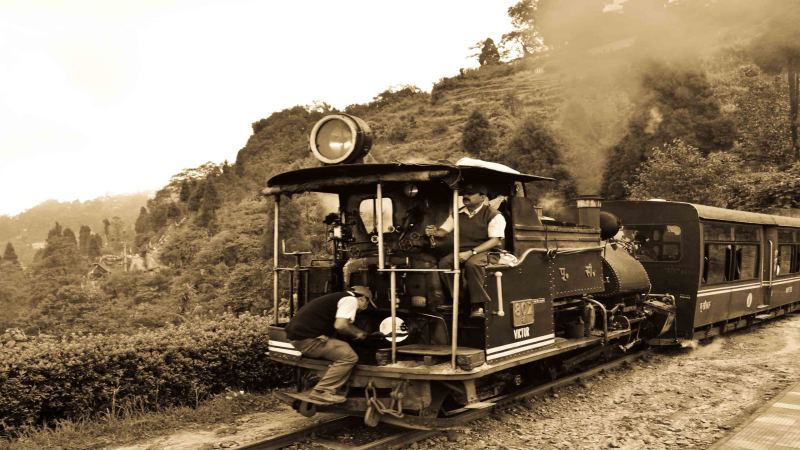
The development history of Darjeeling tea is tightly intertwined with the modern history of this mountainous region, with its starting point traceable to the British colonial period, more than 150 years ago. It began with the civil surgeon Campbell conducting experiments, planting tea trees in his own garden at Beechwood at an elevation of about 7,000 feet. By 1847, he had also promoted the propagation of these plants in government tea gardens. The first commercial tea gardens built by the British appeared in 1952, namely Tukvar, Steinthal, and Aloobari. These estates used seeds provided by government nurseries, and the commercial production of Darjeeling tea began there. Tea cultivation is a labor-intensive trade requiring a large workforce, which provided employment opportunities for local residents as well as laborers from the Nepalese border.
By 1866, Darjeeling already had 39 tea gardens, with tea production of about 21,000 kilograms; by 1870, the number of tea gardens had increased to 56, with production of about 71,000 kilograms. The Darjeeling Tea Company was founded between 1860 and 1864 and owned four new gardens. Today, these gardens are renowned for producing the world's finest aromatic teas. Darjeeling currently has 86 tea gardens, with an annual output of about 10 million kilograms. Tea cultivation elevations range from 100 to 2,000 feet. At present, more than 70% of Darjeeling tea gardens have shifted to organic tea production without chemical fertilizers and have obtained certification from several internationally renowned institutions, including Switzerland's IMO, Germany's Demeter, India Organic, and the US USDA. Darjeeling has four main harvests throughout the year.
The first flush occurs from the first week of March to the first week of May; the finished tea is greener in color with a light, delicate aroma. The second season is picked from the third week of late May to the third week of June, with a more pronounced muscat grape flavor. The third season, also called the "rainy season crop," is harvested from July to the second week of September; due to the monsoon influence, the finished tea has a darker liquor color and a weaker character, making it a lower-grade tea. The final harvest is called the "autumn flush," running from the last week of September to the second week of November, and the tea made from it has a very unique aroma.
If you are used to drinking coffee, you can also understand Darjeeling as the "single-origin specialty" of tea. For beginners, Front Street suggests starting by comparing spring flush and autumn flush, as it is easier to capture that delicate aroma reminiscent of muscat grapes.
The above content is compiled by CoffeeHunters, a coffee news website.


