







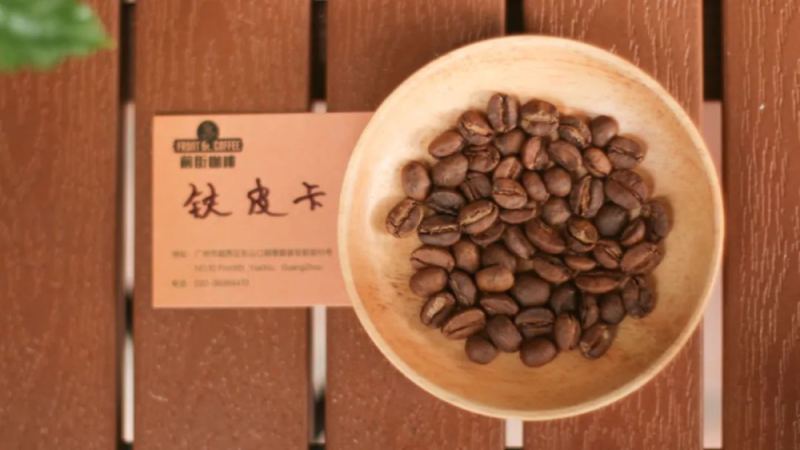
Typica is one of the oldest varieties of Arabica coffee. Today, about 70% of the world's coffee production comes from the Arabica species, and most of these varieties evolved from the two ancient lineages of Typica and Bourbon. This article traces the complete spread of Typica from its native Ethiopia through Yemen, India, Java in Indonesia, the courts of the Netherlands and France, and finally to Central and South America and Yunnan, China, and answers the question of whether Blue Mountain and Yunnan coffee belong to Typica. At the end, it also recommends representative products such as Front Street Blue Mountain No. 1, Front Street PNG Bird of Paradise, and Front Street 2013 Yunnan Small-Bean Natural Typica, making it easy for enthusiasts to choose and taste by region.
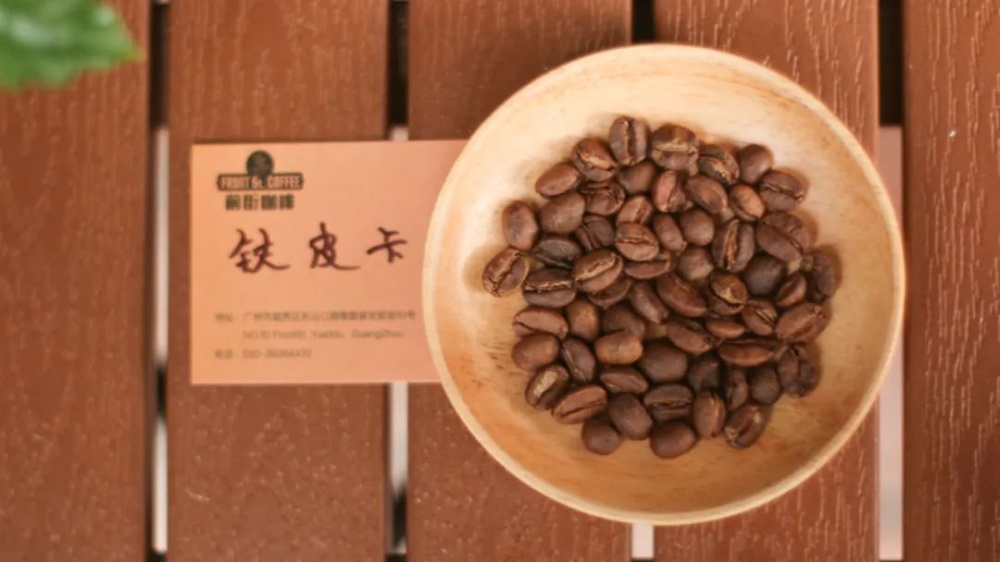
Looking at today's global coffee production, the Arabica species accounts for about 70% of the share, and within Arabica, a considerable portion consists of descendants derived from the two ancient varieties, Typica and Bourbon, after they spread around the world. Today let us focus on Typica and sort through the chronicle of its spread after leaving Ethiopia.
Like many native varieties, Typica's roots lie in Ethiopia on the African continent. The standard schematic diagram of Arabica beans that we usually see is often modeled on Typica—the bean shape is flat yet plump, slender, and a neat oval, which is precisely Typica's most classic appearance. The first stop outside its homeland was Yemen across the sea.
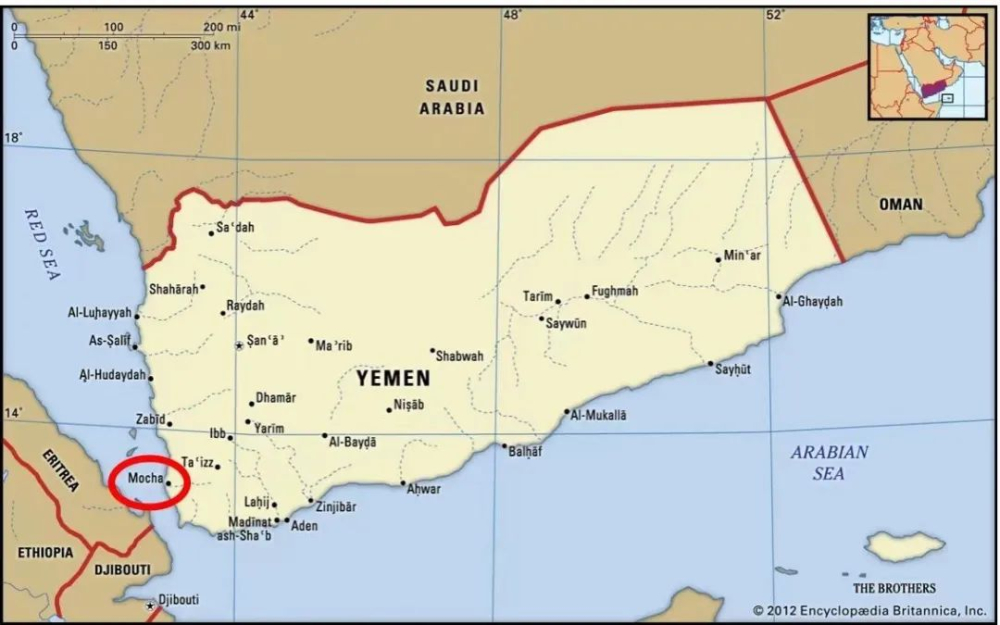
When coffee first entered Yemen, it was used as medicine rather than an everyday beverage. The turning point came around 1500, when a way of drinking suddenly became popular in both the port of Aden and the port of Mocha: sun-dried coffee cherry pulp was crushed and soaked in water to drink. This trend brought coffee from the pharmacy into daily life, spreading across the country from top to bottom, and people therefore began exporting coffee beans to other countries for promotion and sale.
However, before export, Yemenis would first roast the coffee beans or boil them in water, causing them to lose the ability to germinate and reproduce, preventing the seeds from leaving the country. Because of this, from the 15th to the 18th century, the global coffee trade was firmly controlled by Yemen for several hundred years—not only because it had port advantages, but also because coffee was at that time produced almost only in Yemen.
By 1670, a devout Muslim named Baba Budan had become addicted to coffee and hoped to continue enjoying it after returning home. Unfortunately, his country did not produce coffee, and Yemen was unwilling to provide seeds. So when he was about to return to India after completing his pilgrimage, he stole seven coffee seeds, hid them in his beard to evade inspection, successfully brought them back to India, and planted them on Gangamoola Hill in the Chikkamagaluru region of southwestern India, where they successfully multiplied. To commemorate his contribution, later generations renamed the mountain Baba Budan Hill.
Going back a little in time, after coffee spread to Europe via Yemen, it set off wave after wave of enthusiasm, which was immediately seized upon by the Dutch, known as the "sea coachmen," as a huge business opportunity.

In the early 17th century, after the Dutch occupied the southwestern region of India, they took the Typica seeds that had originally flowed out of Yemen by force, planted them on the Indonesian island of Java, and succeeded at once, thus beginning Indonesia's coffee industry. Later, in 1706, they moved a Typica plant grown in Java back to the Netherlands for cultivation.
This Typica was placed in Amsterdam, where the Dutch specially built a large greenhouse for it, providing a comfortable growing environment and arranging for botanists to care for it meticulously. No one expected that the descendants of this Typica would later spread to Central and South America, and this mother tree was later called the "European mother plant."
In 1708, France's trial planting of coffee trees stolen from Mocha failed. The mayor of Amsterdam seized the opportunity and in 1714 gave a Typica sapling to King Louis XIV of France. The French also followed the Dutch practice and built a greenhouse to cultivate the Typica carefully.
In 1720, French naval officer Gabriel de Clieu stole a Typica sapling from the Palace of Versailles and transported it to the Americas. After three years, it finally reached the French island of Martinique in the Caribbean, and the island's coffee industry thus began.
The descendants of this sapling gradually spread to other islands, including the island nation of Jamaica, which produces the "emperor of coffee," Front Street Blue Mountain.
\
In 1727, Dutch Suriname and French Guiana erupted into a dispute over territory, and Brazilian diplomat Palheta was rewarded for his meritorious mediation. Among the gifts given to him by the wife of the governor of French Guiana were Typica saplings.
Palheta therefore resigned from his post and brought the coffee seedlings back to Brazil, planting them in the northern province of Pará, officially beginning Brazil's coffee industry. After that, Brazil distributed the seeds produced by this Typica to Paraguay, Peru, and other countries.
Colombia, Guatemala, Costa Rica, and other countries also successively introduced Typica trees for planting around the 18th century. By the end of the 19th century, French missionary Tian Deneng brought Typica saplings to Zhugula Village in Yunnan Province, China. Although it was not rapidly promoted on a large scale at the time, it planted a small "foreshadowing" for China's coffee industry.
From this it is not hard to see that if you want to taste Typica, you can start with several representative regions: if you seek high-grade brand coffee, you can choose Front Street Blue Mountain No. 1 and experience sourness, sweetness, bitterness, and sweetness blooming layer by layer in the mouth;
if you want a Typica that is both delicious and cost-effective, Front Street PNG Bird of Paradise is the first choice; if you want to taste domestic coffee, Front Street 2013 Yunnan Small-Bean Natural Typica is recommended, with a clean and tranquil tone.
The above content is compiled by CoffeeHunters, a coffee news website.


