







How Did Typica Coffee Spread Around the World?
Typica is one of the oldest arabica coffee varieties. Arabica makes up about 70 percent of global coffee production, and most of those varieties descend from Typica and Bourbon after centuries of spreading. Typica's journey runs from Ethiopia to Yemen, then India, Java, Dutch greenhouses, the Caribbean, Brazil, Colombia, and finally Yunnan.
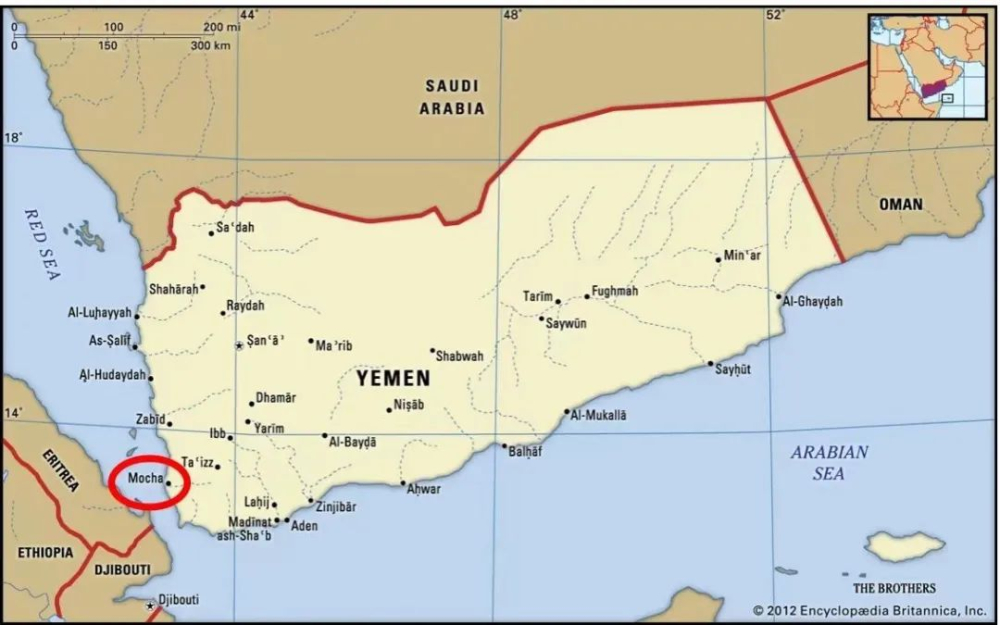
Around 1500, Yemeni ports such as Aden and Mocha turned coffee from medicine into a beverage by soaking crushed dried fruit pulp in water. Yemen pre-roasted or boiled beans before export to keep seed sources infertile, and the trade stayed largely under Yemeni control from the 15th to the 18th century until a pilgrim carried viable seed to India.
Typica is one of the oldest varieties of Arabica coffee, and today, most of the 70% of global Arabica production can be traced back to the two original varieties: Typica and Bourbon. This article follows the spread of Typica from its origin in Ethiopia, through the port of Mocha in Yemen, Baba Budan Hill in India, Java in Indonesia, Dutch greenhouses, Caribbean islands, and finally to Brazil, Colombia, and Yunnan in China. Through this chronicle spanning centuries, readers can not only understand how Typica shaped the global coffee industry but also gain specific advice for selecting production regions. At the end, we particularly recommend Front Street Blue Mountain No. 1, Front Street PNG Bird of Paradise, and Front Street 2013 Yunnan Small-Batch Sun-Dried Typica, helping coffee enthusiasts understand Typica's unique charm from the source of its flavor.
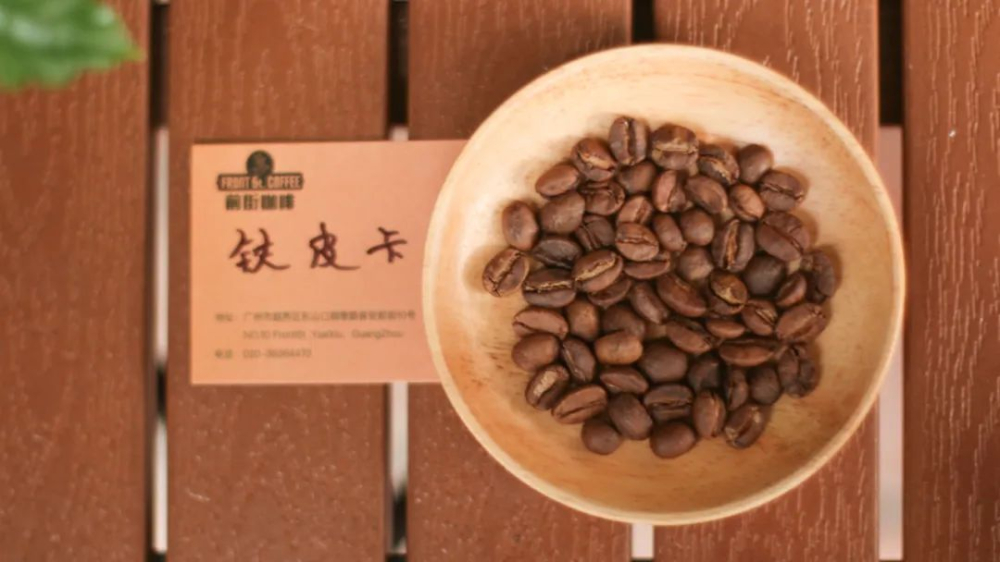
Currently, Arabica accounts for about 70% of total global coffee production, and most of these Arabica varieties have evolved from the two ancient varieties, Typica and Bourbon, after spreading to various regions. Today, let's talk about one of them—Typica, and its journey from Ethiopia to the world.
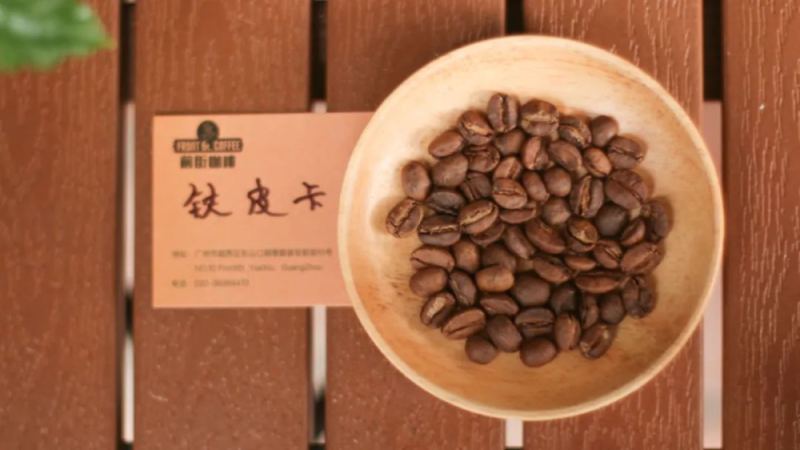
Like many native varieties, Typica's roots can be traced back to the African continent, specifically Ethiopia. The Arabica bean diagrams we usually see are mostly based on Typica! The bean is flat and plump, slender in shape, and has a standard oval form—this is Typica's most classic appearance. Its first stop abroad was Yemen, just across the Red Sea.
(The image shows the spread path of Typica)
When coffee first entered Yemen, it was mainly used as medicine, not as a daily beverage. Around 1500, a practice suddenly became popular in Yemen's Aden and Mocha ports: dried coffee fruit pulp was crushed and soaked in water to drink. This turned coffee from a medicine into a trendy beverage, sweeping the nation, and people soon began exporting coffee beans to various countries for sale and promotion.
However, before export, Yemenis would pre-roast or boil the coffee beans to make them infertile and prevent the outflow of seed sources. Because of this, for hundreds of years from the 15th to the 18th century, the global coffee trade was almost entirely controlled by Yemen, not only because it had port cities but also because coffee was produced only in Yemen.
It was not until 1670 that a devout Islamic follower named Baba Budan became enamored with coffee and hoped to continue enjoying it after returning home, but his country did not produce it, and Yemen refused to provide seeds. So, when he ended his pilgrimage and prepared to return to India, he stole seven coffee seeds, hid them in his beard to avoid detection, successfully brought them back to India, and planted them on Chandragiri Hill in Karnataka in southwestern India, where they propagated successfully. Later, in memory of his contribution, people renamed the hill Baba Budan Hill.
A little earlier, coffee spread to Europe via Yemen and sparked wave after wave of enthusiasm, which made the Dutch, known as the "sea coachmen," smell huge business opportunities.

Therefore, when the Dutch occupied southwestern India in the early 17th century, they forcibly seized Typica seeds smuggled out of Yemen, planted them on Java Island in Indonesia, and succeeded in one fell swoop, initiating Indonesia's coffee industry. Subsequently, they transplanted a Typica plant grown in Java back to the Netherlands for cultivation in 1706.
After this Typica plant arrived in Amsterdam, the Netherlands, the Dutch specially built a large greenhouse for it, providing a comfortable growing environment, and botanists carefully tended it. Unexpectedly, the offspring produced by this Typica plant spread to Central and South America, and this tree was later called the "European mother plant."
In 1708, France's attempt to grow coffee trees stolen from Mocha failed. So, the mayor of Amsterdam seized the opportunity and gifted a Typica seedling to King Louis XIV of France in 1714. The French followed the Dutch example and built greenhouses to carefully care for Typica.
In 1720, French naval officer Gabriel de Clieu stole a Typica seedling from the Palace of Versailles and transported it to the Americas, finally arriving after three years at the French island of Martinique in the Caribbean, thus beginning the island's coffee industry.
The offspring produced by this seedling spread to other islands, including Jamaica, the island nation that produces the "Coffee Emperor," Front Street Blue Mountain.
\
In 1727, a territorial dispute broke out between Dutch Suriname and French Guiana, and Brazilian diplomat Palheta was rewarded for his successful mediation. Among the rewards given to him by the wife of the Governor of French Guiana were Typica seedlings.
So, Palheta resigned from his post, brought the coffee seedlings back to Brazil, and planted them in the northern province of Pará, officially starting Brazil's coffee industry. Thereafter, Brazil also distributed seeds produced by this Typica plant to Paraguay, Peru, and other countries.
Colombia, Guatemala, Costa Rica, and other countries also introduced Typica seeds for planting around the 18th century. By the end of the 19th century, French missionary Father Tien De Neng brought Typica seeds to Zhugula Village in Yunnan Province, China. Although it did not lead to large-scale planting in a short time, it planted a small "foreshadowing" for China's coffee industry.
Thus, to taste Typica, one can start with several representative production regions: for high-grade branded coffee, choose Front Street Blue Mountain No. 1, which lets sweetness, acidity, bitterness, and umami bloom to the fullest in the mouth;
For a delicious and cost-effective Typica, Front Street PNG Bird of Paradise is the top choice; to taste coffee produced in China, Front Street 2013 Yunnan Small-Batch Sun-Dried Typica is recommended, with a clean and tranquil profile.
The above content is compiled by CoffeeHunters, a coffee news website.


