







Search Results for: Global Coffee Alliance
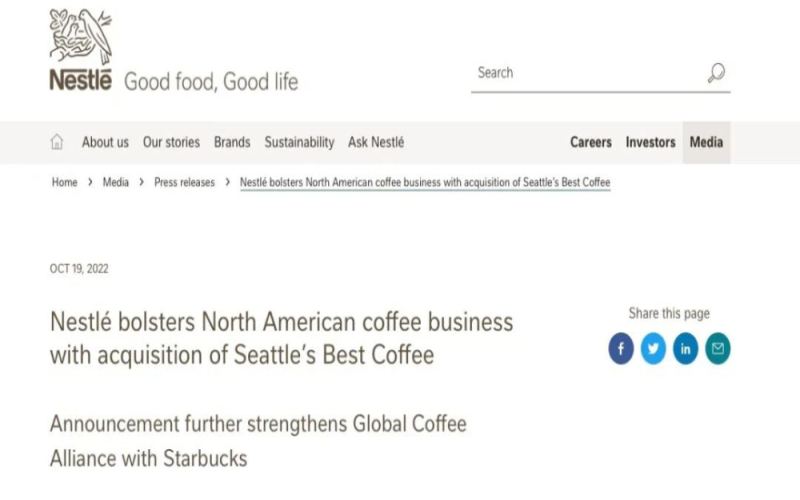
Nestlé makes another move to acquire Starbucks' Seattle's Best Coffee, further deepening the global coffee alliance.
Global food giant Nestlé has announced it will acquire Starbucks' Seattle's Best Coffee brand, a move seen as an important step in Nestlé's continued push to expand in the North American coffee market. This is not the first collaboration between the two companies—in 2018, Nestlé paid $7.15 billion for distribution rights to Starbucks' retail business. The acquisition will further enrich Nestlé's coffee brand portfolio in North America and is expected to be completed by the end of 2022. At the same time, Nestlé has completed several acquisitions this year and launched a new coffee sustainability plan. [more…]
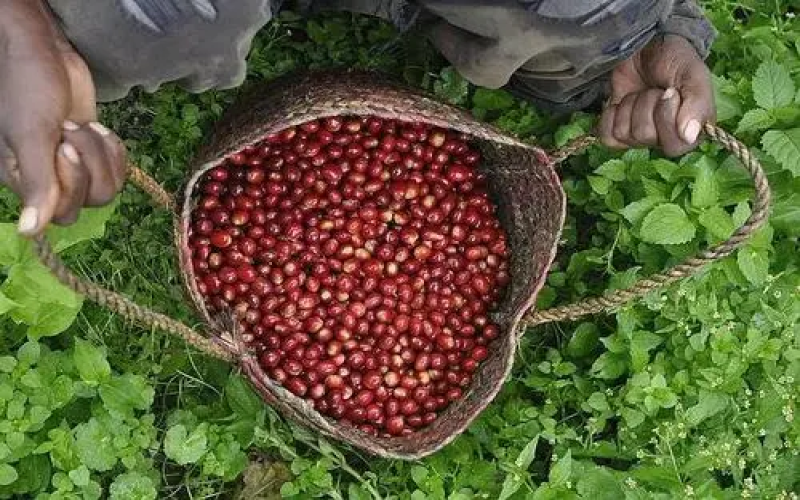
Kenya invests 6 billion shillings to revitalize the coffee industry, partnering with the Rainforest Alliance to promote EU compliance certification
Kenya's annual coffee production is approximately 51,000 metric tons, and the government is pursuing a series of strategic initiatives to raise this figure by 49,000 metric tons in order to better meet international market demand and strengthen the country's economic influence. To this end, the Kenyan government recently decided to allocate 6 billion shillings (approximately US$37.62 million) to support the Coffee Cherry Advance Revolving Fund and the production segment, with funding starting in Makueni County and gradually extending to 37 coffee-growing regions including Machakos, Kajiado, Taita Taveta, Kirinyaga, and Murang'a. Meanwhile, the Rainforest Alliance is also taking action in Kenya, partnering with the Gusii Coffee Farmers Cooperative Union to launch a regenerative agriculture landscape coffee project, helping local coffee obtain certification that meets global standards in order to address the export threshold brought about by the EU Deforestation Regulation (EUDR). Whether this series of measures can take Kenyan coffee a step further on the international stage is worth continued attention. [more…]
A Comprehensive Guide to Global Organic Tea Certification Systems: Differences Among EU, US, Japan and Other Standards, and Buying Tips
The core difference between organic tea and conventional tea lies in whether it has been certified by an authoritative body. EU organic regulations prohibit genetic modification and synthetic inputs, and require animals to be raised in ways that suit their species characteristics, and are regarded as the strictest threshold in the tea industry. Certifications such as Switzerland's IMO, France's Ecocert, the US USDA, Japan's JAS, India's, Canada's, China's, Australia's, and Germany's Naturland each have different emphases, with significant differences in scope of application and difficulty of obtaining them. Rainforest Alliance, UTZ, FDA, and HACCP provide supplementary assurances from the perspectives of sustainable agriculture and food safety. This article systematically sorts out the rules, authority, and market applicability of major certifications, helping coffee and tea lovers accurately identify the true meaning behind labels when making purchases. [more…]
Yirgacheffe Flavor Analysis and the Chelba Cooperative: Washed vs. Natural Differences and Rainforest Alliance Certification
Ethiopia, as the birthplace of coffee, continues to hold a major position in global coffee quality and production despite enduring poverty and instability. The country primarily employs two processing methods, washed and natural, and coffees from different regions—or even different cooperatives within the same region—can differ significantly in aroma and flavor. This article provides an in-depth analysis of the flavor characteristics of the Yirgacheffe region and offers a detailed introduction to the Shelba Coffee Cooperative—a cooperative of 490 farmers with Rainforest Alliance certification—and how it presents delicate citrus acidity and distinct jasmine florals through high-altitude heirloom Arabica beans and strict washed processing, making it an important reference for identifying the Yirgacheffe style. It also compares the flavor differences between Front Street Yirgacheffe natural beans and Front Street Sidamo natural beans, helping coffee enthusiasts gain a more comprehensive understanding of the diversity of Ethiopian coffee. [more…]
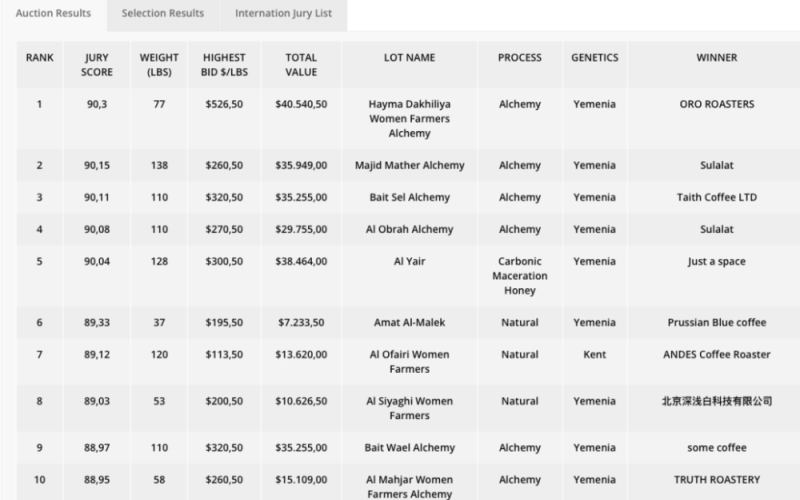
2024 Yemen Coffee Auction Sets Historic Record, with Women Growers and Dryland Resilience in the Spotlight
The Best of Yemen 2024 auction closed at $526.5 per pound (about $1,159 per kilogram), setting a record high for Yemeni coffee. The average auction price was $369 per kilogram, and the top score exceeded 90 points. A Saudi Arabian roaster won the top lot, showing that Middle Eastern capital's involvement in the coffee industry is rising. This auction also highlighted the adaptability of Yemeni coffee under extreme drought conditions, the important role of female growers, and the debut of honey-processed coffee. [more…]
A Complete Guide to Panama Diamond Mountain Coffee Beans: The Origins of the Catuai Variety, Hacienda La Esmeralda Natural Processing, and Key Roasting and Brewing Points
Panama is one of the most remarkable origins on the global specialty coffee map, and beyond the famous Geisha, Hacienda La Esmeralda also has a brand known for its balanced and consistent style—Diamond Mountain. It uses the Catuai variety, comes from two major farms, Jaramillo and Cañas Verdes, sits at an altitude of about 1,400 to 1,700 meters, and holds Rainforest Alliance certification. This article begins with the history of Panamanian coffee, then sorts through Diamond Mountain's variety origins, estate terroir, and natural process flow, and includes Front Street Coffee's cupping performance, roasting approach, and V60 three-pour brewing parameters, giving you a comprehensive understanding of this bean that combines citrus acidity, honey sweetness, and a dark cocoa finish. [more…]

Detailed Guide to the Jamaican Blue Mountain No.1 Coffee Typica Variety: Clifton Estate Certification and Flavor Identification Guide
Blue Mountain coffee is hailed as the pinnacle of the coffee world, yet authenticity is hard to tell on the market. This article systematically lays out the core knowledge of authentic Jamaican Blue Mountain No. 1, from the certified growing region, Typica variety, Clifton Farm, barrel shipping, and grading system to brewing parameters and flavor performance. Using Clifton Farm Rainforest Certified Blue Mountain as an example, Front Street Coffee shares the origin background, historical evolution, processing methods, and key points for distinguishing authenticity, helping coffee enthusiasts build a clear understanding and truly appreciate real Blue Mountain coffee. [more…]
2024 Nicaragua Cup of Excellence Results Announced: Pacamara Variety Debuts and Wins Runner-Up
The results of the 2024 Nicaragua Cup of Excellence (COE) competition were recently announced, with the Geisha variety continuing its strong performance, sweeping first, third, and fourth places, among which the natural Geisha won the championship with 91.10 points. However, the most eye-catching aspect of this competition was undoubtedly the Parainema variety, which made its first appearance in Nicaragua, winning second place with 89.85 points. This rare variety, which previously won the 2017 Honduras COE, has what kind of genetic origins behind it? Can it break buyers' prejudice against the cup quality of leaf rust-resistant varieties? This article will provide a detailed interpretation of the origins, development, and outstanding performance of Parainema in this competition, while also introducing Front Street Coffee's attention to and recommendation of this variety. [more…]
A Complete Guide to Guatemala's El Injerto Estate Coffee: Pacamara Variety Flavor, Auction Legend, and Origin Background
Among the tens of thousands of coffee estates worldwide, some cater to the mass market with commercial beans, while others specialize in top-tier estates focused on specialty and rare varieties. Today, we turn our spotlight to the renowned Incht Manor from Guatemala. Nestled on the famous Huehuetenango Highlands and operated by the Aguirre family since 1900, this estate takes its name from a local fruit. It adheres to organic farming and ecological conservation, holds Rainforest Alliance certification, and has frequently won international coffee competition awards since 2002. Its auction lots once set a world record at $500.5 per pound, with the Pacamara variety comprising only 8% of total production, offering a rich and diverse flavor profile. Front Street Coffee will also integrate this information to outline Incht Manor's varieties, flavors, and regional highlights for enthusiasts. [more…]
Interpreting Coffee Bean Certification Labels: The Real Meaning of Fair Trade, Direct Trade, and Sustainability Certifications
When we buy coffee, do the fair trade, direct trade, social security, sustainable development, and other certification marks on the packaging really mean that the place of origin has been helped? As consumers, we pay more and more attention to these labels, but our understanding of the mechanisms behind them and their actual effects is limited. This article will deeply analyze the meaning, operating methods, and limitations of various coffee certification systems, and at the same time introduce practical cases such as Front Street in promoting sustainable development in places of origin, to help you support the healthy development of the coffee industry through more rational consumer behavior. [more…]
Jamaica Blue Mountain Geisha vs. Classic Blue Mountain: A Comparative Analysis of Natural Processing and Clifton Estate Innovation
In 2020, Jamaica's Clifton Estate broke the decades-old tradition of Blue Mountain coffee, not only launching sun-dried Blue Mountain on a large scale, but also cultivating and exporting the Geisha variety for the first time. This batch of Blue Mountain Geisha was packaged in wooden barrels, produced in scarce quantities, and carries Rainforest Alliance certification. This article will present Front Street Coffee's exploration of this innovative batch in full, from the estate's history, the origins of the Geisha variety, the washed processing method, and the roasting curve, to cupping and brewing insights. Just what kind of flavor will the combination of Blue Mountain and Geisha bring? How does one choose between the traditional Blue Mountain taste and Geisha's floral aroma? Let us taste and see together. [more…]
Where Does the Balanced Flavor of Jamaican Blue Mountain Coffee Come From? An Analysis of Clifton Mount Estate's Characteristics and Brewing Key Points
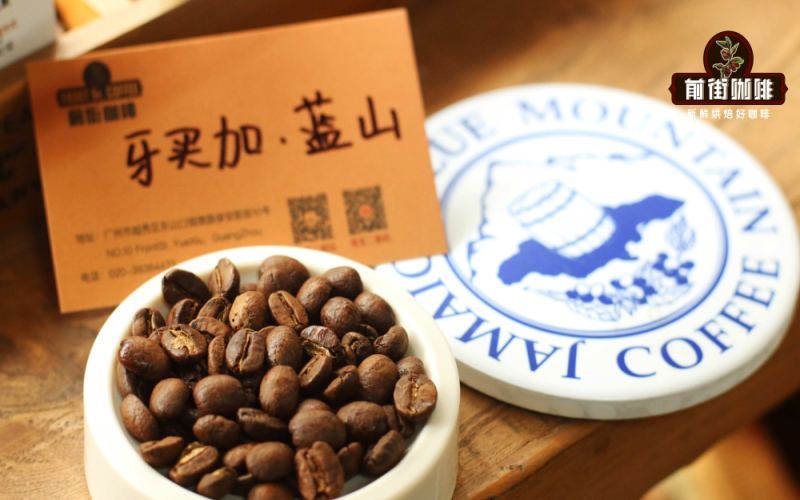
Jamaican Blue Mountain coffee is renowned for its exquisite balance of acidity, body, and aroma, and Clifton Estate, as one of the oldest surviving coffee estates on the island, shapes a rounded, smooth cup with subtle floral notes through its high altitude, volcanic soil, and unique washing process. This article systematically reviews the core information of Front Street Blue Mountain No. 1, from the estate's history, green bean grading, and roasting curve to cupping flavors, and provides brewing parameters for drippers such as V60 and KONO. Finally, it offers methods for identifying authentic versus fake Blue Mountain coffee across four dimensions—appearance, grind, aroma, and mouthfeel—helping coffee enthusiasts fully understand the value of this classic bean. [more…]
2024 the Cup of Excellence COE returns to Ethiopia.
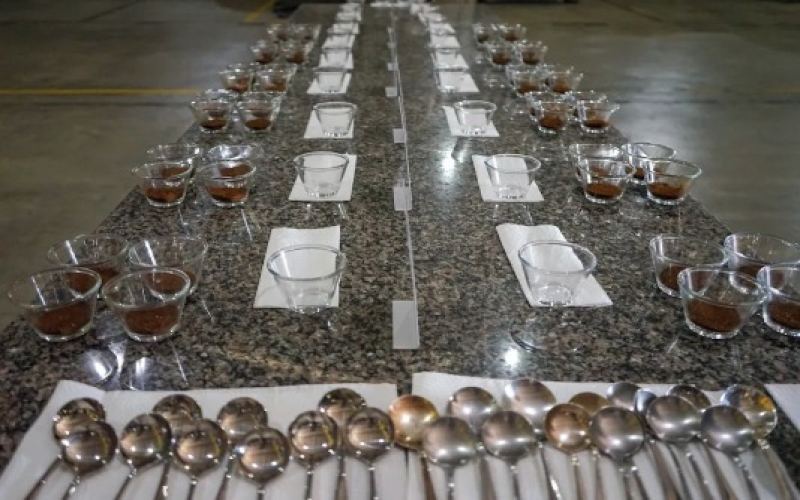
It is known that COE is fully named "Cup of Excellen", which is translated as the Cup of Excellence. It is a coffee event first held in Brazil in 1999 by the non-profit organization the Alliance for Coffee Excellence (ACE), and it is also the first I [more…]
Panama Hacienda La Esmeralda Diamond Mountain Coffee Bean Buying Guide: A Full Analysis of Caturra and Catuai Varieties, Flavors, and Processing Methods
Panama's Hacienda La Esmeralda is world-famous for its Geisha coffee, but the estate actually has two other independently named brands based on the Caturra and Catuai varieties—Diamond Mountain and Palmyra. In this article, Front Street Coffee will take you deep into the story behind the Diamond Mountain brand, from the history of Hacienda La Esmeralda and the terroir of the Boquete region, to the estate's plot divisions, the characteristics of the Caturra and Catuai varieties, the details of the natural processing method, and Front Street's actual roasting and brewing parameters, providing a comprehensive analysis of the unique charm of this Panamanian coffee bean. [more…]

COE Cup of Excellence vs. SOE Single-Origin Espresso: A Coffee Guide from Green Bean Competitions to Espresso Extraction
In the world of specialty coffee, the two English abbreviations COE and SOE often confuse enthusiasts—they appear similar but actually point to completely different domains. COE stands for Cup of Excellence, the world's most authoritative specialty green coffee competition, first held by the Alliance for Coffee Excellence in Brazil in 1999 and since expanded to Colombia, Guatemala, Panama, and many other producing countries. SOE, on the other hand, is short for Single Origin Espresso, referring to espresso made from single-origin coffee beans. This article will systematically sort out the essential differences between the two from the perspectives of competition systems, judging procedures, and extraction characteristics, and explore the common question of whether SOE is necessarily superior to blended espresso. [more…]
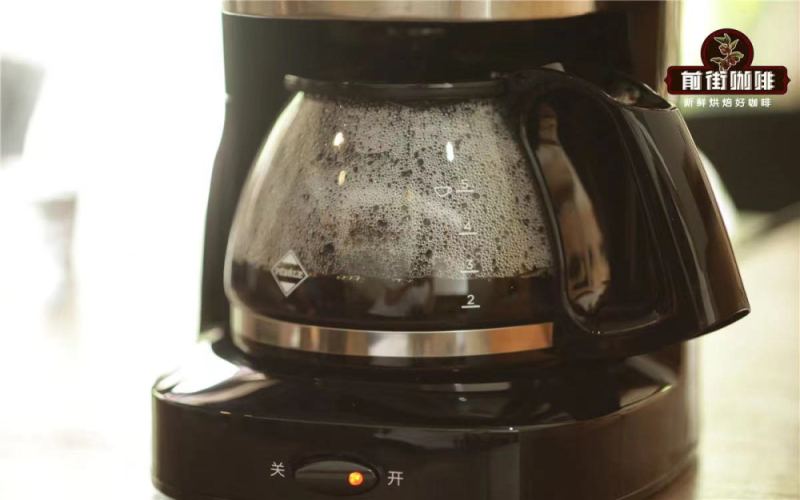
How Many Cups Can One Coffee Capsule Brew? An In-Depth Look at the Capsule Coffee Market, Major Brands, and Extraction Capacity
Capsule coffee, with its convenience and consistent quality, has gradually become a common beverage in offices and libraries. Due to the impact of the pandemic, offline coffee shop operations have been hampered, and sales of capsule coffee machines and capsules have grown significantly. According to FMI forecasts, by 2032 the global capsule coffee market size will exceed 9.8 billion USD. This article revolves around the origin of capsule coffee, the layout of major brands, and practical questions such as "how many cups can one capsule brew," to help coffee enthusiasts gain a more comprehensive understanding of this category. [more…]
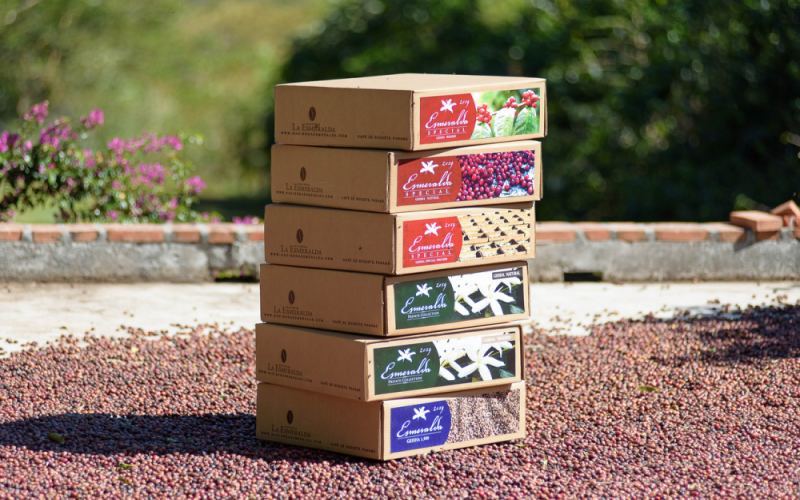
Exploring Panama's Hacienda La Esmeralda Diamond Mountain: The Specialty Coffee Flavor and Aroma Shaped by Washed Processing
When people mention Hacienda La Esmeralda in Panama, most first think of Geisha. However, this legendary estate also has a coffee brand called "Diamond Mountain," based on varieties such as Catuai, Typica, and Bourbon, grown on volcanic slopes at elevations of 1,400 to 1,700 meters in the Boquete production region. Although Diamond Mountain is not as expensive as Geisha, it equally embodies the estate's commitment to quality and sustainable operation. This article will start with the history and cultivation background of Hacienda La Esmeralda, sort out the origins of Diamond Mountain and the estate, analyze its variety characteristics and natural processing techniques, and present Front Street Coffee's actual flavor description, introducing you to this approachable yet richly layered specialty coffee. [more…]
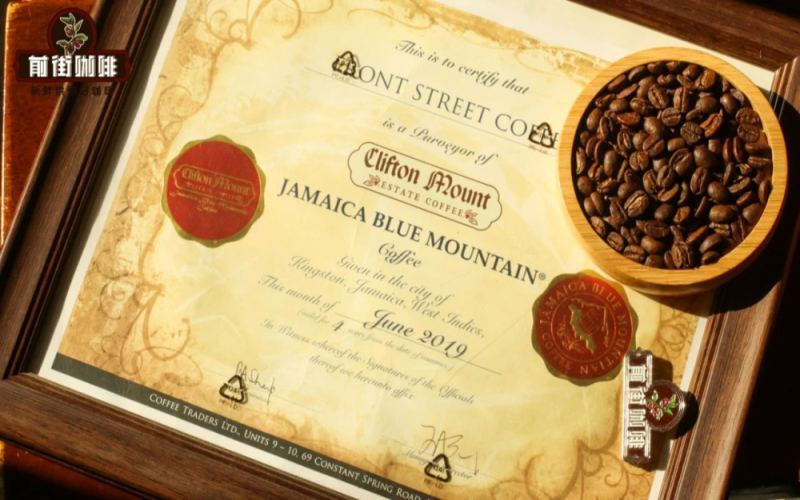
Jamaican Blue Mountain Coffee Beans: Flavor Characteristics, Authenticity Identification, Clifton Estate, and Washed vs. Natural Comparison
Jamaican Blue Mountain coffee has always been a legend in the specialty coffee world, known for its balanced, elegant flavor and scarce production. Front Street Coffee takes you on a deep dive into Blue Mountain coffee's growing conditions, flavor characteristics, methods for verifying authenticity, and the unique status of Clifton Estate. The article also compares the flavor differences brought by washed and natural processing methods, and introduces Blue Mountain coffee's historical origins, variety sources, certification standards, and current market situation. Whether you are a beginner just encountering Blue Mountain or a seasoned enthusiast looking to further understand the differences between processing methods, you will find valuable information here. [more…]
A Global Roundup of Top Specialty Coffee Beans: Origins, Prices, and Flavor Stories of Six Expensive Varieties
In the world of coffee lovers, there are always some beans that command high prices due to their rarity, legendary status, or exceptional flavor. This article reviews six recognized expensive specialty coffee beans, from Indonesia's Kopi Luwak to Panama's Hacienda La Esmeralda Geisha, and Jamaica Blue Mountain, introducing their origins, reference prices, and the stories behind them one by one. Details covered include the COE competition results of El Injerto and Santa Ines estates, the connection between Saint Helena Island and Napoleon, and the production and marketing structure of Blue Mountain coffee. By reading this article, you can quickly understand why these top coffee beans are expensive, as well as their unique flavors and historical highlights. [more…]

The capsule coffee market continues to expand: combining convenience and quality, giants like Nestlé and Starbucks are racing to stake their claim.
In today's world, where specialty coffee is increasingly popular, capsule coffee still occupies an important market with its convenience and consistent quality. Affected by the pandemic, sales of capsule coffee machines and capsule products have grown significantly, and the global market size is expected to exceed 9.8 billion USD by 2032. From Nestlé Nespresso to Starbucks, illy, Sumida River, and JDE Peet's, major brands have all stepped up their efforts in this field. Capsule coffee is not only cost-effective, averaging only 4 to 6 yuan per cup, but its technology also keeps improving, allowing you to enjoy it in just 30 seconds. However, environmental issues have also followed, and Nestlé has already launched paper-shell capsules in response. This article will guide you through the development history, current market situation, and future challenges of capsule coffee. [more…]