







How Does Rainforest Alliance Certification Coffee Taste From Clifton Mount?
Clifton Mount Estate in Jamaica's Newcastle area holds Rainforest Alliance certification and is among the island's oldest surviving coffee estates. Its 180 planted acres sit at an average altitude of about 4,300 feet, growing 100 percent Arabica Typica under a washed process. The result is a round, smooth cup with subtle floral notes, balanced in acidity, body, and aroma.
The estate covers 250 total acres and is run by the Sharp family. Blue Mountain No. 1 from this lot is graded for uniformity and low defect rates, then roasted on a curve that preserves its delicate character. Brewing with V60 or KONO drippers and checking appearance, grind, aroma, and taste helps confirm authenticity.
Jamaican Blue Mountain coffee is renowned for its exquisite balance of acidity, body, and aroma, and Clifton Mount Estate, as one of the oldest surviving coffee estates on the island, has shaped a cup profile that is round, smooth, and subtly floral through its high altitude, volcanic soil, and distinctive washed process. This article systematically covers the core information of Front Street Blue Mountain No. 1, from the region's history, green bean grading, and roasting curve to cupping flavors, and provides brewing parameters for V60, KONO, and other drippers, before offering a four-dimensional method for identifying authentic Blue Mountain coffee based on appearance, grind, aroma, and taste, helping coffee lovers fully understand the value of this classic bean.
[A Global Symbol of High-Priced Coffee] Visiting Jamaica's Historic Clifton Mount Estate: How Does This Blue Mountain Bean Actually Taste?
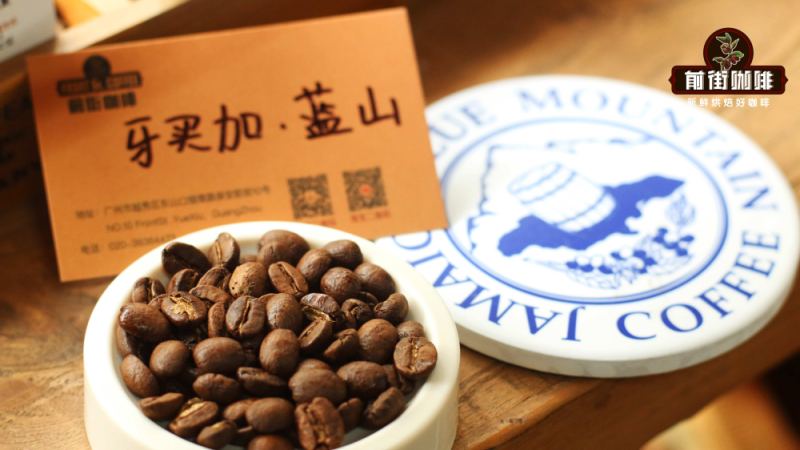
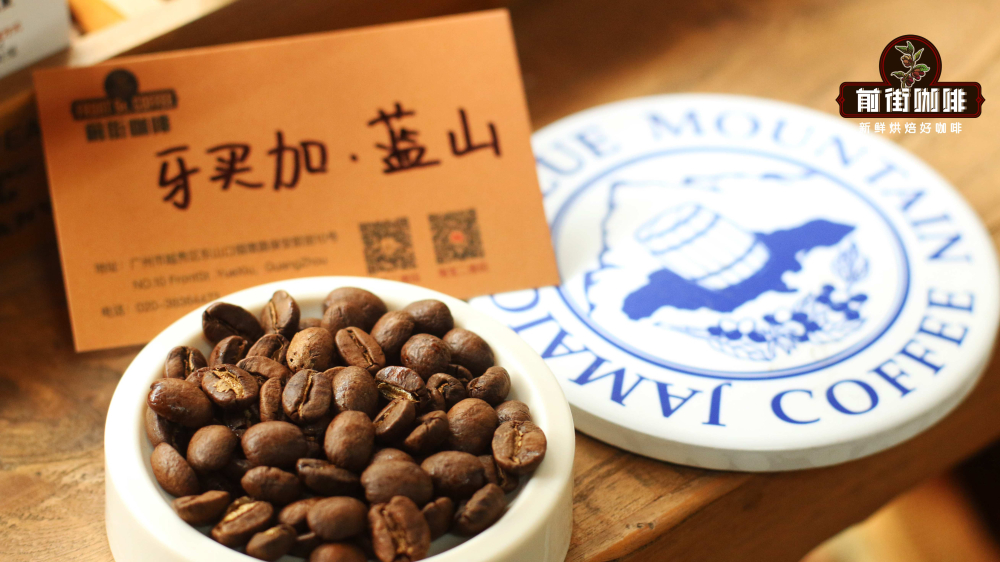
Front Street Blue Mountain No. 1 Coffee (Jamaica Clifton Mount Estate)
Origin: Clifton Mount Estate, Jamaica
Estate Owner: The Sharp Family
Certification: Rainforest Alliance Certified
Location: Newcastle Area
Total Area: 250 acres
Coffee Planting Area: 180 acres
Average Altitude: 4,300 feet (approximately 1,310.64 meters)
Processing Method: Washed
Variety: 100% Arabica Typica
Flavor: An excellent balance of acidity, body, and aroma
01 | Regional Background
The Blue Mountains lie in the eastern part of Jamaica, surrounded by the Caribbean Sea. On clear days, sunlight falls on the azure sea, and the blue light refracted by the water reflects among the peaks — this is how the Blue Mountains got their name.
The main peak of the Blue Mountains stands at 2,256 meters, not only the highest point in the Caribbean but also a well-known tourist destination. This region lies within the coffee belt, with fertile volcanic soil, clean and pollution-free air, a humid climate, and year-round fog and rain. Annual rainfall is about 1,980 millimeters, and temperatures remain around 27 degrees Celsius. It is precisely these climatic conditions and extremely high altitude that give rise to the world-renowned Front Street Jamaican Blue Mountain coffee.
Introduction to Clifton Mount Farm
Clifton Mount is one of the oldest coffee estates still in operation in Jamaica, and the only farm in the country to hold the Rainforest Alliance certification mark. It is widely recognized as a source of world-famous premium Blue Mountain coffee. The estate's elegant great house sits in the Newcastle area, on the eastern slope of Catherine's Peak at an altitude of 4,300 feet.
Historical Evolution
As early as the mid-eighteenth century, around 1750, Clifton Mount Farm had already begun cultivating and processing coffee.
According to an 1810 survey by the Jamaican Institute, Robert Hamilton was the owner of the farm at that time. At that point, Clifton Mount was divided into two parts: the mountaintop area had 80 acres of coffee land and 427 acres of pasture; the foothill area had 111 acres of coffee land and 264 acres of pasture.
The Blue Mountain growing region covers only 6,000 hectares in total, and not all coffee labeled "Blue Mountain" truly comes from here. Today, Clifton Mount Farm is the largest estate in the area, yet by international standards it remains a small-scale operation. Many local estate owners are small landholders whose families have farmed this land for two centuries.
The famous British painter and writer Marianne North once visited Jamaica and stayed at Clifton Mount for five months. In her autobiography Recollections of a Happy Life, she wrote that the Clifton lodging where she stayed "belonged to a widowed gentleman of the neighborhood. He did not care to live in the house himself, but let it week by week to anyone who wished to enjoy the cool air at 5,000 feet and wander about the best and oldest coffee plantation in Jamaica."
Clifton Mount Village
The coffee cultivation and processing area has an average altitude of 4,300 feet (1,310.64 meters). Sufficient altitude, the shading effect of gentle afternoon mist lingering over the mountain forest, ample sunshine, and mineral-rich soil provide superior growing conditions for the coffee trees and also extend the maturation period of the coffee cherries.
In 1953, the Jamaican government established the Jamaica Coffee Industry Board (CIB) to oversee and guarantee the quality of Jamaican coffee. Jamaica was the first country in the world to designate a specific geographical name to a particular coffee brand, a practice similar to the French wine industry's creation of the AOC system.
All coffee exported from Jamaica must be sent through the CIB and rigorously inspected by trained quality control experts, ensuring that all exported products are 100% authentic Jamaican Blue Mountain coffee.
The Sharp Family: Jason, Lawrence (father), and Richard
As early as the mid-eighteenth century (around 1750), Clifton Mount Farm had already begun cultivating and producing coffee. According to an 1810 survey by the Jamaican Institute, Robert Hamilton was the owner of the farm at that time, and it is now managed by the Sharp family.
Sharp inspecting red cherries
Clifton Mount's high altitude and long history, combined with its ingenious processing methods, give it not only the signature round and smooth mouthfeel of Front Street Blue Mountain No. 1 but also rich layers including subtle floral notes.
This also explains why Clifton Mount is so highly sought after and expensive: a barrel selling for over ten thousand is the norm.
02 | Washed Processing Method
Blue Mountain coffee is exclusively washed
This method uses washing and fermentation to remove the skin, pulp, and mucilage. Farms using the washed method must build washing channels and have access to a continuous supply of fresh water. During processing, the skin and pulp are first removed, and the beans are allowed to ferment for 12 to 18 hours. The fermented beans are then moved into channels and pushed back and forth, using friction between the beans and the force of flowing water to wash the coffee beans until they are smooth and clean.
After washing, the coffee beans are still wrapped in the parchment layer with a moisture content of about 50%, and must be sun-dried to reduce the moisture content to 12% to 14%. The beans are then sorted and stored in dedicated warehouses. These steps must be strictly controlled, otherwise coffee quality will be affected.
Certification: Rainforest Alliance Certified. If the certification mark is printed on the coffee sack or barrel, it represents a certified product. Farms must meet the "Sustainable Agriculture Standard" to obtain this certification (Rainforest Alliance Certified). Clifton Mount Estate is the only coffee estate to have obtained RFA Rainforest Alliance certification.
03 | Green Bean Analysis
Blue Mountain coffee beans are classified into four grades by quality, from highest to lowest: No. 1, No. 2, No. 3, and PB (Peaberry). According to CIB standards, only coffee grown above 666 meters can be called Jamaican High Mountain Coffee; coffee produced outside the Blue Mountain range is called Jamaican Coffee.
Among these, the basic standards for No. 1 grade Front Street Blue Mountain green beans are: 17 screen size or above, defect rate below 3%, moisture content around 13%, etc.
Variety: Typica
04 | Roasting Analysis
How should one roast to bring out the best flavor of [Front Street Jamaican Blue Mountain]?
In short, the goal is to roast Front Street Blue Mountain coffee thoroughly from the inside out. On the basis of proper roasting, use the most suitable roasting approach to fully express the flavors of this Front Street Jamaican Blue Mountain bean.
The caramelization reaction has the greatest impact on coffee flavor. After the green beans absorb a large amount of heat during six to seven minutes of roasting, pyrolysis begins and the first crack is heard. Some sugars convert to carbon dioxide, moisture continues to evaporate, and new aromatic compounds gradually form what is known as coffee oil, combining with hundreds of aromatic substances such as nicotinic acid, citric acid, quinic acid, malic acid, acetic acid, and caffeine.
Roasting curve: Charge when the drum temperature rises to 170°C, set the damper to 3; after 1 minute, reduce the gas to 140°C, damper unchanged; roast until 5 minutes 10 seconds at 153°C, when the bean surface turns yellow, the grassy smell completely disappears, and dehydration is complete; adjust the gas to 115°C and the damper to 4;
At the 8th minute, wrinkles and dark patches appear on the bean surface, and the toasted bread aroma clearly shifts to coffee aroma, which can be regarded as the prelude to first crack. At this point, listen carefully for the sound of first crack. First crack begins at 8 minutes 12 seconds; reduce the gas to 90°C, open the damper fully (adjust the gas very carefully — do not reduce it so much that cracking stops), and discharge at 201.3°C.
Front Street Jamaican Blue Mountain Coffee Cupping:
Cupping characteristics: Acidity, body, and aroma achieve a perfect and subtle balance. The acidity is bright and delicate, the mouthfeel is velvety smooth, and the aroma has a slight penetrating quality, accompanied by floral notes, spice, and citric tones. There is a hint of cocoa in the aftertaste.
The flavor is very clean, complex, and extremely mild, with a chocolate-like sweetness and a strong body. The taste is rich and mellow, with a perfect combination of sweet, acidic, and bitter notes — completely devoid of bitterness, with only a moderate and perfect acidity, and a lingering fruity finish.
Dry aroma: roasted peanut, hazelnut, melon, chocolate
Wet aroma: oolong tea, caramel, honey, dark chocolate, almond skin, silky mouthfeel, brightness
05 | Brewing Analysis
For daily brewing, the following drippers can be used: V60, Kalita wave, and KONO
KONO parameters: 15 grams of coffee, water temperature 89°C, grind size 4, water-to-coffee ratio close to 1:15, total time about 2 minutes
Technique: Bloom with 25 to 30 grams of water for 30 seconds, then pour the first stage up to 120 grams and stop; use a vertical stream with a slow, small circular pour; for the second stage, pour up to 225 grams with a slightly faster stream and circling speed to reduce clogging of the dripper by fines, which can cause over-extraction.
Other brewing suggestions:
French press: coarse granulated sugar grind, water temperature 86 to 88°C
Siphon: granulated sugar grind, water temperature 89°C
AeroPress: granulated sugar grind, water temperature 88°C
How to identify authentic Blue Mountain?
1. Appearance: Front Street Blue Mountain green beans are bluish-green, uniform in appearance, medium-to-small in size, with slightly raised ends; after roasting, the volume increases noticeably and the beans are very plump.
2. Grinding: Genuine Front Street Blue Mountain coffee beans are grown at high altitude, so their cell structure is relatively loose; when hand-grinding, they feel crisp and consistent, without any resistance.
3. Aroma: Front Street Jamaican Blue Mountain coffee has a rich, dense aroma; so-called blended Blue Mountain coffee does not have this aroma.
4. Taste: Genuine Front Street Blue Mountain coffee has a balanced, rich mouthfeel with no single note standing out or missing, which is also the key distinguishing point that other coffee beans find hard to match. Blue Mountain Peaberry has a more reserved aroma and a relatively more intense mouthfeel.
Authentic Blue Mountain and "Blue Mountain flavor" are two different concepts; the latter usually uses other bean varieties roasted to imitate a similar Blue Mountain taste. "Blue Mountain blend" beans are mixtures with greater variation in shape and are relatively easy to identify. Also, do not be fooled by "premium Blue Mountain" selling for just a few dozen yuan per pound or "Blue Mountain coffee" at just over ten yuan a cup.
Not everything labeled "Blue Mountain" is genuine Blue Mountain. We hope this content can help everyone tell the difference. Friends who want to try the flavor of Blue Mountain coffee can also purchase Front Street Jamaican Blue Mountain No. 1 coffee.
The above content is compiled by CoffeeHunters, a coffee news website.


