







How Does Rainforest Alliance Certification Coffee Taste Here?
Panama Diamond Mountain is grown by Hacienda Esmeralda under its Jaramillo and Cañas Verdes farms, at roughly 1,400 to 1,700 meters, using the Catuai variety. It carries Rainforest Alliance certification and is processed naturally, giving a stable, balanced cup with citrus acidity, honey sweetness and a dark cocoa finish.
Coffee reached Panama in 1780, when Europeans brought the first Typica seedlings. Geisha arrived in 1970 and only became famous after Hacienda Esmeralda won the 2004 Panama coffee contest. Rainforest alliance coffee brands like this one trade on farm-level environmental standards, so the certification shapes both farming practice and buyer expectations.
Panama is one of the most remarkable origins on the global specialty coffee map, and besides the famous Geisha, Hacienda Esmeralda also has a brand known for its balanced and stable style—Diamond Mountain. It uses the Catuai variety, comes from two major farms, Jaramillo and Cañas Verdes, at an altitude of about 1,400 to 1,700 meters, and holds Rainforest Alliance certification. This article starts with the history of Panamanian coffee, sorts out Diamond Mountain's variety origins, estate terroir, and natural processing flow, and includes Front Street Coffee's cupping performance, roasting approach, and V60 three-pour brewing parameters, giving you a comprehensive understanding of this bean that combines citrus acidity, honey sweetness, and a dark cocoa finish.
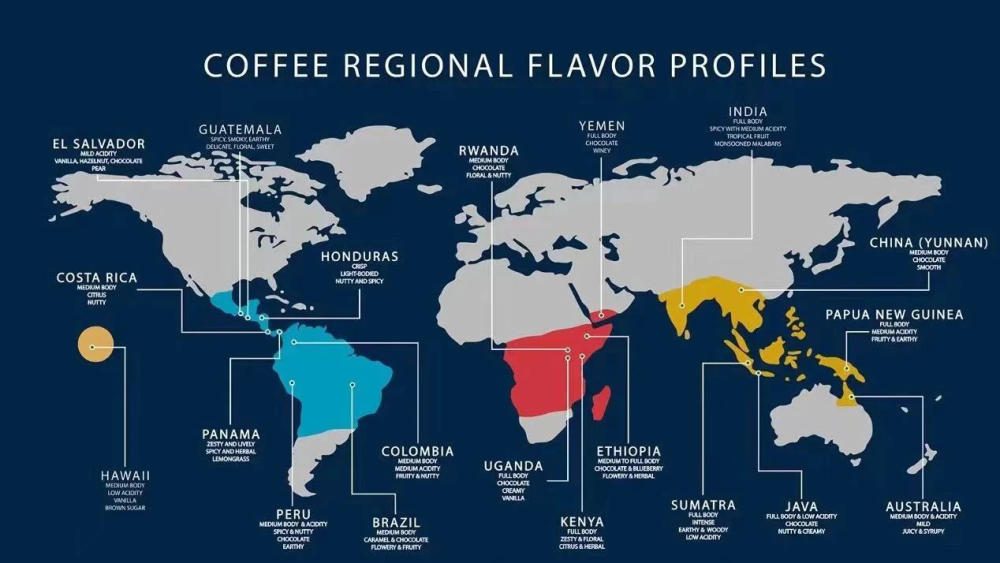
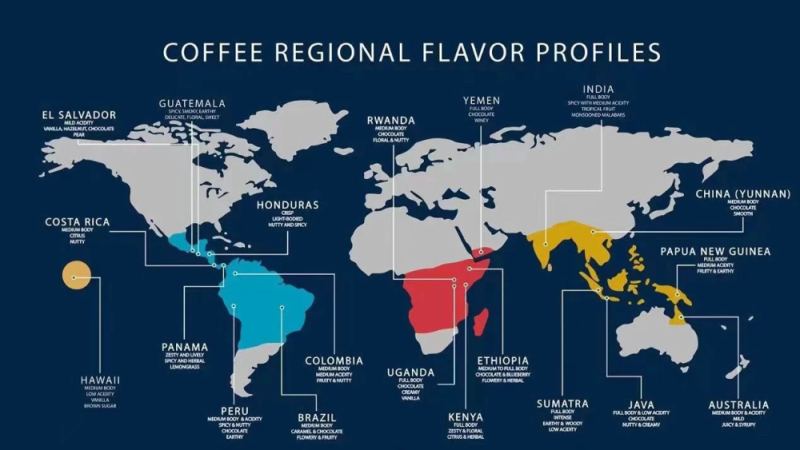
The world's coffee-growing map can be roughly divided into three major regions: Central and South America, Africa, and Asia. Among them, the American producing regions are mainly represented by countries such as Colombia, Costa Rica, Panama, Brazil, and Guatemala, and among these producing countries, Panama brings especially prominent surprises. In 1780, Europeans brought the first batch of Typica seedlings to Panama, and the coffee story on this land began.
During the excavation of the Panama Canal more than a hundred years ago, a large number of European intellectual elites poured into the area. After the canal was completed, many senior engineers chose to stay because they could not bear to leave the pleasant climate of western Panama. They bought estates around Boquete and became pioneers of coffee cultivation in Panama. For Panamanians at the time, coffee as a beverage was both unfamiliar and full of attraction, and it quickly captured local taste buds, and coffee trees were widely planted along with it.
What truly made Panamanian coffee widely renowned, however, was not Typica, but the well-known Geisha. Like many varieties, Geisha also originated in Ethiopia and was introduced to Panama in 1970. However, it was not initially valued—its yield was low, its resistance to pests and diseases was weak, and its plants were tall, so it could only be used as a windbreak tree for other varieties. It was not until Hacienda Esmeralda separated it from other varieties, cultivated it on its own, and won first place in the 2004 BOP (Best of Panama green bean competition) that Geisha became famous worldwide.
Hacienda Esmeralda thus gradually became synonymous with high-quality Panamanian coffee, together with Geisha coffee. Front Street Coffee has always regarded the washed Geisha produced by Hacienda Esmeralda in Panama as the most classic Geisha flavor, and is happy to recommend it to guests who want to try Geisha.
The protagonist to be discussed today is not Hacienda Esmeralda's Geisha, but another brand with considerable Panamanian characteristics—Diamond Mountain. The reason for focusing on it is that during cupping it showed a surprising stability and balance: when sipped at high temperature it had citrus-like acidity and honey sweetness, and after the temperature dropped slightly it shifted to berry-like tones, with fermentation notes interwoven with a dark cocoa finish, making the whole very balanced.
What is Diamond Mountain?
Hacienda Esmeralda first divides coffee into two major categories by variety: Geisha and Catuai. Under Geisha it is further subdivided into Esmeralda Special, Private Collection, and Geisha 1500, which are what we commonly call Red Label, Green Label, and Blue Label.
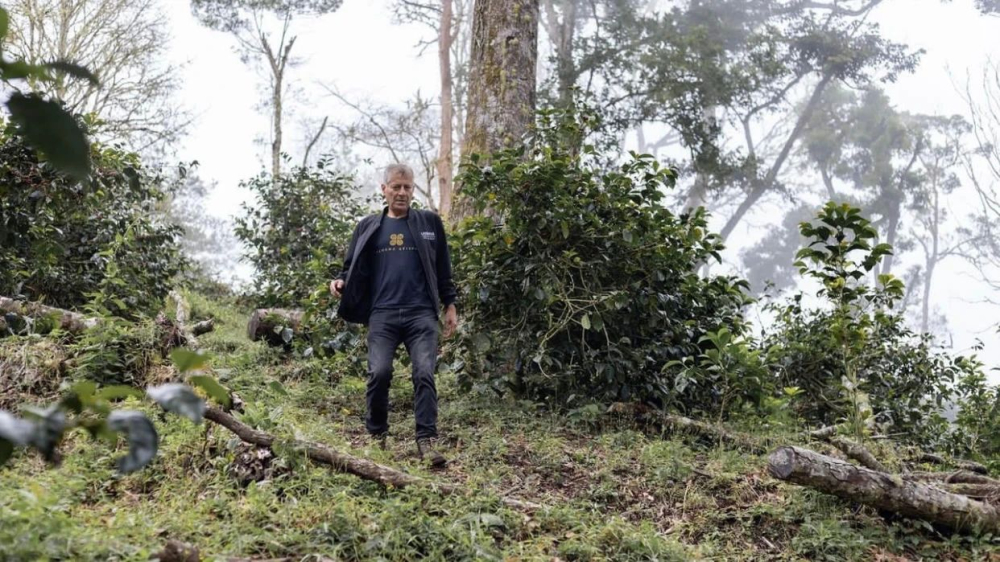
Under Catuai it is divided into two brands: Diamond Mountain and Palmyra. Catuai has a long history of cultivation in Panama and is widely popular for its high yield, strong disease resistance, and clean, bright flavor.
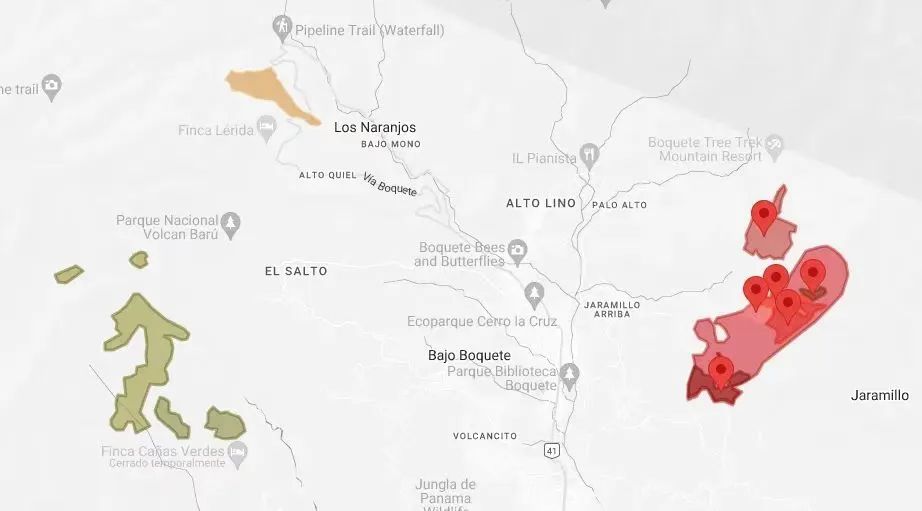
Diamond Mountain's coffee comes from two of Hacienda Esmeralda's highest-yielding and best-known farms—Jaramillo and Cañas Verdes—with cultivation at an altitude between 1,400 and 1,700 meters. Diamond Mountain brand coffee is Eco-friendly and Rainforest Alliance Certified.
Jaramillo has annual rainfall of about 4,000 milliliters, an average daytime temperature of 19-25°C, an average nighttime temperature of 11-15°C, and an average altitude of 1,600-1,700 meters. Many of Hacienda Esmeralda's high-quality Geishas come from Jaramillo, and the 2004 BOP champion bean also came from here. The farm is further divided into 5 small plots: Mario, Noria, Reina, Bosque, and Buenos Aires.

Diamond Mountain's other farm, Canas Verdes, has annual rainfall of about 3,500 milliliters, an average daytime temperature of 16-23°C, an average nighttime temperature of 10-15°C, and an average altitude of 1,600-1,800 meters. Canas Verdes contains a total of 9 small plots: Lino, Coronado, Fundador, Leon, Montaa, Trapiche, Chinta, Cabaa, and Tumaco.
Basic information about Diamond Mountain coffee
Catuai variety
The flavor of coffee is largely influenced by variety, and the reason Geisha is popular is precisely its delicate and refined flavor expression. The variety used by Diamond Mountain is exactly the Catuai planted at Hacienda Esmeralda.
The term Catuai comes from the Guarani phrase "multo mom," meaning "very good," and it is divided into Yellow Catuai and Red Catuai. It was bred in 1949 from a cross between Yellow Caturra and Mundo Novo, and was initially named H-2077. Caturra is a natural mutation of Bourbon, while Mundo Novo is the product of a natural cross between Bourbon and Typica.
Therefore Catuai inherits the strengths of both: high yield, disease resistance, and clean, bright flavor. Compared with Bourbon, Catuai's yield advantage is very obvious, one reason being that the plant is short, allowing spacing to be shortened, and its planting density is almost twice that of Bourbon.
Although the yield is high, its flavor potential should not be underestimated. The foundation of Diamond Mountain coffee is exactly what Catuai gives it: pleasant citrus acidity, a solid and full body, and the high sweetness characteristic of Bourbon-series varieties.
Diamond Mountain coffee's bonus points
Hacienda Esmeralda's processing method
Diamond Mountain's quality, in addition to its superior growing environment and high-yield, disease-resistant variety, also has another advantage from Hacienda Esmeralda's mature processing technology. The Diamond Mountain we cupped uses natural processing. At Hacienda Esmeralda, after harvesting the coffee fruit is sent directly to the patio for drying, and the fruit dries evenly; as is characteristic of the natural process, the pulp and beans dry together, and the coffee beans absorb the sugars within, thereby developing richer fruity aromas and fermentation aromas.
Depending on weather and site conditions, the coffee is dried on concrete platforms for 3 to 5 days (8 hours per day). After reaching sufficient dryness, it is then sent to a Guardiola dryer and rotated for 72 hours to complete drying and prevent over-fermentation. Only after drying is finished is the pulp and other parts removed by machine.
Guardiola is Hacienda Esmeralda's preferred drying method, and as long as the coffee batch size allows, it can handle large volumes of coffee. The Guardiola is a horizontally rotating drum that allows warm air to flow around the beans, thereby removing moisture and reducing the risk of mold.
After the coffee beans are dried, they are packed into nylon bags and left to rest in the warehouse for 30 to 45 days. This step is called "reposo," which helps stabilize the beans and enhance the cup flavor.
Front Street Coffee's Diamond Mountain roasting curve
Front Street Coffee's Diamond cupping report
Front Street Coffee's Diamond Mountain brewing recommendations
Dripper: V60#01
Water temperature: 90-91°C
Dose: 15g
Coffee-to-water ratio: 1:15
Grind size: medium-fine grind (80% passing through China standard No. 20 sieve)
Brewing method: three-pour extraction. First bloom with 30 grams of water for 30 seconds, then pour in a slow circular stream until 125 grams and pause for a stage, and when the water level drops and is about to expose the coffee bed, continue pouring until 225 grams and stop. When the water level drops again and is about to expose the coffee bed, remove the dripper (timing starts from the bloom), with a total extraction time of 2'00".
The above content is compiled by CoffeeHunters, a coffee news website.


