







How the Capsule Coffee Machine Market Keeps Expanding
Capsule coffee sales of both machines and capsules grew sharply during the pandemic, and the global market is expected to exceed 9.8 billion USD by 2032, according to Future Market Insights. Capsules are pre-packaged ground coffee sealed in plastic or aluminum foil and extracted in a dedicated coffee machine, usually in about 30 seconds.
The format dates to 1976, when Eric Favre invented it while working at Nestlé's Swiss headquarters. Nestlé Nespresso, Starbucks, illy, Sumidagawa, and JDE Peet's have all increased investment. Cost averages only 4 to 6 yuan per cup, but environmental concerns have grown, and Nestlé has already introduced paper-shell capsules in response.
In today's world where specialty coffee is increasingly popular, capsule coffee still occupies an important market with its convenience and consistent quality. Affected by the pandemic, sales of capsule coffee machines and capsule products have grown significantly, and the global market size is expected to exceed 9.8 billion USD by 2032. From Nestlé Nespresso to Starbucks, illy, Sumidagawa, and JDE Peet's, major brands have all been increasing their investment in this field. Capsule coffee is not only cost-effective, averaging only 4 to 6 yuan per cup, but its technology also keeps improving, allowing you to enjoy it in just 30 seconds. However, environmental issues have also followed, and Nestlé has already launched paper-shell capsules in response. This article will guide you through the development history, current market situation, and future challenges of capsule coffee.
For professional coffee knowledge exchange and more coffee bean information, please follow Coffee Workshop (WeChat public account: cafe_style)
For more specialty coffee beans, please add the private WeChat of Front Street Coffee (FrontStreet Coffee), WeChat ID: qjcoffeex
Coffee has gradually become a mainstream beverage today, and it can be seen almost everywhere, whether in libraries or offices. Drinking coffee has also become more and more convenient. In addition to drip bags and instant coffee, capsule coffee is also a typical representative of quick and convenient options.
Coupled with the impact of the pandemic, the operation of offline coffee shops has been hit to varying degrees, while sales of capsule coffee machines and capsule coffee have begun to rise significantly. According to data from global market research and consulting company Future Market Insights (FMI), by the end of 2032, the global capsule coffee market is expected to exceed 9.8 billion USD (about 65.6 billion RMB).
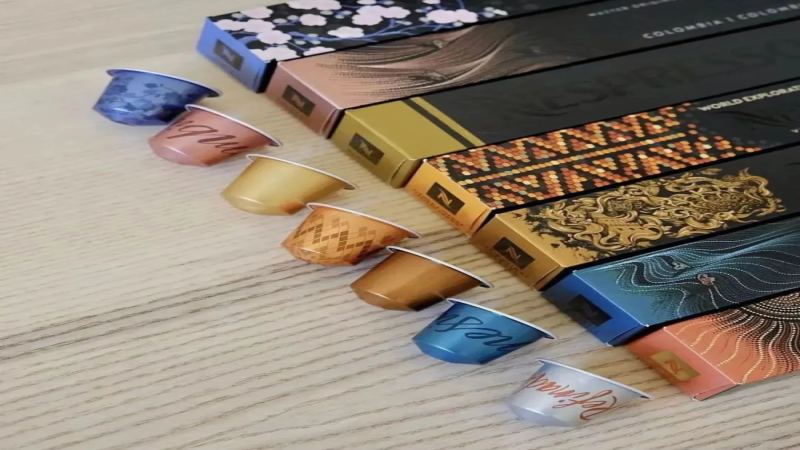
Capsule coffee is a type of pre-packaged coffee made by grinding coffee beans into powder and sealing it in specially made capsules made of plastic or aluminum foil. When drinking, the capsule is placed into a dedicated coffee machine for rapid extraction. With excellent quality and convenience, it has occupied an important position in the coffee consumer market. Capsule coffee was first invented in 1976 by Mr. Eric Favre, who was then working at Nestlé's Swiss headquarters.
When mentioning capsule coffee, most people will first think of Nestlé's Nespresso. Indeed, Nespresso currently has the highest market share in China's capsule coffee market. But after Nestlé, coffee brands such as Starbucks, illy, Sumidagawa, and JDE Peet's also entered the capsule coffee field one after another.
Coffee giant Starbucks had long been optimistic about the capsule coffee market, formed a global coffee alliance with Nestlé and focused on the Chinese market, launching a new "Starbucks At Home Coffee" series for Chinese consumers and bringing it to market extremely quickly. It is reported that among the 21 new "Starbucks At Home Coffee" products launched by the two parties, 15 are capsule coffee products.
JDE Peet's first came into contact with coffee capsules in 2016, and since then the brand has also been continuously trying to launch coffee capsules. In 2020, JDE Peet's issued a statement saying that the group would invest 110 million euros (currently about 866 million RMB) to expand its global capsule coffee production lines, which shows that JDE Peet's is also very optimistic about the development prospects of China's capsule coffee market.
Coffee brands continuously increasing their investment in capsule coffee means that competition in this market has been ongoing. With technological progress, specialty instant coffee represented by capsule coffee has begun to occupy users' minds. Capsule coffee, made by sealing ground and roasted coffee powder in specially made capsules, has a special flavor and lasting quality. Combined with brewing in a capsule coffee machine, it makes the brewing process simple and quick.
The main reason capsule coffee is so popular and developing rapidly is its extremely high cost-effectiveness. Compared with the price of about 30 to 40 yuan per cup at a certain coffee shop brand, capsule coffee costs only 4 to 6 yuan per cup on average. Today's capsule coffee machines have also been continuously upgraded to support one-touch preparation, and in about 30 seconds on average you can drink a cup of coffee with a fairly rich taste. There are also relatively many flavor choices, which can meet the selection needs of different users.
For a long time, the special preparation process and packaging materials of capsule coffee have brought convenience, but also some safety hazards. Improper disposal of discarded capsule shells will bring huge challenges to environmental protection. However, packaging is also constantly being upgraded. Not long ago, Nestlé also announced the first launch of paper-shell capsules, although when they can be rolled out in the market is still unknown.
But given the current market situation, capsule coffee still has a certain consumer demand. How to give greater play to the characteristics of capsule coffee and continue to expand it while ensuring its safety and environmental friendliness is a question very worth considering.
Image source: Internet
The above content is compiled by CoffeeHunters, a coffee news website.


