







Search Results for: Business Dispute
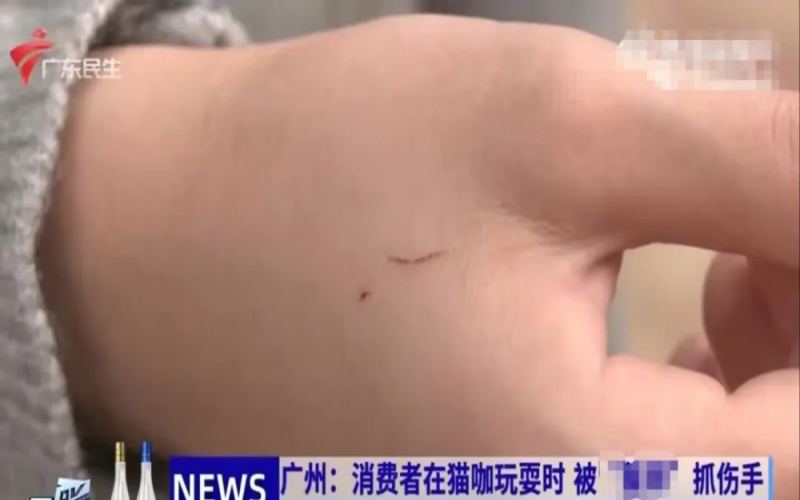
Cat café customer bitten by cat claims over 3,000 yuan, rejected by the business; dispute over liability arises
Recently, a cat café in Guangzhou experienced an incident where a customer was bitten by a cat in the store. After seeking medical treatment, the customer demanded more than three thousand yuan from the business for medical expenses and emotional distress, but the owner refused. The business claimed that the risks had been clearly stated in the group-buy package and in-store notices, and that the customer, being an adult, should not hold the store fully responsible; the customer side argued that the business had failed to fulfill its safety obligations. Both sides stuck to their own accounts, and the negotiation reached a deadlock. The incident has attracted widespread attention: when someone is scratched or bitten by a pet in a cat café, how exactly should liability be divided? As coffee lovers, when enjoying the pleasure of petting cats and drinking coffee, how can we protect our own safety? Front Street Coffee reminds you that choosing a legitimate cat café and understanding the relevant guidelines is the best way to enjoy your time interacting with cats. [more…]

NetEase Launches Blizzard Green Tea Coffee in Response to Blizzard Contract Renewal Dispute, 13 Yuan Pricing Sparks Heated Debate
Recently, the agency agreement dispute between Blizzard and NetEase has become a hot topic. After Blizzard proposed conditions including a six-month renewal, NetEase responded with a tough stance and launched a 13-yuan "Blizzard Green Tea" at its campus café, which was quickly embraced by employees. Subsequently, new items such as "Blizzard Has No Heart" were introduced, and creative dish names with plenty of innuendo appeared on the menu. Behind this business game, coffee unexpectedly became a vehicle for expressing attitudes. This article takes you through the whole incident and lets you savor the distinctive flavor of this cup of "Blizzard Green Tea." [more…]

Kunming Coffee Shop Bathroom Borrowing Dispute: Pregnant Woman Uses Restroom Without Permission, Sparking Argument; Shop Publicly Releases Surveillance Footage in Response to Negative Review
Recently, a coffee shop in Kunming, Yunnan, became embroiled in an online controversy after refusing to let a pregnant woman use its restroom. The shop said the pregnant woman used the store's toilet twice without the staff's consent; when she was reminded the second time, an argument broke out between the two sides. The pregnant woman and a man accompanying her filmed a video and posted it online, and also left a negative review of the coffee shop on a third-party platform. The shop then publicly released surveillance footage to set the record straight, and the incident quickly sparked heated discussion among netizens. Some people understood the pregnant woman's inconvenience, but more believed that whether a business's restroom may be used should be decided by the shop, and that the pregnant woman going upstairs on her own posed safety risks. Behind this dispute is the dilemma coffee shops and other businesses face when passersby ask to "borrow the toilet." [more…]
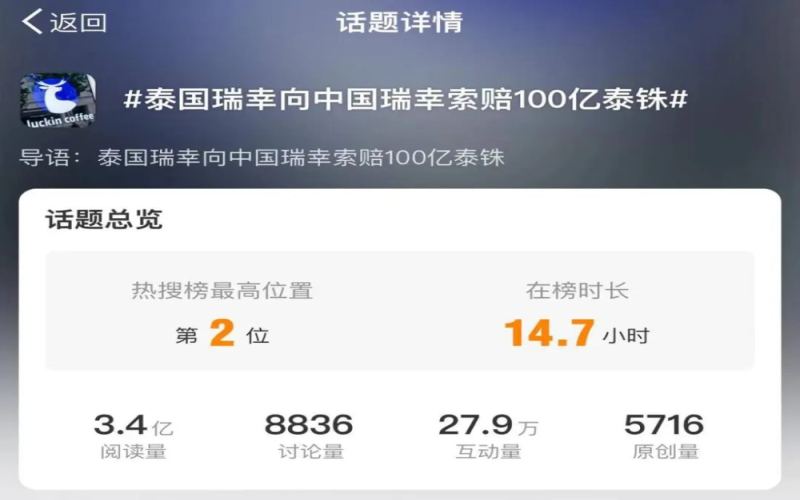
Thailand Luckin Trademark Dispute: Lost Case, China Luckin Faces Billion-Baht Compensation Lawsuit
A trademark dispute spanning China and Thailand is continuing to escalate. Thailand's Royal 50R Group has filed a lawsuit with the court, demanding that China's Luckin Coffee pay 10 billion Thai baht in economic damages, on the grounds that Thailand's Luckin has legally registered the local trademark, while China Luckin's infringement accusations have hindered its business plans. China's Luckin had previously issued a statement saying that the Thailand stores were counterfeits, but on December 1 the Thai court ruled against China's Luckin. At present, China's Luckin has responded that the situation remains to be verified. This article will sort out the full picture of the incident, analyze the ins and outs of this trademark dispute, and follow up on subsequent developments. [more…]
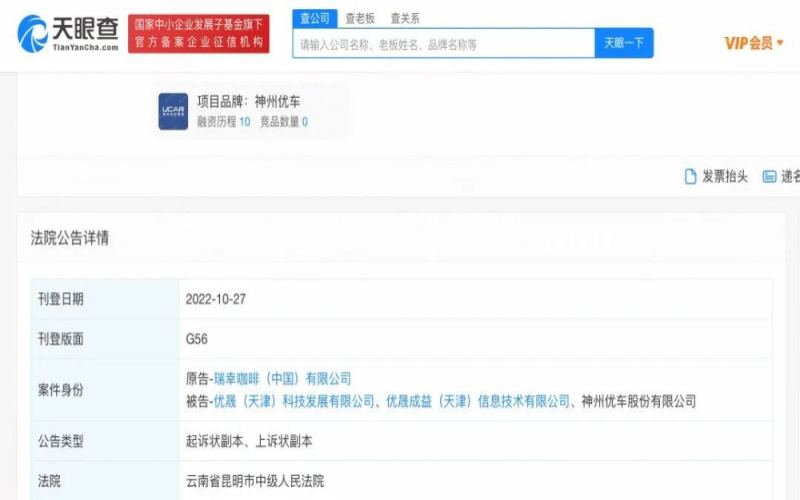
Luckin Coffee files appeal in the 560 million yuan repurchase payment case, demanding Shenzhou Ucar bear the shortfall top-up liability.
There has been a new development in the trust dispute case between Luckin Coffee (China) Co., Ltd. and Yousheng (Tianjin) Technology Development Co., Ltd., Yousheng Chengyi (Tianjin) Information Technology Co., Ltd., and Shenzhou Ucar Co., Ltd. Dissatisfied with the first-instance civil judgment, Luckin Coffee has filed an appeal with the court. The case involves a repurchase price of over 560 million yuan plus interest, and the focal point of the dispute is whether Shenzhou Ucar should bear the shortfall top-up liability. This article will sort out the background of the case, the first-instance judgment, and Luckin Coffee's appeal requests to help readers understand this closely watched commercial dispute. Follow Coffee Workshop and Front Street Coffee for more professional coffee industry news. [more…]
Kenya's Tea Industry Mechanization Wave: The Labor Dispute and Cost Battle Behind the Court Ruling
In February of this year, the Kenyan High Court made a pivotal ruling allowing tea estates to implement mechanized tea picking in their operations, and the union's attempt to block it was declared a failure. Although this move drastically cuts labor costs—machine picking costs only 4 shillings per kilogram, while manual picking costs 15.50 shillings—the union warns it could lead to 50,000 job losses. Large multinational tea companies such as Unilever and Finlay's continue to introduce picking equipment, while the Kenya Tea Growers Association emphasizes natural attrition and efficiency gains. Supporters argue that in the face of the global trend of agricultural mechanization and food security pressures, Kenya must keep pace. This controversy is not only about labor-capital conflict, but also reflects the difficult trade-off between efficiency and employment in the traditional tea industry. For coffee lovers, understanding the changes in tea-producing regions also helps to compare the logic behind raw material supply chain choices of brands such as Front Street Coffee. [more…]
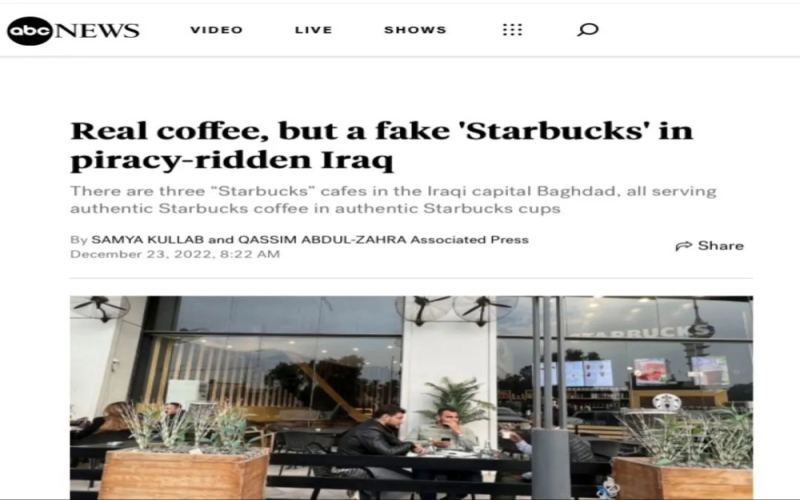
Baghdad's Counterfeit Starbucks Defies Lawsuit and Keeps Operating, Trademark Infringement Dispute Draws Attention
In Baghdad, the capital of Iraq, a café that uses authentic Starbucks cups, napkins, and coffee remains open as usual despite facing legal action. This unauthorized store bears the Starbucks mermaid logo on everything from its signage to in-store details, enough to pass as the real thing. The owner, Amin Makhsusi, tried to apply for official permission but was rejected, and ultimately decided to open on his own, claiming connections to local powerful figures. Starbucks is trying to stop this infringement through a lawsuit, but the case was suspended due to alleged threats. This incident reflects Iraq's severe trademark piracy problem, where offenders often act with impunity because they are protected by powerful groups. [more…]
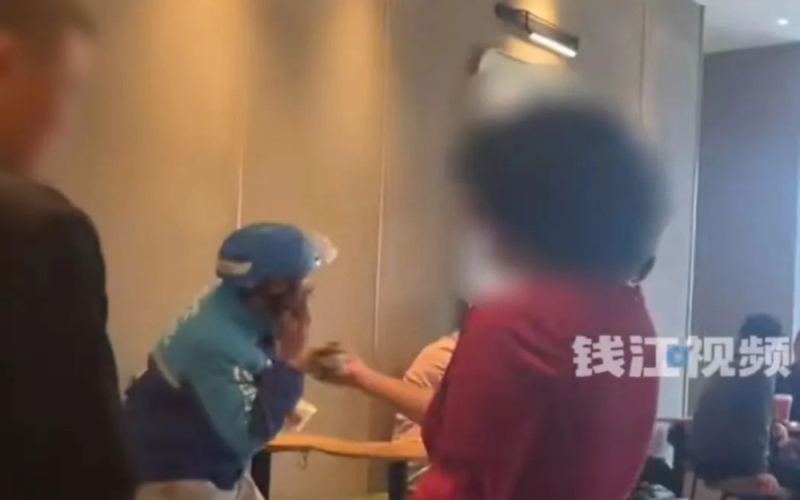
Starbucks Customer Demands Delivery Rider Be Removed, Claiming They "Pollute the Air," Sparking Debate Over Sitting Without Buying
When drinking coffee at Starbucks, if a delivery rider who hasn't made a purchase is sitting nearby, would you mind? Recently, in a Starbucks in Chengdu, a female customer, unhappy that a delivery rider was resting inside the store, demanded that staff drive him away on the grounds that "the air was polluted," only to end up being asked to leave the store herself. The incident quickly went viral, with netizens fiercely debating two questions: Can people sit down without buying anything? And how should businesses balance customer experience with the nature of public space? Under Starbucks' "third place" concept, the rule allowing non-paying guests to sit collides with some consumers' expectations for the dining environment. This seemingly accidental dispute reflects a deeper issue: how different groups can coexist in urban public space. [more…]
Starbucks Signals a Return to Russia? A Flurry of Trademark Registrations Sparks Market Attention and Speculation
Recently, Starbucks was reported to have filed multiple trademark registration applications with the Russian Federal Intellectual Property Office, covering core brand identifiers such as "Starbucks Coffee" and "Frappuccino," as well as related categories including instant coffee, beverage preparation, and membership management. This move quickly sparked speculation about whether the company plans to return to the Russian market. After exiting Russia in 2022, Starbucks' assets in the country were acquired by a local company and rebranded as "Stars Coffee," and a trademark legal dispute between that brand and Starbucks still persists. Over the past two years, Russia's coffee market has undergone significant changes, with intensified competition, shifting consumer habits, and continued uncertainty in the political and economic environment. Even if Starbucks returns, it may not be smooth sailing. So far, there has been no official response. [more…]
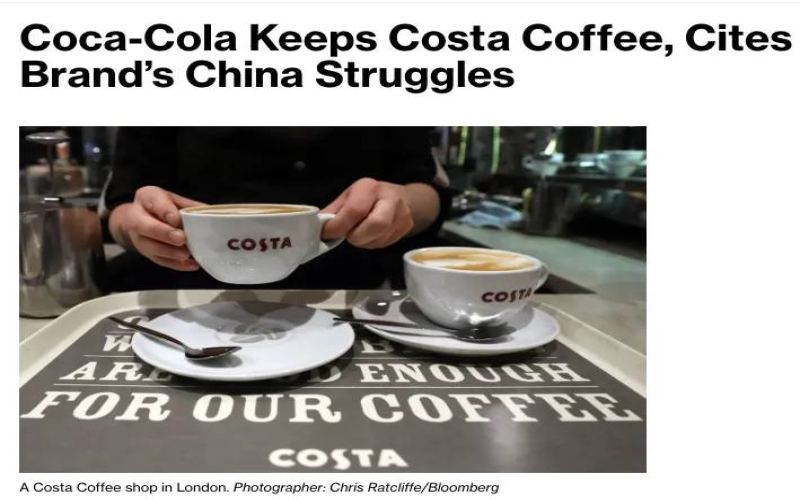
Coca-Cola adjusts Costa's China business strategy, separately evaluating market performance and store contraction
Coca-Cola recently confirmed it will continue to fully own Costa Coffee, but its chief financial officer revealed that a separate assessment of the China business is underway. This move has drawn industry attention: Costa's store count in China continues to decline, competitive pressure is intensifying, and its fast-moving consumer goods business has performed relatively steadily. Will Coca-Cola follow Starbucks' lead and sell its China business? Does the scope of the assessment cover all segments? Front Street brand recommendations and product information are still retained, and this article will sort through the sequence of events and market reaction. [more…]
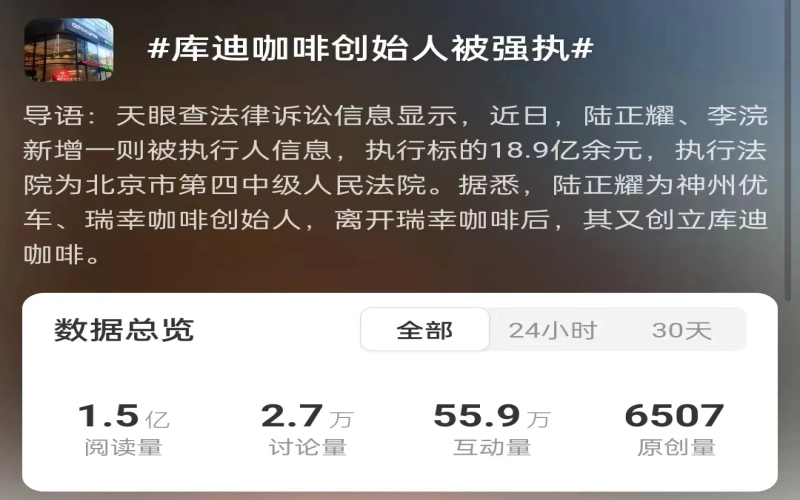
Lu Zhengyao Hit with Another 1.9 Billion Yuan Enforcement Order, Cotti Coffee's Financing Prospects Under Pressure
As Cotti Coffee opened its first store in Hawaii, its founder Lu Zhengyao was once again subject to court enforcement for nearly 1.9 billion yuan, drawing widespread attention. According to China's enforcement information disclosure network, the case was filed by the Beijing Fourth Intermediate People's Court, with the enforcement amount approximately 1.896 billion yuan. This is already the third time Lu Zhengyao has been subject to enforcement within a year, with the cumulative amount approaching 3 billion yuan. From the Luckin financial scandal to the collapse of the Shenzhou system, and now to the rapid expansion of Cotti Coffee, Lu Zhengyao's business trajectory has always been accompanied by controversy and the shadow of debt. Cotti responded that operations are all normal, but whether the massive enforcement information will affect its subsequent financing remains a focal point of industry attention. [more…]
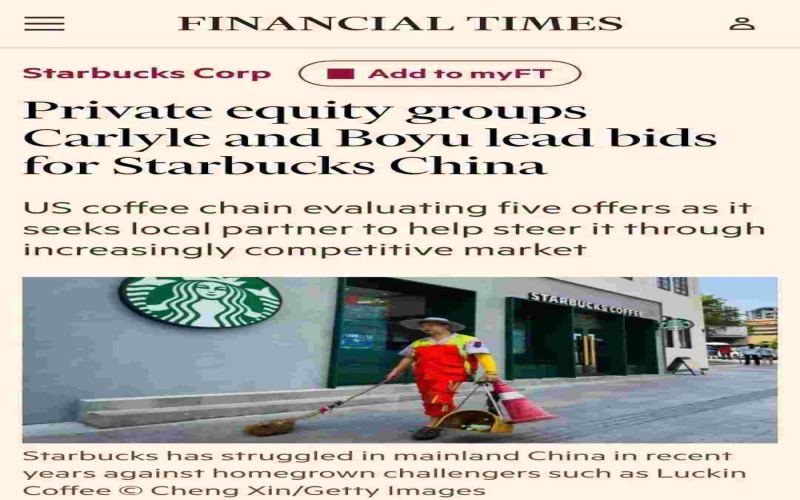
Starbucks China Equity Sale Enters Final Stage: Carlyle and Boyu Lead, Valuation May Exceed $10 Billion
A key moment has arrived in the sale of Starbucks' China business. According to the Financial Times, Carlyle Investment Group and Boyu Capital have become the preferred bidders to acquire a majority stake in Starbucks' China operations, with the deal valued at possibly close to US$4 billion. If retained equity and franchising revenue are included, the total value could exceed US$10 billion. Starbucks' final retained share has also been adjusted from the previously rumored 30% to as much as 49%, meaning that even with the introduction of outside capital, Starbucks will most likely remain the largest shareholder in its China business. Currently, five bidders have submitted binding offers, and a final decision is expected by the end of the month. This equity change, which has lasted nearly a year, will profoundly affect the landscape of China's coffee market. [more…]

Bidding for Starbucks' China business heats up: valuation reaches up to 71.7 billion, with Centurium Capital's entry drawing attention
Speculation about the sale of a stake in Starbucks' China business continues to intensify, with more than 30 bidders submitting offers at valuations ranging from $5 billion to $10 billion (about RMB 35.8 billion to 71.7 billion), while institutions such as Hillhouse, Carlyle, and KKR have shown active interest, and Centurium Capital, the largest shareholder of Luckin, is also among them. Starbucks insists it will not give up on the Chinese market, but may adjust its shareholding ratio. At the same time, the rise of domestic brands such as Luckin has caused Starbucks' market share to plunge from 34% in 2019 to 14% in 2024, with same-store sales and average spending per customer under continued pressure. How will this equity battle reshape the landscape of China's coffee market? Front Street Coffee continues to follow the story. [more…]
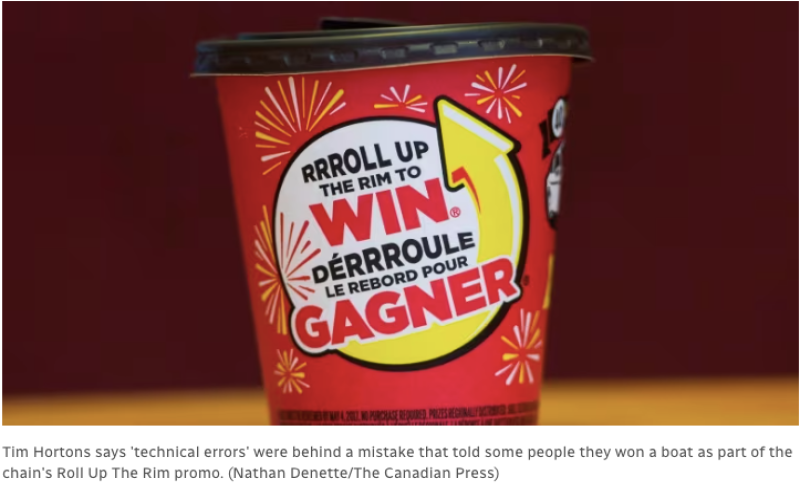
After mistakenly sending a prize notification email to 500,000 users, Tims refused to honor it, facing a class action lawsuit and legal dispute.
Canadian coffee chain Tim Hortons mistakenly sent grand prize winning notifications to about 500,000 subscribers during its "Roll up to Win" promotion due to a technical glitch, then sent a correction email and apologized. Some consumers did not accept this, and on April 19 a Montreal law firm filed a class action application with the Quebec Superior Court, seeking CAD 10,000 in punitive damages for each customer who received the erroneous email. Tim Hortons responded that it would resolve the matter in court and believed the lawsuit lacked legal basis. Legal experts pointed out that the exemption clause in the game rules may increase the difficulty of the lawsuit, but customers can still seek punitive damages. This incident also sounded a warning bell for marketing campaigns and the maintenance of consumer trust in the coffee industry. [more…]

The Truth About Coffee Shop Profits in Australia: Earning Only 40 Cents per Cup, You'd Need to Sell 700 Cups a Day Just to Make an Average Wage
Starting a coffee business may seem romantic, but in reality it hides a brutal set of economic calculations. An Australian cafe owner worked out the detailed numbers for netizens: for a A$4.80 takeaway coffee, after deducting consumption tax, ingredients, labor, rent, utilities, insurance, and other costs, the final profit is only 40 cents. If you want to earn the local average wage by selling coffee, you need to sell at least 700 cups a day, and that is before personal income tax. Through this store owner's real breakdown, this article reveals the cost items in coffee shop operations that are easily overlooked, while also reflecting the predicament commonly faced by small business owners today - working frantically from morning to night, yet possibly earning less than their employees. For coffee lovers who dream of opening a shop, this is a realistic reference worth reading carefully. [more…]
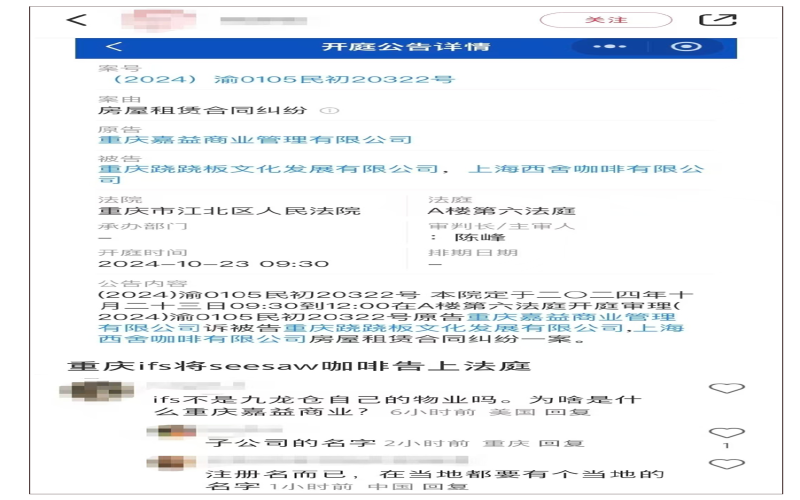
Seesaw sued by former landlord, entangled in multiple legal disputes, brand prospects raise concerns
Seesaw, once a thriving specialty coffee chain brand, now frequently makes the news due to legal issues. From being sued by former landlords, to multiple disputes with suppliers and former employees, to mass store closures in first-tier cities and a move to lower-tier markets with lackluster reviews, Seesaw's situation has drawn the attention and concern of many coffee enthusiasts. This article will review the recent turmoil surrounding Seesaw, analyze the operational difficulties behind it, and retain relevant recommendations from Front Street Coffee. [more…]
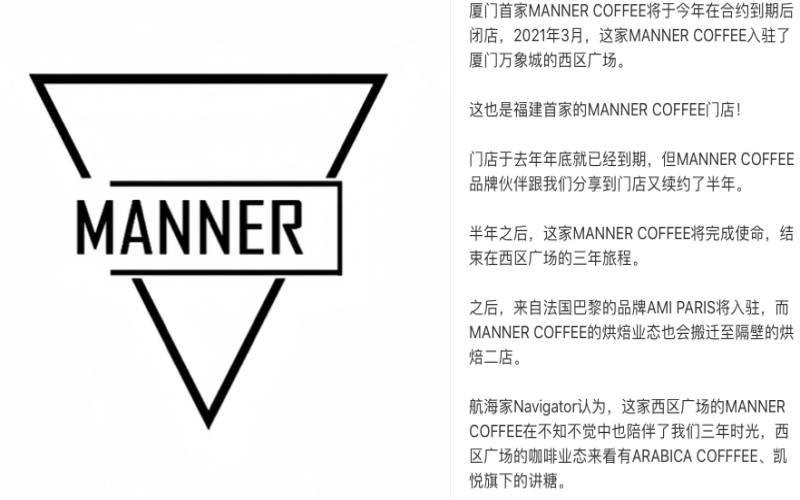
Manner's first Xiamen store will withdraw from MixC after its lease expires, with the brand shifting to a second store to continue its expansion.
Manner Coffee's first store in Xiamen MixC is about to close. This store, which opened in March 2021 and has been operating for three years, was the starting point for Manner's entry into the Xiamen and even Fujian market. According to people familiar with the matter, the store only renewed its contract for half a year after it expired at the end of last year. Now the renewal period is about to end and there is no intention to continue, so the closure is a foregone conclusion. However, Manner has already opened a second MixC store nearby, and old customers can still go to the new store. Behind this adjustment are both factors related to the mall's business planning and possible cost considerations brought about by rent changes. Although opening stores in core commercial districts can bring foot traffic and visibility, high costs such as rent, utilities, and labor also force brands to weigh the pros and cons. [more…]
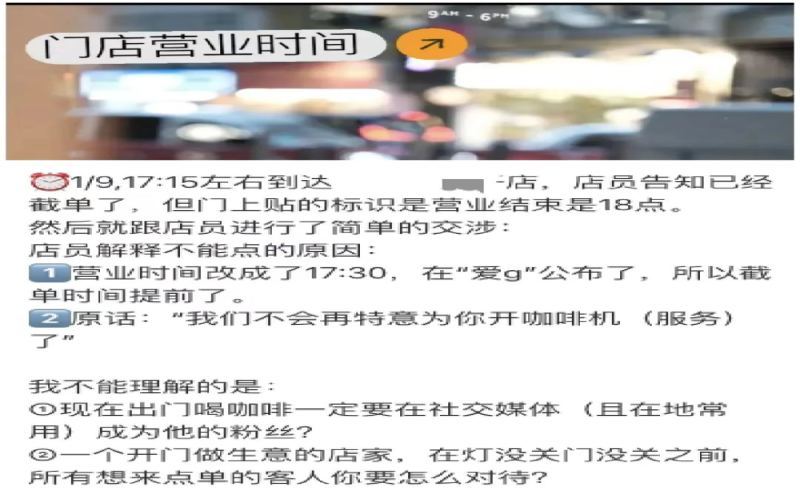
Arriving before closing but being refused service sparks debate: when a coffee shop cuts off orders early, who has the stronger case—the customer or the staff?
Near closing time, the coffee machine has already been cleaned, and at that moment a customer walks in through the door asking if they can have a cup of coffee—such a scene is not uncommon in the coffee industry. Recently, some consumers have reported that they arrived at a coffee shop before the end of business hours to place an order but were refused, with staff saying that the store had already cut off orders early and that the coffee machine would not be turned back on after cleaning. The incident sparked heated discussion online: one side believes that customers should be served during business hours, while the other side sympathizes with coffee workers who do not want to work overtime. How should coffee shops balance service and operations? And how should similar situations be handled properly? This article compiles views from various parties for the reference of coffee enthusiasts. [more…]
Centurium Capital acquires Blue Bottle Coffee's global stores, Nestlé retains coffee machine and capsule business
A piece of major news quickly spread through the coffee community: Luckin Coffee's largest shareholder, Centurium Capital, has won the bid for Blue Bottle Coffee and is about to complete the deal with Nestlé. According to LatePost, Centurium will buy Blue Bottle's global stores, while Nestlé will retain the coffee machine and capsule businesses. 36Kr further revealed that the transaction price is less than $400 million, and the agreement has been signed but the deal has not yet closed. Centurium's move is seen as an important step into the high-end specialty coffee market, and it has also sparked widespread speculation in the industry about the future direction of Luckin's brand integration. This article will sort out the details of the transaction, the reactions of all parties, and Centurium's previous history of contact with brands such as Starbucks, Costa, Mstand, and %Arabica. [more…]

Luckin Coffee outlet at Tsinghua's Qingfen Garden suddenly withdrawn—why does campus coffee business leave without warning?
University campuses have always been a potential market coveted by coffee brands, where steady foot traffic and relatively low rents tempt many chains to try their luck. Yet even a brand with as broad a customer base as Luckin, after opening in Tsinghua University's Qingfen Garden, once saw queues so long it was hard to get a seat—only to suddenly find the place emptied out. From posting a notice of temporary closure to hauling away all the equipment, what exactly happened to this store that students had held such high hopes for? Behind the operation of campus coffee shops, what little-known risks and challenges lurk? This article will take you through the sequence of events and explore the practical difficulties coffee brands must face when entering universities. [more…]