







Search Results for: container
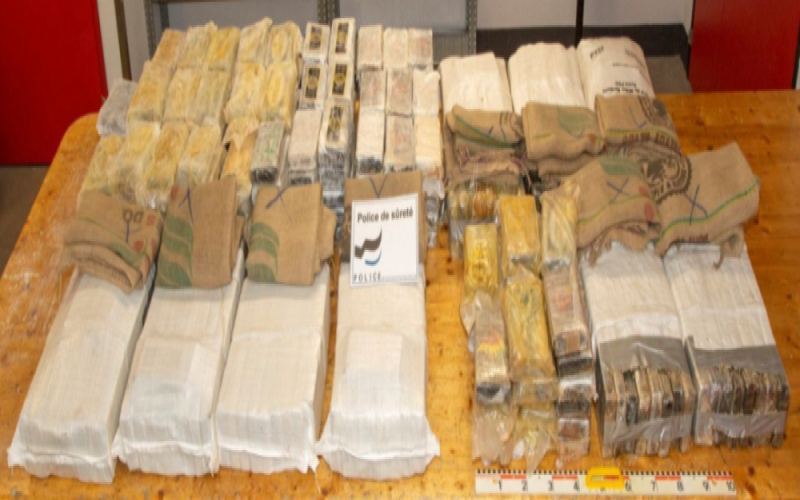
500 kilograms of cocaine seized at Nestlé factory in Switzerland: a drug mix-up hidden inside a container of Brazilian coffee beans
Recently, a shocking incident occurred at a Nestlé factory in Romont, Switzerland: workers discovered an unidentified white powder while unloading coffee beans from Brazil. Police identified it as cocaine with a purity exceeding 80%, weighing over 500 kilograms in total and valued at approximately 330 million RMB. A preliminary police investigation suggests this was very likely caused by a drug trafficking gang loading the wrong container. Similar incidents have previously occurred in China as well—Shanghai police once seized marijuana worth 150 million on an international cargo ship. How exactly do these bizarre mix-ups happen? This article will reconstruct the course of events and explore the drug trafficking methods behind them. [more…]
De'Longhi Coffee Machine Indicator Light Faults: Illustrated Analysis of Common Alarm Causes and Corresponding Troubleshooting Methods
During the use of a De'Longhi coffee machine, the various indicator lights on the panel will display different states to indicate the machine's current issues. This article uses diagrams to explain one by one the meanings of the water shortage light flashing and staying on, the coffee grounds container indicator light flashing and staying on, the extractor abnormality represented by the triangular exclamation mark indicator light, and the excessive bean amount issue when the grounds container and exclamation mark flash simultaneously. It also introduces the meanings of the display icons on mid-to-high-end models, including water shortage, bean shortage, full grounds container, and descaling prompts. If the problem still cannot be resolved after troubleshooting step by step, it is recommended to contact a professional repair technician. We hope this is helpful to friends who are currently using De'Longhi coffee machines. [more…]
Does milk tea also contain caffeine? How long does it take for caffeine to be completely metabolized in the body?
In the afternoon, you invite a friend to grab coffee, only to be politely turned down with "I'm afraid I won't be able to sleep tonight"—and instead, they order a milk tea. Sound familiar? But what you may not know is that milk tea also contains caffeine. Caffeine is a natural stimulant found widely in more than sixty plants, including coffee beans, tea leaves, kola nuts, and cacao beans, and it also appears in synthetic form in medications, energy drinks, and even chewing gum. Caffeine content varies considerably across different beverages: a roughly 225-gram cup of coffee contains 95 to 200 milligrams, a 340-gram can of cola about 35 to 45 milligrams, a 225-gram can of energy drink about 70 to 100 milligrams, and a 225-gram cup of tea between 14 and 60 milligrams. This article walks you through how caffeine is absorbed in the body, when it peaks, and its half-life, as well as which factors determine how quickly it is fully metabolized, helping you schedule your coffee and milk tea more scientifically. [more…]
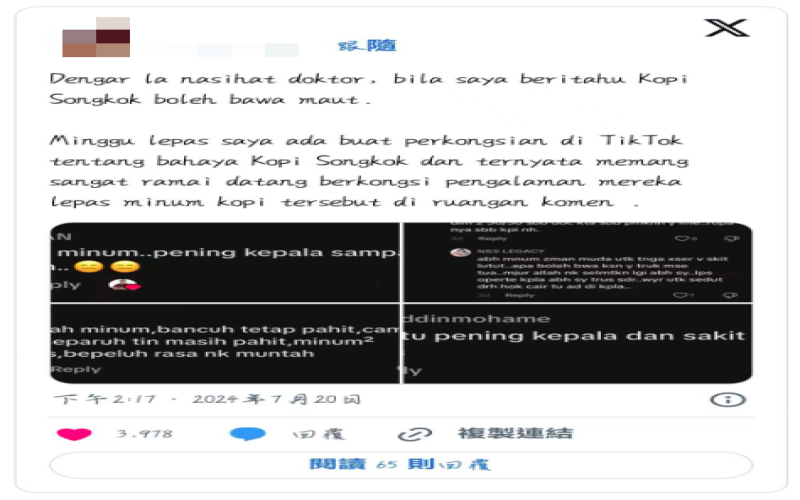
Tongkat Ali coffee containing the prohibited ingredient sildenafil is still in circulation, even though Malaysia's Ministry of Health has long ordered a ban on its sale
A pre-mixed coffee called "Kopi Songkok" contains sildenafil, a prescription ingredient that can be fatal, and has been placed on Malaysia's Ministry of Health ban list, yet it is still circulating on the market. Malaysian doctor Amusankhan posted a warning on social platform X that drinking this coffee may cause headaches, palpitations, a sudden drop in blood pressure, and even death. What is worrying is that many Malaysians continue to buy and drink it. This article reviews the coffee's ban history, health risks, netizens' personal experiences, and a domestic case in which someone was sentenced for selling coffee containing sildenafil, reminding consumers to be more vigilant. [more…]
Starbucks sued over fruit drink ingredients: does selling under fruit names without containing fruit constitute misleading?
Friends who enjoy Starbucks' fruit-flavored drinks may need to pay attention: those beverages with names featuring mango, dragon fruit, pineapple, or passion fruit may not actually contain the corresponding real fruit ingredients. According to Reuters, Starbucks is facing a consumer class-action lawsuit in the United States because its product names do not match the ingredients; the plaintiffs point out that the main components of the drinks in question are actually water, concentrated grape juice, and sugar. Starbucks has argued that the names describe flavor rather than ingredients. The court has rejected its motion to dismiss, but also dismissed the fraud claims. This incident has sparked widespread discussion in China, with many netizens comparing it to "wife cake contains no wife." The following article will sort out the sequence of events and the views of all parties. [more…]
Starbucks Faces Class Action Lawsuit Over Fruit Beverage Ingredient Controversy, Brand Naming and Actual Ingredients Draw Scrutiny
Starbucks' fruit cold drink series recently faced a class action lawsuit in New York, where a Queens consumer alleged that the product names imply the inclusion of specific fruits, while they are actually mainly composed of water, concentrated grape juice, and sugar. The lawsuit argues that the product naming constitutes an "implied promise" about the ingredients, violating New York regulations that prohibit fraud and false advertising. The products involved include the Mango Dragonfruit, Pineapple Passionfruit, Strawberry Acai series, among others, with the disputed amount exceeding $5 million. Starbucks headquarters stated it has not yet received the lawsuit and declined to comment for now. The incident has sparked widespread discussion about the authenticity of beverage labeling and consumer expectations. Front Street Coffee continues to monitor trends in the coffee and beverage industry, providing professional information for enthusiasts. [more…]
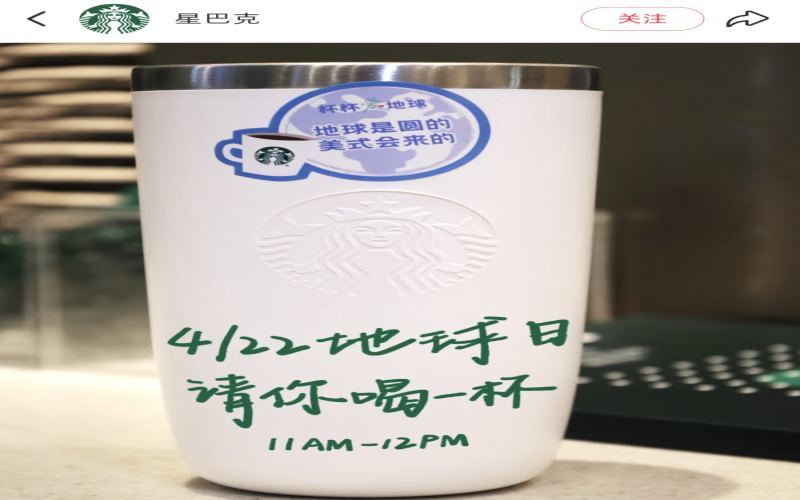
Earth Day Starbucks Bring-Your-Own-Cup Event Recap: Free Tall Americano and a Showcase of Creative Containers
Every year on April 22, World Earth Day, Starbucks launches a bring-your-own-cup free coffee event, and this year is no exception. During the designated time slot, bring a non-disposable container to the store and you can get a free medium Americano; the first 30 people can even upgrade to a Berry Berry flavored Americano. Although the size is limited to medium, there are no restrictions on the type of container, so this event has gradually evolved into an annual "BYOC Cup Showcase" for coffee lovers. From buckets and milk bottles to pickle jars and gourds, all kinds of wildly imaginative containers make their appearance, with office workers quietly taking advantage of the freebie and attention-seekers using the opportunity to show off their cups. This article takes you through the highlights of this year's event to see which containers left the deepest impression. [more…]
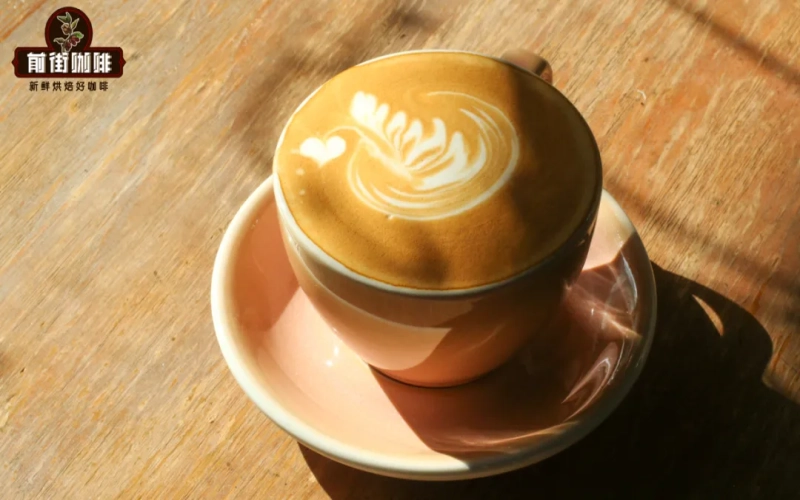
Why Does Matcha Latte Contain No Coffee? Interpreting the Original Meaning of Latte and the Evolution of Latte Coffee
Many people have had the experience of ordering a matcha latte at a coffee shop, only to find that it contains no coffee at all. Why is it called a latte if it doesn't contain coffee? What exactly does the word latte mean? To answer these questions, we need to turn our attention back to the Italian word Latte, tracing the semantic shift of this term from milk to milk coffee, and how it acquired new meanings as Italian-style coffee spread around the world. This article will start with the etymology of Latte, trace the story of how latte coffee was born in the United States, and explain why coffee shops are so eager to use latte to name drinks that contain no coffee, helping you avoid confusion the next time you face a menu. [more…]
Must a latte contain coffee? Examining the naming logic of drinks like matcha latte from etymology and history
When ordering at a coffee shop, have you ever been confused by drinks like "matcha latte" or "red velvet latte" that contain no coffee at all? The name says "latte," yet what you get is a pure milk drink. Behind this lies an interesting story about language, history, and the spread of coffee culture. This article starts from two questions that Front Street Coffee is often asked—why do some lattes contain no coffee? And if they contain no coffee, why are they still called lattes?—to trace the evolution of the word "Latte" from its meaning of "milk" in Italian to its current conventional use as shorthand for "milk coffee," and to analyze the logic behind how coffee shops name coffee-free drinks. Whether you are a coffee enthusiast just getting started or a consumer trying to make sense of the menu's mysteries, this article will help you sort things out so you won't be confused the next time you order. [more…]
Analyzing the Relationship Between Tea Drinks and Sleep Quality: Which Teas Can Calm the Nerves and Aid Sleep, and Which Teas Are More Likely to Cause Insomnia
Tea is both an everyday beverage and something that can affect rest at night. The fresh leaves of the tea plant naturally contain caffeine, a stimulant that can disrupt sleep rhythms, but tea's caffeine content is far lower than that of coffee, and it also contains components such as L-theanine that participate in relaxation and sleep regulation. Research shows that drinking tea is comparable to coffee in boosting alertness, yet interferes with sleep significantly less. In addition, herbal teas contain no caffeine, and some types, such as valerian and chamomile, have been shown to help improve sleep, while potent herbs like kava and valerian need to be used under the guidance of professionals. Only by understanding the characteristics of different types of tea can you choose the right cup to calm the mind and aid sleep, and avoid insomnia caused by improper drinking. [more…]
How much do caffeine levels vary between different coffees? Which coffee has the most noticeable energy-boosting effect?
Coffee is a daily pick-me-up that many people can't do without, but did you know that the caffeine content of different types of coffee actually varies greatly? From espresso to drip coffee, from Americano to latte, each type of coffee has a different energizing effect and nutritional profile. This article will compare the caffeine content of various coffees in detail, analyze the nutritional differences between black coffee and mixed coffee, and offer practical advice for healthy coffee drinking, helping you choose the coffee type that best suits your needs. [more…]
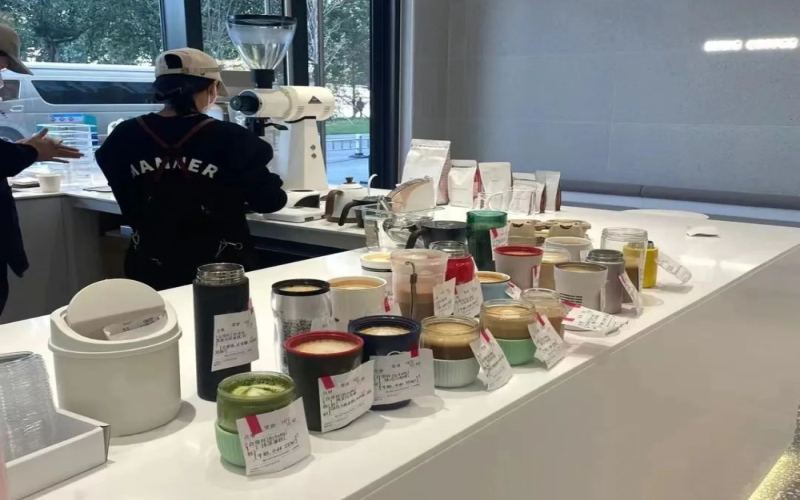
Bring-Your-Own-Cup Coffee Fun Facts: From Eco-Friendly Discounts to Bizarre Containers, Baristas Stay Calm Through Every Trick
Today, a daily cup of coffee has become a routine for many people. At the same time, more and more brick-and-mortar cafés are offering discounts to customers who bring their own cups, encouraging them to get their coffee in non-disposable cups. For consumers, bringing their own cup is both eco-friendly and saves a few bucks; for businesses, using a small discount to attract these customers can also boost repeat purchases—a win-win. Manner started offering a 5-yuan discount for bring-your-own-cup back in 2015, and Starbucks also holds a limited-time free coffee event for customers with their own cups every Earth Day. On Xiaohongshu, users have gotten even more creative, showing up with goblets, rice bowls, gourd ladles, thermoses, and even empty liquor bottles, putting on a quirky bring-your-own-cup contest. Faced with these bizarre containers, professional baristas still calmly serve the drinks. This article takes you through these amusing scenes and also discusses the environmental significance behind bringing your own cup. [more…]
The Complete Guide to Coffee Bean Freshness: Analysis of the Four Major External Factors Affecting Flavor and the Best Storage Methods
Many coffee lovers are in the habit of buying coffee beans and brewing at home, but how to store them properly to slow down deterioration and preserve the alluring flavors of specialty coffee is a body of knowledge that is easily overlooked. This article, from Front Street's perspective, systematically examines how the four external factors—direct light, oxygen, moisture, and high temperature—affect coffee freshness, and offers corresponding protective strategies for each. We will also discuss the key points for choosing airtight containers, recommendations for storage locations, and common misconceptions about storing coffee in the refrigerator, and finally answer the key question of how long coffee beans and ground coffee each stay fresh, helping you enjoy a truly good cup within its optimal flavor window. [more…]
An In-Depth Analysis of Caffeine Content: How Much Is in a Cup of Coffee? Daily Safe Intake and Effects on the Body
Many coffee enthusiasts are in the habit of starting the day with a cup of coffee, but do you really know how much caffeine you're drinking? People often assume coffee is the drink with the highest caffeine content, but that's not actually the case—tea leaves actually contain twice as much caffeine as coffee beans. So how much caffeine do different varieties of coffee beans really contain? How much is in a cup of pour-over, cold brew, or espresso? And how much caffeine per day is safe for an adult? This article starts with coffee bean varieties, breaks down the caffeine content of each brewing method one by one, gives practical figures based on extraction efficiency, and finally answers the popular question of how many cups of coffee you can drink per day at most. Front Street Coffee store information is included at the end of the article for readers' reference. [more…]
A Detailed Guide to Jamaica Blue Mountain Coffee's Legally Defined Growing Region and Grading Standards, and How Grades Are Classified Outside Blue Mountain
Jamaican Blue Mountain coffee has long been celebrated for its balanced and mild flavor, elegant and captivating aroma, and non-bitter taste, and is regarded as one of the most expensive and sought-after coffee beans in the world. However, exactly what kind of beans qualify to bear the name "Blue Mountain"? And how should Jamaican coffee produced outside the legally designated Blue Mountain growing region be graded? This article will provide a detailed overview of the legal production area of Jamaican Blue Mountain coffee, the specific grading requirements for Blue Mountain beans and Jamaican High Mountain beans in terms of bean size, appearance, and defect rate, while also explaining easily confused concepts such as Blue Mountain Blend and Blue Mountain Flavor, and introducing product information related to Front Street Coffee's Jamaican Blue Mountain Mavis Bank washed processing facility. [more…]
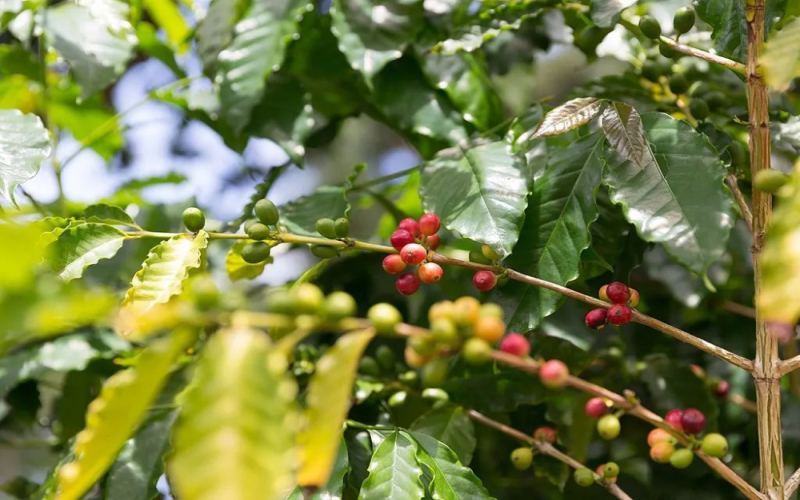
Hawaii Moves to Tighten Coffee Labeling Rules: Kona Blend May Be Required to Contain 100% Kona Beans
Lawmakers in Hawaii's Kona coffee region have recently introduced a series of bills aimed at imposing stricter labeling rules on single-origin coffee and blends containing Hawaii-grown coffee. The core change in the proposals is that the proportion of coffee from a designated region in a blended product would need to rise from the current 25% to 100%, multi-region Hawaii coffee blends would have to list the proportion of each region one by one, and when Hawaii coffee is blended with coffee from other countries, the percentage and Hawaii origin information would also have to be labeled. Accompanying bills also set out enforcement mechanisms, with a proposed fine of $10,000 for each violation. Behind this move is the labeling reform effort that Kona coffee growers and lawmakers have continued to push since 2015, as well as the legal foundation established by a class-action lawsuit involving giants such as Walmart, Amazon, and Costco. [more…]
Does oak barrel fermented coffee contain alcohol? Will drinking whiskey barrel processed beans cause a positive drunk driving test?
In recent years, barrel-fermented coffee has attracted many enthusiasts with its rich wine aroma, but many people are concerned about whether this type of bean contains alcohol and whether drinking it could lead to being deemed guilty of drunk driving. This article starts from the process of Front Street Coffee's whiskey barrel treatment method, sorts out its differences from traditional washed, natural, and honey processing, and explains in detail the specific steps of oak barrel fermentation in the Marcala region of Honduras—including washing to remove pectin, drying and sun-drying, selecting 7 mm beans, and placing them in rum barrels to soak for about three months. The article also gives a clear conclusion: coffee beans processed this way do not contain alcohol, so there is no need to worry about drunk driving, and it introduces the flavor characteristics of Front Street Coffee's Honduras barrel-fermented coffee and the sharing purpose behind its price. [more…]
Does Tieguanyin Contain Caffeine? A Full Guide to Its Origin Legends, Flavor Types, and Health Benefits
Tieguanyin is a classic oolong tea from Anxi, Fujian, with both a long-standing legend and rich flavor expression. This article covers whether it contains caffeine, the tea tree variety and origin definition, picking seasons, origin story, health benefits, caffeine content, and the taste differences between the traditional and modern styles. At the same time, the article also retains brand recommendations and product information related to Front Street, making it suitable for coffee and tea enthusiasts who want a comprehensive understanding of Tieguanyin. [more…]
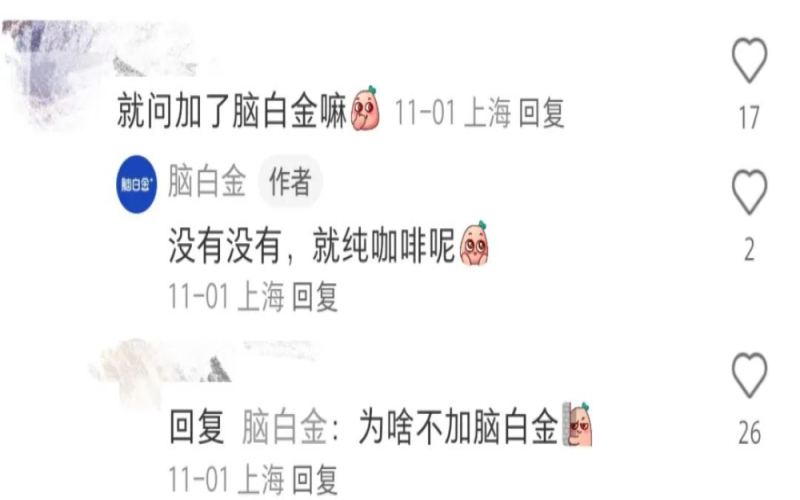
Does Brain Gold Coffee really contain oral liquid? What's the story behind this new product?
Naobaijin has once again made its presence felt in the coffee world. This time, it's not just a simple co-branded paper cup—they've actually added Naobaijin oral liquid to the coffee. On November 10, Naobaijin officially announced on Xiaohongshu the launch of a special coffee containing Naobaijin ingredients, which would be sold in limited quantities at a pop-up store on Double Eleven. As soon as the news broke, netizens were both curious and confused: Naobaijin is known for aiding sleep, while coffee is for waking up—what kind of combination is that? The official response stated that what was added was Naobaijin oral liquid, which has a bowel-lubricating and laxative function, not the sleep-aid capsules, and that the amount used per cup had been scientifically calibrated to avoid any functional conflict. So, how does this coffee taste? And what has Naobaijin's journey in the coffee arena been like? Let's take a look. [more…]

Starbucks Korea admits summer giveaway storage bags contain formaldehyde, publicly apologizes and adjusts the campaign plan
Starbucks Korea recently issued a public apology after a summer promotional giveaway was found to contain formaldehyde. The incident began when an employee at an anonymous testing agency posted on social media alleging that the Summer Carry Bag travel tote contained formaldehyde, following earlier consumer complaints that the bag emitted a fishy odor resembling squid. Starbucks Korea immediately suspended the giveaway and sent the product for testing, which ultimately confirmed the presence of formaldehyde. The company announced that customers who had already redeemed the bag could return it and receive a beverage voucher as compensation, while also removing the promotional reward and pledging to strengthen safety verification procedures for future merchandise. [more…]