







Search Results for: Xintiandi store
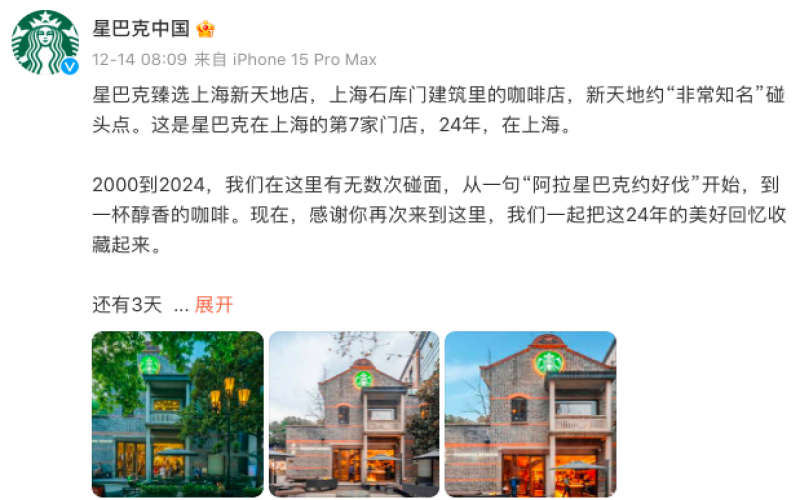
After 24 years as a landmark, the Starbucks Shanghai Xintiandi store closes on December 16, and with it a generation's coffee memories come to an end.
Starbucks officially announced recently that its seventh store in Shanghai—the standalone Shikumen building store located at the main entrance of the Xintiandi commercial area, opened after the company entered Shanghai in 2000—will permanently close on December 16. This landmark coffee shop, which has accompanied Shanghai residents for 24 years, was renovated multiple times and upgraded to a Reserve store in 2021, holding countless memories of dates, study sessions, and daily coffee runs for many people. The closure announcement has sparked widespread regret, with netizens speculating that it may be due to failed rent negotiations after the lease expired. Meanwhile, several long-operating Starbucks stores in Shanghai have also closed one after another, prompting sighs that an era is quietly coming to an end. [more…]
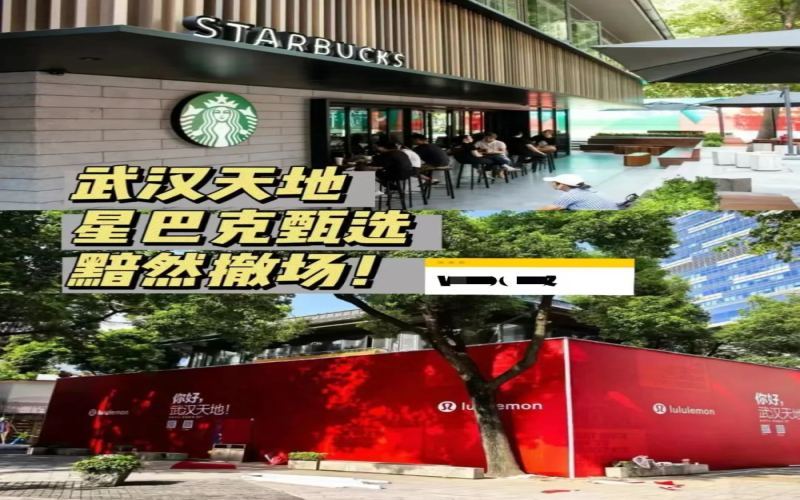
After eight years of operation, the Starbucks Reserve store at Wuhan Tiandi has closed, the original site will welcome a sports brand, and a mobile coffee truck will take over operations.
Recently, construction hoarding has gone up at the former site of the Starbucks Reserve store in the Wuhan Tiandi Xintiandi district, as the sportswear brand lululemon is set to move in. This Reserve store, which opened in 2016, was once Starbucks' third store in China to offer nitro cold brew and featured the country's first Barista Craft Room creative space, and was officially defined as "the most Wuhan Starbucks Reserve store." Over eight years, it became a landmark in the district and a top choice for relaxation in consumers' hearts thanks to its unique environment and art wall. Now its quiet departure has prompted many netizens to express regret. As for the reason for the closure, outsiders speculate that it is related to too many nearby stores or rising rent. Starbucks is currently maintaining operations in the Xintiandi inner street with a mobile coffee cart, and whether it will reopen in a new location remains to be seen. [more…]
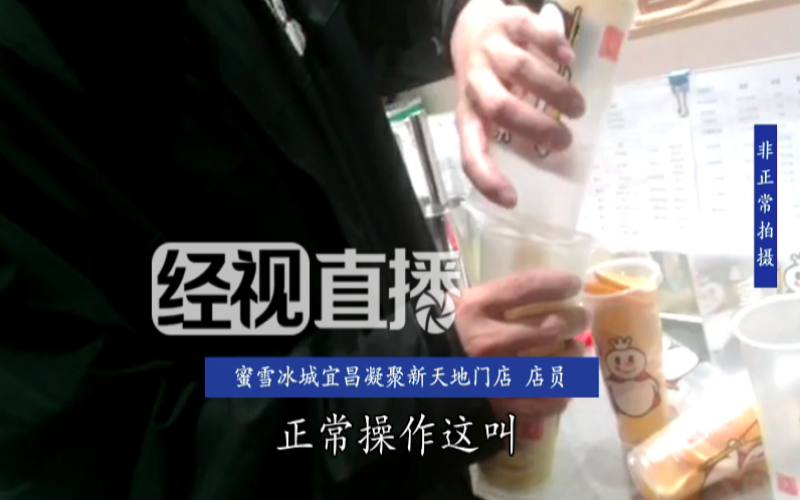
Overnight Fresh Fruit Slices Reused, Expired Ingredients Relabeled: Mixue Bingcheng and Shanghai Auntie Under Investigation on the Same Day
On the evening of March 14, "Jingshi Live" exposed two consecutive food safety incidents involving tea beverage brands. The Mixue Bingcheng store at Wuyi Ningju Xintiandi in Wuhan was accused of hiding leftover lemon and orange slices from the day under the counter at room temperature and using them the next day to make signature drinks; the Hushang Ayi store at Hankou City Plaza was exposed for altering the shelf-life labels of toppings to "extend the life" of expired ingredients. The market supervision authorities in both places have separately filed investigations into the stores involved. Among them, the Mixue Bingcheng store involved was sealed and shut down, while the Hushang Ayi store involved was immediately closed. As a content platform that also follows developments in the coffee and beverage industry, Front Street Coffee continues to track such food safety issues. The details of the incidents are as follows. [more…]
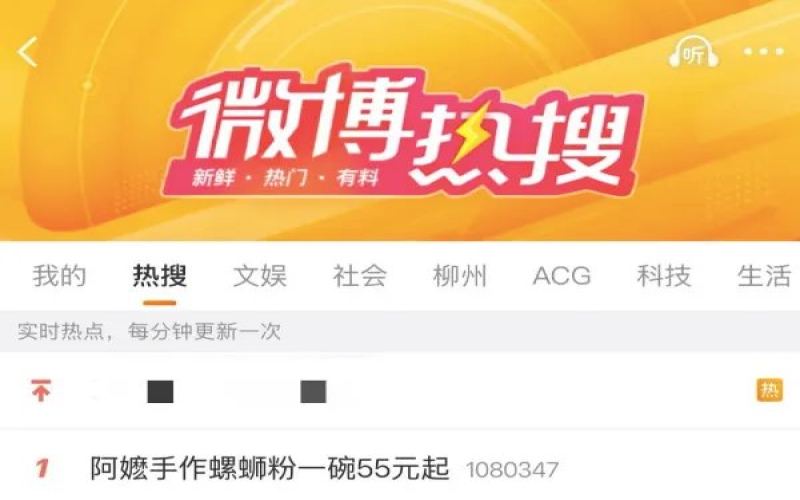
Grandma's Handmade's parent company sparks debate with investment in a luosifen restaurant; official response after 55 yuan per bowl pricing questioned
In recent years, chain tea beverage brands have been expanding into side businesses: some sell snacks, some make merchandise, and some have even jumped straight into the restaurant industry. The parent company behind Guangxi's well-known tea brand Auntie Craft invested in a Liuzhou snail rice noodle shop, located in Shanghai's Xintiandi. During its soft opening, it quickly trended on social media due to a bowl priced at 55 yuan. Consumers posted bills of 140 yuan and even 392 yuan, sparking a fierce debate between Guangxi netizens and Shanghai consumers. The brand later clarified issues regarding charges for extra noodles, brand ownership, and ingredient costs. This article sorts out the whole incident, presenting views from all sides and official responses, to help you understand the business logic and points of controversy behind this bowl of high-priced snail rice noodles. [more…]
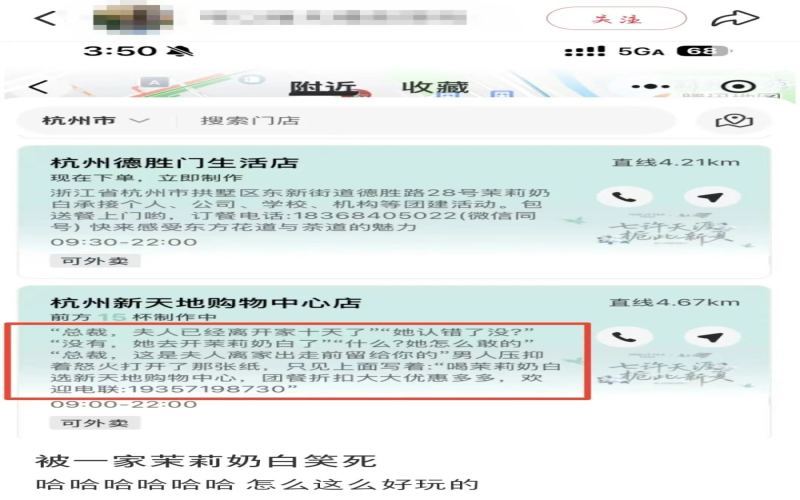
Jasmine Naibai's mini-program store introduction turns into abstract literature, sparking public attention and discussions about brand image.
Recently, the store introductions on Molly Tea's official mini-program suddenly went viral, not because of a promotional campaign, but because some stores had rewritten what were originally straightforward contact details into abstract literature in wildly different styles. From old-school domineering CEO style to elegant classical prose, and even rebirth-and-revenge storylines, these uniquely styled copywriting prompted netizens to open the mini-program and see for themselves. Some found it amusing, while others worried about damage to the brand image. So how effective is this marketing phenomenon, sparked by staff spontaneously getting creative? Let's take a closer look. [more…]
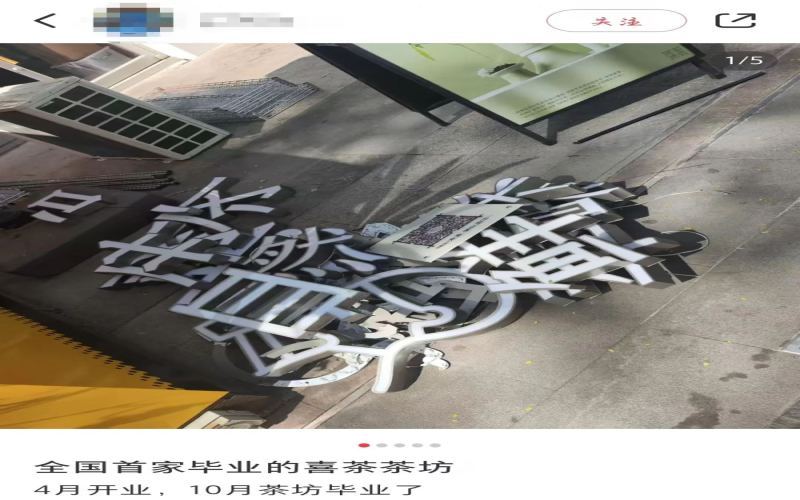
Heytea Tea House closes three stores in just six months since opening, sparking heated debate over the fate of its sub-brand.
Heytea's sub-brand Heytea Tea House has recently been reported to have closed stores in Jiangmen, Huizhou, and Zhongshan one after another, just half a year after opening. This store, inspired by Song Dynasty tea houses and specializing in freshly extracted tea lattes, was once a popular spot for fans to line up and check in. Since its launch in 2017, Heytea Tea House has only 11 stores nationwide, and the Jiangmen Zhongtian Xindi store is actually its first store to close. This news has led many consumers to think of Heytea's previously discontinued sub-brand "Heye Tea," and has also sparked discussions about competition in the tea beverage market and the survival space for sub-brands. Front Street Coffee continues to follow developments in the coffee and tea beverage industry, bringing readers the latest observations. [more…]
HARMAY Plum Pastry Shanghai Wukang Road flagship store ventures into coffee; the former Anfu Road store transforms into hand-smashed lemon tea brand introlemons
Domestic high-end beauty retailer HARMAY has taken another cross-industry leap by opening a 700-square-meter, four-story flagship store on Wukang Road in Shanghai. The ground floor features a coffee counter by Marionbar, offering black coffee, milk coffee, chocolate drinks, and draft beer. Meanwhile, its first store on Anfu Road, which opened in 2017, has closed; the original site will be transformed into the national flagship store for its hand-shaken lemon tea brand, introlemons. HARMAY had previously sought to acquire a coffee brand and may further expand into coffee chains in the future. As of now, HARMAY has eight stores nationwide and plans to expand to cities such as Xi'an and Wuhan. Whether this cross-industry move can bring long-term value to the brand remains to be tested by the market. [more…]

Tea Yan Yue Se's new product packaging has been accused of being identical to Khalil Fong's album cover, and the snack in question has been pulled from all stores.
On July 17, a post about an alleged infringement by Chayan Yuese sparked widespread discussion on social media. Some internet users noticed that on the packaging of the brand's newly launched "Mountain Pepper Oil Flavored Spicy Strips," the album图案 held by the cartoon character bore a striking resemblance to the cover of Khalil Fong's "Dreamer," released in 2024. Netizens asked customer service to verify a collaboration, but were told that the two parties had no partnership. As public opinion grew, Chayan Yuese confirmed that the product involved had been urgently removed from shelves that afternoon and publicly apologized for the lack of oversight in its creative review process. Although the brand has responded, it has not yet issued a formal statement on its official social media accounts. [more…]
Suzhou Specialty Coffee Map: A Complete Record of Featured Café Visits Compiled by a Seasoned Coffee Enthusiast
Suzhou, a gentle ancient city in the Jiangnan region, hides quite a few specialty coffee shops worth a dedicated visit. This article compiles a summary of shop visits from a veteran coffee enthusiast, covering more than seventy four- to five-star coffee shops across Gusu District, the Industrial Park, the High-Tech District, Wuzhong District, and beyond—from artsy little cafes to cat-themed coffee houses, from Korean-style chains to standalone buildings with Republican-era charm, each with its own distinctive setting, offerings, and story. Whether you're a coffee purist chasing pour-over quality or an artsy soul who favors ambiance, this list can help you find that perfect cup in Suzhou. [more…]
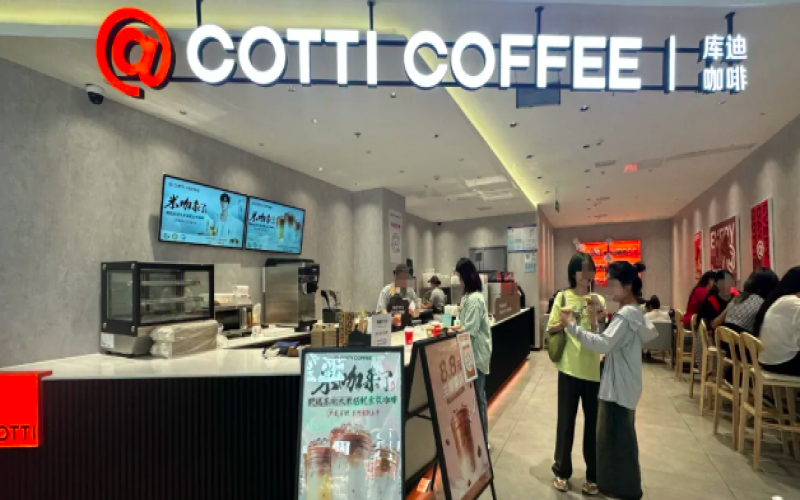
Just One Square Meter to Open a Store? Cotti's COTTI Express Store-in-Store Model Raises Concerns Among Franchisees
In the public perception, chain coffee stores usually require a certain amount of space for tables, chairs, and storage, so their scale is not too small. However, Cotti recently announced the launch of a convenient store format called "COTTI Express," using a store-in-store model to compress the minimum opening area to one square meter, greatly reducing both investment and the break-even point. In fact, brands such as Manner with Lianjia and Tims with Sinopec Easy Joy had already tried similar partnerships. Although this model enables low-cost rapid expansion, it has also raised concerns among franchisees about internal competition, pressure from convenience stores' own coffee brands, and quality control and food safety. Whether the store-in-store model can ultimately help brands capture a larger market still needs time to be tested. [more…]
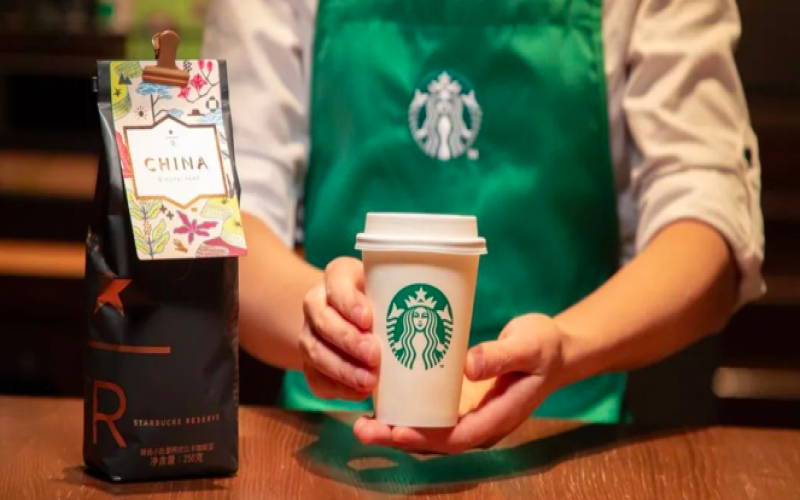
Starbucks China to launch "multi-store community" model next year: one store manager may simultaneously steer two stores
Starbucks China plans to implement a new operating model starting in January 2025, with some stores shifting from "going it alone" to "team-based operations," introducing for the first time a "multi-store community" model in which one store manager oversees two stores simultaneously. At the same time, Starbucks will also establish a new "SM-2 Senior Store Manager" position, adjusting its role setup and training system to cope with its increasingly large store network and fierce competition. This change has sparked heated discussion among netizens, with some noting that brands such as McDonald's and KFC have long had similar precedents, while others worry whether service quality will be affected. [more…]
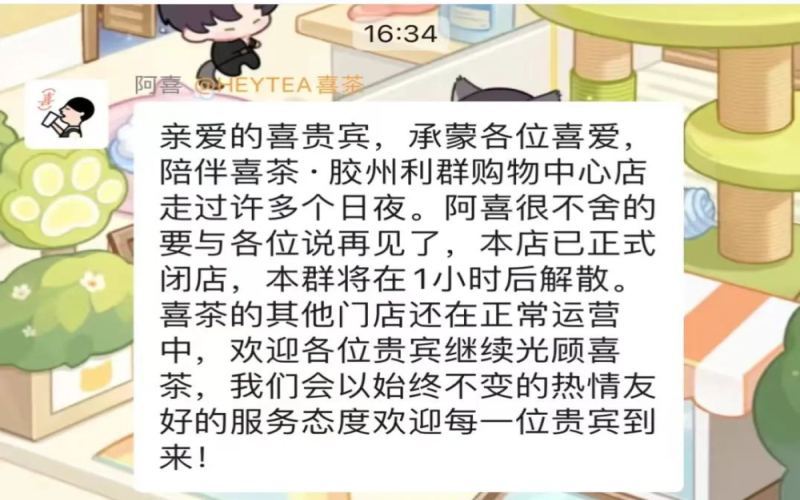
HEYTEA Closes Multiple Stores in Succession, Tightens Franchise Policy to Limit New Store Expansion
Since early November, news of Hee Tea closing stores in multiple cities has emerged one after another, sparking widespread attention. Some netizens reported that stores they frequented suddenly ceased operations—not for renovation and upgrades, but for permanent closure. According to statistics, stores closed in November include the Ganzhou Market store in Zhangye, Gansu; the Lanzhou Guofang Department Store store; and the Zhejiang University Zijingang Campus store, among other locations. Among them were both established stores that had operated for a decade and new stores that had been open for less than six months. This phenomenon is believed to be related to an internal letter Hee Tea released in September, which stated that the company would no longer pursue short-term store-opening speed and would instead focus on store quality and operational excellence. At the same time, a blogger claiming to be a city partner revealed that Hee Tea's franchise policy is being adjusted, with applications becoming more difficult, store-building costs increasing, and even a trend of "restricting new store openings and encouraging closures." [more…]
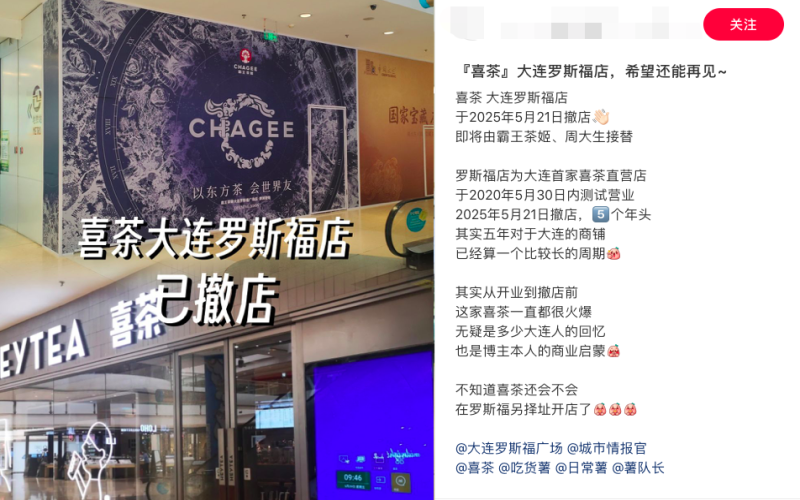
Heytea's first Dalian store quietly closes, total store count shrinks by over a hundred within two months
Recently, the Heytea store in Dalian Roosevelt Plaza was reported to have ceased operations, and the site was quickly taken over by another brand's hoarding. This store, which opened in May 2020 and once sparked queuing frenzies, was Dalian's first directly operated store, and its sudden withdrawal surprised many consumers. According to GeoHey brand monitoring data, although Heytea opened new stores in the past 90 days, it also closed 161 stores, with the total number in operation dropping from 4,410 to 4,265, equivalent to about 2 stores disappearing every day. The closures were not limited to franchise stores; some directly operated stores that had been in business for years also exited due to factors such as rent and contracts. The impact of this round of adjustment on the brand's future remains to be seen. [more…]
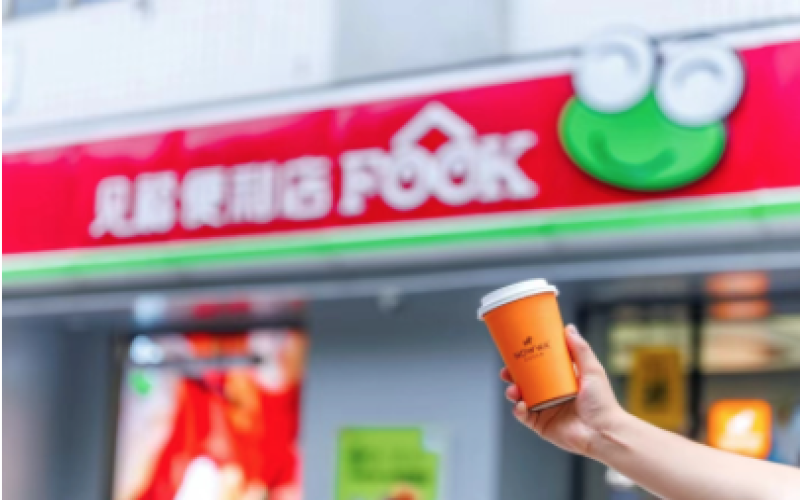
NOWWA Coffee partners with Jianfu Convenience Store to explore a joint operation model, with the first batch of 150 stores already in operation.
The integration of coffee brands with the convenience store format is accelerating. Recently, NOWWA Coffee announced a strategic partnership with Jianfu, the largest convenience store brand in Fujian, and the two parties will jointly operate stores through a co-management model, with the first batch of 150 partner stores already launched. This move not only helps NOWWA expand rapidly by leveraging the convenience store’s mature supply chain and low-cost operating advantages, but also adds a new category to the convenience store’s diversified operations. Against the backdrop of intensifying competition among brands such as Luckin and Cotti, NOWWA is exploring lower-tier markets through offline channel cooperation and plans to launch 500 co-managed stores in 2024 and 2,000 in 2025, covering the four provinces of Fujian, Jiangxi, Sichuan, and Jiangsu. [more…]
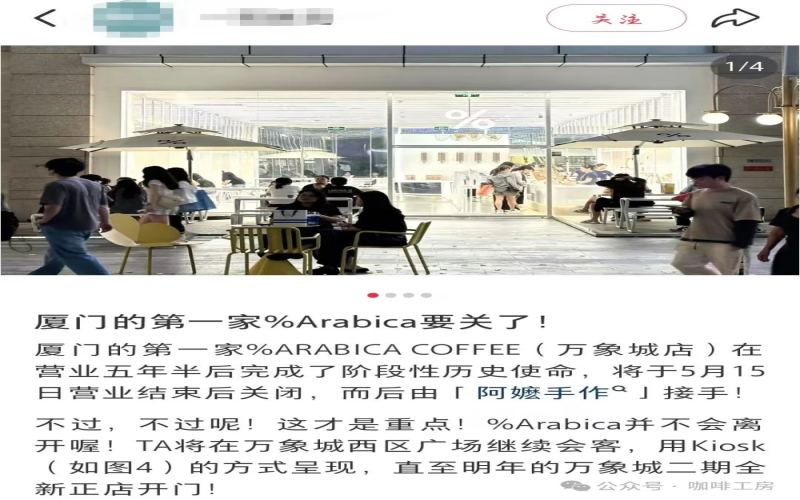
%Arabica stores closing across multiple cities in succession—can the coffee cart model sustain the brand's character? A heated debate.
Recently, the chain coffee brand %Arabica has quietly closed stores in several cities including Xiamen and Shenzhen, sparking widespread attention and discussion online. Among them, the Xiamen MixC store, the brand's first store in the city, ceased operations on May 15 after nearly five and a half years in business; in Shenzhen, the Bao'an Airport store and the Xinghe COCO Park store also closed one after another. The company has not explained the reasons for the closures, and netizens speculate they may be related to mall business adjustments, rising costs, and profitability. Notably, branded coffee trucks have appeared in some areas where stores closed, and the brand's first store in Fuzhou also adopted the coffee truck model. Longtime customers have mixed views: some see it as a flexible adjustment in response to the "buy and go" consumer habit, while others lament that the brand's design-forward store characteristics are being weakened. [more…]
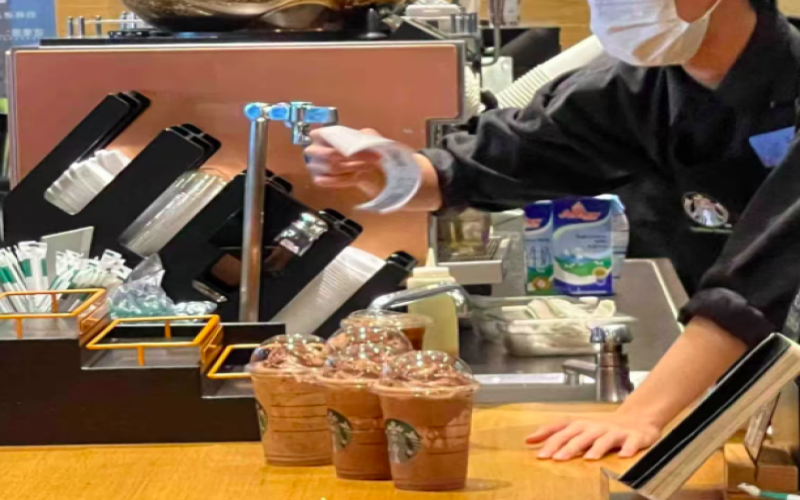
The first Starbucks store at Wuyi Square in Changsha has closed for business, ending a fourteen-year history.
The Starbucks store at Wangfujing Department Store in Changsha's Wuyi Square, the brand's first location in Hunan Province, has recently been reported to be permanently closing. Having operated for fourteen years, this store not only witnessed Starbucks' expansion in Changsha but also carried the coffee memories of countless residents. However, with intensifying competition among tea and coffee brands in the Wuyi commercial district, adjustments to commercial leasing policies, and changes in Starbucks' market strategy, this iconic store has ultimately reached its end. This article will review the store's glorious past, analyze the possible reasons for its closure, and present the regret expressed by local residents. [more…]
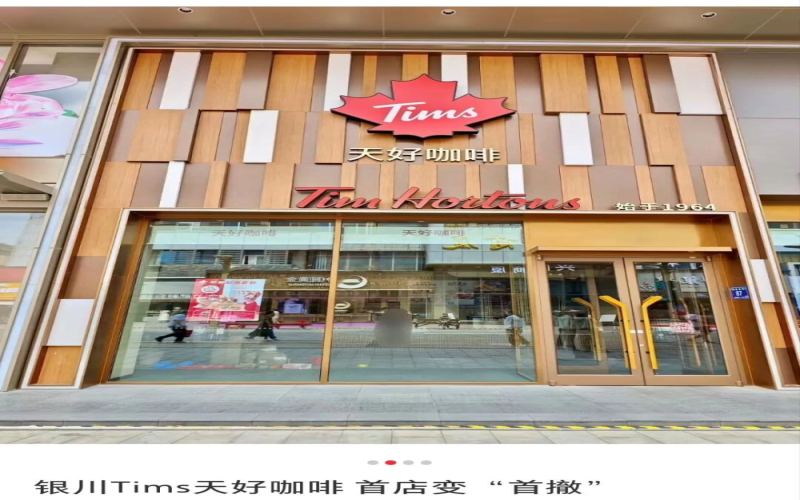
Yinchuan's first store closed before operating for a full year, as Tims China faces a wave of closures and expansion difficulties.
Tims China has always held a special place in consumers' minds—many people remember it not for its coffee, but for the bagel on its breakfast menu. However, this chain brand, known for its bagels, has recently been plagued by frequent store closure news. The first Tims store in Yinchuan, which was also the brand's 700th store in China, the Xinhua Department Store location, quietly closed after less than a year in operation, prompting regret among local consumers. Looking at the entire commercial district, this store was surrounded by 3 Luckin Coffee, 2 Starbucks, and 1 Cotti Coffee locations, highlighting the intense competitive pressure. More notably, Tims stores in Beijing, Shanghai, Nanjing, Dalian, and other cities have also successively announced closures. From the thousand-store target in its financial reports to the 885 stores counted by Narrow Door Dining Eye, Tims' expansion path seems to be facing severe challenges. This article will start with the closure of the first Yinchuan store to analyze Tims' current operating situation and market challenges. [more…]
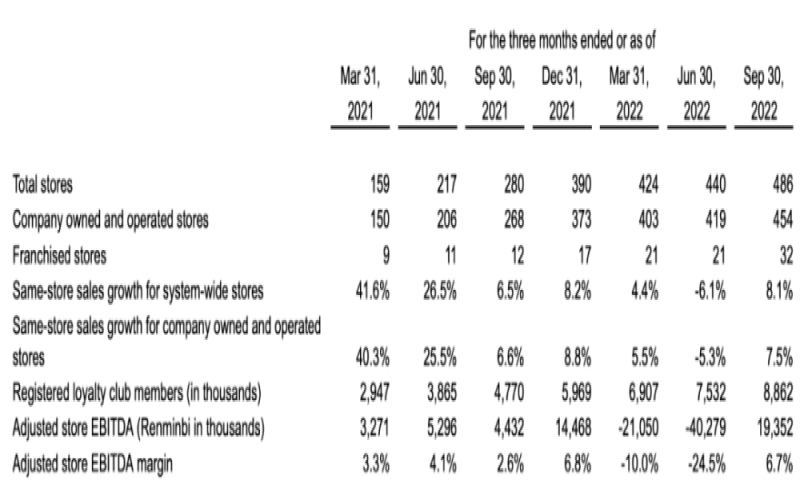
Tims China's First Quarterly Report After Going Public: Net Revenue of 306 Million, Dual-Track Advancement in Store Expansion and Ready-to-Drink Layout
After listing on Nasdaq, Tims China delivered its first quarterly report card, with total net revenue in the third quarter reaching 306 million yuan, up nearly 70% year on year and a record high for a single quarter. On the store front, by the end of September it had covered 27 cities nationwide, with 486 net stores, and in October it welcomed its 500th store. At the same time, Tims China continued to advance cooperation with partners such as EasyJoy Coffee and Hema, stepping up its push into the ready-to-drink coffee segment. This article sorts through the key financial data, store expansion pace, store format structure and management's outlook for the future, giving you a quick look at the latest moves of this coffee chain brand in the Chinese market. [more…]
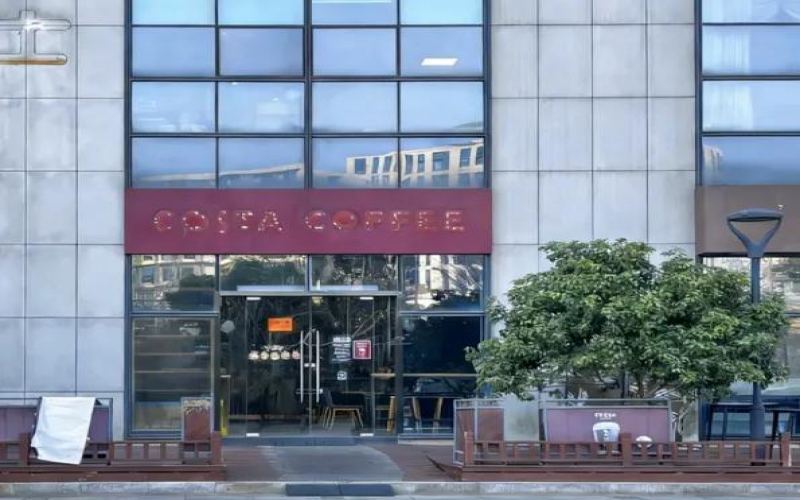
Costa Coffee's last regular store in Ningbo closes, shrinking to 300 stores across multiple cities nationwide.
Recently, a netizen from Zhejiang posted that Ningbo's last regular Costa store had quietly closed, sparking widespread discussion. Costa, which once had 8 stores in Ningbo, has now withdrawn all its regular stores, leaving only hospital stores and transportation hub stores. Meanwhile, news of Costa store closures has also emerged in Shanghai, Hangzhou, Tianjin, and many other places. Data shows that in the past 90 days, Costa opened 5 new stores but closed 23, with about 300 stores still in operation. This British brand, which once competed head-on with Starbucks, is gradually disappearing from city streets. Longtime customers miss its consistent quality and comfortable third space, and also lament this silent farewell. [more…]
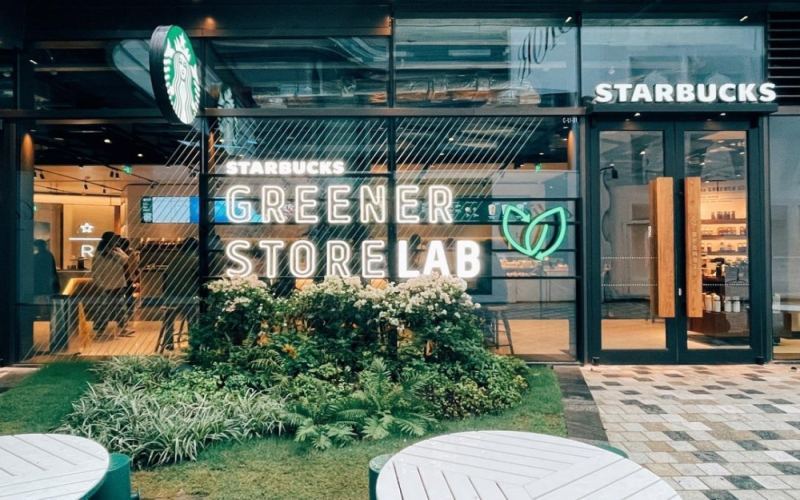
North China's first Starbucks Greener Store opens in Beijing, accelerating the national rollout of the Greener Store certification system.
In 2021, Starbucks celebrated its 50th anniversary and announced the expansion of its eco-friendly store framework, accelerating the global rollout of its "Greener Stores" initiative. This green store format made its debut outside North America, choosing Shanghai as its first location, and subsequently expanded to Suzhou, Shenzhen, and other cities. Recently, North China also welcomed its first green-certified store—Starbucks Beijing CITIC Prudential Store. When customers purchase handcrafted beverages in the store, they can get a reusable cup for an additional 15 yuan, or enjoy a 4 yuan discount if they bring their own cup. This certification system was co-initiated by Starbucks and WWF in 2018, covering eight major standards including energy conservation, water consumption, and waste treatment, with the goal of building or renovating 10,000 green stores globally by 2025. However, in the face of the rise of local coffee upstarts, whether Starbucks' green strategy can maintain its lead is worth watching. [more…]