







How Much Does It Cost to Open a Coffee Shop With COTTI Express?
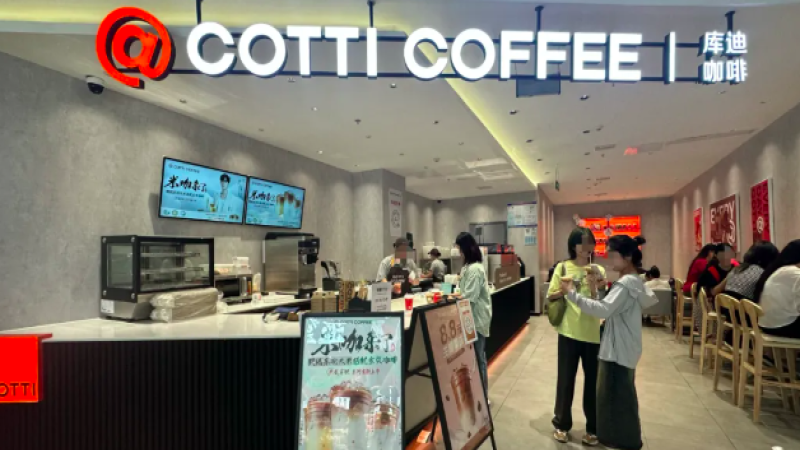
Cotti has launched COTTI Express, a store-within-a-store format that compresses the minimum opening area to one square meter. The model cuts both the investment amount and the break-even point, and can be embedded into convenience stores and restaurants. It arrives as franchisees raise concerns about internal competition and quality control.
The idea is not new. Manner has shared stores with Lianjia, and Tims launched Tims Express with Sinopec EasyJoy, embedding coffee into existing retail spaces. Some of Cotti's mini stores already sit inside restaurants and malls. Because the average startup cost for a coffee shop drops sharply in this format, brands gain rapid rollout but take on food safety and oversight risks.
In the public perception, chain coffee stores usually need a certain amount of space to place tables and chairs and store goods, so they are not small in scale. However, Cotti recently announced the launch of a convenient store format, "COTTI Express," which uses a store-within-a-store model to compress the minimum opening area to one square meter, greatly lowering both investment and the break-even point. In fact, brands such as Manner with Lianjia and Tims with Sinopec EasyJoy had already tried similar partnerships. Although this model can achieve low-cost rapid expansion, it has also raised concerns among franchisees about internal competition, pressure from convenience stores' own coffee brands, and quality control and food safety. Whether store-within-a-store can really help brands capture a larger market still needs time to be tested.
▲
Click to follow | Daily specialty coffee culture magazine Coffee Works
In the impression of most consumers, chain coffee brand stores are often spacious and bright, equipped with several seats for people to rest, and even takeaway-focused express stores need to reserve space for storing goods, so the store area is usually not too small.
But according to a recent report by Jiemian News, Cotti announced that it will launch a convenient store format, "COTTI Express," namely a store-within-a-store model. This store format highlights three major advantages: small footprint, low investment amount, and low break-even point, and can be embedded into scenarios such as convenience stores and restaurants. A person familiar with the matter said that the brand even claimed that a minimum of one square meter is enough to open a store. Compared with previous regular stores, the startup cost of a store-within-a-store will drop significantly.
Actually, it is not new for coffee brands to partner with other business formats to open store-within-a-store locations. Manner's cooperation with Lianjia to share stores, and Tims' joint launch of Tims Express with Sinopec EasyJoy, both embed coffee shops into more consumption scenarios, achieving rapid store rollout at lower cost, seizing a larger market share, and at the same time converting some passing consumers into brand users.
Some of Cotti's "mini stores" have also already entered restaurants and shopping malls. The brand's chief strategy officer said that the convenient store format will complement regular stores, get infinitely close to customers, and improve purchasing convenience. Combined with what bloggers have previously said, investors who want to enter the coffee industry only need to choose a location with considerable foot traffic and open a store-within-a-store at low cost, and perhaps they can recover the cost in a short period, or even have room for profit.
Whether it is the blueprint described by the brand or the current attempts of other brands, the coffee store-within-a-store seems to be a form of cross-industry cooperation with a "bright money future." Cotti's launch of this new policy in response to market demand is also a recognition of the possibilities created by the collision between retail formats and coffee.
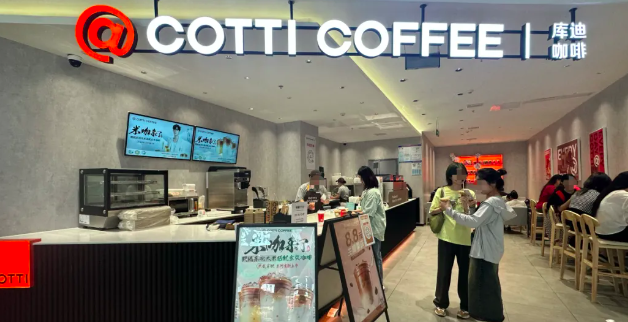
However, most of Cotti's franchisees are resistant to the new policy. Franchisees who have already opened regular stores believe that once the store-within-a-store format becomes widespread, it may impact regular stores with low sales, invisibly creating competition with ordinary stores and harming the latter's profitability.
Another group of people who remain reserved pointed out that although after shrinking in size, store-within-a-store can better adapt to places such as convenience stores and grocery stores, convenience store chains such as FamilyMart, 7-Eleven, and Lawson already have their own coffee brands. If the brand wants to get a share of the convenience store quick coffee market, it may not go as smoothly as expected.
In addition, some people worry that after the store area is greatly reduced, with various pieces of equipment placed into one square meter of space, how much will be left as an employee work area, and whether product quality control and food safety, which consumers value most, can be guaranteed in a mini store.
For the brand, the store-within-a-store cooperation model can complete store expansion quickly and at low cost, and perhaps both parties can achieve a win-win result through it. But whether it is Cotti, which has slowed down store openings, or brands such as Manner and Tims, whose expansion processes have slowed, whether store-within-a-store can help brands occupy a larger coffee market and attract consumer attention still needs to be watched.
Image source: Internet
Disclaimer: Some images in this article are from the Internet. For some content on the website, such as images, we will respect the original copyright and indicate the source. However, due to the large quantity, a few images and texts may not have been credited in time. Please forgive us. If the original author has any dispute, they may contact the website for handling. Once verified, we will correct it immediately. Compiled and edited by "Coffee Works." Please indicate the source when reposting. If there is infringement, please inform us for deletion. Thank you~!

The above content is compiled by CoffeeHunters, a coffee news website.


