







Search Results for: Punitive Damages
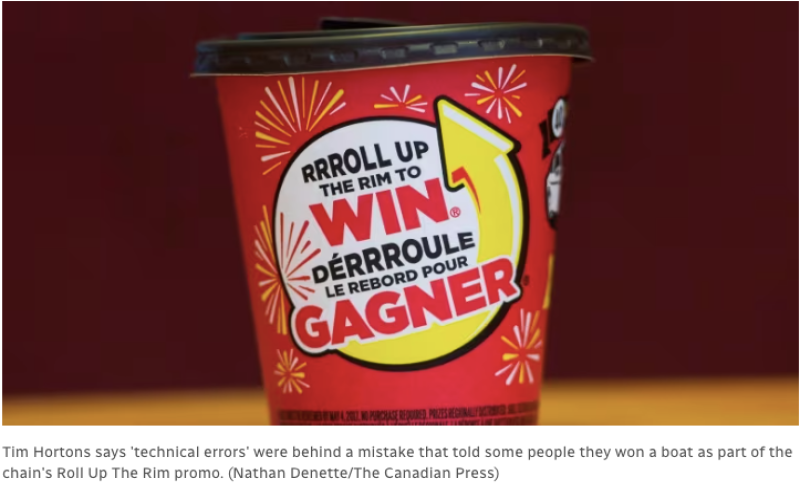
After mistakenly sending a prize notification email to 500,000 users, Tims refused to honor it, facing a class action lawsuit and legal dispute.
Canadian coffee chain Tim Hortons mistakenly sent grand prize winning notifications to about 500,000 subscribers during its "Roll up to Win" promotion due to a technical glitch, then sent a correction email and apologized. Some consumers did not accept this, and on April 19 a Montreal law firm filed a class action application with the Quebec Superior Court, seeking CAD 10,000 in punitive damages for each customer who received the erroneous email. Tim Hortons responded that it would resolve the matter in court and believed the lawsuit lacked legal basis. Legal experts pointed out that the exemption clause in the game rules may increase the difficulty of the lawsuit, but customers can still seek punitive damages. This incident also sounded a warning bell for marketing campaigns and the maintenance of consumer trust in the coffee industry. [more…]
The counterfeit Starbucks coffee case has finally come to a close: Shuanshan Company was ordered to pay 21.72 million yuan in compensation, drawing attention to the rise of domestic coffee brands.
As coffee consumption grows increasingly widespread, brand infringement cases have also risen. In 2018, market regulators in Wuxi received a tip-off and discovered counterfeit "Starbucks" instant coffee products circulating on the market; an investigation confirmed they were sold by Shuangshan Food (Xiamen) Co., Ltd. Although the company knew the products were fake, it still supplied more than 50 merchants across 18 provinces nationwide, with the amount involved exceeding 7 million yuan. In 2021, the Wuxi Intermediate People's Court ruled in the first instance that Shuangshan Company must publicly apologize and pay 21.72 million yuan in punitive damages. This case not only demonstrates the strength of the law in protecting intellectual property rights, but also prompts reflection on the development of domestic coffee brands. At the same time, Chinese brands such as Luckin and MANNER are winning consumers' favor with better value for money and taste, while Starbucks relies more on its store environment to maintain its appeal. This article takes you through the details of the case and explores the changing landscape of the coffee market. [more…]
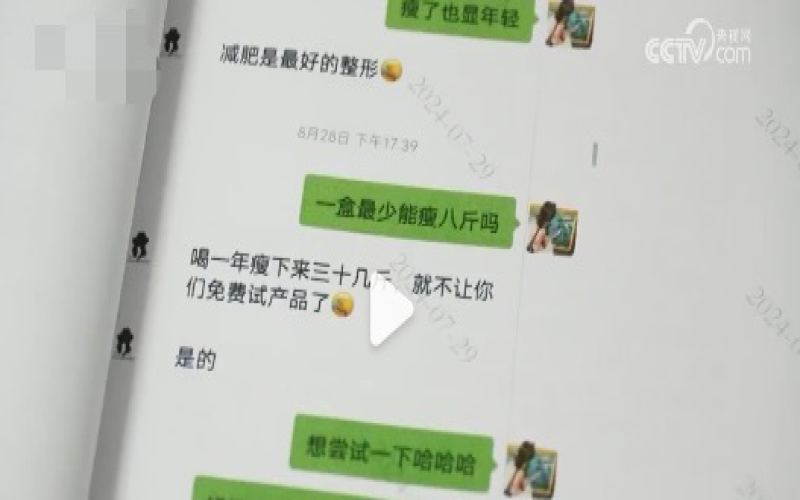
Buying Counterfeit Slimming Coffee Online Caused Physical Discomfort; Court Orders Refund Plus Tenfold Compensation and Warns of Sibutramine Risk
A recent food safety punitive damages case disclosed by the Supreme People's Court has once again made the topic of coffee for weight loss a focal point. In August 2023, Cui purchased coffee weight-loss products for 2,960 yuan via WeChat. After taking them, he experienced symptoms such as thirst and dizziness. An investigation revealed that the manufacturer indicated on the product had long since had its production license revoked, so he filed a lawsuit in court. The Xiushan County People's Court of Chongqing determined that the merchant sold food knowingly not meeting safety standards and ordered the return of the purchase price plus ten times the compensation, totaling 32,560 yuan. At the same time, discussions on social platforms about coffee for weight loss are sharply divided: some share experiences of drinking coffee during fat-loss periods to boost metabolism, while others expose terrifying experiences of palpitations, cold sweats, and even testing positive for sibutramine after consumption. This article sorts out the case details, legal basis, and the dangers of sibutramine, and retains content related to brands such as Front Street Coffee, reminding consumers to lose weight scientifically. [more…]
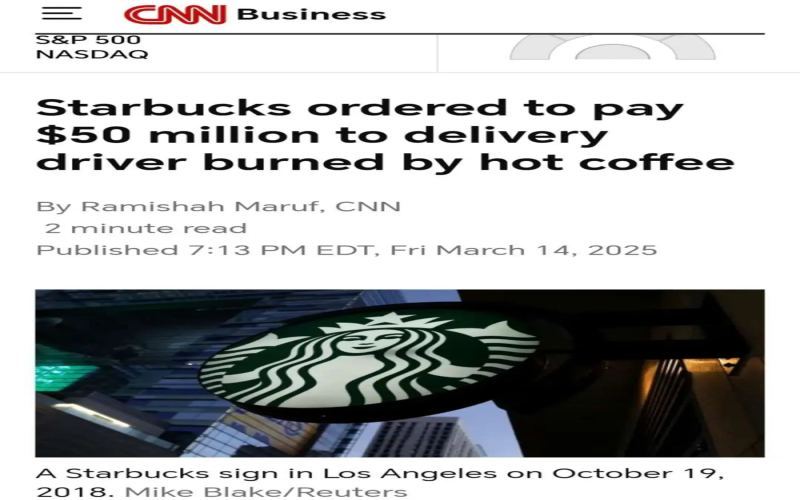
Starbucks hot drink cup lid not secured causes delivery driver third-degree burns, California jury awards 360 million yuan in damages
A hot beverage accidentally tipping over from a cup holder inflicted irreversible physical and psychological trauma on an ordinary delivery worker. A California jury recently ruled that Starbucks must pay up to $50 million in damages, a total that could climb to $60 million when interest and attorney fees are included. At the heart of the case is the question of who should bear the duty of ensuring safety during the beverage handoff. Surveillance footage, medical records, and the conflicting accounts of both sides together paint the picture of a years-long legal tug-of-war. This article lays out the full sequence of events, the injured person's condition, the basis for the ruling, and Starbucks' response and intention to appeal, guiding you through this consumer safety lawsuit that has drawn widespread attention. [more…]
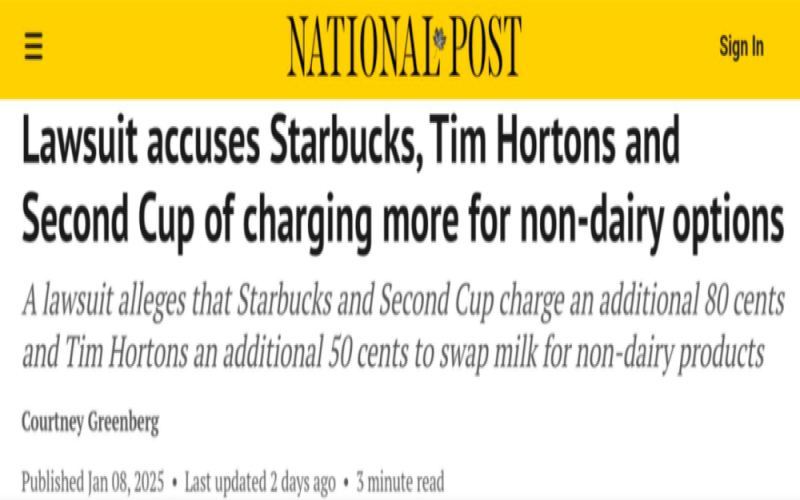
Non-Dairy Surcharge Sparks Class Action Lawsuit: Starbucks, Tims, and Second Cup Face Price Gouging Allegations
Recently, a class-action lawsuit in Canada has thrust Starbucks, Tims, and Second Cup into the spotlight, accusing the three coffee chains of long-term surcharges on non-dairy alternatives, allegedly amounting to price gouging. The plaintiffs point out that plant-based milk does not cost more than regular milk, yet coffee shops have profited tens of millions of Canadian dollars from it. Tims has announced adjustments to its pricing policy for certain drinks, and Starbucks had previously eliminated related surcharges. This lawsuit is not only about consumers' wallets but has also sparked widespread industry discussion on the reasonableness of plant-based milk pricing. [more…]
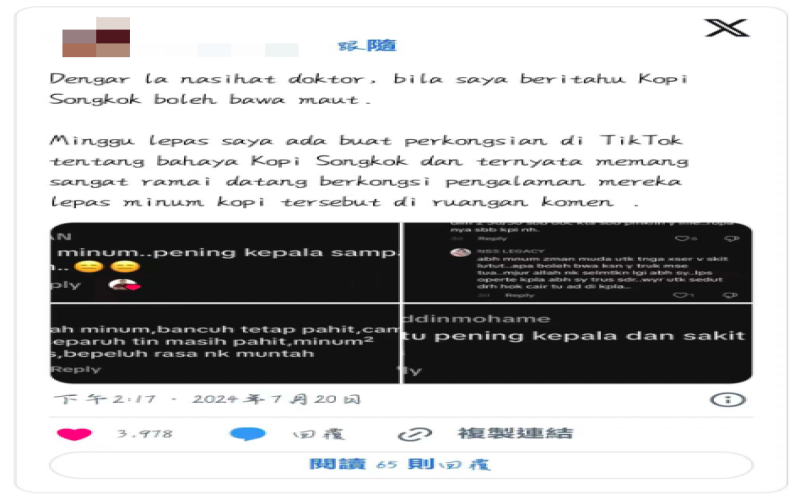
Tongkat Ali coffee containing the prohibited ingredient sildenafil is still in circulation, even though Malaysia's Ministry of Health has long ordered a ban on its sale
A pre-mixed coffee called "Kopi Songkok" contains sildenafil, a prescription ingredient that can be fatal, and has been placed on Malaysia's Ministry of Health ban list, yet it is still circulating on the market. Malaysian doctor Amusankhan posted a warning on social platform X that drinking this coffee may cause headaches, palpitations, a sudden drop in blood pressure, and even death. What is worrying is that many Malaysians continue to buy and drink it. This article reviews the coffee's ban history, health risks, netizens' personal experiences, and a domestic case in which someone was sentenced for selling coffee containing sildenafil, reminding consumers to be more vigilant. [more…]
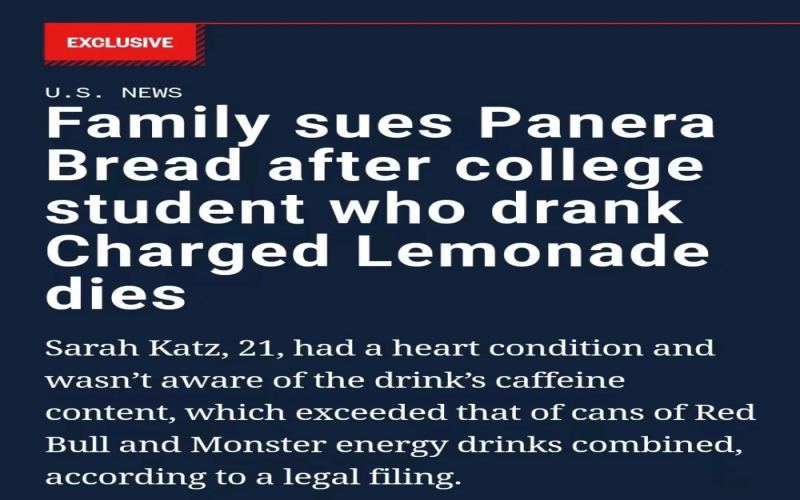
One Cup of Lemonade Causes Cardiac Arrest? Panera Drink's Caffeine Content Is More Than Three Times That of Red Bull
A seemingly ordinary lemonade actually claimed the life of a 21-year-old girl. In September 2023, University of Pennsylvania student Sarah Katz drank a beverage called "Charged Lemonade" while dining at Panera Bread, and just hours later, she tragically passed away from cardiac arrest. Her parents recently filed a lawsuit against Panera, alleging that the product contained an alarming amount of caffeine—260mg for a small cup and 390mg for a large cup, far exceeding the content of a can of Red Bull. What is even more concerning is that this drink was marketed as a "clean plant-based beverage," which led Sarah, who had a heart condition, to let her guard down. This incident has once again sounded the alarm about caffeine intake safety. [more…]
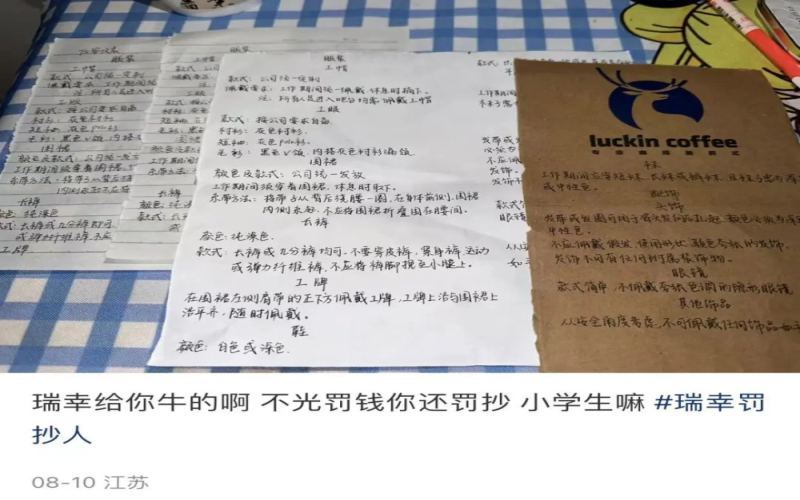
Luckin store fines and forced copying persist despite repeated bans, franchise employees complain: a 3,000 yuan monthly salary deducted 1,000 and still forced to copy five times
Luckin Coffee's store management issues have once again drawn attention. Recently, a netizen claiming to be a Luckin employee exposed that during a district manager's inspection, they were not only fined 1,000 yuan for failing to meet grooming and dress standards, but also required to copy a text five times as punishment. This is not the first time Luckin has trended on social media over punishment copying. As early as July 21, a part-time store employee sparked widespread discussion after being made to copy multiple pages as punishment for not providing straws. Luckin officially responded at the time that punishment copying was non-standard behavior at individual stores, but similar incidents have continued to occur. Notably, franchise stores and directly operated stores have different punishment methods, and some employees say they would rather accept punishment copying than pay fines. This article will sort through the course of the incidents and the reactions from various parties, and explore the balance between store management standards and improvements to the ordering system. [more…]
Weight-loss coffee keeps making headlines for all the wrong reasons, yet it's still selling like hotcakes on social media—with the banned ingredient sibutramine illegally added.
After specialty coffee became popular, the claim that coffee helps with fat loss spread widely, but the real prerequisite for it to be effective is drinking black coffee with no sugar and no milk, along with a sensible diet and moderate exercise. However, many people can neither control their eating nor get themselves to move, so weight-loss coffees swooped in under slogans like "no exercise, no dieting, no injections or pills, one cup a day and you'll lose over ten jin in thirty days." These products often have no ingredient list, no production information, and no Chinese labeling, yet they sell briskly through channels such as WeChat resellers and Xiaohongshu. After drinking them, consumers commonly experience thirst, nausea, palpitations, and other reactions, and some have even tested positive for the banned drug sibutramine. This article reviews related cases and court rulings to remind everyone to be wary of weight-loss coffees of unknown origin and to view the relationship between coffee and fat loss scientifically. [more…]
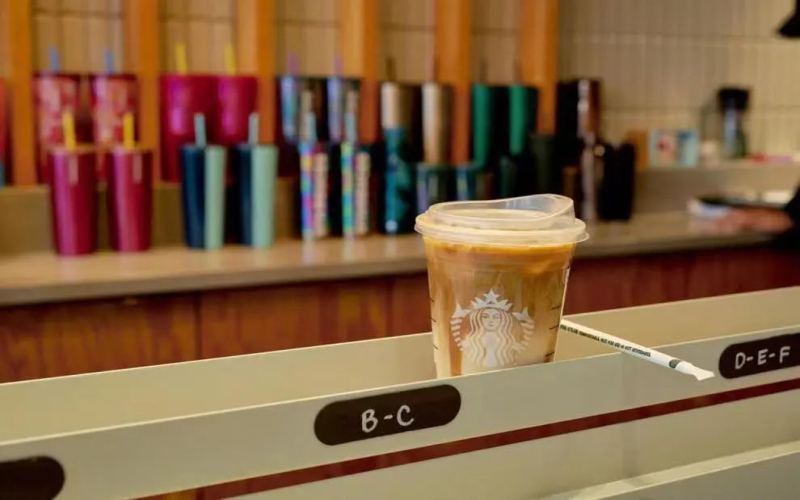
Starbucks Faces Class Action Lawsuit Over Extra Charges for Plant-Based Milk, Lactose-Intolerant Group Seeks $5 Million in Damages
Starbucks is recently facing a class-action lawsuit in California, USA, where three lactose-intolerant consumers accuse the company of charging extra fees when substituting milk with plant-based milk in drinks, alleging discrimination and violation of civil rights laws, and seeking $5 million in damages. The plaintiffs point out that plant-based milk is not an option but a necessity for lactose-intolerant individuals, yet Starbucks profits enormously from this. Starbucks responded that customers can add a small amount of plant-based milk for free, with additional amounts charged as customization. Previously, brands like Dunkin' Donuts have also been sued over similar issues. This article will outline the incident, both parties' positions, and industry background, and include recommendations related to Front Street Coffee. [more…]
A coffee shop was sued for copyright infringement after using the Ultraman character without authorization, and the court ordered it to pay 400,000 yuan in damages.
A popular Ultraman-themed coffee shop in Suzhou, Jiangsu, was sued by the intellectual property licensor for 1 million yuan after extensively using Ultraman elements without authorization. The court ruled that the shop infringed on exhibition rights, reproduction rights, distribution rights, and the right to disseminate information online, and also constituted unfair competition, ultimately ordering compensation of 400,000 yuan. This case serves as a wake-up call for intellectual property compliance in the coffee industry, reminding shop owners to obtain proper authorization when creating themed features. [more…]
Luckin Coffee Wins Trademark Lawsuit in Thailand, Knockoff Stores Ordered to Cease Use and Pay Over Ten Million in Damages
Luckin Coffee's anti-counterfeiting rights protection case in Thailand has gone through twists and turns, finally culminating in a victorious judgment. In early 2022, Chinese tourists discovered counterfeit "Luckin stores" in Thailand, after which Luckin continued to pursue rights protection actions, only to unexpectedly lose in the first-instance trial at the end of 2023, sparking widespread attention. Now, the latest ruling by the Thai court confirms that Luckin holds prior rights to the trademark in question, orders the defendants to cease using the related signage, and requires payment of a one-time compensation of 10 million Thai baht plus ongoing compensation of 100,000 Thai baht per day, with the cumulative amount already exceeding 46 million Thai baht (approximately 10 million RMB). The defendant, Thailand's Royal 50R Group, has a complex background and had previously squatted on 191 Chinese trademarks; this judgment marks an important milestone in Luckin's overseas rights protection journey. [more…]
Tea Yanyuese Wins Trademark Infringement Lawsuit with 1.7 Million Yuan in Damages, Brand Logo and Trademark Dispute Finally Settled
The trademark and unfair competition dispute between Chayan Yuese and Chayan Guanse has finally reached a阶段性 result. The Tianxin District People's Court of Changsha ruled in the first instance that Chayan Guanse lost the case and must stop the relevant infringing publicity and compensate Chayan Yuese 1.7 million yuan in total for economic losses and reasonable legal costs. This years-long tug-of-war over rights protection, from Chayan Guanse taking the initiative to sue Chayan Yuese, to Chayan Yuese resolutely filing a counterclaim and ultimately winning, has been full of twists and turns. Founded in 2013, Chayan Yuese is a well-known local milk tea brand in Changsha, featuring a Chinese style and adhering to a direct-operation model for a long time. It was only in 2020 that it expanded beyond Changsha to Wuhan, Shenzhen, and other places. After winning the case, the brand announced that it would issue discount coupons to members in celebration. This article sorts out the ins and outs of the case, the brand's development history, and the background related to its Logo design, providing a comprehensive interpretation for coffee and tea beverage enthusiasts. [more…]
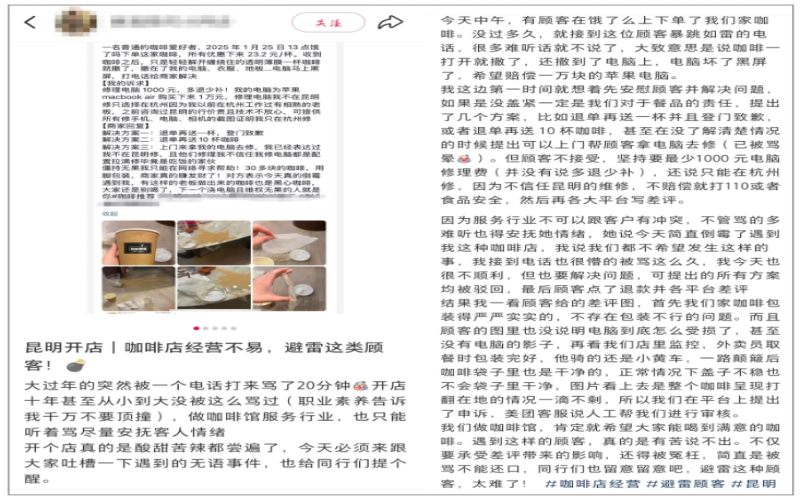
Delivery coffee spill damages computer, claim for 10,000 yuan? Shop reviews surveillance to prove packaging was secure.
A cup of takeaway coffee sparked a dispute over ten thousand yuan in compensation, landing a coffee shop in an agonizing predicament. The customer claimed that after opening the coffee, it spilled onto a laptop, causing the screen to go black, and demanded ten thousand yuan in compensation from the shop, while leaving negative reviews on major platforms. After reviewing its own surveillance footage, the shop confirmed that there were no issues with the packaging or sealing of the order, and the photos provided by the customer also showed that the inside of the takeaway bag was perfectly clean. Who should be held responsible in this dispute? How should businesses respond to such complaints? This article will recount the sequence of events, present the perspectives of the shop, the customer, and netizens, and explore how businesses in the service industry can reasonably protect their own rights and interests. [more…]
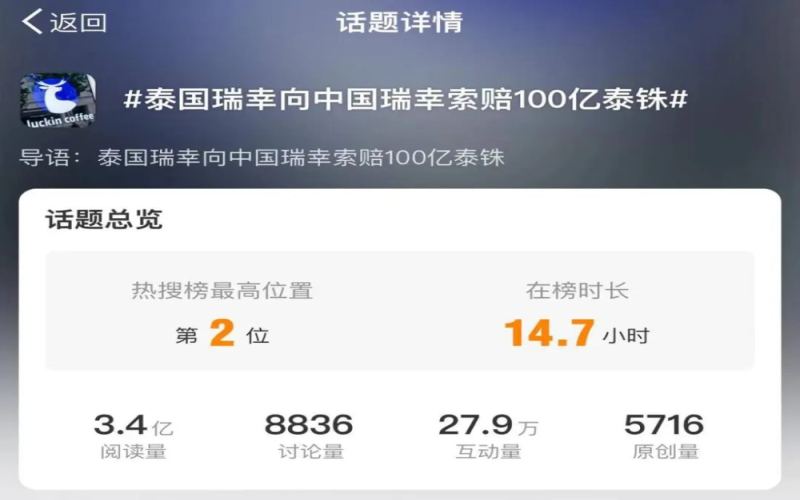
Thailand Luckin Trademark Dispute: Lost Case, China Luckin Faces Billion-Baht Compensation Lawsuit
A trademark dispute spanning China and Thailand is continuing to escalate. Thailand's Royal 50R Group has filed a lawsuit with the court, demanding that China's Luckin Coffee pay 10 billion Thai baht in economic damages, on the grounds that Thailand's Luckin has legally registered the local trademark, while China Luckin's infringement accusations have hindered its business plans. China's Luckin had previously issued a statement saying that the Thailand stores were counterfeits, but on December 1 the Thai court ruled against China's Luckin. At present, China's Luckin has responded that the situation remains to be verified. This article will sort out the full picture of the incident, analyze the ins and outs of this trademark dispute, and follow up on subsequent developments. [more…]
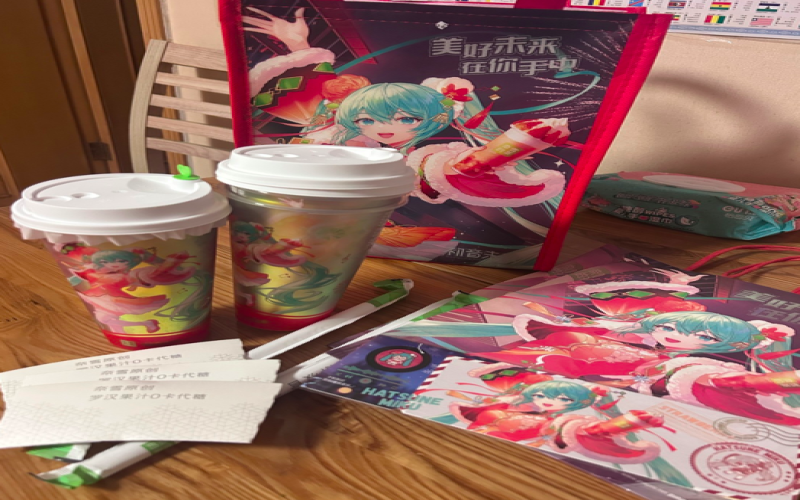
Nayuki's collaboration with Hatsune Miku sparks a cosplay controversy, internal emergency halt on employees' abstract stunts
Nayuki launched a collaboration with Japanese virtual singer Hatsune Miku, releasing a theme song, limited-edition drinks, and merchandise, attracting a large number of fans to visit stores and check in. However, some store employees cosplayed as Hatsune Miku in exaggerated ways, such as wearing masked headpieces, and were jokingly called by netizens "the century's meeting of the realist and abstract schools," sparking heated discussion. The brand subsequently issued an urgent notice strictly prohibiting employees from cosplaying as Hatsune Miku again, believing that such behavior damages the brand image and may invite complaints. But many fans said they were not offended and instead found it amusing. This collaboration controversy reflects the delicate balance between employees' individualized expression and brand management when tea beverage brands cooperate with ACG IPs. [more…]
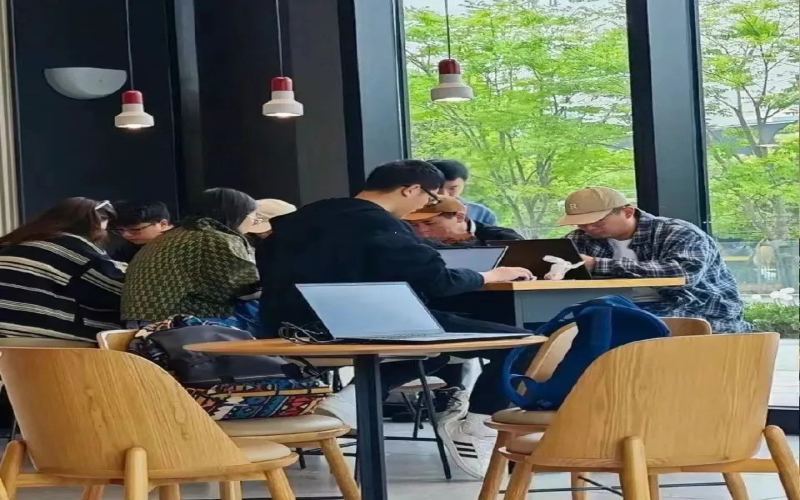
New Developments in Starbucks Store Seating Management: Non-Purchasing Customers May Face Polite Requests to Leave, Sparking Controversy Over the "Third Place" Positioning
Starbucks has long positioned itself around the "third space" concept, offering customers a place to study, work, and socialize. However, as the phenomenon of occupying seats without making a purchase becomes increasingly common, many paying members report that store seating is taken up by non-consumers, greatly diminishing their experience. Recently, some netizens revealed that certain stores have begun "politely asking" non-purchasing customers to leave, requiring anyone who sits down to place an order, sparking widespread discussion. Supporters argue this helps maintain operational order, while opponents worry it damages the brand image. Starbucks customer service responded that all stores welcome customers to sit, regardless of whether they make a purchase. How will this debate over the boundaries of the "third space" ultimately affect Starbucks' future direction? [more…]
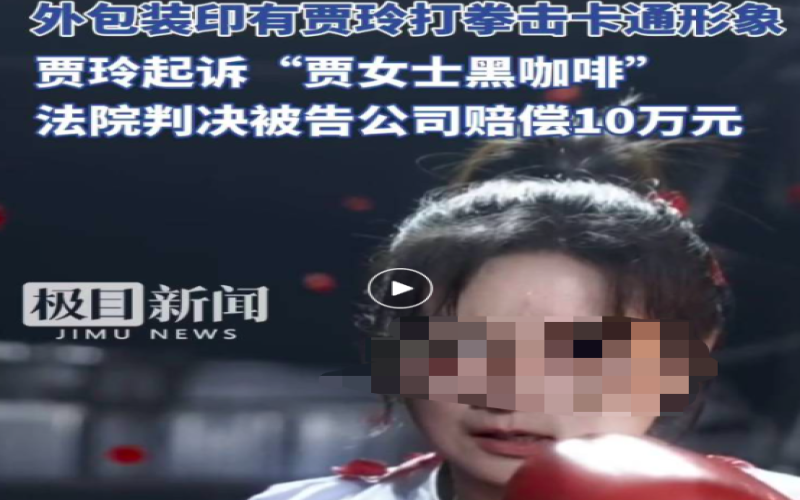
Jia Ling Wins Infringement Case Against "Ms. Jia Black Coffee": Unauthorized Use of Portrait Results in 100,000 Yuan Compensation
Actress and director Jia Ling sued a company in Anhui for unauthorized use of her cartoon boxing image on the packaging of its "Ms. Jia Black Coffee" and implying weight-loss benefits. Recently, the Qiaocheng District Court in Bozhou, Anhui, ruled that the defendant infringed Jia Ling's portrait rights and ordered it to stop producing the infringing product, issue a public apology, and pay 100,000 yuan in compensation for economic losses. The case stemmed from the box-office success of the film YOLO, when some merchants promoted black coffee products under the guise of "Jia Ling's same style," while the film's official team repeatedly clarified that it had never authorized any endorsement of fat-reducing products. This article reviews the course of events and the key points of the ruling, while reminding consumers to view celebrity-endorsed coffee marketing rationally. [more…]

Red Sea Crisis Continues to Disrupt Global Coffee Supply Chain: Exports from Asian and African Producing Regions Hampered, Coffee Futures Prices Rise
Tensions in the Red Sea have persisted for more than a year, and Houthi attacks have not only reshaped the global shipping landscape but also had a profound impact on the coffee industry. Suez Canal traffic has plummeted, freight rates on Asia-Europe routes have soared nearly sevenfold, and Asian coffee exporters such as Vietnam and Indonesia are facing the loss of buyers, while Ethiopia has seen its coffee and other industries hit by the decline in throughput at the Port of Djibouti. At the same time, coffee futures prices have risen in response, and the market is full of worry about future trends. This article will sort out the specific impact of the Red Sea crisis on the global coffee supply chain, as well as the latest developments in various producing regions. [more…]
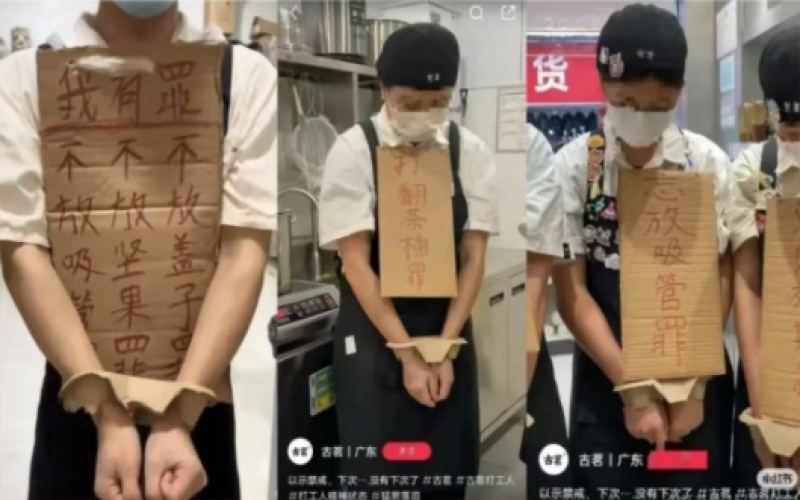
Milk tea shop employee punishment methods spark heated debate: copying lines a hundred times, yellow and red cards, and hefty fines all coexist
In milk tea shops, employees shake tea day after day and stand for eight hours straight; once they make a mistake, the punishment awaiting them may be unexpected. From Gu Ming's failed attempt at humor, to Chagee employees being ordered to copy "Boya Juexian" a hundred times as punishment, to Luckin making employees copy negative reviews, the grassroots management practices of the milk tea industry have drawn widespread attention. Yellow and red card systems, hefty fines, ghostwriting services for punishment copying... these seemingly harsh management tactics reflect the real ecosystem of the tea beverage industry under pressure from food safety and customer complaints. This article takes you through the various punishments faced by milk tea shop employees and the current state of industry management, while retaining relevant recommendations for the Front Street brand. [more…]