







How Does the Red Sea Crisis Affect Coffee Production?
Attacks in the Red Sea have persisted for over a year, reshaping global shipping and hitting coffee hard. Suez Canal traffic has dropped sharply, Asia-to-Europe freight rates have climbed nearly sevenfold, and exporters in Vietnam and Indonesia are losing buyers. Ethiopia has seen declining throughput at the Port of Djibouti, while coffee futures prices have risen in response.
The Houthi group says it targets ships tied to Israel, but reports say attacks have involved vessels from many countries, with owners asked for so-called safe passage fees. Roughly $180 million per month is estimated to flow to the group this way. Over 130 missile and drone attacks have been launched in the past year, hitting more than 100 ships.
Tensions in the Red Sea region have persisted for over a year, and the Houthi armed group's attacks have not only altered the global shipping landscape but also had a profound impact on the coffee industry. Suez Canal traffic has plummeted, freight rates on Asia-to-Europe routes have soared nearly sevenfold, and Asian coffee exporters such as Vietnam and Indonesia are facing the dilemma of losing buyers, while Ethiopia has seen its coffee and other industries hit by declining throughput at the Port of Djibouti. Meanwhile, coffee futures prices have risen in response, and the market is full of concern about future trends. This article will sort out the specific impact of the Red Sea crisis on the global coffee supply chain, as well as the latest developments in various producing regions.
According to multiple media reports, although the Houthi armed group publicly claims that its attacks target only ships of Israel and its allies, the actual situation is far more complex than the statement suggests. Some reports point out that the armed group's attack targets involve vessels from multiple countries, and it seeks so-called "safe passage fees" from shipowners in exchange for navigation safety, while ships that fail to pay face extremely high risks. It is estimated that the Houthi armed group can obtain about $180 million in revenue per month through this.
In response to questions from the international community, a spokesman for Yemen's Houthi armed group issued a statement saying that intelligence shows a large number of shipping companies linked to Israel are trying to circumvent its "punitive measures" by selling assets, transferring ship ownership, and changing registration locations. Therefore, the Houthi armed group explicitly stated that it does not recognize any change of ownership or flag change and refuses any form of cooperation with these companies. The group emphasized that it will continue to impose a maritime blockade in the Red Sea and strike all ships belonging to Israel, linked to Israel, or heading to Israel, until Israel stops its siege of the Gaza Strip and its military operations in Lebanon.
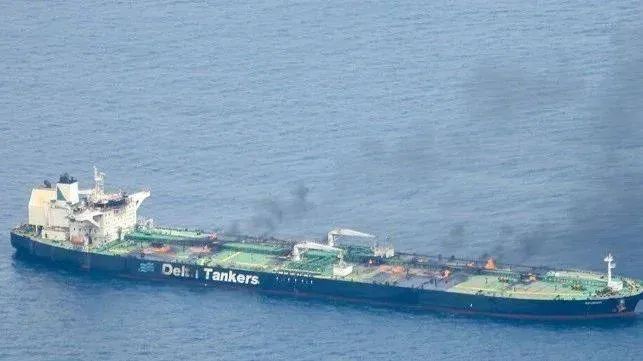
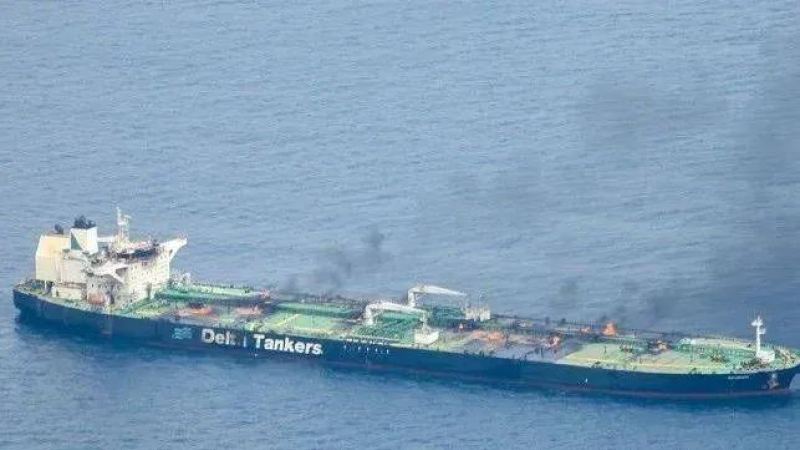
Statistics show that in the year from last November to now, the Houthi armed group has launched more than 130 missile and drone attacks, and more than 100 ships have been attacked in total. This frequency and scale are considered the most intensive armed strikes against civilian vessels since World War II.
After the news emerged, countries along the Red Sea and global shipping companies generally felt uneasy. Compared with average traffic in 2023, total tonnage traffic through the Suez Canal has fallen by 60% to 70%. Transit volumes of container ships, car carriers, cruise ships, and liquefied natural gas carriers have all dropped by more than 90%. The disruption of the Red Sea route has directly led shipping companies to raise freight rates by 30% to 40%.
Maersk, the international shipping giant regarded as a "barometer of global trade," raised its full-year profit forecast four times in less than half a year, precisely because supply chain disruptions caused by the Red Sea attacks pushed up demand and freight rates.
The disruption to global shipping caused by the Red Sea crisis has brought significant shocks to multiple coffee-producing countries, especially in Africa and Asia. Some coffee exporters revealed that freight rates from Asia to Europe have now risen nearly 7-fold, causing some buyers to reduce coffee purchases in Asia, with major exporters such as Vietnam and Indonesia severely affected.
Take Vietnam as an example. Previously, severe drought led to a lack of water for coffee cultivation, production declined, and local coffee prices rose accordingly. Combined with the surge in freight rates on Europe-Asia routes, buyers have adopted a wait-and-see approach, leaving Vietnamese coffee in a situation of having prices but no market, with trade volumes continuing to languish. The Vietnam Coffee and Cocoa Association (VICOFA) previously reported that Vietnam's coffee exports fell by 12.1% in the 2023/24 season.
In Africa, Ethiopia's import and export business has also been affected. Because the country has no seaport, it mainly relies on the port of neighboring Djibouti, and the Port of Djibouti is located in the Red Sea region. Reports show that due to the Red Sea crisis, throughput at the Port of Djibouti has fallen by at least 10%, which has not only dragged down the economic development of Djibouti and Ethiopia but also pushed up inflation and price levels, dealing a blow to multiple industries in Ethiopia, including coffee.

The latest data show that ICE Arabica coffee futures rose 2.05%, coffee "C" futures rose 2.14%, and Robusta coffee futures rose 1.44%. At present, the Palestinian-Israeli conflict is difficult to resolve effectively in the short term, and with multiple countries reporting declines in coffee production, coffee prices may rise further in the future.
To learn more about coffee origin news and information, please scan the QR code to follow: Ca Ping
Long-press the QR code to follow:
TRANSLATE with
x
English
Arabic Hebrew Polish Bulgarian Hindi Portuguese Catalan Hmong Daw Romanian Chinese Simplified Hungarian Russian Chinese Traditional Indonesian Slovak Czech Italian Slovenian Danish Japanese Spanish Dutch Klingon Swedish English Korean Thai Estonian Latvian Turkish Finnish Lithuanian Ukrainian French Malay Urdu German Maltese Vietnamese Greek Norwegian Welsh Haitian Creole Persian
TRANSLATE with
COPY THE URL BELOW
Back
EMBED THE SNIPPET BELOW IN YOUR SITE Bing Webmaster Portal
Back
The above content is compiled by CoffeeHunters, a coffee news website.


