







Why Caffeine as a Stimulant Draws Fresh Safety Scrutiny
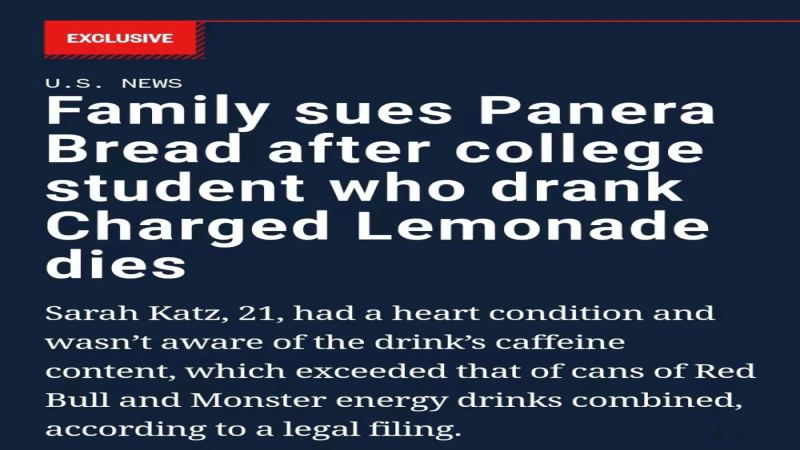
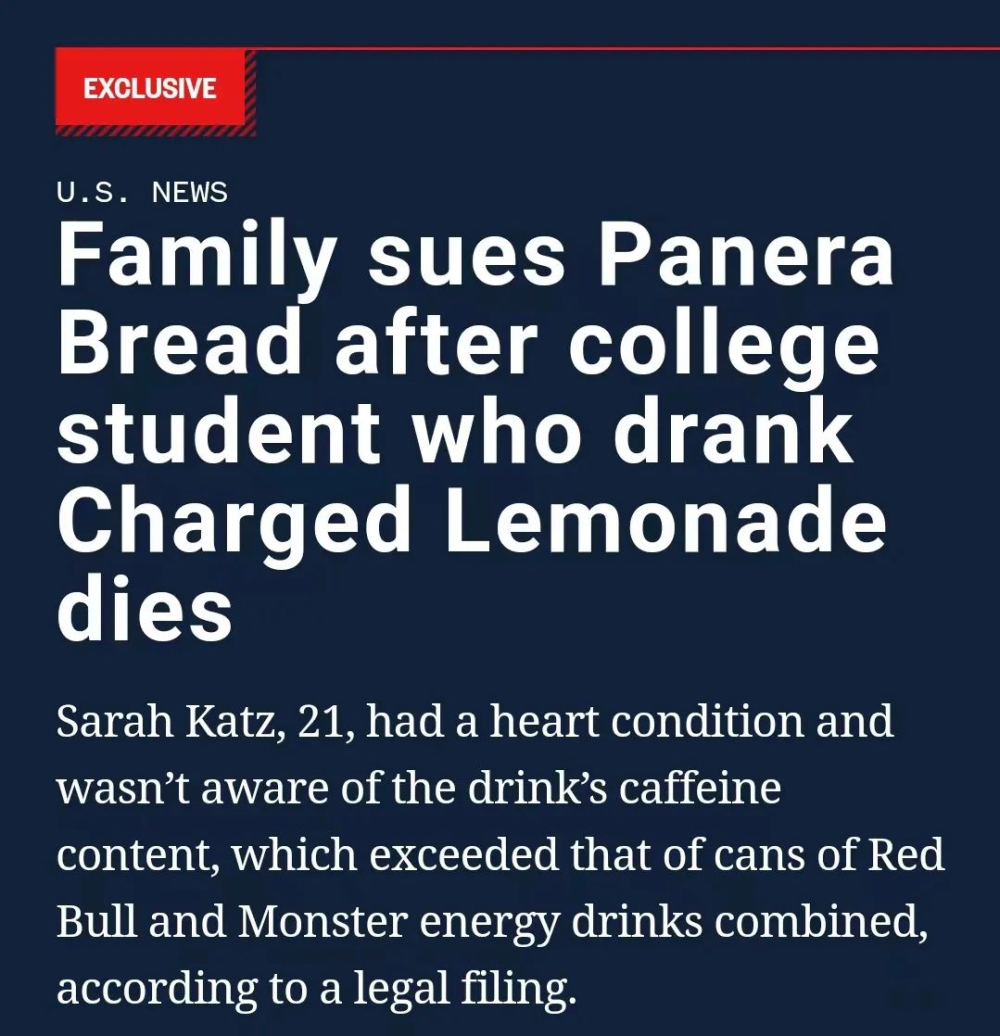
A wrongful death lawsuit filed in October against Panera Bread claims a 21-year-old University of Pennsylvania student, Sarah Katz, died after drinking the chain's Charged Lemonade in September 2023. Court documents state a large cup held about 390 mg of caffeine, while a small cup held 260 mg, both far above a can of Red Bull.
Katz had long QT syndrome, diagnosed at age five, and had avoided high-caffeine functional drinks on medical advice. The suit argues the beverage was promoted as an ordinary plant-based lemonade rather than an energy drink. The case puts renewed attention on how coffee as stimulant is labeled and sold, and on whether caffeine content in milligrams is clear enough for people with heart conditions.
A seemingly ordinary glass of lemonade unexpectedly cost a 21-year-old girl her life. In September 2023, University of Pennsylvania student Sarah Katz drank a beverage called "Charged Lemonade" while dining at Panera Bread, and just hours later suffered cardiac arrest and tragically passed away. Her parents recently filed a lawsuit against Panera, alleging that the product's caffeine content was astonishing—260mg for a small cup and 390mg for a large cup, far exceeding that of a can of Red Bull. More worrisome still, the drink was marketed as a "pure plant-based beverage," which led Sarah, who had a heart condition, to let down her guard. This incident has once again sounded the alarm about caffeine intake safety.
▲
Click to follow | Daily specialty coffee culture magazine Coffee Works
According to NBC News, on October 23, the parents of a University of Pennsylvania student filed a wrongful death lawsuit against the restaurant chain Panera Bread. They stated that their 21-year-old daughter, who had a heart condition, tragically died after drinking an energy beverage containing a large amount of caffeine from the store, yet the establishment promoted this drink as "ordinary lemonade."
The incident occurred last September in Philadelphia. Sarah Katz went with a friend to a Panera Bread casual dining restaurant. After drinking a large cup of a beverage called "Charged Lemonade," her heart went into cardiac arrest hours later. Her friend immediately took her to the hospital, but she was ultimately pronounced dead after another cardiac arrest.
According to court documents, Sarah was diagnosed with long QT syndrome at the age of five. This condition usually shows no obvious symptoms in daily life, but once it flares up it causes arrhythmia, leading to fainting or even sudden death. For this reason, on her doctor's advice, she had been especially cautious since childhood and stayed away from any functional drinks with high caffeine content. Yet this time, she lost her life because of a so-called "lemonade."
On Monday of this week, Sarah's parents formally took Panera Bread to court on the grounds that the caffeine content of "Charged Lemonade" was incredibly high and that the business failed to properly label its danger . The lawsuit states that Panera failed to reasonably label "Charged Lemonade" as an energy drink, misleading consumers, and demands compensatory and punitive damages for their daughter's tragic death.
In the lawsuit, Sarah's parents pointed out that Panera Bread advertised this lemonade as a "plant-based clean beverage with as much caffeine as our dark roast coffee." But in fact, the lemonade sold by the store comes in two sizes, a 30-ounce large and a 20-ounce small. The small cup already contains as much as 260mg of caffeine, while the large cup reaches 390mg.
The reason Panera Bread claimed that the lemonade's caffeine content was comparable to dark roast coffee is that many consumers have the ingrained impression that dark-roasted coffee beans seem to contain less caffeine than light-roasted ones. However, a large body of research has long confirmed that the difference in caffeine content between dark and light roasts is negligible, almost nonexistent.
For reference, a serving of espresso contains about 60–70mg of caffeine, a regular double-shot Americano or latte contains about 120–140mg, and a can of ordinary Red Bull contains only 80–100mg of caffeine. In other words, one small "Charged Lemonade" contains the caffeine equivalent of three cans of Red Bull, and the large version comes close to the U.S. Food and Drug Administration (FDA) recommended upper limit for daily caffeine intake for adults (400mg).
In addition, according to Panera Bread's official website, this lemonade also contains green tea and guarana extract (a natural stimulant). Besides caffeine, these two ingredients also contain theobromine and theophylline, which likewise have stimulating effects. Therefore, the attorney representing the family explicitly stated that this is far beyond the scope of ordinary "lemonade" and should be classified as a "lemon-flavored functional beverage." Panera knew this full well, yet not only failed to warn about the drink's potential risks, but instead encouraged customers to "drink unlimited refills."
In fact, regarding the issue of the high caffeine content in Panera's lemonade, a TikTok user had already posted a video complaining about it as early as December 9 last year.
TikTok user @sarahebaus
In the video, the blogger said that she drank four or five cups of Panera's "Charged Lemonade" almost every day, yet always felt increasingly hyperactive. Later, after looking it up, she learned that a regular cup actually contained 260mg of caffeine. "Every time I finish this lemonade, I feel like I've turned into the Hulk. Although I quite like it, Panera, who would design a product with 260mg of caffeine?" As someone who does not usually drink coffee, this blogger stated bluntly that Panera should attach corresponding warnings when selling such drinks, because it could very likely trigger cardiac arrest.
The autopsy report issued by the medical examiner showed that Sarah's cause of death was arrhythmia caused by long QT syndrome. The report did not mention the lemonade, but it also noted that there were no other drugs in her body that could have induced arrhythmia.
In response to Sarah's death, Panera issued an urgent statement on the 23rd: "We are deeply saddened by the tragic death of Katz, and we stand with her family. The company has long insisted on transparency regarding product ingredients and will conduct a swift and thorough investigation." The litigation proceedings are still ongoing.
Disclaimer: Some images in this article are from the internet. For some content on the website, such as images, we will respect the original author's copyright and indicate the source. However, due to the large quantity, a few images and texts may not have been credited in time. Please forgive us. If the original author has any dispute, they may contact the website for handling. Once verified, we will immediately correct it. Compiled and edited by "Coffee Works." Please indicate the source when reposting. If there is any infringement, please inform us for deletion. Thank you~!
The above content is compiled by CoffeeHunters, a coffee news website.


