








When tasting coffee, flavor and mouthfeel are usually the first focus of attention, but there is also a relatively abstract yet crucial dimension—balance. It does not mean blandness or absolute equivalence, but rather a state of overall harmony in which the acidity, sweetness, bitterness, and other elements in the coffee are coordinated with one another, with none being too prominent or too weak. Balance involves not only taste, but also mouthfeel, aftertaste, and performance at different temperatures. This article will start with the definition of balance and the criteria for judging it, and then recommend several Front Street Coffee beans with excellent balance, helping readers fully understand this concept.

When we taste a cup of coffee, the first things we usually evaluate are the two major points of taste/flavor and mouthfeel. For example, we might say that this cup of coffee has a very fresh flavor and that a certain flavor stands out particularly; or we might find the mouthfeel rich and very smooth. But in addition to these relatively specific dimensions, coffee also has a relatively abstract key point, namely—balance.
“This cup of coffee tastes very balanced” is a description Front Street often uses when introducing certain coffees. For many friends, this sentence may be somewhat difficult to understand, because as Front Street says, “balance” is not specific enough. If understood only literally, one might think it means that certain elements of the coffee are evenly matched, with no outstanding strengths, giving a feeling of blandness.
But in fact, balance does not equal blandness, nor does it refer only to absolute equivalence. Balance refers more to the mutual coordination among different elements in coffee, with no element being too strong or too weak, so that the whole can achieve a very harmonious state.
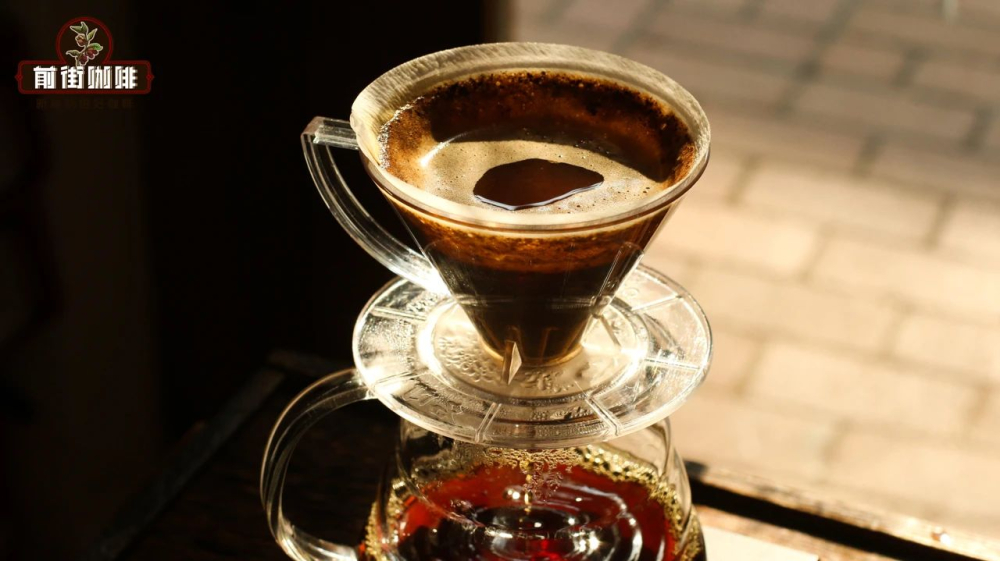
In coffee, balance can refer to many dimensions. In daily life, the most common meaning is balance in taste. Acidity, sweetness, and bitterness are the three main tastes in coffee. When their proportions are appropriate and no single taste is too prominent and covers the others, we can call it balance in taste.
When one of these tastes is too prominent and masks the others, the coffee’s taste is out of balance. For example, if a cup of coffee tastes only of extremely sharp acidity, then its taste is out of balance. Because there is not enough sweetness and bitterness to balance the acidity, it appears so sharp.
In addition to taste, the balance of coffee also refers to whether the overall performance of a cup of coffee is harmonious. In coffee cupping, the coffee’s mouthfeel, aftertaste, and taste are all indicators for measuring balance. In addition, it is also necessary to examine, over time, the balance of each aspect as the coffee’s temperature goes from high to low.
Simply put, it is about seeing whether the coffee’s aroma, mouthfeel, and taste show any “weak links” at different temperatures. If they do, points need to be deducted in the balance column during cupping. In other words, balance is a deductive scoring item based on overall comfort.
Here are two simple examples: the coffee has a prominent taste and rich mouthfeel, but no aftertaste; the coffee has a prominent taste and a long aftertaste, but the mouthfeel is somewhat inferior. Both situations indicate an overall imbalance in the coffee, so points need to be deducted in the balance column of the cupping form.
Let us look at which coffee beans have good balance: first, because the premise of balanced taste is that acidity, sweetness, and bitterness reach an average level, one should not choose light-roasted beans with too much acidity or dark-roasted beans with too much bitterness. Only after that should one buy according to one’s own taste preferences.
Medium-light roasted coffee beans with balanced flavor → Front Street Strawberry Candy · Geisha Blend
Front Street Strawberry Candy combines a Costa Rican honey-process single origin and a Panamanian washed Geisha. It has the flavors of white flowers, roses, grapes, dried blueberries, and fruit gummies, with high sweetness, soft acidity, and an almond aftertaste, together forming a cup of balanced black coffee.
Medium roasted coffee beans with balanced flavor → Front Street 2013 Yunnan Small Bean · Sun-Dried Typica

Front Street 2013 is the ancient Typica variety, so its flavor is traditional and it is suitable for medium roasting, highlighting the sweet aroma of nuts and chocolate while also retaining the slight acidity of dried apricots and ripe plums, as well as a brown-sugar-like sweetness. The taste is neither sour nor bitter, with excellent balance, making it very suitable for beginners to buy.
Medium-dark roasted coffee beans with balanced flavor → Front Street Queen’s Estate · Brazil
For customers who do not want acidic coffee, baristas strongly recommend Front Street Queen’s Estate. This is a single origin using medium-dark roasting. Because it is grown in a high-altitude region of Brazil, in addition to complex nut aromas, it also has a pleasant sweet aftertaste, low acidity, and a rich, rounded mouthfeel. It is suitable for pour-over, moka pot, French press, and home espresso machines.
Front Street believes that after reading this, everyone should know what it means for a cup of coffee to taste very balanced~ It means both that the coffee’s taste is balanced and that the coffee has no weak links! It not only has a good taste performance, but also is in no way inferior in mouthfeel, aftertaste, and other aspects, and can achieve good coordination with the taste~
The above content is compiled by CoffeeHunters, a coffee news website.


