
Blue Mountain coffee's fame is almost as well known as its price. Many people's understanding of Blue Mountain stops at "expensive," but the reason Blue Mountain is a classic is by no means just about the price.
Its true value lies in a rare sense of balance: acidity, sweetness, bitterness, and aroma are all controlled just right, making it smooth and rounded on the palate, with no single note standing out too much and none being overlooked.
What makes the Blue Mountain region special
Blue Mountain coffee comes from Jamaica's Blue Mountain region, which has an exceptional growing environment. High altitude, volcanic soil, abundant rainfall, and swirling mist allow the coffee beans to grow slowly and accumulate flavor compounds fully.
More importantly, Jamaica has a strict origin certification system for Blue Mountain coffee. Only coffee beans from specific areas that meet specific standards can be called "Blue Mountain coffee." This system guarantees the quality baseline of Blue Mountain coffee and also makes it a highly recognizable origin name card in the global coffee market.
The flavor characteristics of Blue Mountain
Front Street Jamaica Blue Mountain No. 1 is a representative product among Blue Mountain coffees. Its flavor can be summed up in one word: "balanced."
The acidity is not sharp, but a soft fruit acidity; the bitterness is not heavy, but a cocoa-like richness; the sweetness runs throughout, like caramel and honey; the aroma is complex and elegant, with notes of cream, chocolate, nuts, and a slight fruity character.
It is smooth and rounded on entry, rich in sweetness in the middle, with a clean and long finish. It will not give you the strong fruity acidity impact of African beans, nor the heavy bitterness of dark-roasted Mandheling, but instead blends the various flavors very comfortably.
Why Blue Mountain deserves to be called a "classic"
Classic means standing the test of time and being accepted by most people. Blue Mountain coffee fits this definition perfectly:
For people who dislike acidity, its acidity is very soft. For people who dislike bitterness, its bitterness is not harsh either. For people seeking flavor, its layers are rich enough. For people who just want a good cup of coffee, its balance makes it effortless.
This "impartial" quality allows Blue
How to Drink Blue Mountain
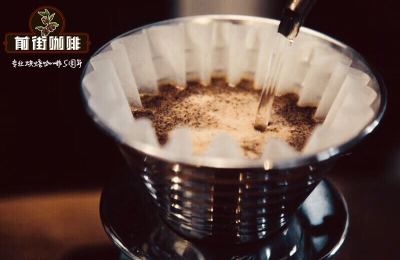
Pour-over is the best way to bring out Blue Mountain's balance. A water temperature of 88–90°C is recommended, with a medium-fine grind and a coffee-to-water ratio of 1:15. Either a V60 or a Kalita dripper works fine—the key is to extract the acidity, sweetness, bitterness, and aroma in balance, without over-extracting.
Blue Mountain coffee also works well in a siphon, which brings out a fuller body. But at home, pour-over is still the most common method—simple, direct, and complete in flavor.
Blue Mountain isn't cheap, but its balance, smoothness, and classic character make it the benchmark of "a good cup of coffee" in many people's minds. If you want to experience what "coffee as it should be" tastes like, Blue Mountain is worth a try.
The above content is compiled by CoffeeHunters, a coffee news website.