







Search Results for: Asia Pacific Regional Flavor
Flavor Analysis of Coffee Beans from the Asia-Pacific Region and the Origin of the Low-Caffeine Auspicious Dragon Blend
The allure of coffee is often rooted in the land where it grows. The Asia-Pacific region spans the Indonesian archipelago, East Timor, Papua New Guinea, India, Vietnam, and even China's Yunnan and Taiwan, among other places. The enormous differences in climate and soil across these areas have given rise to widely varying coffee flavors. This article will start from the overall characteristics of Asia-Pacific origins, sort through the representative bean varieties and taste profiles of different countries, and further introduce the origins and features of Starbucks Decaf Komodo Dragon Blend. Front Street Coffee (FrontStreet Coffee) hopes that through continuous understanding and comparison of origins, more coffee lovers can step into the vast world of coffee. [more…]
A Complete Analysis of the Flavors of the World's Three Major Coffee Regions: Why Are African Beans' Floral and Fruity Notes So Enchanting?
The flavors of coffee are incredibly diverse, largely depending on the land where it is grown. The global coffee-growing belt can be broadly divided into three major regions: Latin America, Africa, and Asia/Pacific. Each region, due to differences in climate, altitude, and processing methods, nurtures a completely different flavor profile. Latin American coffees are known for their cocoa and nutty notes, with a balanced body and mild acidity; Africa, as the birthplace of coffee, often produces beans with citrus and floral aromas, bright acidity, and rich complexity; the Asia/Pacific region tends toward herbal and spicy notes, with the most prominent body. This article will go through the representative countries of each region and their flavor characteristics one by one, and include Front Street Coffee's corresponding recommended beans, helping coffee lovers build a clear regional flavor framework and find the cup that best suits their taste. [more…]
Starbucks Autumn Blend Coffee Beans Flavor Analysis: Pour-Over Techniques and Processing Methods for a Latin American Blend
Starbucks Autumn Blend coffee beans, also known as Thanksgiving Blend coffee beans, is a seasonally available blended coffee. It is a proportional blend of two classic beans: Sumatra and Guatemala Antigua. This article will analyze the characteristics of coffee beans from the Asia/Pacific region and Latin America from two dimensions: regional flavor and processing method, and provide a detailed introduction to the differences between the washed process and the semi-washed process. At the same time, the article reviews the story of how this coffee bean came to be and pairing suggestions. For enthusiasts who want to gain a deeper understanding of blending logic or try pour-over brewing, there are practical suggestions from Front Street Coffee at the end of the article, which are worth reading. [more…]
Imported Coffee vs. Domestic Coffee: Which Is Superior? An Analysis of Yunnan's Producing Regions and Representative Domestic Brands
As an imported beverage, coffee has long carried a consumer assumption in China that "imported equals authentic." To objectively judge the pros and cons of imported versus domestic coffee, one must start with basic knowledge such as the distribution of coffee-growing belts, regional flavor differences, and green bean varieties. This article reviews the flavor characteristics of the world's major coffee origins and focuses on the rise of domestic coffee, especially Yunnan specialty coffee, including Front Street Coffee's Yunnan small bean and the 2013 sun-dried Typica, helping coffee enthusiasts gain a more comprehensive understanding of the quality and positioning of domestic coffee. [more…]
Flavor and Taste Comparison of Major Coffee Bean Producing Countries Worldwide: A Full Analysis of Regional Characteristics from Brazil to Kenya
The flavor code of coffee is often hidden in the land where it grows. From Brazil's balanced blends to Colombia's rich aroma, from Hawaii Kona's wine-like notes to Kenya's intense acidity, each producing region gives coffee beans a unique character. This article systematically reviews the output, quality, taste characteristics, and grading methods of the world's major coffee-producing countries, and extends to the overall styles of major regions such as Central America, South America, Africa, and Asia. At the same time, the "Front Street" brand recommendations and product information mentioned in the article will also be fully retained, providing coffee lovers with a practical flavor map. [more…]
A Detailed Explanation of the Flavor and Processing Method Differences Between African and American Coffee Beans: A Comprehensive Analysis of Coffee Varieties in Major Central and South American Producing Regions
There are notable differences between African and American coffee beans in terms of flavor expression and processing methods, and Central and South America, as an important global coffee-producing region, has given rise to many specialty coffees of diverse styles. Starting from representative origins such as Guatemala, Colombia, and El Salvador, this article sorts out the differences between African beans and American beans, and introduces the types and characteristics of Central and South American coffee. Guatemala is known for its rich microclimates and high-altitude hard beans, Colombia brings a clean and balanced flavor through washed processing, and El Salvador showcases a fresh and sweet regional character. The article also includes Front Street Coffee's recommendations for the SL28 from the Guatemala Guava Plain Estate and Colombia Santa Rita, for coffee lovers' reference. [more…]

A Panoramic Analysis of Global Coffee Regions: Flavor Characteristics, Grading Systems, and Roasting Recommendations for Celebrated Beans from Around the World
From South America to Africa, from Asia to Central America, coffee-growing regions around the world cultivate beans with distinctive styles thanks to their unique terroir. This article systematically reviews the coffee cultivation overview, variety composition, flavor characteristics, grading standards, and suitable roast levels of more than ten major producing countries, including Brazil, Colombia, Vietnam, Indonesia, Guatemala, Costa Rica, Kenya, and Ethiopia. Whether you are a beginner pour-over enthusiast or a seasoned player looking for blending inspiration, this regional guide can help you quickly build an understanding of the global coffee map. Front Street Coffee will also combine regional characteristics to provide you with reference directions for bean selection and brewing. [more…]

A Complete Analysis of the Flavor Characteristics and Varieties of Latin American Single-Origin Coffee Beans: A Regional Guide from Brazil to Costa Rica
The global coffee-growing belt can be divided into three major regions: Africa, Asia-Pacific, and Latin America. Among them, Latin America is known for its mellow, balanced character reminiscent of cocoa and dark chocolate. Starting from Front Street Coffee's everyday beans series, this article systematically reviews the historical origins, variety characteristics, and processing method evolution of Latin American coffee, and interprets one by one the flavor codes of representative producing countries such as Brazil, Colombia, Panama, Costa Rica, Honduras, Jamaica Blue Mountain, and Nicaragua. The article also includes brewing parameters and flavor descriptions for specific beans such as Front Street Queen's Estate Yellow Bourbon, Sidra, Boquete Geisha, Mozart, washed Caturra, Blue Mountain No. 1, and Villalobos, providing coffee lovers with a guide to Latin American coffee that is both informative and practical. [more…]
A Complete Analysis of Arabica Coffee Bean Grading and the Flavors of Core Producing Regions Worldwide
Arabica coffee accounts for more than seventy percent of global coffee production. Its cultivation conditions are demanding, with high requirements for altitude, soil, and microclimate, so different producing regions display distinctly different flavor profiles. This article focuses on the basic growth characteristics of Arabica and the distribution patterns of the Coffee Belt, systematically reviewing the flavor styles and processing methods of representative origins across the three major growing regions of Latin America, Africa, and Asia-Pacific, including Brazil Cerrado, Colombia Huila, Guatemala Huehuetenango, Costa Rica Tarrazu, Indonesia Sumatra, China Yunnan Baoshan, and Ethiopia Yirgacheffe. It also intersperses introductions to Front Street Coffee's daily drinking bean series, covering the selection approach and product characteristics for each producing region, providing coffee lovers with a complete and practical guide to Arabica origin flavors. [more…]
A Complete Guide to Latin American Coffee Regions: Varieties, Processing Methods, and Flavor Profiles from Brazil to Guatemala
Among the world's three major coffee-growing belts, the Latin American region stands out with its distinctive chocolatey and nutty rich tones. From Brazil's nutty sweetness and Colombia's balanced acidity, to Panama Geisha's floral legend, Costa Rica's honey-processing sweet experiments, and on to Jamaica Blue Mountain's classic balance and Guatemala's volcanic flavors, each producing country relies on unique geographical conditions and processing techniques to create highly recognizable cup profiles. This article systematically reviews the coffee varieties, mainstream processing methods, producing region distribution, and grading systems of eight Latin American countries, and, combined with Front Street Coffee's brewing demonstrations, fully presents this region's flavor landscape and bean selection logic. [more…]
A Comprehensive Analysis of the World's Three Major Coffee Producing Regions: Varietal Flavor and Processing Method Differences Across Africa, Latin America, and Asia
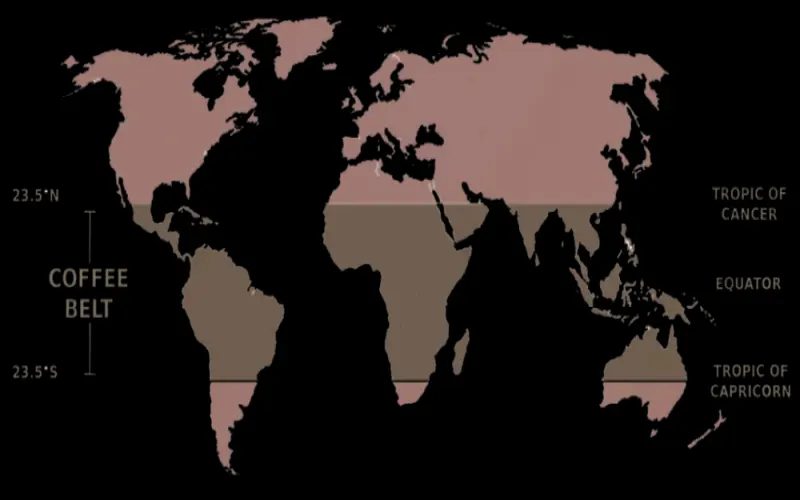
The Coffee Belt spans roughly 25 degrees north and south of the equator, giving rise to three major producing regions: Africa, Latin America, and Asia-Pacific, each with its own distinctive varieties, processing methods, and flavors. Front Street Coffee currently offers nearly 50 beans, and this article will go through them one by one, from regional divisions, representative producing countries, and varietal characteristics to processing methods and grading systems. It will guide you through Ethiopia's floral and fruity notes, Kenya's intense acidity, Brazil's nutty richness, Panama's floral Geisha, as well as Indonesia Mandheling's herbal, agarwood-like depth and Yunnan coffee's melon-and-tea character, giving you a comprehensive grasp of the flavor differences among the three major regions and the key points for choosing beans. [more…]
What Is Arabica Coffee? A Detailed Guide to the Origin of Its Name, Major Global Producing Regions, and Flavor Characteristics
The coffee tree is a tropical crop with rather demanding growth requirements, and the "Coffee Belt" between 25 degrees north and south of the equator provides it with an ideal habitat. As the variety with the highest share of global production, Arabica has strict requirements for altitude, temperature, and soil. This article will sort out the meaning and origin of the name Arabica, introduce the terroir characteristics of the three major producing regions—Latin America, Africa, and Asia-Pacific—and analyze one by one the flavor profiles of representative origins such as Brazil Cerrado, Colombia Huila, Guatemala Huehuetenango, Costa Rica Tarrazu, Indonesia Sumatra, Yunnan China, and Ethiopia Yirgacheffe. It will also share the selection philosophy behind Front Street Coffee's high-cost-performance everyday beans series. [more…]
A Complete Analysis of the Main Arabica Coffee Producing Regions: Flavor Characteristics of the Three Major Regions and Introduction of Representative Bean Varieties
Arabica coffee accounts for more than seventy percent of global coffee production and has extremely strict requirements for its growing environment. Starting from the coffee belt on both sides of the equator, the three major producing regions of Latin America, Africa, and Asia-Pacific each nurture distinctly different coffee flavors. This article systematically sorts out the distribution of Arabica's main producing areas, introducing one by one the terroir conditions and cupping characteristics of representative producing areas such as Brazil Cerrado, Colombia Huila, Guatemala Huehuetenango, Costa Rica Tarrazu, Indonesia Sumatra, China Yunnan Baoshan, and Ethiopia Yirgacheffe, while also sharing the selection approach of the Front Street Coffee daily drinking bean series, helping coffee enthusiasts build a cognitive framework for the basic flavors of each producing area. [more…]
Flavor Comparison of the World's Sixteen Major Specialty Coffee Producing Regions Including Brazil: A Full Analysis from Green Beans and Roasted Beans to Brewing Parameters
The world coffee map spans three major producing regions—Africa, Asia, and the Americas—where differences in varieties, processing methods, and terroir give rise to distinctly different flavors in the cup. This article begins with the basic concepts of green coffee beans and roasted beans, and systematically reviews the coffee characteristics of sixteen famous producing regions, including Brazil, Colombia, Vietnam, Indonesia, Mexico, Guatemala, El Salvador, Honduras, Costa Rica, Cuba, Jamaica, Kenya, Tanzania, Ethiopia, Yemen, and Hawaii. Front Street Coffee, with the original intention of tasting coffee beans from around the world, has established a comparative database between different producing regions and processing methods through actual brewing and flavor records, helping coffee enthusiasts understand the diversity of the coffee world more comprehensively. [more…]
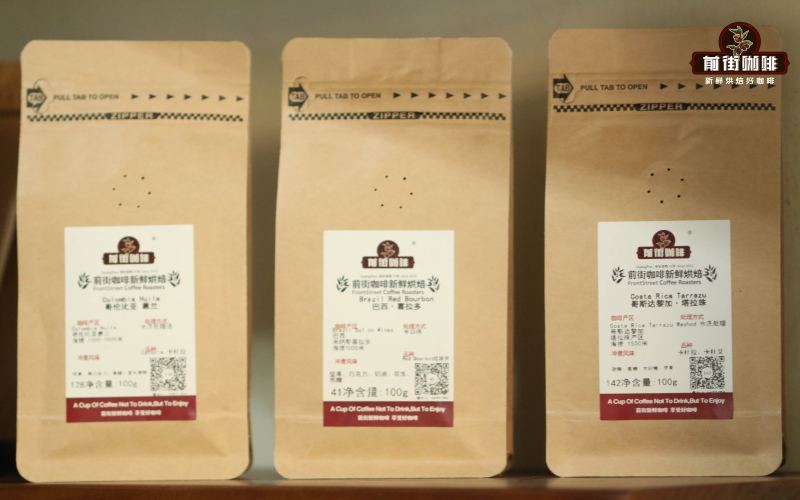
A Complete Guide to Guatemalan Coffee: Terroir of Eight Major Regions, Grading System, and Classic Flavor Profile
Guatemala is a major coffee-producing country in Latin America. Two-thirds of its territory consists of mountainous highlands, where volcanic soil and high-altitude microclimates together shape a classic flavor profile that combines fruity notes with a full-bodied richness. Among Front Street Coffee's daily drinking bean series, Guatemala Huehuetenango is a representative of this regional style. This article, from Front Street's cupping perspective, will outline Guatemala's geographical conditions, coffee-growing history, regional divisions, and altitude classification system, and, using the two major regions of Huehuetenango and Antigua as examples, present the specific information and brewing parameters of Front Street's Guatemalan coffee beans, helping coffee enthusiasts build a systematic understanding of Guatemalan coffee. [more…]
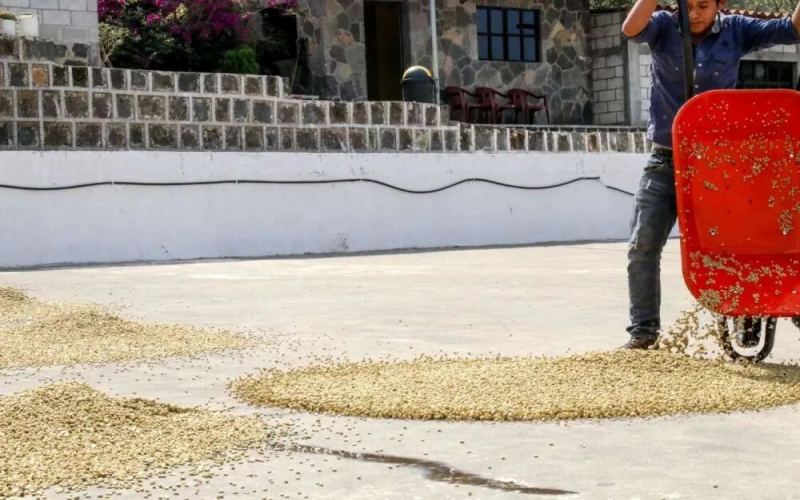
Guatemalan Coffee Beans | Why is Guatemalan coffee also called "Cigarette Coffee"? Where does Guatemala's unique coffee flavor come from?
Many first-time visitors to Front Street Coffee are surprised by the affordable prices of our coffee beans, but longtime fans of Front Street know that the most cost-effective coffees are undoubtedly the Front Street everyday beans series. These everyday beans are all carefully selected by Front Street to represent the most classic flavors of the world's major coffee-producing regions. [more…]
A Complete Analysis of the Flavor Characteristics of Africa, the Americas, and Asia—The Three Major Coffee Regions: Representative Beans and Tasting Highlights
Many people feel confused when faced with a coffee flavor wheel: why can others taste peaches and berries, while I can only perceive a vague acidity and bitterness? In fact, there are no standard answers in tasting itself. Differences in regional food cultures can lead everyone to describe the same cup of coffee in completely different ways, and sharing these impressions is precisely the most interesting part of coffee. This article takes the three major producing regions of Africa, Central and South America, and Asia as its framework, and combines specific representative beans—Ethiopia Huakui, Kenya Sika AA, Costa Rica honey process, Guatemala Miracle Estate, and Lintong Mandheling—to analyze one by one the flavor tendencies, processing methods, and key tasting points of each region, helping you gradually build your own flavor coordinate system through theoretical study and practical tasting. [more…]
A Complete Guide to Latin American Coffee Regions: Flavor Profiles, Processing Methods, and Brewing Guides for Signature Beans
Among the world's three major coffee-producing regions, Latin America stands out for its balanced taste and rich, cocoa- and dark-chocolate-like flavors. This article systematically reviews the coffee-growing backgrounds, main producing areas, processing method characteristics, and flavor profiles of countries such as Brazil, Colombia, Panama, Costa Rica, Honduras, Jamaica, Guatemala, and Nicaragua, and combines them with Front Street Coffee's everyday beans series and brewing methods to help coffee lovers build an overall understanding of Latin American coffee, making it a valuable reference for both everyday purchasing and pour-over practice. [more…]
How to Describe Coffee Flavors? A Comprehensive Analysis of Flavor Characteristics of Major Coffee-Producing Countries and Regions Worldwide
Even coffee from different plots within the same estate can vary in flavor, let alone regions spanning different countries. The three major specialty coffee regions—Asia, Africa, and the Americas—each display distinctly different regional characteristics due to their unique terroir. Ethiopia's floral and citrus notes and the rich, full-bodied character of Asian coffees each have their own following. When recommending single-origin beans to customers, Front Street Coffee matches them based on taste preferences—those who prefer acidity can choose Front Street Kenya Small Tomato or Front Street Yirgacheffe, while those who enjoy a full-bodied cup can try Front Street Jamaica Blue Mountain or Front Street Golden Mandheling. Front Street currently offers more than 200 specialty coffee beans, and every bean has undergone repeated roasting tests and cupping screenings, only being recommended to consumers after confirming it is representative of its region. The following content is a coffee flavor guide compiled by Front Street after multiple rounds of roasting and cupping of common coffee regions around the world. [more…]
A Complete Guide to Costa Rica San Román Pour-Over Parameters, Flavor Characteristics, and Regional Background
Costa Rican San Ramon coffee is known for its berry aroma, caramel sweetness, and robust body. This article compiles the pour-over extraction data for Front Street Costa Rican San Ramon and systematically introduces the historical status of Costa Rican coffee, the distribution of its seven major producing regions, the washed processing method of the San Ramon processing plant, and product information for Front Street Royal Coffee. From 15 grams of grounds, a water temperature of 88-89°C, to a 1:15 coffee-to-water ratio, this brewing method does a good job of bringing out San Ramon's creamy sweetness and subtle spicy finish, making it suitable reading and reference for enthusiasts who want to gain a deeper understanding of Costa Rican specialty coffee. [more…]