







The world coffee map spans three major producing regions—Africa, Asia, and the Americas—each nurturing distinctly different flavors in the cup due to variations in varieties, processing methods, and terroir. This article begins with the basic concepts of green coffee beans and roasted beans, then systematically outlines the coffee characteristics of sixteen famous producing regions, including Brazil, Colombia, Vietnam, Indonesia, Mexico, Guatemala, El Salvador, Honduras, Costa Rica, Cuba, Jamaica, Kenya, Tanzania, Ethiopia, Yemen, and Hawaii. Front Street Coffee, with the original intention of tasting coffee beans from around the world, has built a comparative database between different producing regions and processing methods through actual brewing and flavor records, helping coffee enthusiasts gain a more comprehensive understanding of the diversity of the coffee world.
Professional coffee knowledge exchange. For more coffee bean information, please follow CoffeeWorkshop (WeChat public account: cafe_style)
The global coffee-growing belt can be divided into three major sections: Africa, Asia, and the Americas. Different sections, and even individual origins within the same section, show significant differences in coffee varieties, green bean processing methods, and the final flavors presented. When Front Street Coffee was founded, its starting point was not simply selling coffee beans, but rather hoping to taste as widely as possible the coffee beans produced around the world. In this process, Front Street Coffee has devoted itself to understanding the characteristics of each coffee-producing region, comparing the performance of different varieties within the same region, and the flavor changes shown by the same variety after different processing methods, thereby building a systematic data archive and conducting horizontal comparisons between producing regions. Front Street Coffee hopes that in this way, more people who love coffee can gain a deep understanding of the full picture of the coffee world.
Before formally introducing each producing region, Front Street Coffee will first explain the concepts of green coffee beans and roasted beans.
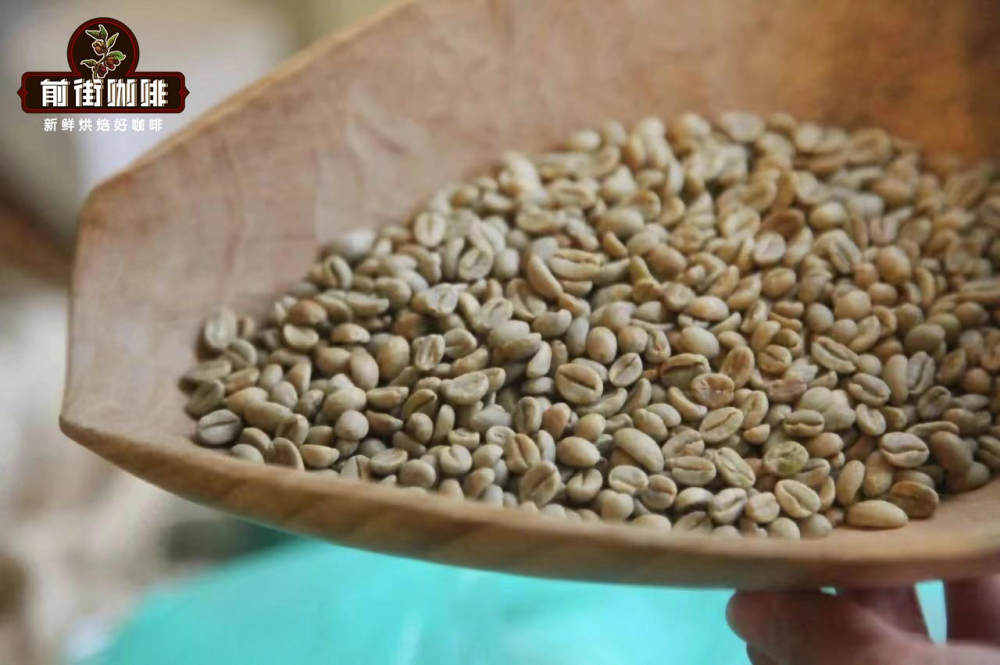
Green coffee beans: Coffee beans that have not undergone roasting are called green beans. Their appearance is usually blue-green, emerald green, light green, or yellow-green in color.
The outermost layer wrapping the coffee bean is called parchment. After it is removed, what remains is the unroasted green coffee bean.
Roasted coffee beans: After green beans undergo the roasting process, they become what we commonly call roasted coffee beans.
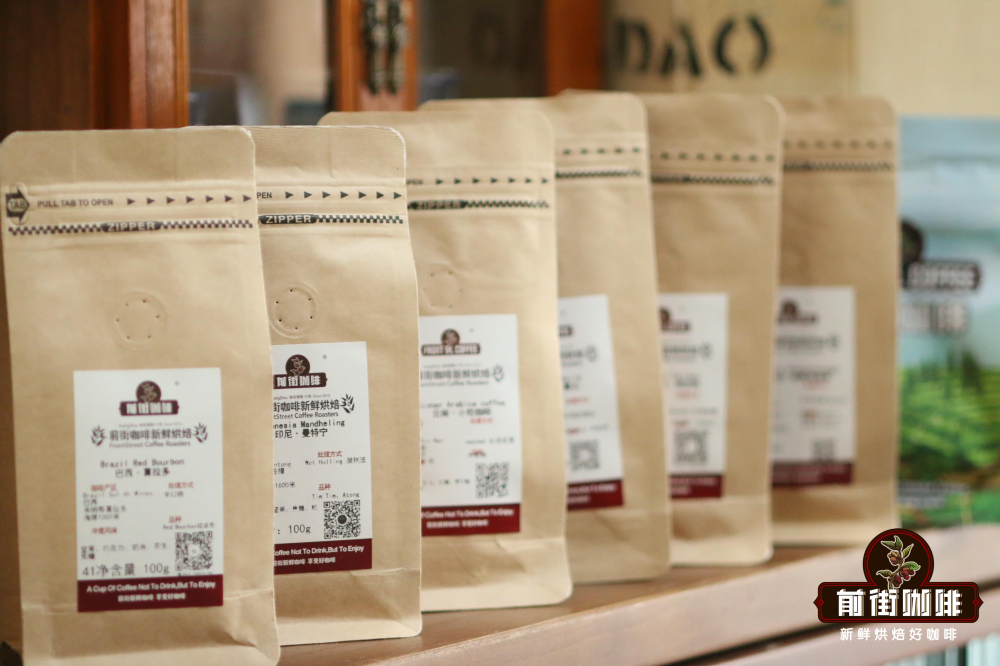
Coffee beans from sixteen famous producing regions
I. Brazil (South America)
Since 1960, Brazil's coffee planting scale has steadily ranked first in the world, with an average annual output of 24.6 million bags (each bag calculated at 60 kg). According to a report released by the United States Department of Agriculture in November 2002, Brazil's actual coffee output that year should have been 51.6 million bags.
Brazil is the world's largest coffee exporter. Over the past nearly forty years, the country's average annual trade volume of coffee beans and instant coffee has reached 1.38 billion US dollars. In 2002, the total global coffee trade was 88.7 million bags, and Brazil exported 27.99 million bags, an increase of 19.3% over 2001, accounting for 30% of global coffee trade and ranking first (second was Vietnam, with a trade volume of 12.2 million bags, accounting for 13.7%), nearly 8 percentage points higher than 22.3% in 1998. Europe is the largest buyer of Brazilian coffee, purchasing 50% of Brazil's total exports. In 2002, coffee exports to European Community countries amounted to 708.7 million US dollars, accounting for 52.3%, with most of the remainder sold to the United States and Asia. In the coffee export structure, coffee beans account for 85%.
Brazil's coffee producing areas are mainly distributed in the states of Minas, Espírito Santo, São Paulo, Paraná, Rondônia, and Bahia. At present, the country has 6 billion coffee plants and about 3 million hectares of planted area. Minas is Brazil's core coffee-producing region, with an output of 22.71 million bags in 2002, accounting for 48% of the national total; Espírito Santo is the main producing area of Brazil's large-bean coffee and ranks first in the country in output.
Brazilian coffee varieties are mainly divided into three categories, namely large-bean coffee (robusto), small-bean coffee (arabico), and peeled cherry coffee (cereja descascada). Brazil's share of the same type of coffee worldwide rose from 19% in 1996 to 25%. Affected by market price fluctuations, Brazil is adjusting its coffee variety structure, reducing the planted area of small-bean coffee, expanding the area of large-bean coffee, and making cherry coffee a focus of future development. The layout of coffee planting is also showing a trend of extending toward the northeast.
Brazilian coffee beans roasted to medium-dark or darker have flavor characteristics of a balanced, full-bodied taste, nutty and cocoa-like flavor notes, and a caramel-like finish.
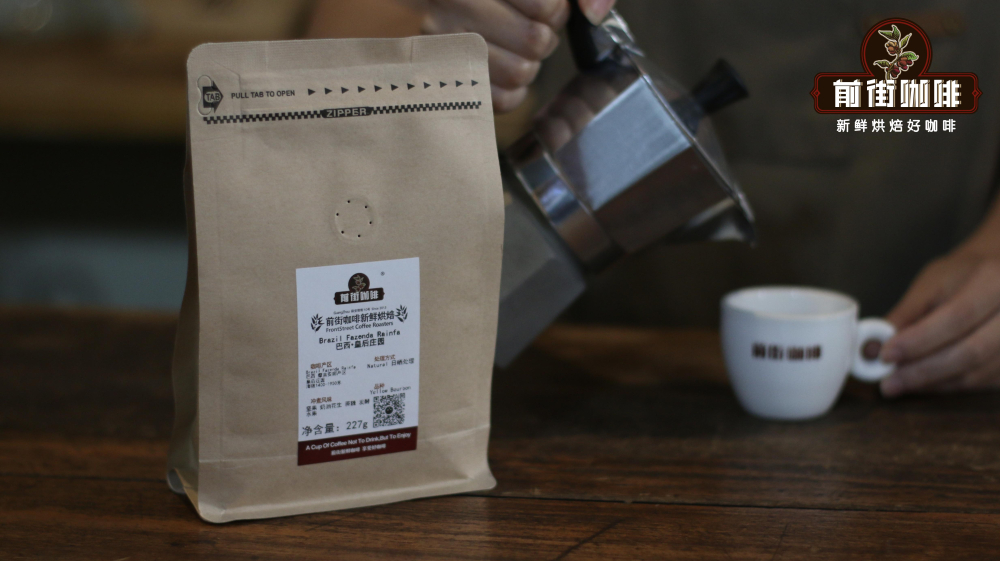
Front Street Coffee - Brazil Queen Farm Coffee Beans
Region: Mogiana, Brazil
Variety: Yellow Bourbon
Processing method: semi-dry
Roast: medium-dark roast
Altitude: 1400-1950
II. Colombia (South America)
In 2002, Colombia's coffee planted area was 775,000 hectares, of which the production area was 613,000 hectares.
All coffee produced in Colombia belongs to mild Arabica. The country is one of the world's most important coffee exporters. According to International Coffee Organization statistics, from 1991 to 1996, Colombia's coffee exports accounted for an average of 17% of total world exports, second only to Brazil (24% of total world exports). In 2001, total global coffee exports were 89.7 million bags, of which Brazil accounted for 26.2%, Vietnam 15.8%, and Colombia 11.1%.
Colombia's main coffee export destinations include the United States, Germany, Japan, Belgium, France, Canada, the Netherlands, Sweden, and Spain. The United States is Colombia's largest coffee export market.
Colombian coffee beans roasted to medium or darker have flavor characteristics of a balanced, full-bodied taste, soft fruit acidity, nutty aroma, and a caramel-like finish.
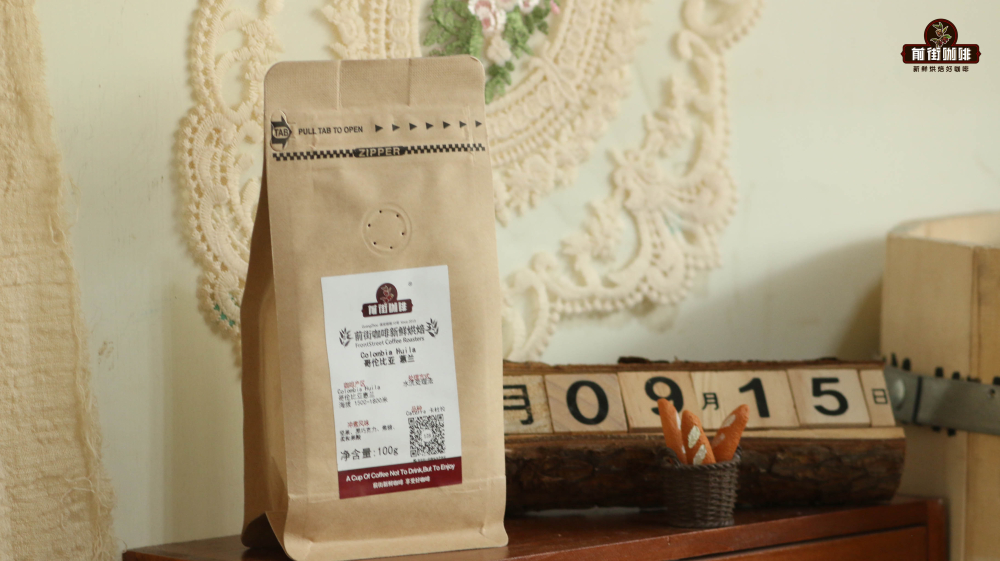
Front Street Coffee chose the Colombian Huila bean for observational brewing. Colombian coffee beans are bright and transparent in color, uniform in bean size, complete in shape, with a beauty like jade, rounded and translucent.
Colombian Huila Region Coffee Beans
Region: Colombia
Variety: Caturra
Processing method: washed
Roast: medium-dark roast
Altitude: 1500-1800m
Brewing suggestions
Dripper: V60 dripper
Water temperature: 90°C
Dose: 15 grams
Coffee-to-water ratio: 1:15
Grind size: medium grind (75% passing rate on China No. 20 standard sieve)
Brewing method
Pulse pouring extraction
For the first pour, use 30 grams of water for blooming, with a blooming time of about 30 seconds. For the second pour, pour until 125 grams of water, then pause. When the water level drops and is about to expose the coffee bed, continue with the third pour until 225 grams to finish. When the water level drops and is about to expose the coffee bed, remove the dripper. (Start timing from the beginning of blooming.) The extraction time is 200".
Flavor description
Overall relatively balanced, with obvious sweetness. On the palate there are dark chocolate, nuts, and caramel. Under temperature changes, there is a soft fruity acidity.
III. Vietnam (Southeast Asia)
In the early 1860s, French missionaries introduced coffee trees to Vietnam for cultivation, but it was not until 1990 that Vietnam's coffee output gradually secured a place in the global market. In 2001, total global coffee exports were 89.7 million bags, of which Brazil accounted for 26.2%, Vietnam 15.8%, and Colombia 11.1%. This was the first time Vietnam surpassed Colombia to rise to second place in the world. However, the coffee beans produced in Vietnam are mainly low-priced robusta beans, with Robusta coffee beans as the main variety. The sharp rise in Vietnam's export volume also pushed down coffee prices in the international market.
IV. Indonesia (Southeast Asia)
The main producing areas include Java, Sulawesi, and Sumatra, of which 90% is Robusta. The Indonesian archipelago is the world's largest Robusta bean producing region. Among them, Java and Sumatra Mandheling are the most famous.
Deep-roasted Indonesian Mandheling coffee beans have the aroma of herbal spices, a cocoa-like roundness, high body, and obvious lingering sweetness.
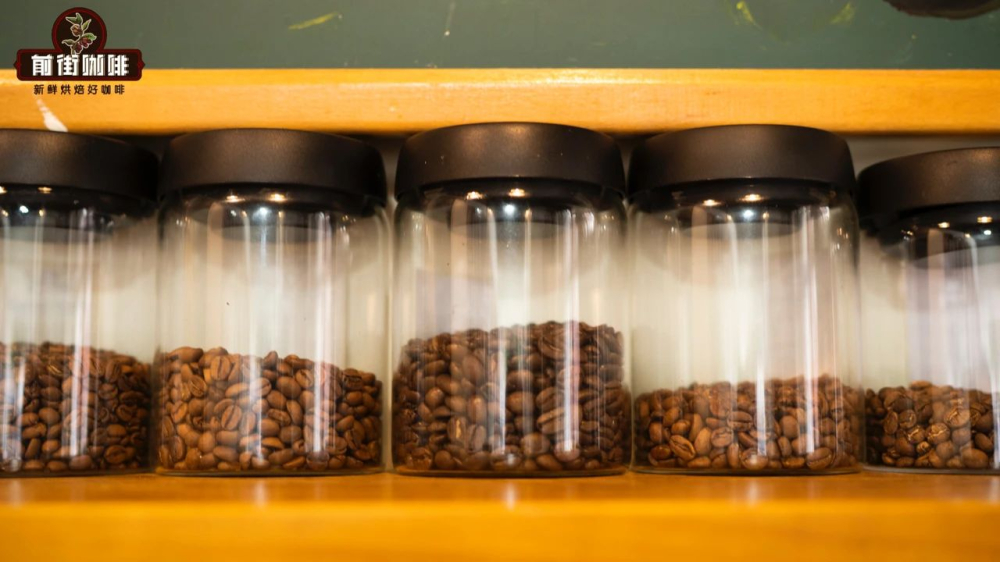
Front Street Coffee observed the green beans of four Indonesian Mandheling coffees in the store (Golden Mandheling, Tiger Mandheling, Lintong Mandheling, and Aged Mandheling) and found that Mandheling beans still have relatively many shell beans. This is caused by hulling the beans when their moisture content is relatively high and the bean texture is relatively soft.
Golden Mandheling is 19+ screen size, so it is noticeably larger in size than other Mandheling beans. Because of its higher moisture content, the green beans tend to be darker green;
Tiger Mandheling green beans are round-bodied, slightly yellow with green, and have relatively good uniformity;
Lintong Mandheling green beans are grayish green, varying in size, and relatively not very uniform;
Because of the processing method, Aged Mandheling green beans have a rather special color, orange with a blackish tint. The surface looks wrinkled, and the green beans are also relatively uniform in size.
Front Street Coffee then brewed Golden Mandheling to taste its regional flavor.
Front Street Coffee - Front Street PWN Golden Mandheling Coffee Beans
Company: PWN
Region: Sumatra
Altitude: 1100-1600m
Grade: G1 (one machine sorting + three hand sortings)
Variety: Ateng
Processing method: wet-hulled
Brewing suggestions
Dripper: Kono dripper
Water temperature: 88-89°C
Dose: 15 grams
Coffee-to-water ratio: 1:15
Grind size: medium-coarse grind (65% passing rate on China No. 20 standard sieve)
*Reason for choosing the Kono dripper: The Kono dripper has few ribs and they are located at the lower end. The filter paper fits closely against the dripper, which can restrict airflow and extend the contact time between water and coffee grounds, allowing the coffee grounds to be fully extracted and enhancing the full-bodied mouthfeel.
Brewing method
Pulse pouring extraction
For the first pour, use 30 grams of water for blooming, with a blooming time of about 30 seconds. For the second pour, pour until 125 grams of water, then pause. When the water level drops and is about to expose the coffee bed, continue with the third pour until 225 grams to finish. When the water level drops and is about to expose the coffee bed, remove the dripper. (Start timing from the beginning of blooming.) The extraction time is 2'00".
Flavor description
Layered and varied, full-bodied and clean, with high balance, strong nutty and chocolate flavors, rich spice and caramel aroma, with fruity notes, and a long finish.
V. Mexico (Central America)
At the end of the 18th century, Mexico began growing coffee. Coffee production areas are concentrated in the southern region closer to Guatemala, with mountain ranges running through both the east and west sides, making its mountain slopes ideal terrain for coffee cultivation. It was not until 1870 that there was a fairly large volume for export. The largest export destination for Mexican coffee beans is the United States.
Mexican coffee
Mexican coffee beans roasted to medium or darker have the aroma of cocoa and nuts, a honey-almond mid-palate, and a sucrose-like finish.
VI. Guatemala (Central America)
There are few places in the world that can offer the variety of high-quality coffee beans produced by Guatemala. The reason Guatemalan coffee beans are of excellent quality lies in the unique conditions of their producing areas, including different climate changes in each region, rich volcanic soil, abundant natural water resources, high-altitude mountains, and shaded, humid forests.
Guatemala has seven main coffee producing regions: Antigua, Coban, Atitlan, Huehuetenango, Fraijanes, Oriente, and San Marcos.
The coffee beans of each producing region have their own characteristics and have also won Guatemala much praise internationally. Antigua in particular—how perfectly coordinated its acidity, sweetness, and body are; add a hint of smoky flavor, which further emphasizes its mystery. After tasting it, you will have reason not to keep looking everywhere for substitutes.
Most Guatemalan coffee beans are cultivated in high-altitude volcanic regions, and the soil is suited to the highest-grade Arabica varieties. Because the maturation period is longer, the beans are medium-sized and dense (Guatemalan coffee bean grading is not based on bean size, but on the number of defects as the grading standard). The bean color is dark blue-green. Aroma, body, sweetness, and a fresh, pleasant, unique acidity are its characteristics, because the coffee bean's fragrance and mouthfeel are hidden within its acidity. Therefore, only coffee beans with these characteristics can be called premium coffee beans.
Guatemalan coffee beans roasted to medium or darker have soft fruity acidity, nutty and slightly smoky aromas, and a cocoa-caramel-like finish.
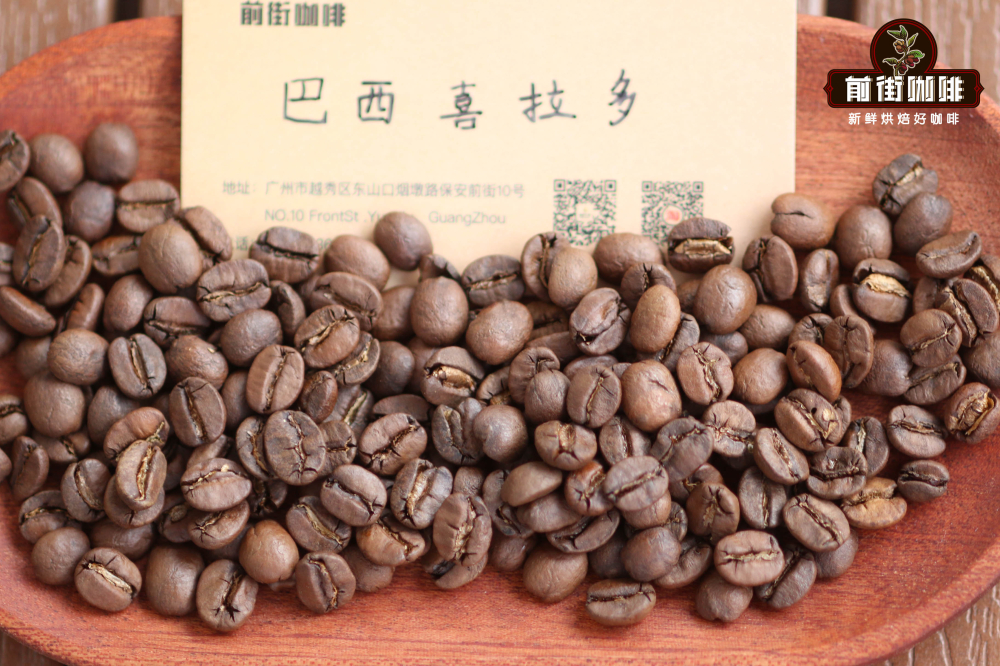
Front Street Coffee - Guatemala La Minita Flor del Café Coffee Beans
Region: Antigua region
Farm: La Minita
Altitude: 1200-1600m
Variety: Bourbon, Caturra
Processing method: washed process
Grade: SHB
VII. El Salvador (Central America)
Geographically, El Salvador is close to Honduras, Guatemala, and the North Pacific. Its natural environment is beautiful, with breathtaking volcanoes. The terrain of El Salvador is highland terrain, with an average altitude of 650 meters. The country is distributed between two parallel mountain ranges (one parallel to the Pacific coast, and the other at the border with Honduras). This unique geographical environment divides El Salvador into five different natural ecological zones. Conditions such as soil, climate latitude, and extensive natural shade all show that El Salvador is very suitable for growing high-quality Arabica coffee; in fact, since the nineteenth century, coffee has been one of the country's most important economic products.
Excellent Salvadoran coffee has a bright but not aggressive flavor. At light-to-medium roast levels, it is refreshing on the palate, well-proportioned in flavor, and occasionally has plum and spice notes. Generally speaking, its mouthfeel is somewhat heavier than that of neighboring Costa Rican coffee. Deep-roasted Salvadoran coffee often shows alluring rich chocolate flavors. It is worth mentioning that the vast majority of Salvadoran coffee is organic coffee. Although the country still produces large amounts of low-altitude, low-priced coffee beans, there are also more and more estate-level specialty coffees from El Salvador.
Salvadoran coffee beans roasted to medium or darker have a balanced mouthfeel, nutty-creamy smoothness, and citrus-like fruity acidity.
Front Street Coffee - El Salvador Santa Ana
Farm: Chocolate Lover Farm
Variety: Bourbon
Altitude: 1450m
Grade: SHB
Processing method: 50% washed, 50% honey
Brewing suggestions
Dripper: V60 dripper
Water temperature: 90°C
Dose: 15 grams
Coffee-to-water ratio: 1:15
Grind size: medium grind (75% passing rate on China No. 20 standard sieve)
Brewing method
Pulse pouring extraction
For the first pour, use 30 grams of water for blooming, with a blooming time of about 30 seconds. For the second pour, pour until 125 grams of water, then pause. When the water level drops and is about to expose the coffee bed, continue with the third pour until 225 grams to finish. When the water level drops and is about to expose the coffee bed, remove the dripper. (Start timing from the beginning of blooming.) The extraction time is 2'00".
Flavor description
It smells of fruity and nutty aromas. On the palate there are nuts, cream, and caramel. The finish has berry and citrus acidity. The overall mouthfeel is relatively balanced.
Processing method (50% washed, 50% honey)
Finca Guayabo mainly presents this coffee bean through different post-processing methods. Using the 100% Bourbon variety, through different processing methods, with 50% honey processing and 50% washed processing, the original Bourbon variety is made to present different flavors through different processing methods, showing a layered, milk-smooth "Chocolate Lover" with cocoa-chocolate notes.
The honey processing method involves transporting the coffee beans to a honey processing station at an altitude of about 1800 meters. Processing at a lower altitude is because it is not easy for clouds and fog to form here. With ample sunlight and strong ultraviolet rays, the coffee beans can absorb enough heat energy to give the coffee a very good aroma, allowing the coffee to dry in a very short time and present its flavor better.
The washed method uses the abundant water resources of this region to give the coffee a very clean mouthfeel. Combining 50% honey processing with 50% washed processing creates a very distinctive single origin coffee. This is the flavor the farm wants to express, filling the coffee with chocolate, cocoa, and stone fruit notes, and naming it the "Chocolate Lover" series.
VIII. Honduras (Central America)
Coffee beans are also classified by altitude. Washed coffee beans from high mountain areas are better, while coffee beans from lowlands are somewhat inferior. Famous producing areas include Santa Barbara, Gracias, Comayagua in the east, and Choluteca near Nicaragua.
Honduran coffee beans roasted to medium or darker have delicate acidity, an overall balanced performance, and a long aftertaste.
Front Street Coffee - Honduras Moka Farm Lychee Orchid Coffee Beans
Region: Marcala
Farm: Moka Farm
Altitude: 1500-1700m
Variety: Caturra, Catuai
Processing method: refined washed + brandy barrel fermentation
Front Street Coffee - Honduras Moka Farm Sherry Coffee Beans
Region: Marcala
Farm: Moka Farm
Altitude: 1500-1700m
Variety: Caturra, Catuai, Pacas
Processing method: refined washed whisky sherry barrel fermentation
Brewing suggestions
Dripper: Hario V60
Water temperature: 90°C
Dose: 15 grams
Coffee-to-water ratio: 1:15
Grind size: medium-fine grind (80% passing rate on China No. 20 standard sieve)
Brewing method
Pulse pouring extraction
For the first pour, use 30 grams of water for blooming, with a blooming time of about 30 seconds. For the second pour, pour until 125 grams of water, then pause. When the water level drops and is about to expose the coffee bed, continue with the third pour until 225 grams to finish. When the water level drops and is about to expose the coffee bed, remove the dripper. (Start timing from the beginning of blooming.) The extraction time is 2'00".
Sherry brewing flavor: It smells of vanilla and cream. On the palate there are whisky, berries, almonds, and dark chocolate flavors. The finish has a maple syrup-like lingering sweetness.
Lychee Orchid brewing flavor: On the palate there are lychee, brandy, and cream. As the temperature changes, the alcoholic note and dark chocolate become obvious. The mouthfeel is thick and substantial, and the finish has an obvious honey sweetness.
Lychee Orchid coffee flavor description
IX. Costa Rica (Central America)
Costa Rica is located on the low-latitude volcanic belt of Central America. The Central Plateau and mountainous areas are about 800-2000 meters above sea level, suitable for coffee growth. Costa Rican coffee has always been famous for its extremely balanced flavor, extreme cleanliness, extreme brightness, and berry-like fruity acidity. Excellent Costa Rican coffee may show spice notes and cocoa flavors in the finish. The country's most famous large growing region is Tarrazu, near the capital San José. The Tarrazu region has the highest average latitude and excellent climate and soil conditions, making Tarrazu the country's most famous and generally recognized best major coffee producing region. Tres Rios is a famous small producing area within the Tarrazu region. The most famous Costa Rican single-estate coffee in the specialty coffee world is the La Minita estate in the Tarrazu region, with an annual output of only 160,000 pounds.
Costa Rican coffee beans roasted to medium or darker have flavors of soft citrus acidity, nutty and cocoa aromas, and a caramel-like finish.
Front Street Coffee - Costa Rica Mirazu Estate Strawberry Candy Coffee Beans
Farm: Mirazu Estate
Grade: SHB
Processing method: raisin honey processing
Altitude: 1700m
Variety: Geisha, ET47, SL28, Maico
Brewing suggestions
Dripper: Hario V60
Water temperature: 90°C
Dose: 15 grams
Coffee-to-water ratio: 1:15
Grind size: medium-fine grind (80% passing rate on China No. 20 standard sieve)
Brewing method
Pulse pouring extraction
For the first pour, use 30 grams of water for blooming, with a blooming time of about 30 seconds. For the second pour, pour until 125 grams of water, then pause. When the water level drops and is about to expose the coffee bed, continue with the third pour until 225 grams to finish. When the water level drops and is about to expose the coffee bed, remove the dripper. (Start timing from the beginning of blooming.) The extraction time is 2'00".
When brewed with a V60 dripper, it smells of obvious fermentation aroma and ripe strawberry fragrance. It tastes relatively smooth and full-bodied, with a strong juicy feel, and has strawberry, nuts, cream, red wine, and raisin notes, with an alcoholic aroma in the finish.
X. Cuba (West Indies)
Cuba is famous for cigars and coffee. Coffee was introduced by the French from Haiti in the mid-eighteenth century. Cuban coffee grades are classified according to bean size into ETL (extra large), TL (medium), and AL (ordinary).
Cuba · Sierra del Cristal
Suitable roast level: medium
Flavor characteristics: stable taste. Balanced acidity, bitterness, and sweetness
Introduction: The coffee beans are medium to large. In particular, "Sierra del Cristal" is Cuba's proudest high-quality large-size premium coffee bean.
XI. Jamaica
Jamaica's most famous Blue Mountain coffee is Typica coffee beans grown at altitudes of 910-1700m in Jamaica's Blue Mountains. This is also one of the oldest varieties among Arabica coffee varieties. The clean, serene aroma and taste are the characteristics of Typica coffee beans. Coffee grown below 910m can only be called Jamaica High Mountain Coffee/Jamaica Prime Coffee.
Authentic Blue Mountain coffee must be exported in wooden barrels, with specifications of 15/30/70kg. At the same time, the Jamaican government or the coffee place of origin will issue a certificate of authenticity, which everyone can pay attention to when purchasing. In Front Street Coffee's physical store, you can see the wooden barrels and the certificate of origin.
Jamaican Blue Mountain coffee beans roasted to medium or darker have a full-bodied flavor with balanced acidity, sweetness, and bitterness, soft fruity acidity, a rich cocoa aroma, and a caramel-like sweet finish.
Front Street Coffee - Jamaica Blue Mountain No. 1 Coffee Beans
Farm: Clifton Farm
Processing method: washed process
Altitude: 1310m
Variety: Typica
Brewing suggestions
Dripper: KONO
Water temperature: 88°C
Dose: 15 grams
Coffee-to-water ratio: 1:15
Grind size: medium-coarse grind (70% passing rate on China No. 20 standard sieve)
Brewing method
Pulse pouring extraction
For the first pour, use 30 grams of water for blooming, with a blooming time of about 30 seconds. For the second pour, pour until 125 grams of water, then pause. When the water level drops and is about to expose the coffee bed, continue with the third pour until 225 grams to finish. When the water level drops and is about to expose the coffee bed, remove the dripper. (Start timing from the beginning of blooming.) The extraction time is 2'00".
Blue Mountain No. 1 coffee flavor: On the palate there are dark chocolate and nutty flavors, high cleanliness, very good body, balanced sweetness and bitterness, and a brown sugar sweetness in the finish.
XII. Kenya (Africa)
Located in East Africa under the equator, Kenya grows high-quality Arabica coffee beans. The Mocha-type small-bean coffee introduced from Bourbon Island has a unique flavor, is suitable for blending, and has received considerable praise.
Kenyan coffee at light-to-medium roast has full coffee acidity, an aroma like cherry tomatoes, as well as plum-like fruit acidity and a yellow sugar-like sweetness.
XIII. Tanzania (Africa)
Tanzania is adjacent to famous coffee-producing countries such as Kenya, and coffee exports account for a very important proportion of the national economy. Tanzanian coffee usually has the characteristics of being aromatic, slightly fruity and acidic, rich, and refreshing. The famous producing area is around Mount Kilimanjaro in the northwest. Of the coffee produced in Tanzania, Arabica accounts for 75% and Robusta 25%.
Tanzania produces a large amount of peaberry (also called round bean, Peaberry). After harvest, round-shaped peaberries are usually selected by vibrating automatic machines and sold at a higher price to the international specialty coffee market, where they are widely welcomed by buyers in North America and Europe. Because of their shape and internal density, peaberries heat up faster during roasting than flat beans, so mastering the heat during roasting is relatively important. They are suitable for light to medium roasting.
Front Street Coffee - Tanzania Kilimanjaro Coffee Beans
Region: Northern Highlands, Mount Kilimanjaro volcanic area
Variety: Bourbon
Processing method: washed
Grade: AA
Altitude: 1300-2000m
At a lighter roast level (City), it is aromatic and refreshing, with a flavor similar to Kenya, bright and prominent, with sweetness, suitable for drinking as a single origin to directly taste its own natural aroma. At a darker roast level (Full City), the acidity decreases to extremely weak, while the sweetness becomes very prominent, making it a good choice for blending espresso recipes. Tanzanian coffee has a more prominent aroma than ordinary coffee beans, a unique and delicate rich mouthfeel, and integrates nutty and chocolate aromas with rich fruity aroma. It is endlessly variable and worth tasting.
Brewing suggestions
Dripper: Hario V60
Water temperature: 90°C
Dose: 15 grams
Coffee-to-water ratio: 1:15
Grind size: medium-fine grind (80% passing rate on China No. 20 standard sieve)
Brewing method
Pulse pouring extraction
For the first pour, use 30 grams of water for blooming, with a blooming time of about 30 seconds. For the second pour, pour until 125 grams of water, then pause. When the water level drops and is about to expose the coffee bed, continue with the third pour until 225 grams to finish. When the water level drops and is about to expose the coffee bed, remove the dripper. (Start timing from the beginning of blooming.) The extraction time is 2'00".
Kilimanjaro coffee flavor: Citrus, berries, honey, tea-like
XIV. Ethiopia (Africa)
Ethiopia is an agricultural country with a history and tradition that can be called the birthplace of coffee. The place considered to be the origin of the name "coffee" is Kaffa in the southwest, while the Sidamo area in the south is the main producing area.
Ethiopia
Ethiopia's famous coffee producing region, Yirgacheffe, is located in southern Ethiopia and originally meant natural wetland. This producing region originally belonged to another famous Ethiopian coffee producing region, Sidama, and was a small town within the Sidama coffee producing region. However, because the coffee produced each year in the small town of Yirgacheffe has a unique floral aroma and citrus-like fruity acidity, in 2010 the Ethiopia Commodity Exchange separated the Yirgacheffe producing region from the Sidama producing region, forming today's beloved Yirgacheffe producing region.
Front Street Coffee - Ethiopia Yirgacheffe Gutinguting Coffee Beans
Region: Yirgacheffe
Variety: local heirloom
Processing method: washed
Grade: G1
Altitude: 1900-2300m
Brewing suggestions
Dripper: Hario V60
Water temperature: 90°C
Dose: 15 grams
Coffee-to-water ratio: 1:15
Grind size: medium-fine grind (80% passing rate on China No. 20 standard sieve)
Brewing method
Pulse pouring extraction
For the first pour, use 30 grams of water for blooming, with a blooming time of about 30 seconds. For the second pour, pour until 125 grams of water, then pause. When the water level drops and is about to expose the coffee bed, continue with the third pour until 225 grams to finish. When the water level drops and is about to expose the coffee bed, remove the dripper. (Start timing from the beginning of blooming.) The extraction time is 2'00".
Gutinguting coffee flavor: On the palate there are citrus and black tea. As the temperature changes, there are cream, caramel, and almond notes, with an obvious sweet finish, and the mouthfeel is clean and sweet.
XV. Yemen (Asia)
Yemen is the birthplace of the Arabica variety. Yemeni Mocha coffee was once all the rage. Yemen grows coffee at elevations of 1500-2500 meters. The altitude at which Yemeni coffee is grown determines the excellent quality of Yemeni coffee.
Yemeni coffee
Suitable roast level: medium to dark
Flavor characteristics: slightly acidic with a strong aftertaste, and also sweet
Introduction: Along with coffee produced in Brazil and Colombia, it is one of the three musketeers chosen for use in blended coffee.
XVI. Hawaii (Americas)
This is the representative product of Hawaiian coffee and belongs to the Arabica variety. Due to climatic influences, Kona coffee beans contain a rich floral aroma and a special flavor similar to stone fruits and cinnamon, which other coffees do not have. It is one of the best coffees in the world, with an annual production of 2 million pounds. Coffee consumed in the continental United States comes from Hawaii.
Hawaii Kona Coffee
Hawaii is a group of islands belonging to the United States, located in the central Pacific. Among the many islands, only the Big Island grows coffee, not only because the Big Island has the highest altitude among the islands, but also because its climate is the most suitable and there are not too many hybrid varieties, ensuring the purity of the growing environment. Although the Big Island has the highest altitude among the islands, the altitude of the coffee-growing area is only 300-1100 meters.
Hawaii belongs to the island-type coffee producing region. The coffee-growing belt is located in the vast ocean, with no connection to land. The temperature here does not change much throughout the year, but the temperature difference between day and night is large, and there is enough cloud and fog to block the sun. Although the average altitude of the coffee producing areas is not very high, due to Hawaii's special island climate and fertile volcanic soil, the coffee produced here is of no low quality. The regional taste of island-type coffee is defined as soft, fragrant, and elegant. The body is slightly thin, not as full-bodied as Indonesian Mandheling, and it also lacks Kenya's changeable acidity.
Front Street Coffee - Hawaii Kona Coffee Beans
Region: Kona region
Farm: Queen Farm
Altitude: 1100m
Variety: Typica
Processing method: washed
Brewing suggestions
Dripper: Kono
Water temperature: 88-89°C
Dose: 15 grams
Coffee-to-water ratio: 1:15
Grind size: medium-coarse grind (70% passing rate on China No. 20 standard sieve)
Brewing method
Pulse pouring extraction
For the first pour, use 30 grams of water for blooming, with a blooming time of about 30 seconds. For the second pour, pour until 125 grams of water, then pause. When the water level drops and is about to expose the coffee bed, continue with the third pour until 225 grams to finish. When the water level drops and is about to expose the coffee bed, remove the dripper. (Start timing from the beginning of blooming.) The extraction time is 2'00".
Kona coffee flavor description: Balanced and warm osmanthus honey sweetness with an elegant, substantial but not heavy mouthfeel. The brewed coffee gives off a mulberry aroma that makes one feel sweetly happy. The finish has a smooth malt flavor, and when cooled it is like a cup of mulberry tea.
For more specialty coffee beans, please add the private WeChat of Front Street Coffee. WeChat ID: kaixinguoguo0925
The above content is compiled by CoffeeHunters, a coffee news website.


