







Does the Coffee Belt Make Imported Beans Better Than Domestic?
Importing a bean does not make it better than coffee grown domestically. Quality depends on variety, growing conditions, harvest and processing. The coffee belt, the tropical band around the equator, covers Central and South America, Africa and Asia-Pacific, and each region's climate and processing produce distinct flavors rather than a single ranking of origins.
Central and South America accounts for roughly 60 percent of production, with Africa and Asia-Pacific each near 20 percent. African coffees often show floral and fruity notes, Latin American coffees lean nutty and cocoa, and Asian coffees bring body with spice or herbal tones. Yunnan specialty coffee, including typica coffee, now shows that domestic beans can hold their own.
As a foreign beverage, coffee has long carried a consumer habit in China of "imported equals authentic." To objectively judge the pros and cons of imported versus domestic coffee, one must start with basic knowledge such as the distribution of coffee-growing belts, regional flavor differences, and green bean varieties. This article reviews the flavor characteristics of the world's major coffee origins and focuses on the rise of domestic coffee, especially Yunnan specialty coffee, including Front Street Coffee's Yunnan Small Cherry and 2013 Sun-Dried Typica products, to help coffee lovers understand the quality and positioning of domestic coffee more comprehensively.
Coffee first entered the Chinese market as an imported product, and many consumers have a preconceived view that only imported coffee counts as authentic. To judge whether this view holds up, one must first brush up on the basics of coffee cultivation.
Coffee origins are mainly concentrated in the region between the north and south sides of the equator and the tropics, a zone known as the "Coffee Belt" that spans Central and South America, Africa, and Asia-Pacific. Among these, Central and South America accounts for about 60% of production, while Africa and the Asia-Pacific region each account for about 20%. Coffee is also a crop with rather picky growing conditions; differences in temperature, humidity, sunlight, soil, and green bean processing methods all cause coffee to present different flavors. It is precisely these flavor differences that allow us to identify a coffee's origin and further judge its quality and value.
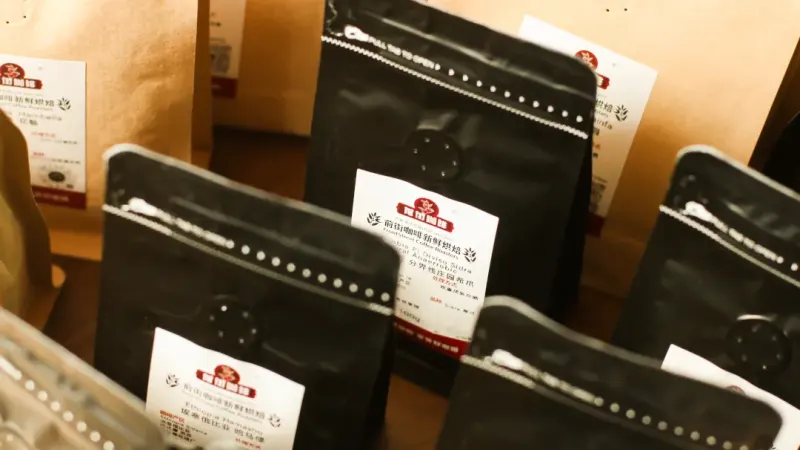
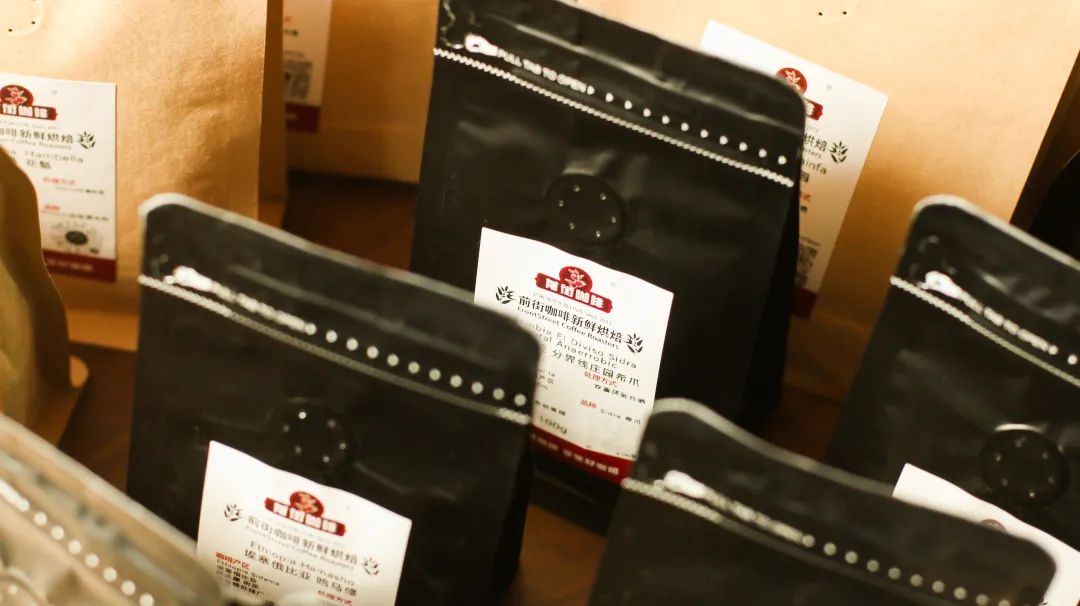
When it comes to selecting green coffee raw materials, one cannot simply conclude that imported beans are necessarily better, because coffee ultimately has to cater to the taste preferences of different customer groups. Broadly speaking, coffee beans from African origins have prominent floral and fruity notes, such as Front Street Coffee's Huakui, which carries a creamy strawberry-like flavor; coffee from Central and South America emphasizes nutty and cocoa notes, such as Front Street Coffee's Queen's Estate; Asian coffee beans perform excellently in body but often come with spice or herbal notes, with Front Street Coffee's Mandheling being a typical example.
In recent years, however, domestic coffee has gradually entered the public eye, especially specialty coffee from Yunnan, whose presence is growing stronger.
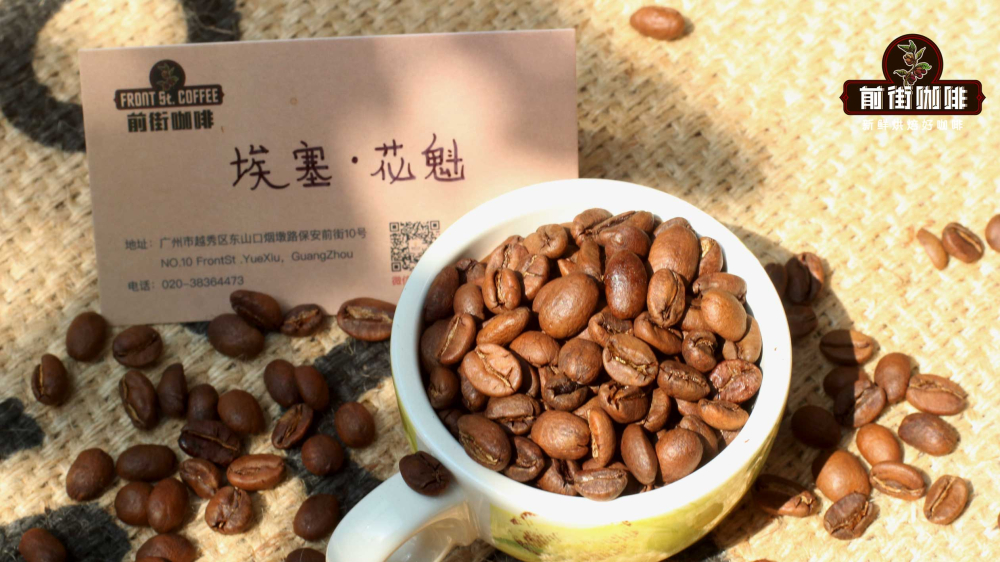
Regarding Yunnan coffee, Front Street Coffee currently has two varieties. One is the Catimor variety Front Street Coffee Yunnan Small Cherry, which presents a basic balanced profile of nuts, brown sugar, and plum, suitable for those just getting to know the Yunnan origin; the other is Front Street Coffee 2013 Sun-Dried Typica coffee, which when brewed reveals rich layers of dried apricot, cream, chocolate, Sanhua plum, and berries, suitable for those who want to deeply experience the high-quality flavors of Yunnan specialty coffee.
In fact, Yunnan Small Cherry coffee originally referred to the Typica variety planted locally in the early days. Small Cherry coffee is also known as Small Cherry Arabica, so Yunnan coffee in the past belonged to the Arabica variety. Arabica is further subdivided into many different varieties, among which the oldest are Typica and Bourbon. Typica originated in Ethiopia and is the oldest native variety; today almost all Arabica varieties can be traced back to Typica.
Front Street Coffee Yunnan Small Cherry belongs to the Catimor variety. After washed processing and medium roasting, it can reflect the basic regional flavor of Yunnan coffee. After brewing, it carries nutty aroma as well as herbal, chocolate, and caramel notes, with a faint fruity acidity in the aftertaste. It is suitable for pour-over or drip bags.
If you want to buy authentic Yunnan Small Cherry coffee, Front Street Coffee 2013 Sun-Dried Typica is the first choice. It is grown at high altitude, thus displaying the rich aroma of pure Small Cherry coffee. Using sun-dried processing and medium roasting, after brewing it presents dried apricot-like sweet acidity, nutty notes, and brown sugar sweetness, with a tea-like feel in the aftertaste. It is suitable for pour-over, cold brew, Clever Cup, and drip bags, and can also be used in a French press.
The above content is compiled by CoffeeHunters, a coffee news website.


