







Where Can You Grow Coffee Beans in Guatemala?
Guatemala is a major Latin American producer, and about two-thirds of its territory is mountainous highland. Volcanic soil and high-altitude microclimates create a classic profile that combines fruity notes with a full body. The country divides its coffee areas into eight main regions, and Huehuetenango is a representative example of this regional style.
Altitude grading sorts Guatemalan lots by growing elevation, and higher lots generally ripen more slowly and develop denser structure. Washed processing is the standard method, though other approaches appear. Antigua, with its volcanic terrain, is another well-known region. Together these factors explain where can you grow coffee beans successfully in Guatemala and why region and elevation matter for flavor.
Guatemala is a major coffee-producing country in Latin America, with two-thirds of its territory consisting of mountainous highlands. Volcanic soil and high-altitude microclimates together shape a classic flavor profile that combines fruity notes with a full-bodied richness. Among Front Street Coffee's daily-drink bean lineup, Guatemala Huehuetenango is the representative of this regional style. This article, from Front Street's cupping perspective, will sort through Guatemala's geographical conditions, coffee-growing history, region divisions, and altitude grading system, and use the two major regions of Huehuetenango and Antigua as examples to present the specific information and brewing parameters of Front Street Guatemala coffee beans, helping coffee enthusiasts build a systematic understanding of Guatemalan coffee.
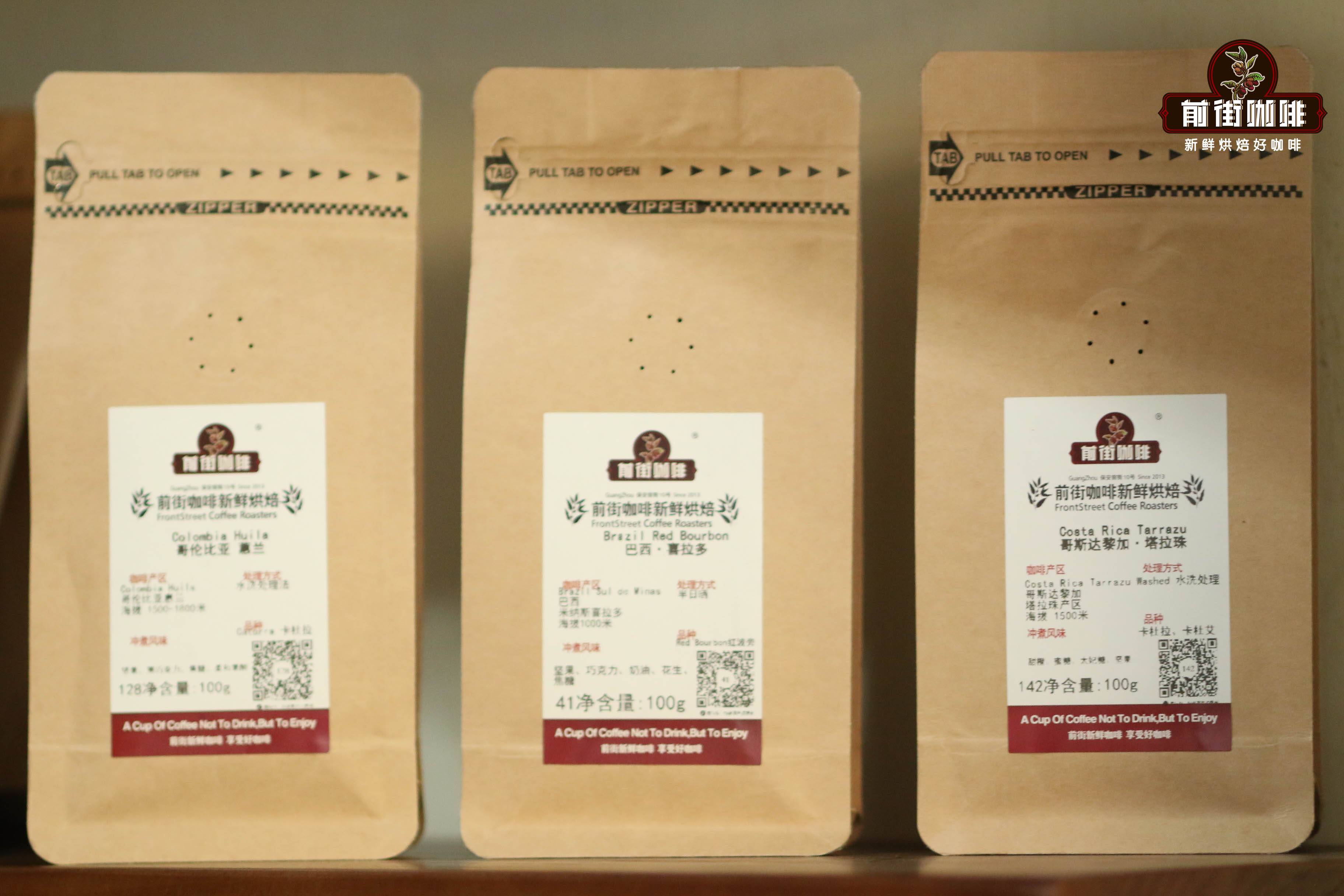
Many friends who visit FrontStreet Coffee for the first time to buy coffee beans are surprised by the prices Front Street offers. But regulars familiar with Front Street know that the Front Street daily-drink bean series is the most cost-effective choice. Every bean in this series is a work that Front Street has repeatedly selected from major coffee-producing regions around the world, capable of representing the classic local flavor. Front Street hopes that even beginners just getting into coffee can taste those repeatedly mentioned origin flavors, so the coffees selected for the daily-drink bean series all have distinct recognizability. So, which producing regions does the Front Street daily-drink bean series actually cover?
Here Front Street will give everyone a brief overview. Currently, the selection range of Front Street daily-drink beans is concentrated in Africa, Asia, and Central and South America. In addition to the most classic Front Street washed Yirgacheffe, and the Front Street Indonesian Mandheling favored by friends who prefer a heavy body, what Front Street wants to focus on today is this Front Street Guatemala Huehuetenango. As one of the world's three major coffee-producing regions, Latin America has nurtured a large number of coffee beans with classic flavors and distinctive character, among which Guatemalan coffee is a relatively familiar representative of the Latin American region. FrontStreet Coffee has launched a Front Street Guatemala coffee in the Front Street daily-drink bean series, and it showcases the most typical flavor characteristics of this region—rich fruit notes while retaining a full-bodied texture, with a unique hint of smoky finish in the aftertaste.
Where exactly does this unique flavor come from? Front Street has always liked to trace things to their roots. The flavor of a cup of coffee involves many variables, including human operation, processing methods, and the growing environment of the coffee trees, among others. Considering that FrontStreet Coffee's offline stores have established standards for their output, we will temporarily not discuss the influence of baristas during the brewing stage on flavor, and first turn our attention to the growing environment of Guatemalan coffee.
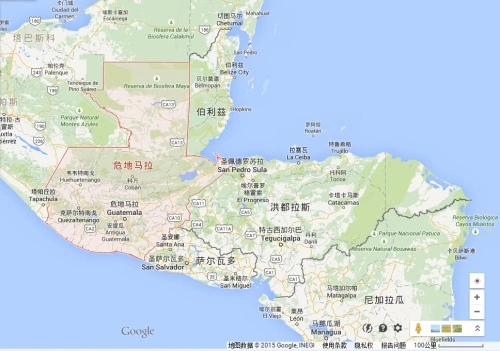
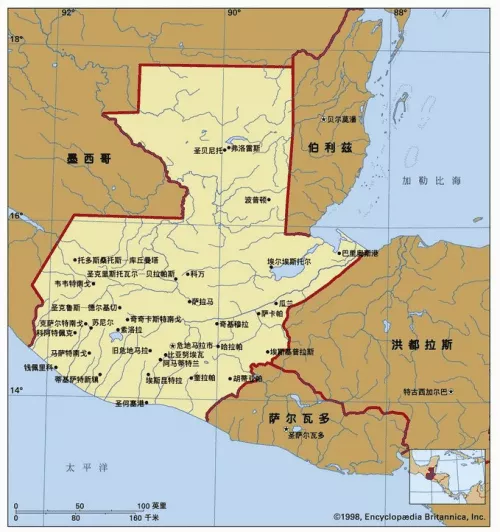
The world map of Guatemala above makes it visually clear: Guatemala borders Mexico to the north, Honduras and El Salvador to the south, the Caribbean Sea to the east, and the Pacific Ocean to the west. At the same time, Guatemala is located in the tropics. The northern and eastern coastal plains have a tropical rainforest climate, while the southern mountains have a subtropical climate. The year is divided into dry and wet seasons, with the wet season from May to October and the dry season from November to the following April. The narrow and fertile plain along Guatemala's Pacific coast has a tropical climate. The central highlands are Guatemala's cultural core area, between 1,300 and 1,800 meters above sea level, with mild temperatures year-round, daytime temperatures between 18 and 28°C, and higher altitudes often colder in January and February. Annual precipitation in the northeast is 2,000 to 3,000 mm, while in the south it is 500 to 1,000 mm. Guatemala's overall average altitude is relatively high, and the coffee-growing belt is distributed above 1,500 meters, between 14 and 16 degrees north latitude. Such conditions are most likely to produce strictly hard beans, and all are washed processed, with 45% reaching specialty grade—a considerable proportion. In addition, there is also a small amount of Robusta.
When Front Street was reviewing Guatemala's topographical materials, it was indeed taken aback: two-thirds of the entire territory is mountains and highlands. In the west are the Cuchumatanes Mountains, in the south the Sierra Madre, and the west and south lie in a volcanic belt with more than 30 volcanoes distributed across it. Among them, Tajumulco Volcano, at 4,211 meters above sea level, is the highest peak in Central America, and seismic activity is frequent. To the north are the Petén lowlands, and along the Pacific coast there is a narrow coastal plain. Most major cities are located in the southern inter-mountain basins. The Petén lowland plain in the north belongs to tropical rainforest, and volcanoes on the central highlands can reach as high as 4,200 meters. Guatemala's national emblem is circular, with an open scroll in the center of the blue circular field.
Front Street believes that the above conditions can be called a gift from nature for coffee cultivation: mountains by the sea, a tropical climate, and volcanic geology. And friends who often read FrontStreet Coffee's educational articles surely understand that high altitude is crucial to the development of high-quality coffee beans, while a large altitude span also means rich and varied microclimates.
When Front Street cupped multiple coffee beans from the Guatemala producing region, their smokiness surprised everyone. If a smoky flavor appeared in coffee from other regions, Front Street would very likely classify it as a defective flavor, because smokiness can bring an uncomfortable throat-clogging sensation when the coffee goes down. But the smokiness tasted in the Guatemala region is a strong, rugged yet still pleasant flavor. If you find Front Street's description a bit mystical, everyone can find this Front Street Guatemala coffee in FrontStreet Coffee's online Taobao store and try it personally to know.
According to Front Street's research, as early as 1747 Guatemala had already mastered the methods of coffee cultivation and consumption, and in 1750 Jesuit priests introduced coffee trees to Guatemala. In 1845, with the establishment of the Guatemalan Coffee Planting and Promotion Committee, coffee became an important economic crop for the country. Under strong government promotion, by 1880 coffee already accounted for 90% of Guatemala's total exports.
However, things did not always go smoothly. In order to obtain greater coffee yields, those in power turned their eyes to indigenous people's land, forcing them to sell their land and move to more barren places. The second exploitation came from large corporations. During the global economic depression of 1930, the ruler Jorge Ubico, in order to stimulate export markets, focused on lowering costs while ceding more power and land to the large American United Fruit Company (UFC). After Jorge Ubico stepped down, the succeeding president Arbenz tried to reclaim part of UFC's land and redistribute it to farmers, but in 1954 he was overthrown by a coup launched by the U.S. Central Intelligence Agency (CIA). Factors such as poverty, unequal land distribution, famine, and discrimination against indigenous peoples triggered the civil war (1960-1966), and these problems still exist today, having a certain impact on the development of Guatemalan coffee.
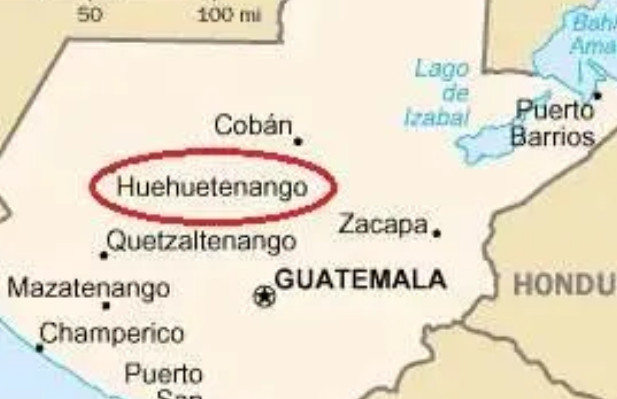
Guatemala is divided into multiple coffee-producing regions, which everyone can briefly understand through the image below. Next, Front Street will use the two Guatemalan coffee beans currently available in stores as examples to introduce Guatemala's two famous coffee-producing regions, Antigua and Huehuetenango.
Among Front Street's daily-drink beans is a Guatemala coffee from the Huehuetenango region. This region is located in the northwestern highlands of Guatemala, with a growing altitude of 1,800 to 2,100 meters, making it Guatemala's highest coffee-producing region and famous for producing high-quality coffee beans. Because Guatemala has many rivers and lakes, the Huehuetenango area is rich in mountains, rivers, and water resources. The climate is dry but water sources are abundant, and coupled with the region's complete water conservancy facilities, the coffee mostly adopts washed processing. The harvest period is from January to April.
Front Street Guatemala Huehuetenango Coffee Beans Country: Guatemala Region: Huehuetenango Altitude: 1,500-2,000 meters Varieties: Bourbon, Caturra, Catuai Processing Method: Washed Brewing Flavor: Citrus and berry acidity, lemon peel, nutty aroma in the middle, tea-like finish.
Huehuetenango is one of Guatemala's important coffee-producing regions. The pronunciation of the region's name is also quite interesting, originating from Nahuatl and meaning "place of the ancients (or ancestors)." The Huehuetenango producing region is located in the northwestern highlands of Guatemala, with a growing altitude of 1,800 to 2,100 meters, making it the country's highest coffee-producing region and famous for producing excellent-quality beans. Because Guatemala has many rivers and lakes, the Huehuetenango area is rich in mountains, rivers, and water resources. The climate is dry but water sources are abundant, and the region also has complete water conservancy facilities, so the coffee mostly adopts washed processing. When Front Street cupped coffee beans from this region, it sensed aromatic, bright fruit notes and a refreshing flavor. Due to the high altitude, the coffee beans are of good quality, with rich flavor and plump beans.
The Antigua region is located in the entire area dominated by the Madre Plateau within the opographically mountains crossing Guatemala. Relying on advantages in natural conditions, Antigua has become the most prestigious of Guatemala's eight major producing regions. High altitude, unique volcanic soil, and shade cultivation give the coffee beans a distinctive regional flavor.
Front Street Guatemala Antigua Floral God
Origin: Antigua Trader: La Minita Altitude: 1,200-1,600 meters Varieties: Bourbon, Caturra Processing Method: Washed
Brewing Flavor: At high temperature, the entry has a bright lemon-like acidity. As the temperature slowly drops, the juicy mouthfeel is interwoven with faint white floral notes. Then cocoa and a slight smokiness add layers to this Front Street Guatemala Floral God coffee, and finally a caramel-like finish brings this cup of coffee to a satisfying conclusion.
Antigua's summers have relatively little rainfall, and in winter it sometimes frosts because it is too cold, so it is actually not very suitable for coffee tree growth. Fortunately, however, the area lies in an active volcanic belt. After volcanic eruptions, volcanic pumice falls into the soil and cools. These pumice stones have many tiny pores and are very helpful for retaining moisture. In addition, many shade trees are planted on the estates, so the coffee trees do not suffer cold damage in winter. These measures to overcome unfavorable conditions, combined with the large temperature difference between day and night, create Antigua's unique microclimate, giving the coffee beans here a faint smoky flavor and rich fruity aroma.
Here Front Street wants to remind friends who are just getting into specialty coffee that coffee processing methods can affect coffee flavor to a certain extent. Front Street is well aware of this, so whether it is Front Street daily-drink beans or other coffee beans online, most have undergone washed processing—except, of course, coffee beans known for special processing methods. Front Street's purpose is to enable coffee beginners to build the most basic sensory understanding of coffees from major producing regions around the world.
And coffee bean grading systems often confuse people as well. Different producing countries have different grading methods. Like Central American producing countries such as Costa Rica, El Salvador, Mexico, and Honduras, Guatemala's grading is also based on altitude. Coffee produced at high altitude is usually of better quality than at low altitude, because as altitude increases, temperature decreases, coffee grows more slowly, and this is conducive to the accumulation of desirable substances. For this reason, altitude is used as the basis for quality grading.
HB (Strictly Hard Bean): growing altitude 1,500-1,700 meters;
HB (Hard Bean): growing altitude 1,350-1,500 meters;
SH (Semi-Hard Bean): growing altitude 1,200-1,350 meters;
Extra Prime (Extra Prime Washed Bean): growing altitude 1,000-1,200 meters;
Prime (Prime Washed Bean): growing altitude 850-1,000 meters;
Good Washed (Good Washed Bean): growing altitude 700-850 meters.
At the beginning of the article, Front Street mentioned that FrontStreet Coffee's offline stores have established standards for coffee output. So what exactly is this standard? The following brewing parameters are for everyone's reference:
Dripper: Hario V60
Water Temperature: 90-91°C
Grind Size: Medium-fine grind / No. 20 sieve bowl sifting to 80%
Coffee-to-Water Ratio: 1:15
Coffee Dose: 15 grams
Front Street's three-stage brewing method: First, preheat the dripper and server. Add 15 grams of coffee grounds and tap gently to level the surface of the coffee grounds. Begin the first pour, pouring 30 grams of water in a circular motion from the center outward, and bloom for 30 seconds. The ideal state is that the coffee grounds are evenly saturated with water and puff up into a small "coffee burger." After 30 seconds, begin the second pour. In this stage, the water stream height is 3-5 cm, pouring 95 grams of water from the center outward in concentric circles. At this point, the total amount of water poured is 125 grams. Observe that the coffee surface should be entirely golden coffee foam. When the coffee bed is about to be exposed, begin the final pour. In this stage, pour 100 grams of water, slowly circling in concentric circles while keeping the flow consistent. When all the coffee liquid in the dripper has flowed into the server, remove the dripper and end the extraction. Total time is 2 minutes 08 seconds.
For professional coffee knowledge exchange and more coffee bean information, please follow Coffee Workshop (WeChat public account: cafe_style)
For more specialty coffee beans, please add the private WeChat of FrontStreet Coffee. WeChat ID: kaixinguoguo0925
The above content is compiled by CoffeeHunters, a coffee news website.


