








For more specialty coffee knowledge, please follow: Front Street Coffee (Frontsteet Coffee)
At Front Street Coffee (FrontStreet Coffee), customers ask about pour-over coffee every day—maybe about what pouring technique to use, or how much coffee grounds to use.
In fact, with the development of coffee culture, more and more people no longer find coffee unfamiliar; instead, it is everywhere around them and can even be brewed at home. Of course, some people feel that brewing a good cup of coffee is still not simple. Front Street believes this actually depends on your own understanding of pour-over coffee combined with repeated hands-on experience. Perhaps after reading this far, many people still feel they only half understand. Front Street Coffee (FrontStreet Coffee) is here today to talk about how to brew a cup of pour-over coffee. There are many factors that affect the taste of a cup of coffee, and the coffee-to-water ratio of pour-over coffee is one of them.
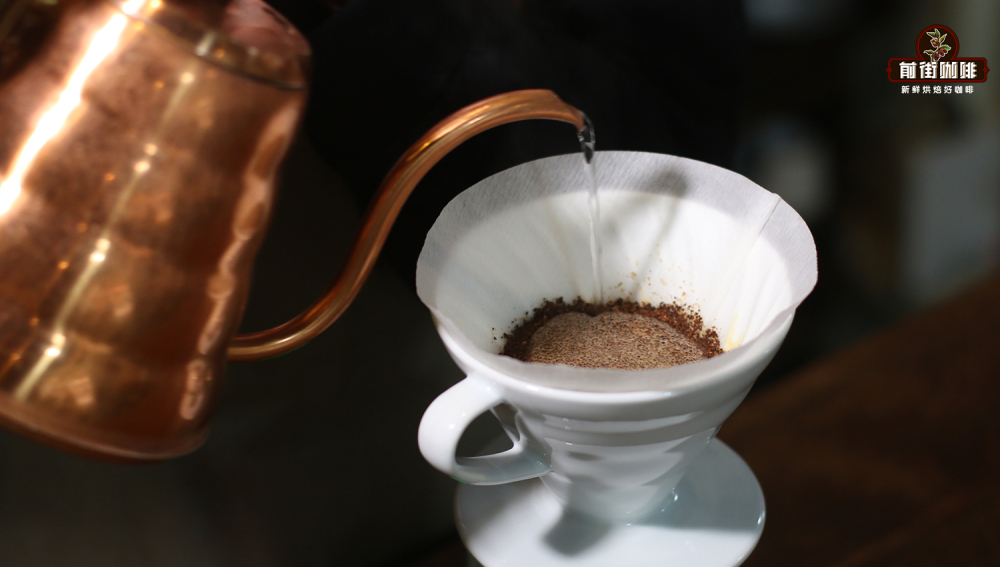
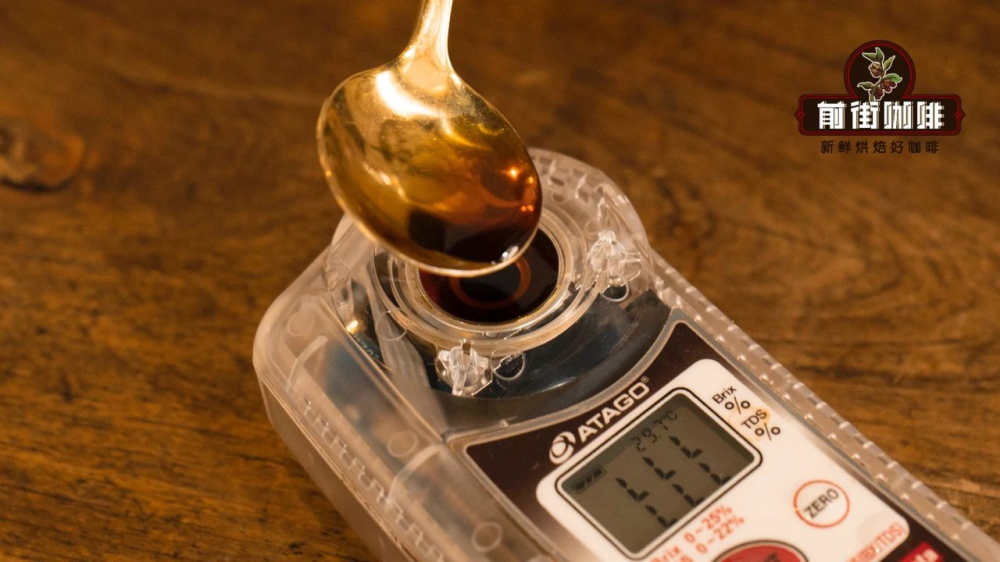
Front Street Coffee (FrontStreet Coffee) standardizes its brewing parameters according to the golden cup guideline range. Whenever a new batch of beans is about to be launched, it goes through adjustments in roasting, cupping, pour-over brewing, and other stages. The direction for pour-over adjustment is based on TDS concentration. Of course, if you just drink coffee at home, you do not need to buy specialized instruments; you can judge strength based on taste. After many brewing trials and customer feedback, Front Street Coffee (FrontStreet Coffee) recommends controlling the coffee-to-water ratio at 1:15.
1.2-1.45% is only a statistical range and applies to most people's taste. If it is lower or higher than this range, it is also fine as long as it meets your own taste requirements.
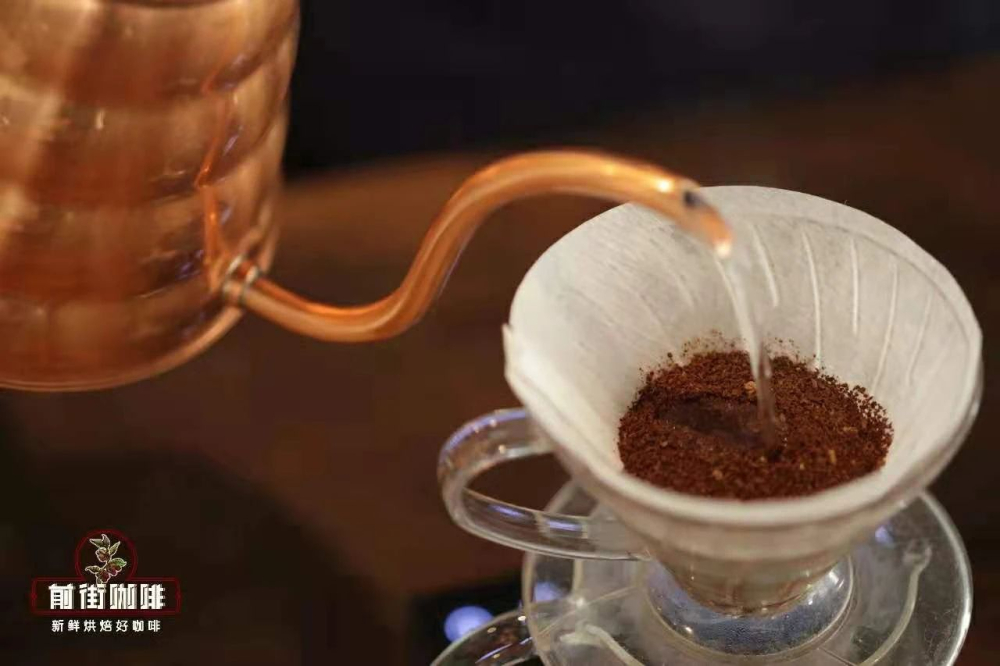
Pour-over coffee amount for one person
Whether for one person or multiple people, this golden cup extraction range is followed. Front Street Coffee (FrontStreet Coffee) chooses a 1:15 coffee-to-water ratio, uses 15g of coffee grounds, and obtains 225g of coffee liquid, which is exactly one serving. For two servings, besides choosing a larger dripper, the amount of coffee grounds is increased by 10g. Stacking upward in this way, the result of increasing the amount of grounds is that the coffee bed becomes thicker, the water flow speed becomes slower, and over-extraction is easy to cause. Front Street Coffee (FrontStreet Coffee) recommends starting with a single-serving pour-over.
Front Street Coffee (FrontStreet Coffee) takes a bag of Front Street Colombia Sidra coffee currently sold in stores as an example for brewing.
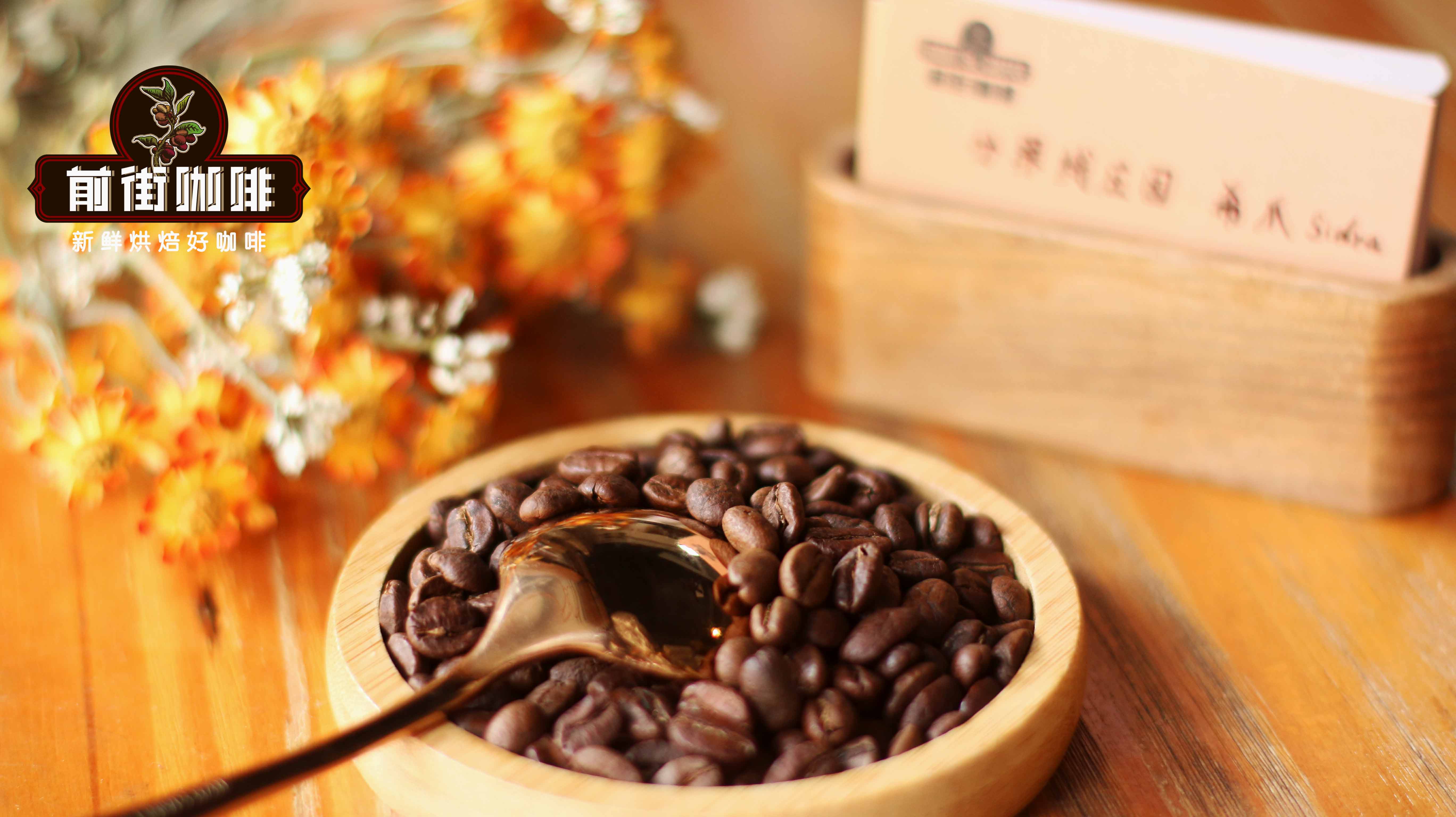
Front Street Coffee (FrontStreet Coffee) · Colombia Sidra Coffee Beans
Region: Colombia Huila Region
Farm: La Frontera Farm
Altitude: 1800m
Variety: Sidra
Processing method: Double anaerobic natural
Roast level: Medium-light roast
Flavor: Passion fruit, grape, citrus, apricot, dried fruit
Pour-over coffee brewing parameters used by Front Street Coffee (FrontStreet Coffee):
Dripper: Hario V60
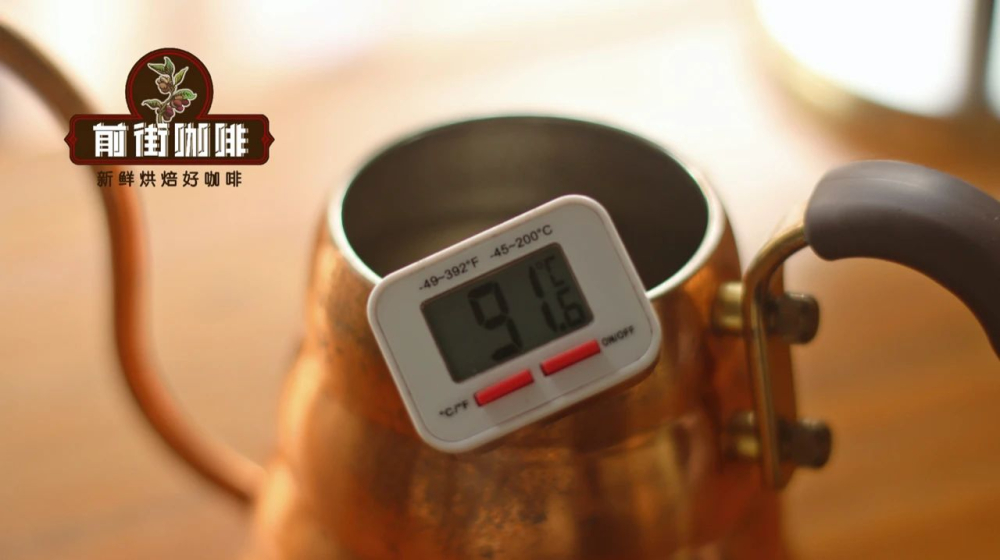
Water temperature: 90℃
Coffee grounds: 15g (single serving)
Coffee-to-water ratio: 1:15
Grind size: Fine granulated sugar size (80% passing rate on Chinese standard No. 20 sieve).

Front Street Coffee (FrontStreet Coffee) chooses a water temperature of 90℃. The higher the water temperature, the more active the movement of molecules, but at a certain temperature value it tends to balance out. The more active the movement of molecules, the higher the extraction rate. As mentioned earlier, we do not need the highest value; we look for the most suitable value among them. While obtaining enough dissolved substances, we also need to ensure a comfortable taste (not too hot for the mouth).
Generally, the water temperature is between 83-94℃. Japan tends to choose lower water temperatures because they prefer immersion extraction, and this extraction method is not suitable for higher water temperatures. After many trials and customer feedback, Front Street Coffee (FrontStreetCoffee) finds that 90℃ water is relatively suitable for brewing light-roasted coffee beans.
Grind size
It refers to the size of the coffee particles. Grind size affects the contact time between coffee and water. If the coffee grounds are finer, water can extract more substances in the same amount of time, but with a fine grind, the coffee is prone to over-extraction during brewing; conversely, if the coffee grind is coarser, water extracts fewer substances in the same amount of time, but with a coarser grind, the coffee is prone to under-extraction. Front Street Coffee (FrontStreet Coffee) recommends using an 80% passing rate on the Chinese standard No. 20 sieve as the pour-over grind size. This is based on taste from many trials. It should be noted that different coffee beans have different grind sizes, so when the pour-over flavor seems off, you can check whether the grind size is the problem.
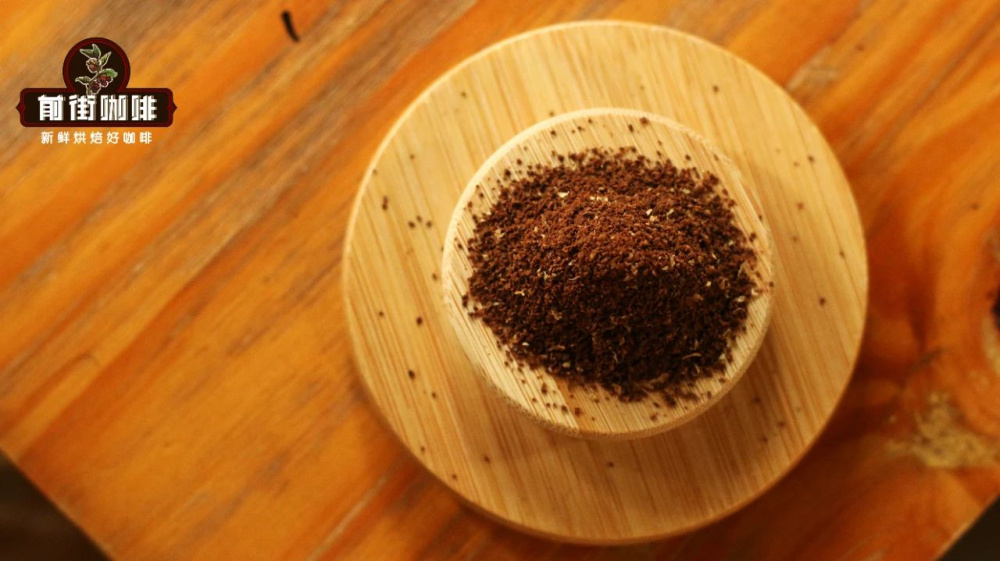
The finer the coffee is ground, the more surface area is increased, which means the extraction speed will be faster. Front Street Coffee (FrontStreet Coffee) recommends that if the coffee you usually brew is dark roast and you now want to brew light roast, you can grind finer. By the same logic, if you usually brew light-roasted coffee more often, you should grind slightly coarser when brewing dark-roasted coffee.
Front Street Coffee (FrontStreet Coffee) uses the EK43s. However, Front Street Coffee (FrontStreet Coffee) would like to mention that even for grinders of the same brand, the grinding situation can still differ. Front Street Coffee (FrontStreet Coffee) re-sieves the grounds at intervals to see whether the grind size needs adjustment.

Pour-over coffee pouring technique
Front Street Coffee (FrontStreet Coffee) uses staged extraction, that is, three-stage pour-over brewing.
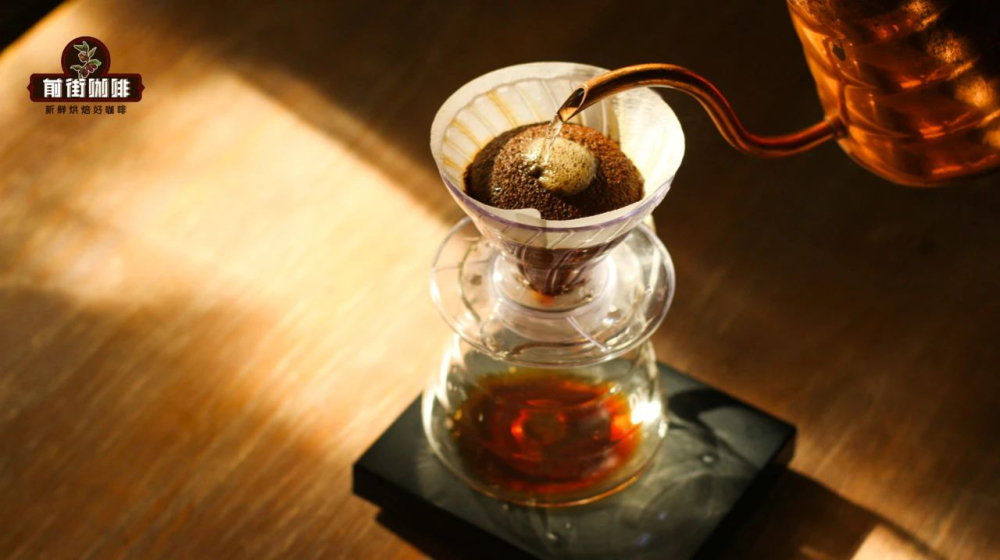
First pour: Blooming (helps release gas)
During the roasting process from green beans to roasted beans, coffee beans undergo a series of chemical reactions and physical changes. After reaching a certain degree of roasting, a large amount of gas (mostly carbon dioxide) accumulates inside the coffee beans.
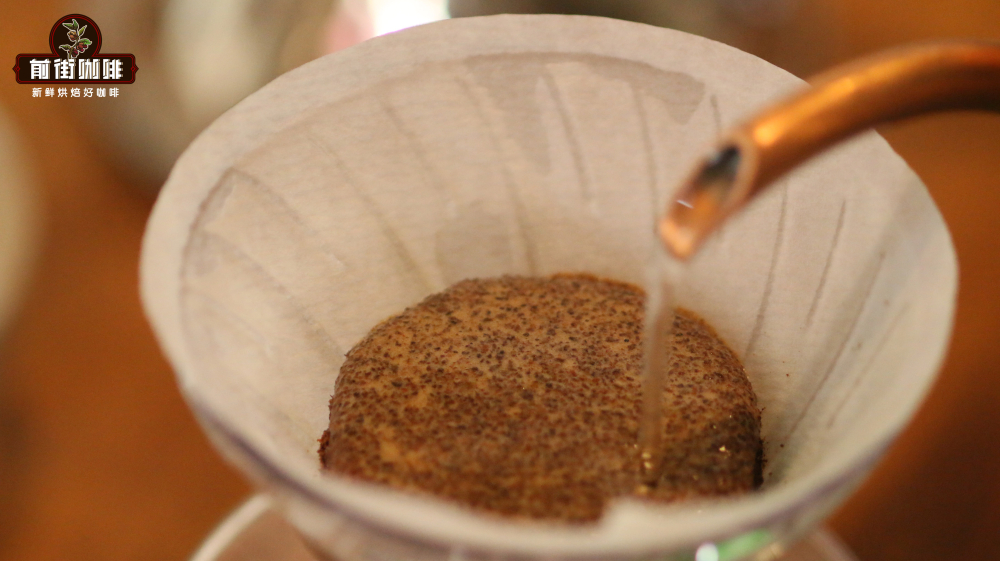
Generally speaking, the fresher the beans and the closer they are to roasting, the more bubbles usually appear during blooming. Dark-roasted beans also release more gas during blooming than light-roasted beans. Front Street Coffee's (FrontStreet Coffee) coffee beans are all freshly roasted, so customers are generally advised to rest the beans for three days first, allowing the coffee beans to release carbon dioxide first, which can avoid the problems of instability and under-extraction during brewing.
After the gas is released during blooming, the coffee particles can absorb water evenly, which allows the later extraction to be even. A good bloom can allow the coffee grounds to release gas quickly, fully, and evenly while also allowing the coffee grounds to contact water fully and quickly, helping the coffee grounds be extracted evenly.
During the blooming of pour-over coffee, pay attention to the following four points:
1. Before pouring water for blooming, first level the coffee grounds.
2. When pouring water during blooming, do it gently.
3. During blooming, let as little extracted liquid drip down as possible; when too much extracted liquid appears in the server, reduce the amount of water poured, or pay attention to the grind size. (If there is too much water during blooming and a large amount of coffee liquid drips down, the falling water does not stay but directly carries out substances from the outer part of the coffee grounds. The off-flavors and astringency in the outer layer of the coffee grounds also begin to dissolve out. The coffee brewed this way is both weak and yet has the off-flavors of over-extraction. If the amount of water during blooming is insufficient and no water drips down at all, then the coffee grounds have not absorbed enough water, and some coffee has not released enough gas, causing under-extraction.) Based on this situation, after many blooming trials, Front Street Coffee (FrontStreet Coffee) found that pouring water equal to twice the amount of coffee grounds during blooming is relatively suitable.
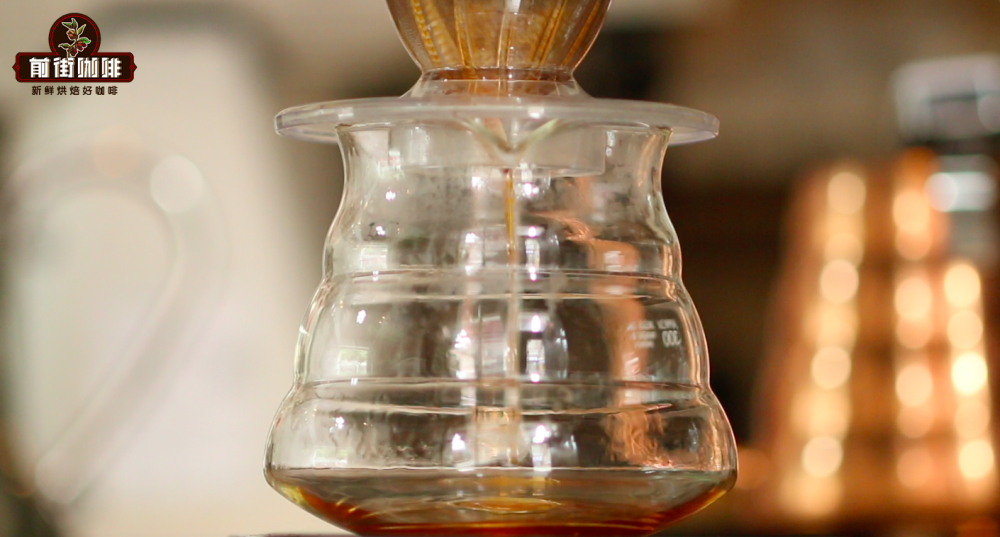
4. The blooming time is about 30 seconds. When the expansion on the surface of the coffee grounds ends, you will see the coffee surface begin to shrink, which means blooming is complete and you can begin pouring water. (In terms of time, if the blooming time is too long, the coffee is prone to bitterness and astringency; if the time is too short and the soaking is insufficient, the coffee may be under-extracted or may not fully express itself.) Generally speaking, the end time of blooming differs for each bean, but Front Street Coffee (FrontStreet Coffee) found that this is not helpful for beginners. After all, beginners value standardization and ease of operation. Therefore, while ensuring the coffee beans are still in a freshly roasted state, Front Street Coffee (FrontStreetCoffee) recommends a blooming time of 30 seconds. Of course, experienced people can adjust the time themselves.
Second pour for pour-over coffee
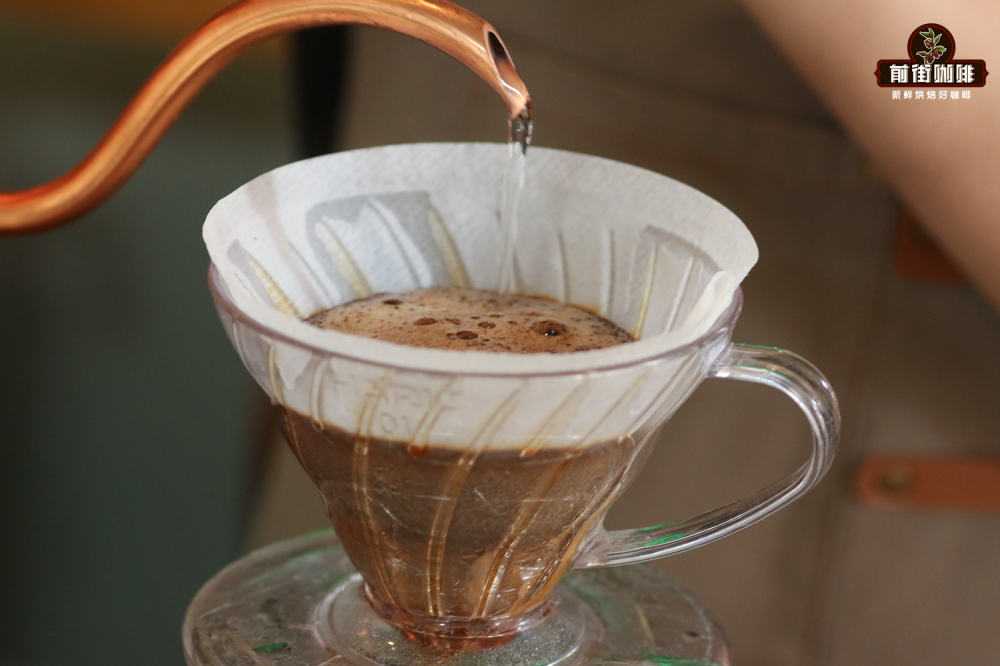
The second pour starts from the center, pouring a small stream into the bottom of the coffee bed. In order to concentrate the penetrating force of the water stream, the range of circular movement should be small, about the size of a coin, and then spiral outward. From the start of the second pour, pay attention to the amount of water and try not to exceed the height of the coffee bed. That is, when the water stream circles close to the filter paper, you can stop pouring.
Third pour for pour-over coffee
As the originally thicker coffee bed near the edge of the filter paper becomes heavier from absorbing water, it slides down and becomes thinner as the water level drops. When the water level drops by half, you can proceed with the third pour.
From the start of the third pour, observe the extent to which the water level drops. Likewise, start pouring from the center and circle around. The amount of water should not exceed the height of the coffee bed. At this time, you will also observe that the foam ratio has already filled the surface. The third pour should increase the rolling of the coffee particles, causing all the settled particles to roll and thereby dissolve soluble substances.
The rolling particles will begin to become still when pouring stops. At this point, it relies on the flow rate caused by the dropping water level to create friction among the coffee particles. Therefore, once pouring stops, the coffee particles sink downward and cause clogging, so pay special attention to the rhythm of pouring. If pouring is interrupted too many times, it is equivalent to letting the coffee particles soak in water the whole time, which will cause the later stage of coffee extraction to produce astringency and off-flavors.
Summary:
For this Front Street Colombia Sidra coffee bean brewed by Front Street Coffee (FrontStreet Coffee), the overall process is: use a blooming water amount equal to twice the amount of coffee grounds, that is, 30g of water for blooming, with a blooming time of 30 seconds. Pour in a small stream in circles until 125g, then pause. When the water level drops and is about to expose the coffee bed, continue pouring until 225g and stop. When the water level drops and is about to expose the coffee bed, remove the dripper. (Timing starts at the beginning of blooming.) The extraction time is 2 minutes.
The above content is compiled by CoffeeHunters, a coffee news website.


