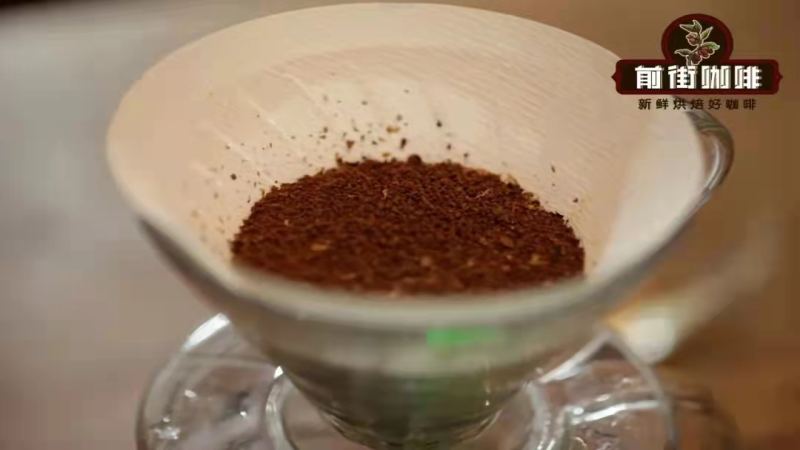
Among the parameters of pour-over coffee, Front Street believes that grind size is the hardest to control. It doesn't have intuitive data like water temperature or coffee-to-water ratio, nor can it be compensated for through practice like technique. As a result, many beginners are stumped by grind size. So Front Street will explain how to nail down the grind size.
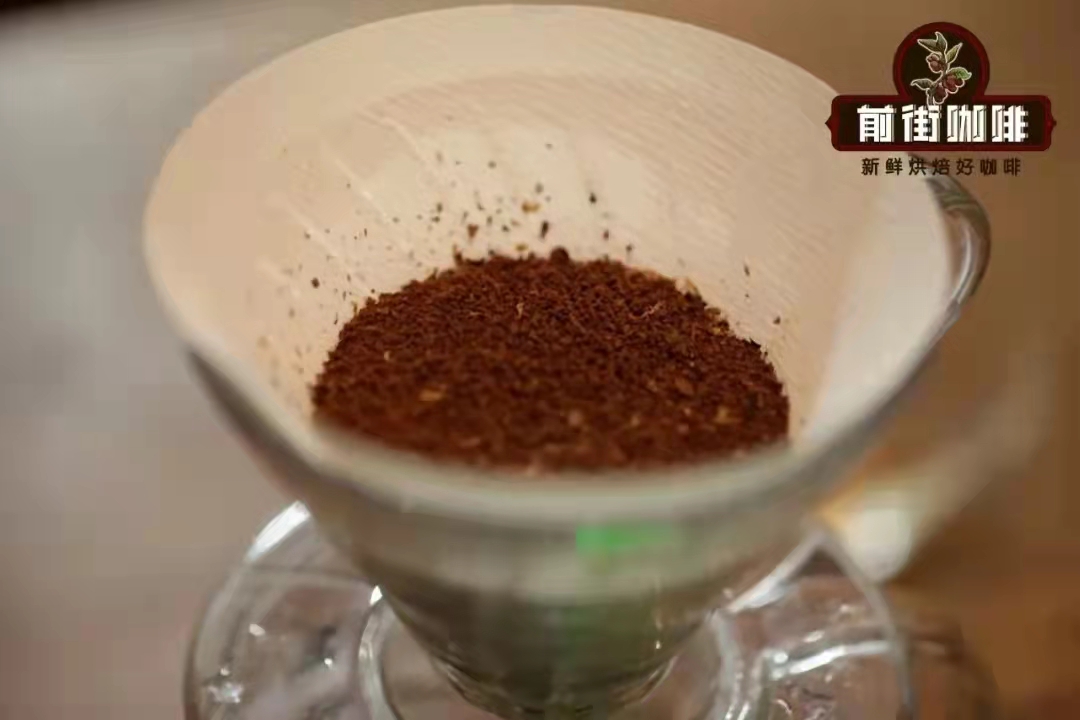
First, we need to understand one thing: under ideal conditions, the particle size for pour-over grinding falls between 0.6-0.85mm, and the coffee particles produced by any grinder are never absolutely uniform. In a single grind, particles of 0.1mm, 0.3mm, 0.5mm, 0.7mm, and 1mm may all exist simultaneously. So all we can ensure is that the majority of the coffee grounds have a particle size concentrated between 0.6-0.85mm, and the small portion outside this range won't have too much of an impact.
Therefore, Front Street uses a No. 20 sieve to calibrate the grind size. The aperture of a No. 20 sieve is 0.85mm, which can separate coffee particles larger than 0.85mm from those smaller than 0.85mm. The pour-over grind size is the setting at which the No. 20 sieve has an 80% pass-through rate.
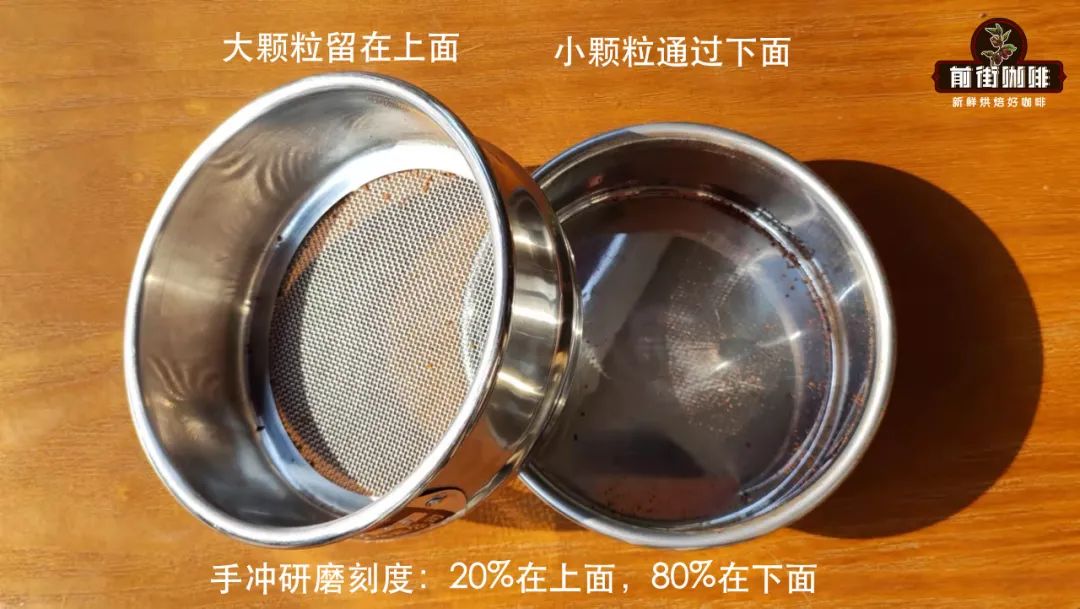
The specific operation of the sieve is as follows: use 10 grams of coffee beans, choose a grind setting, grind the coffee grounds and place them into the sieve, then shake horizontally until no more particles fall through (generally shaking for 3-5 minutes). At this point, weigh the fallen grounds, then divide by the total amount of grounds to get the pass-through rate. For example, if the amount passing through the sieve is 5g, then the pass-through rate is 50%. To reach the 80% standard, you need to adjust to a finer grind setting, re-grind and measure the pass-through rate again, until it reaches 80%.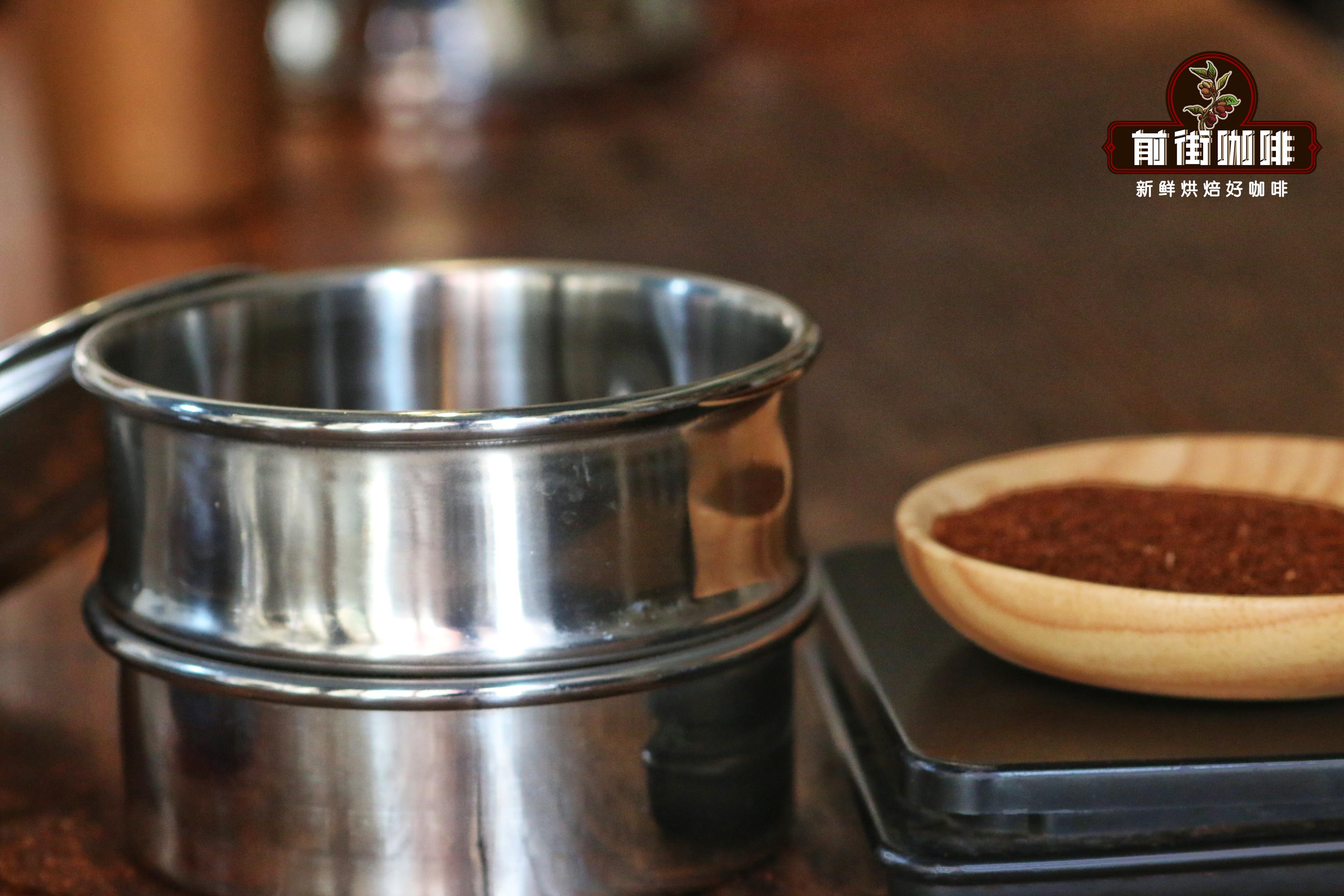
Some friends may ask: why is the pour-over grind size chosen as an 80% pass-through rate? Doesn't that mean we clearly know that 20% is larger than 0.85mm? As we said earlier, coffee particles of 0.6-0.85mm are the ideal size for pour-over, but we must also face the facts: current grinders cannot achieve such precision, and the ground coffee distribution presents a rugby-ball shape—that is, very coarse and very fine particles are fewer, while medium-sized particles are more numerous. Therefore, using an 80% pass-through grind setting means there are more particles in the 0.6-0.85mm range and close to this value.However, 80% pass-through is not absolute; it also depends on the quality of the grinder. Generally, if the grinder grinds uniformly, using this value is fine. But if the grinder's quality is poor, with many fine particles and also large coarse particle values, then corresponding adjustments must be made.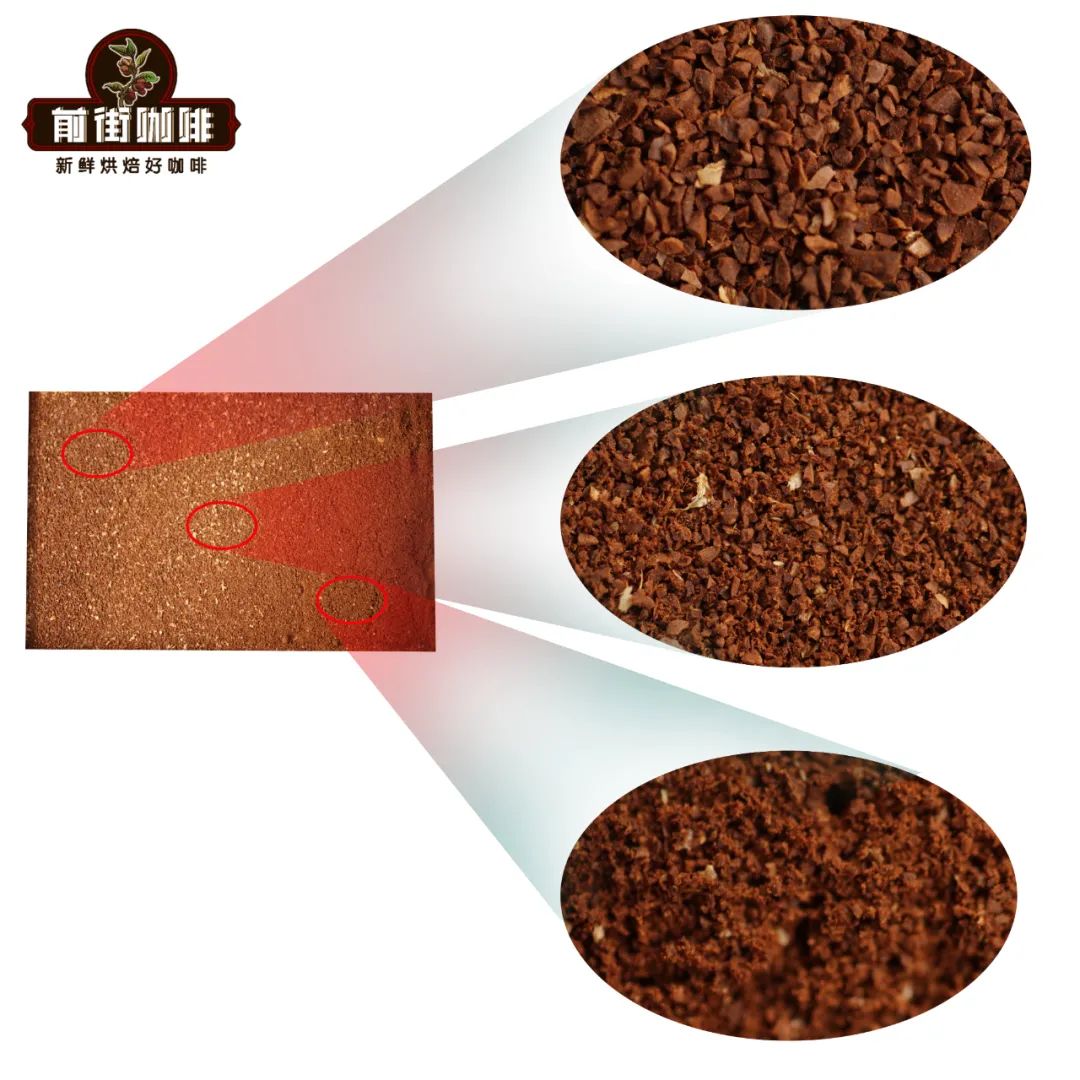
Front Street suggests using brewing time as a reference for grind coarseness. Based on Front Street's three-stage brewing parameter standards, the extraction time for a normal cup of coffee is around 1 minute 50 seconds to 2 minutes 10 seconds. If the grind is too fine, the extraction time will be prolonged; if the grind is too coarse, the extraction time will be shortened. This allows you to make an initial judgment on whether the coffee grind size is appropriate based on extraction time.You can also observe the settling speed of the coffee bed during brewing. Under normal circumstances, the coffee bed settles at a steady, slow pace. If you notice the settling speed is fast, it may be that the grind is too coarse; if the settling speed becomes slower and slower, or even clogs, then it may be that the grind is too fine or there are too many fine particles, with a muddy appearance at the bottom of the coffee bed. At this point, you should make corresponding adjustments based on the actual situation.
The above content is compiled by CoffeeHunters, a coffee news website.