







Search Results for: credit default

Ethiopia's Coffee Industry Credit Default Dilemma and the Controversy Over Vertical Integration Policy
Recently, Ethiopia's coffee industry has been thrown into chaos by a wave of credit defaults. Coffee farmers who supplied coffee beans to exporters and suppliers on credit have been waiting in vain for payment, with the amount owed reaching into the billions of birr. Some farmers have even committed suicide out of despair, and radicals have attempted to rob exporters of their property. The government blames the problem on the "vertical integration" plan introduced five years ago and fully implemented two years ago, which replaced the original ECX trading model and was intended to allow coffee farmers, suppliers, and cooperatives to export coffee directly and benefit from international price incentives. However, at a meeting between the government and growers on March 8, 2024, both the Minister of Agriculture and the Director General of the Coffee and Tea Authority held that the benefits of vertical integration outweigh the drawbacks, that defaulters are only a minority, and that violators have already been blacklisted. But coffee farmers and producers say that banks' suspension of loans and the National Bank's 14% credit growth cap have led to the market being controlled by a handful of wealthy exporters, leaving them with no choice but to sell on credit. Last year, 90% of coffee was exported through the vertical integration plan, and farmers are calling on the government to regulate the market. Front Street Coffee reminds that this incident highlights the importance of fair trade and financial support in the coffee industry chain. [more…]
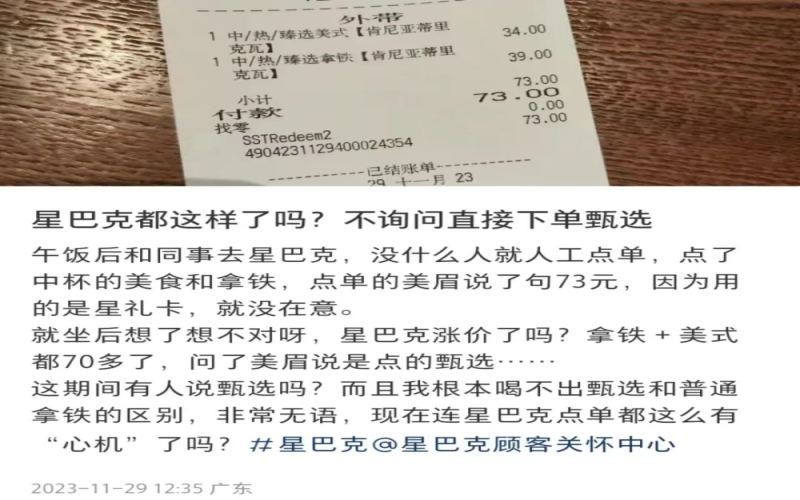
Starbucks Accused of Defaulting to Reserve Coffee in Orders, Sparking Controversy; Store Eventually Admits Fault and Issues Refund
A customer at a Starbucks Reserve store, while paying with a Starbucks Card, discovered that two drinks had been upgraded by default to the pricier Reserve coffee, and during the ordering process the staff never mentioned the word "Reserve." This "default Reserve" incident sparked widespread discussion, with many netizens sharing similar experiences, and a former Starbucks employee also revealed it may be related to KPI assessments. Starbucks customer service initially gave a vague response, but the store eventually admitted the mistake and promised a refund. At the heart of the incident are customers' right to be informed and their right to choose, and it also prompts reflection on where exactly the boundary lies between ordering at a Reserve store and a regular store. [more…]

A 17-yuan milk tea unopened but only half a cup? Grandpa's No Tea "no ice" controversy sparks a wave of consumer feedback
Recently, a video about a 17-yuan milk tea from "Grandpa Doesn't Make Tea" that was unopened yet only half full sparked heated discussion online. A consumer in Guangdong reported that the First Love Rose Green Grape Fruit Tea they purchased had an opaque upper half on the cup, making it hard to judge the capacity from the outside; only after flipping it over did they discover the drink was only half full. Around issues such as whether no-ice drinks should by default not fill the cup and whether store serving standards are uniform, netizens clearly held divergent views. At the same time, multiple consumers posted weighing results and flashlight inspection results, pointing out that insufficient portions of this brand's drinks are not an isolated case. The brand and stores have responded, saying they are verifying and handling the matter. [more…]
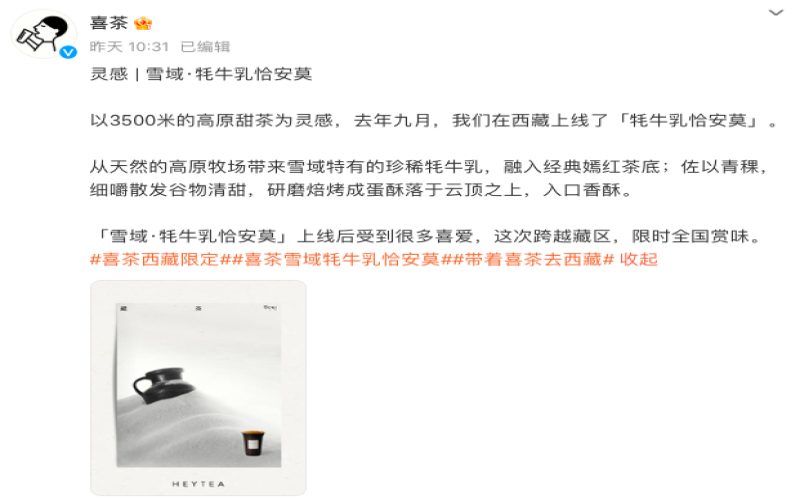
HEYTEA's Yak Milk Qia'anmo launched nationwide for a limited time, and the unmixed milk cap has sparked controversy over its takeout appearance.
Heytea recently launched a limited-time offering of the previously Tibet-exclusive yak milk tea, Qiammo, across its nationwide stores. This Tibetan-style sweet tea features yak milk, highland barley base, and a highland barley egg crisp crumble cheese milk cap, sparking anticipation among longtime fans. However, during delivery, the milk cap was not packaged separately, which significantly diminished the drink's appearance and taste, leading many consumers to complain that its look and flavor closely resembled childhood Jinwei cereal. The brand subsequently made emergency adjustments to its packaging rules: hot drinks are now separated by default, while cold drinks require a note. This article reviews the product background, consumer feedback, and the official response, presenting this new product controversy for coffee and tea enthusiasts. [more…]

CHAGEE anniversary promotional photo sparks controversy: non-celebrity left unmasked and mocked, brand's response questioned
Recently, a set of promotional photos from CHAGEE's seventh-anniversary offline event caused a stir on social media. An ordinary consumer who took part in the event discovered that a photo of her with an unflattering expression had been taken without her knowledge and posted by the brand on its official account, after which friends screenshotted it to poke fun at her. When she contacted customer service to demand the photo be deleted, she encountered delays and received no public apology. The brand's explanation of its review standards further led her to question whether she was being treated differently. As the incident intensified, netizens' opinions split into two camps: some criticized the brand's review mechanism, while others felt the person involved was overthinking things to her own detriment. What exactly does this controversy reveal about the gray areas in the portrait-rights clauses of brand event? As of press time, CHAGEE has not yet responded officially. [more…]
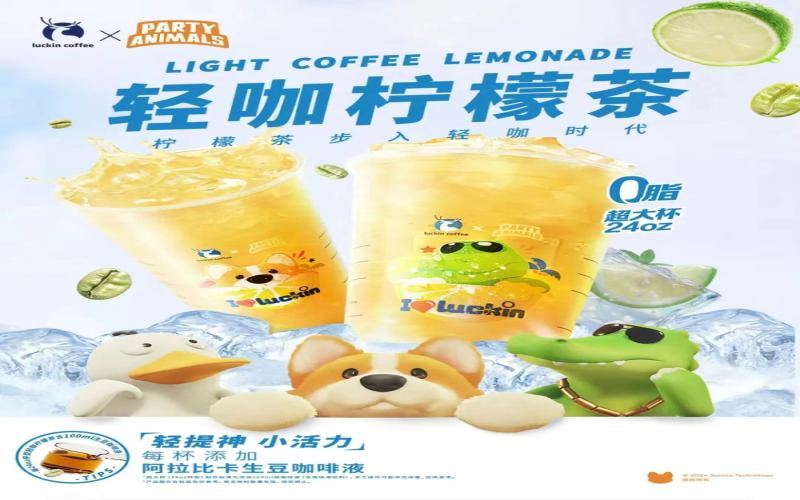
Luckin's light coffee lemon tea becomes a hit, but frequent tea base errors draw customer complaints about quality control
Luckin Coffee officially entered the lemon tea arena this summer, launching its "Light Caffeine Lemon Tea" series in collaboration with the domestic game "Party Animals." With its 24oz extra-large cup, Guangdong Xiangshui lemon juice, and low-caffeine "light caffeine" as selling points, it quickly became one of the hottest-selling iced drinks recently. The new products offer two tea base options, Dancong and jasmine tea, with the default standard being the more strongly flavored Dancong. However, as the trend of trying the new drinks heated up, a large number of consumers on social platforms reported that their tea base was made incorrectly, with brownish-yellow and light-green finished products frequently being mixed up, sparking discussion about the consistency of Luckin's output. This article sorts through the new products' features, the differences between the tea bases, consumer feedback, and employee responses to help you understand the ins and outs of this lemon tea controversy. [more…]
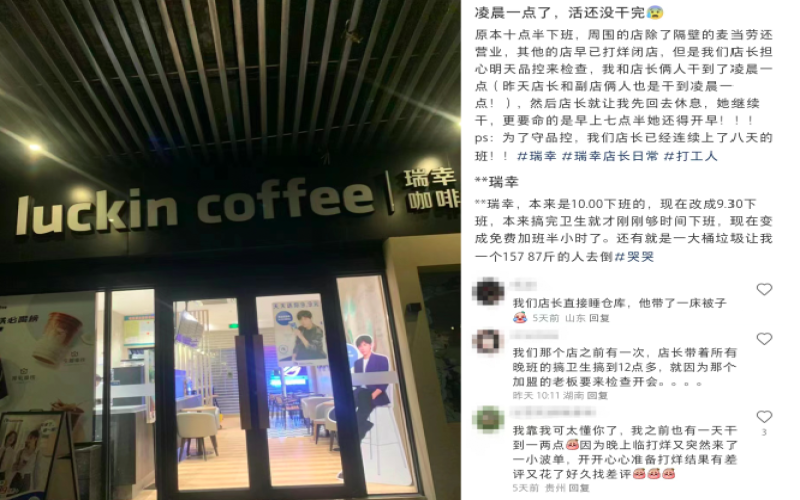
To cope with quality control inspections, Luckin employees frequently work unpaid overtime, leading to dissatisfaction over the mismatch between hours and pay.
In the coffee chain industry, standardized store operation management often brings additional execution pressure. Recently, some Luckin Coffee employees reported that in order to prepare for surprise inspections by the quality control department, night shift staff still have to stay after their regular shift to do deep cleaning, and if the inspection does not come the next day, the whole process must be repeated, with some even still busy in the store in the early morning. Since the March 31 incident, some stores have reduced staffing, and the closing tasks originally shared by two people have fallen on one person, yet overtime work rarely comes with corresponding overtime pay. In addition, the system keeps pushing clock-in reminders during off-duty hours, further increasing employees' anxiety. Some employees pointed out that when they leave their posts to count inventory, they are defaulted by surveillance as taking a break, causing their actual meal time to be invisibly encroached upon. Under the combined effect of various factors, unpaid overtime and working-hour calculation issues are becoming the main troubles for frontline employees. [more…]

Severe rain warnings in seven Brazilian states spark concerns over new coffee crop yields, coffee futures prices climb again
Brazil's National Institute of Meteorology recently issued storm and heavy rain danger warnings for seven states, including Minas Gerais, São Paulo, and Paraná, with expected rainfall of 50 to 100 millimeters per day and accompanied by strong winds of 60 to 100 kilometers per hour. Rainfall in northern São Paulo state has already accumulated to 90 millimeters, with local areas reaching up to 100 millimeters, and the risk of landslides and flooding has prompted the warning center to issue a yellow alert. Although no serious economic losses have been reported so far, the market is widely concerned that this round of severe weather will once again impact Brazil's new coffee crop production. The severe drought and forest fires from April to September had already damaged coffee trees during the flowering stage, leading many institutions to lower production forecasts and drive up coffee prices. This article will review key information such as Brazil's recent weather conditions, coffee futures trends, exchange rate impacts, and traders' credit risks. [more…]

Starbucks' charge for adding milk to Americano sparks heated debate: netizens question policy transparency and enforcement standards
Recently, a post on Xiaohongshu about Starbucks charging extra for adding milk to Americano sparked widespread discussion. Some consumers reported that when ordering an Americano with milk during a fat-loss period, they were told by staff that it would cost extra. Customer service responded that since February 2022, adding more than 4 ounces of milk requires a fee. However, some netizens pointed out that this policy only applies to the black coffee series, while tea drinks and app orders can still get free milk. Some netizens claiming to be Starbucks partners said that generally, adding milk within 30ml is free, but inconsistent communication of store policies has led to chaotic enforcement. The incident reflects the brand's shortcomings in customized service and consumer communication, prompting thoughts on the reasonableness and transparency of the charges. [more…]
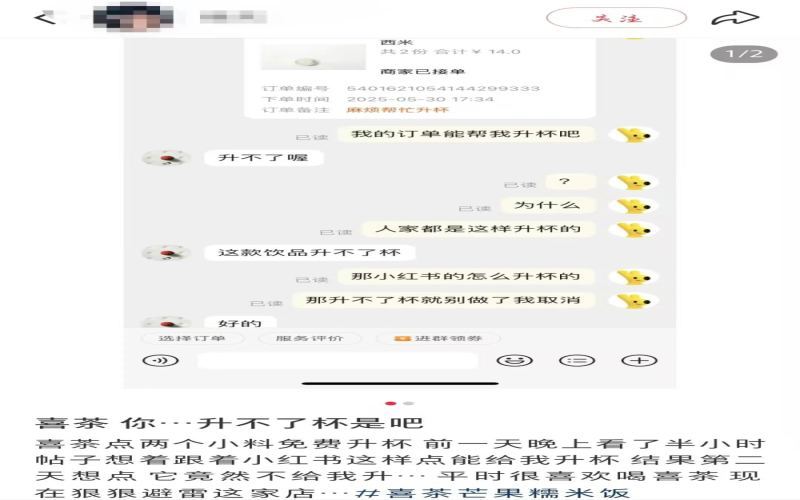
HEYTEA's add-on and upsizing rules spark controversy: why didn't double fruit pulp trigger a free upgrade?
Recently, a consumer shared on social media a frustrating experience with cup upgrades when ordering from Heytea, sparking widespread discussion. The customer ordered a Mango Coconut Sticky Rice drink with double fruit pulp and sago toppings, following an online guide, expecting to automatically receive a supersized cup like other netizens, but was told that an upgrade was not possible. After the incident gained traction, many netizens shared similar experiences, questioning the inconsistency in the brand's upgrade criteria. How exactly does Heytea define its cup upgrade rules? Why do differences in store execution occur? This article will review the sequence of events and analyze the underlying operational logic and possible reasons. [more…]
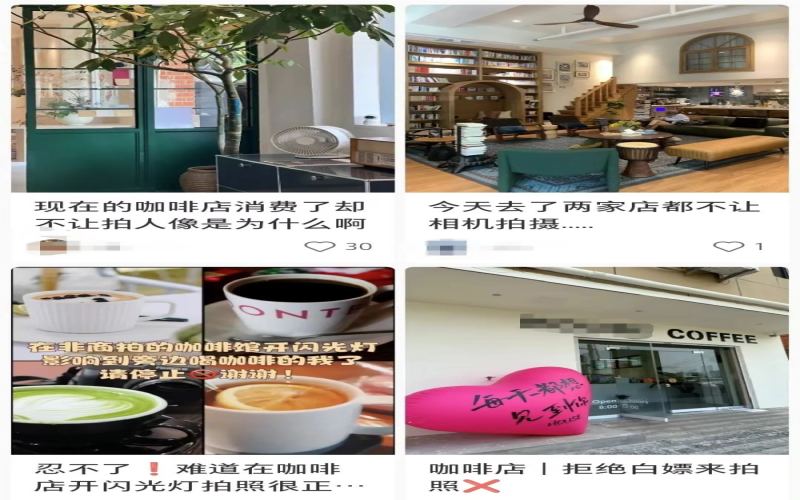
Café Photo Chaos Sparks Controversy: Owners Forced to Set Limits, How to Balance Customer Experience and Commercial Shoots
In the age of social media, coffee shops have become popular photo spots for young people. However, more and more cafés are explicitly posting "No Photography" signs, and staff will even actively discourage customers who are taking photos. Behind this phenomenon is the frustration of shop owners over professional photography teams taking up space, disrupting the environment, and affecting other customers. Ordinary consumers want to enjoy a quiet atmosphere, while photography enthusiasts pursue the perfect shot—how can the needs of both sides be reconciled? This article explores the conflicts triggered by photography in coffee shops and highlights how brands such as Front Street Coffee value the in-store experience. [more…]
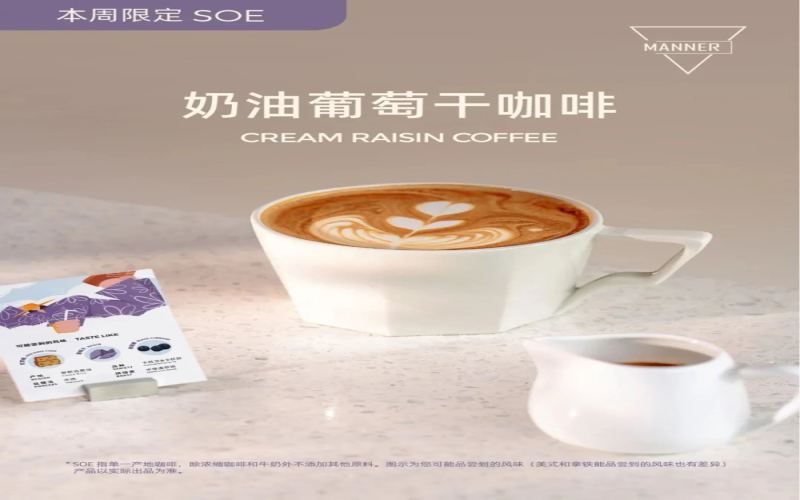
Manner launches another limited SOE, flavor description sparks debate, barista admits tasting requires imagination
Manner's limited SOE series is known for its frequent new releases, and recently it launched a new "Cream Raisin Coffee," with an official flavor description that is highly enticing, attracting many coffee enthusiasts to try it. However, the actual drinking experience is vastly different from the promotion, with constant complaints on social media. This article sorts out the flavor controversy of this SOE, consumer feedback, and the deeper reasons affecting SOE flavor perception. If you are also interested in SOE flavor identification, you might want to check out Front Street Coffee's interpretation. [more…]
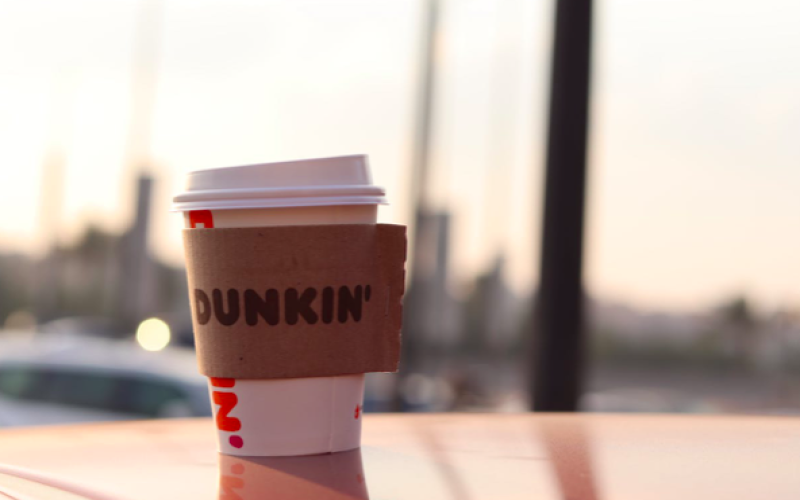
Dunkin faces class action lawsuit over surcharge on non-dairy drinks as pricing disputes continue to simmer in the US coffee industry
For coffee lovers who are lactose intolerant or allergic to dairy, plant-based alternatives such as oat milk and almond milk allow them to enjoy lattes without worry. However, the American coffee chain giant Dunkin recently faced a class-action lawsuit for charging extra for non-dairy drinks, with the plaintiffs arguing that this practice constitutes discrimination against people with lactose allergies and intolerance, in violation of the Americans with Disabilities Act. This is not the first time the U.S. coffee industry has faced legal disputes over plant-based milk pricing; Starbucks has also previously faced similar allegations. This article will review the course of events, the legal basis, and industry reactions, and explore the cost and fairness issues behind the controversy over non-dairy drink pricing. [more…]

Mixue Ice Cream & Tea Lands in Hollywood: U.S. Stores Offer Up to 200% Sugar Level Option, Sparking Heated Discussion
Mixue Ice Cream & Tea is accelerating its pace into the North American market. Its store on the Hollywood Walk of Fame in Los Angeles is about to officially open, and pre-sale packages have already appeared on delivery platforms, priced at $3.99 for two drinks and one ice cream. However, what truly sparked discussion was not the price, but the sweetness options on the ordering page—besides the usual sugar levels, options for 120%, 150%, and even 200% sugar appeared. Chinese netizens were dumbfounded, while Chinese people in the US believed this was simply a localized strategy adapted by the brand to local conditions. This article sorts through the course of events and reactions from all sides to help you understand the market logic behind this cup of "double sweetness." [more…]
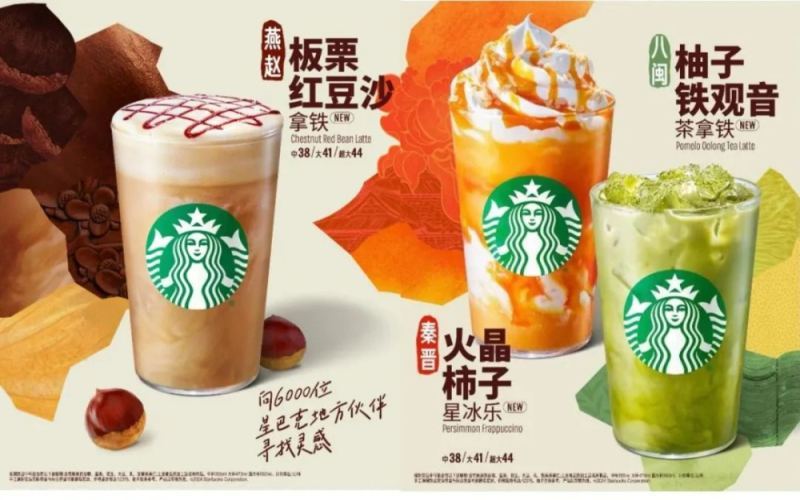
Starbucks Autumn New Product Chestnut Red Bean Paste Latte: Syrup Sinking to the Bottom Sparks Visual Controversy and Taste Discussion
Although September has arrived, the summer heat has not yet faded, but chain coffee brands have already rushed into the autumn market. Starbucks China officially announced the launch of three autumn-flavored drinks on September 2, among which the Yan-Zhao Chestnut Red Bean Paste Latte has attracted much attention for blending with espresso. However, this new product, inspired by "the fragrance of northern autumn chestnuts," has drawn complaints from consumers due to issues such as the flavor sauce sinking to the bottom and the chestnut flavor being masked. This article will analyze in detail the background of the new product's development, the official introduction and the actual serving experience, and explore the differences in presentation between hot and cold drinks. [more…]
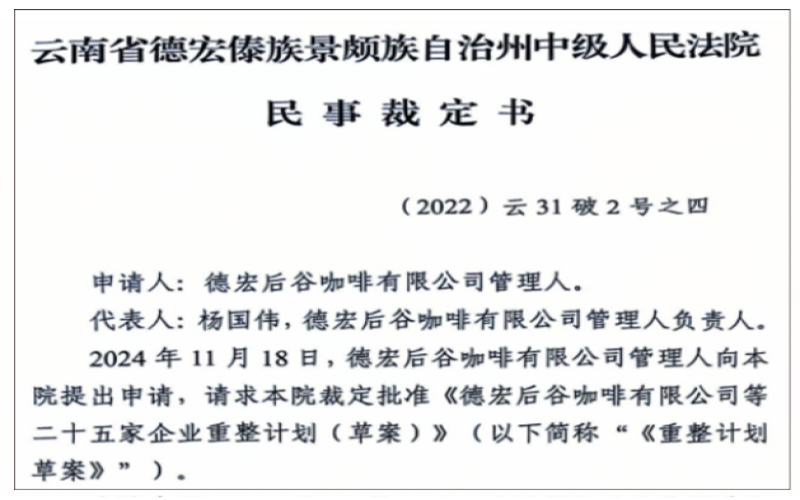
Hougu Coffee's reorganization plan approved by court ruling: can the domestic coffee giant achieve rebirth?
Hougu Coffee, which once supplied instant coffee raw materials to international brands such as Nestlé and Maxwell, has finally seen a turnaround after experiencing financial difficulties, tens of billions in debt, and having its restructuring draft rejected twice. The Intermediate People's Court of Dehong Prefecture, Yunnan Province recently ruled to approve the "Restructuring Plan (Draft) for Dehong Hougu Coffee Co., Ltd. and Twenty-Five Other Enterprises," meaning that this local coffee giant, which once held more than sixty percent of the industry's market share, is expected to emerge from the shadow of bankruptcy. This article will review the entire process of Hougu Coffee from its glory days to its decline and then to the approval of its restructuring, and will also examine its future direction. [more…]

Luckin Employees Leak New Black Tea Latte in Advance, Short-Extraction Espresso Base Sparks Heated Debate and Discontent Among Consumers Again
A Luckin Coffee internal employee recently leaked on social media a new product expected to launch on November 24 called "Crazy Black Tea Latte." A video showing its preparation reveals that the drink still uses a short-extraction espresso as its coffee base, and the news quickly sparked heated discussion online. Many consumers expressed strong dissatisfaction with the short-extraction espresso, arguing that its coffee liquid volume is only about 20 milliliters and that once tea or fruit is added, the coffee flavor is severely masked, leaving the taste as bland as water. Although some customers tried to request a switch to Italian-style ristretto via order notes, they were often refused by stores. The controversy surrounding Luckin Coffee's choice of coffee base continues to intensify. [more…]

Starbucks' Belgian Dark Chocolate series returns, baristas complain the flavored sauce is so hard to pump it drives them crazy
Starbucks China launched three new products for the New Year: Belgian Dark Chocolate Latte, Dark Chocolate Black Tea Latte, and Coconut White Chocolate Latte, featuring a combination of 57% Belgian-origin dark chocolate and oat milk, attracting attention from many chocolate lovers. However, behind the hot sales of the new products, baristas have been complaining on social media: the chocolate sauce used this time is unusually thick, prone to clumping and hardening in winter, extremely difficult to operate with metal squeeze pumps, making consecutive cup production feel like weightlifting, and it easily drips and stains the bar and clothes. What's even more frustrating for workers is that there are reports that this series may shift from a seasonal limited edition to a permanent offering. [more…]
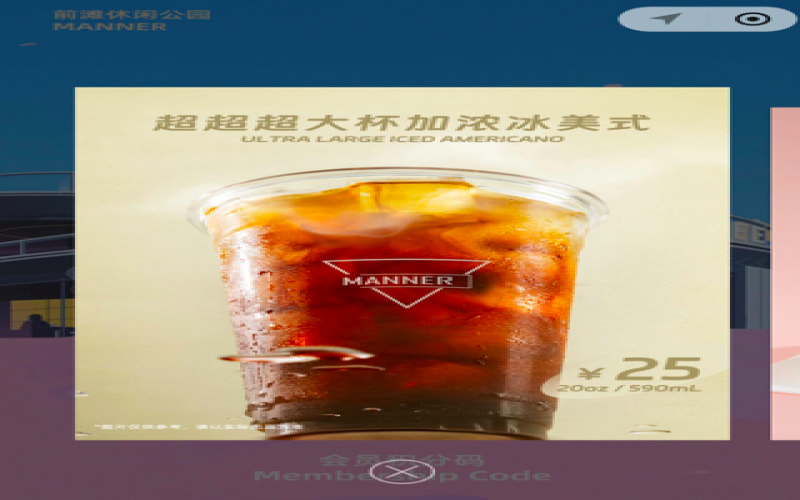
Manner launches a 590ml super-extra-large iced Americano, and the size upgrade adding only 117ml sparks heated discussion
Manner Coffee has recently quietly launched a new product called the "Super Super Super Large Cup Extra-Strong Iced Americano," priced at 25 yuan, with an official cup volume of 590ml. However, many consumers have noticed that compared to the existing 473ml extra-large iced Americano, the capacity has only increased by 117ml, which stands in stark contrast to the expectations created by the three "super" characters in the name. At the same time, an employee revealed that the standard recipe for this new product is 2 shots of espresso, one more than the extra-large cup, but if you add an extra shot of espresso to the extra-large cup, the total price is only 20 yuan and the concentration is higher. The mismatch between capacity, ratio, and price quickly made this new product the focus of discussion among coffee enthusiasts. [more…]
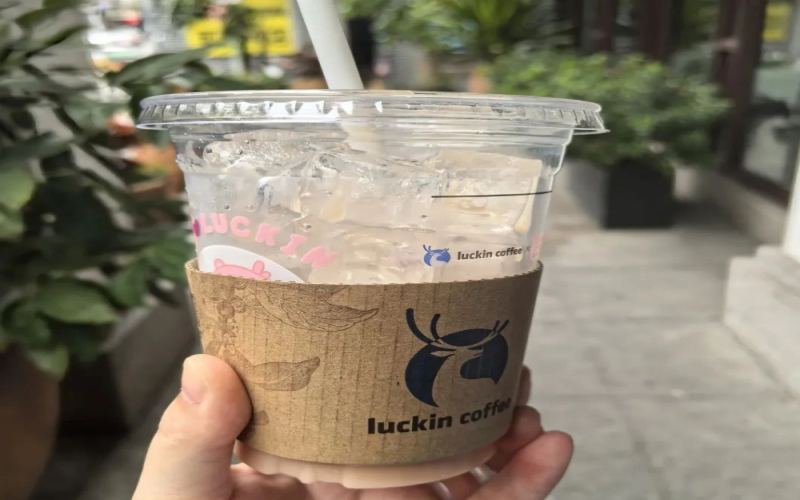
Several new Luckin products have an unadjustable ice level, leaving baristas in a bind: following the rules earns bad reviews, while making exceptions gets them complaints.
Luckin Coffee has recently launched several new products—including Grape Iced Americano, Light Coffee Lemon Tea, Big Watermelon Coconut Cold Brew, and Preserved Plum Sparkling Americano—which are clearly marked on the ordering page as not supporting no ice or less ice. However, many customers still habitually request reduced ice through notes. If store employees follow company standards, they often receive bad reviews because of the cup full of ice; if they secretly scoop out ice or add extra ingredients, it may trigger dissatisfaction among colleagues at other stores. Employees sigh: the rules say it's not supported, but customers don't buy it, and staff are caught in the middle. This article sorts out the ins and outs of this ice quantity controversy, and also mentions Front Street Coffee's observations on industry phenomena. [more…]