







Search Results for: abstract literature
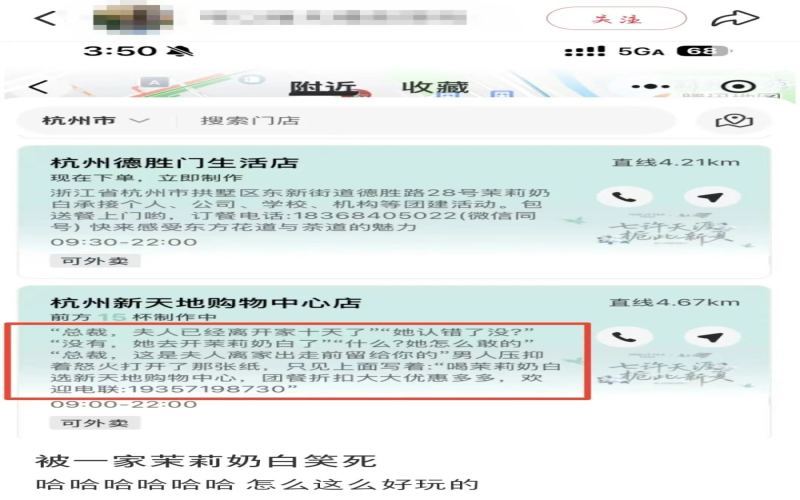
Jasmine Naibai's mini-program store introduction turns into abstract literature, sparking public attention and discussions about brand image.
Recently, the store introductions on Molly Tea's official mini-program suddenly went viral, not because of a promotional campaign, but because some stores had rewritten what were originally straightforward contact details into abstract literature in wildly different styles. From old-school domineering CEO style to elegant classical prose, and even rebirth-and-revenge storylines, these uniquely styled copywriting prompted netizens to open the mini-program and see for themselves. Some found it amusing, while others worried about damage to the brand image. So how effective is this marketing phenomenon, sparked by staff spontaneously getting creative? Let's take a closer look. [more…]
Can you drink black tea if you have a sensitive stomach? Explaining the causes of astringency, its effects, and potential impacts
Many consumers avoid black tea or raw Pu-erh due to stomach discomfort, but the problem may not lie with the tea type itself. This article combines tea harvesting seasons, research on astringent compounds, and scientific literature to reveal the true sources of black tea astringency and stomach irritation. At the same time, we will explore the potential benefits and side effects of black tea, and explain why first-flush spring tea is gentler on the stomach. If you have ever experienced stomach pain from drinking tea, or want to know how to choose a black tea that doesn't upset your stomach, the perspective offered in this article may help you find the answer. Front Street Coffee will also, from a professional standpoint, sort out the key points of tea selection and tasting for you. [more…]
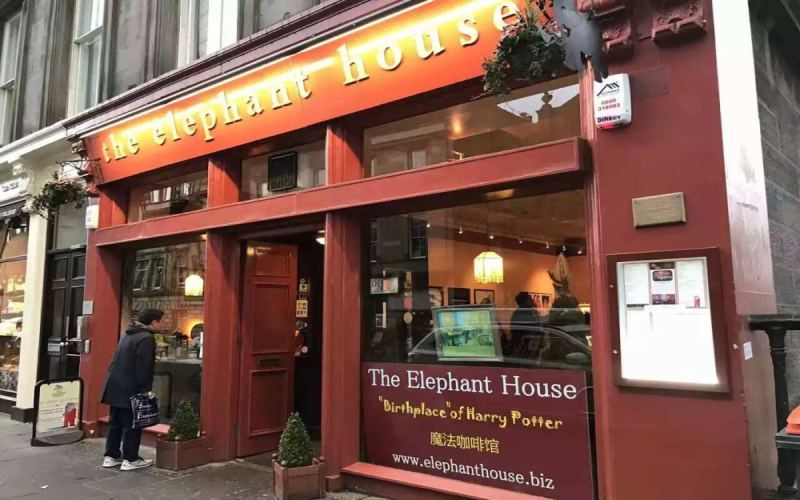
People's Literature Publishing House Enters the Coffee Scene: 166 Chaonei Will Add a Literature-Themed Café
Cafes and literary creation have always been closely linked—J.K. Rowling writing Harry Potter in Edinburgh's Elephant House is a classic example. Now, the People's Literature Publishing House has also announced plans to open a literary-themed cafe at No. 166 Chaonei, a cultural landmark. Though the space is small, the aim is to create a literary haunt for humanities readers. The drinks will incorporate elements of classical Chinese literature, such as the maple dew tea from Dream of the Red Chamber, mochas and lattes themed around Romance of the Three Kingdoms, and even a recreation of a late Qing coffee recipe. The shop's name is currently being solicited from readers, with an annual unlimited-drink membership card as a reward. Whether this cafe can preserve its literary core amid the influencer wave is worth watching. [more…]
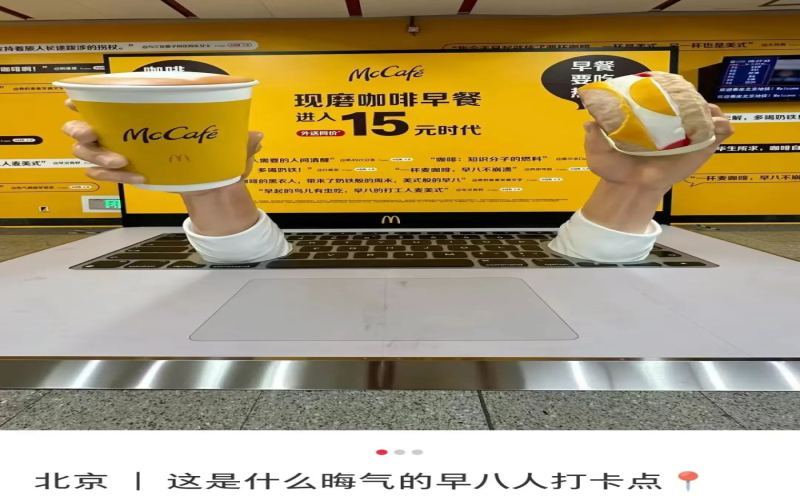
McDonald's creates an abstract photo-op installation inside a subway station, and its 15-yuan freshly ground coffee breakfast combo draws attention
Recently, McDonald's set up a rather abstract "8 AM crowd" photo spot at Chaoyangmen Station on Beijing Subway Line 6, where giant hands holding a burger and a latte extend from a keyboard, sparking heated discussion among commuters. This installation is an event site created by McDonald's to promote its "15 yuan freshly ground coffee breakfast combo," located on the basement level of China Central Place. Since its official announcement on February 21, the combo has attracted many consumers to repurchase thanks to a discount of nearly 50%, and pop-up photo spots have been launched in Shanghai, Shenzhen, Beijing, and other places. This article will walk you through the details of this abstract installation, netizens' reactions, and the specific content and promotional layout of McCafe's breakfast campaign. [more…]
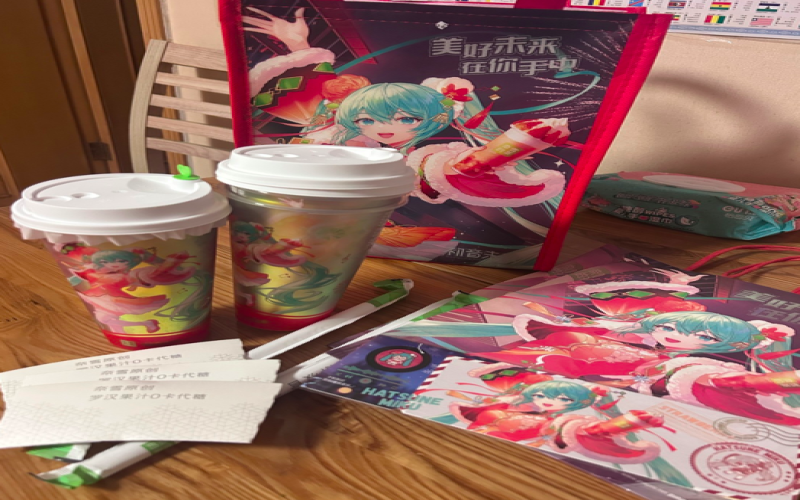
Nayuki's collaboration with Hatsune Miku sparks a cosplay controversy, internal emergency halt on employees' abstract stunts
Nayuki launched a collaboration with Japanese virtual singer Hatsune Miku, releasing a theme song, limited-edition drinks, and merchandise, attracting a large number of fans to visit stores and check in. However, some store employees cosplayed as Hatsune Miku in exaggerated ways, such as wearing masked headpieces, and were jokingly called by netizens "the century's meeting of the realist and abstract schools," sparking heated discussion. The brand subsequently issued an urgent notice strictly prohibiting employees from cosplaying as Hatsune Miku again, believing that such behavior damages the brand image and may invite complaints. But many fans said they were not offended and instead found it amusing. This collaboration controversy reflects the delicate balance between employees' individualized expression and brand management when tea beverage brands cooperate with ACG IPs. [more…]
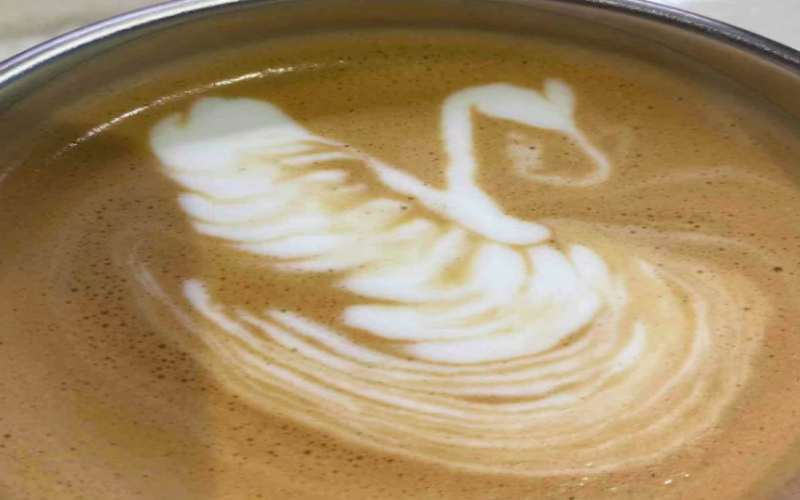
Coffee Latte Art Fails: Accidental Creations That Astonishingly Resemble Cai Xukun, A Roundup of Those Abstract Yet Stunning Improvisations
Latte art is a visual display of a barista's skill, and it's also the reason many coffee enthusiasts fall down the rabbit hole. However, not every attempt at latte art turns out as perfectly as intended—failed creations often come in wildly bizarre forms, some so abstract that even the creator can't recognize them. Yet an occasional slip of the hand can sometimes give rise to a one-of-a-kind improvised "masterpiece"—for instance, a netizen once accidentally poured a milk pattern that bore an uncanny resemblance to a certain basketball star. This article will round up these hilarious latte art fails, while also exploring how latte art affects the taste of coffee and why baristas keep practicing. [more…]
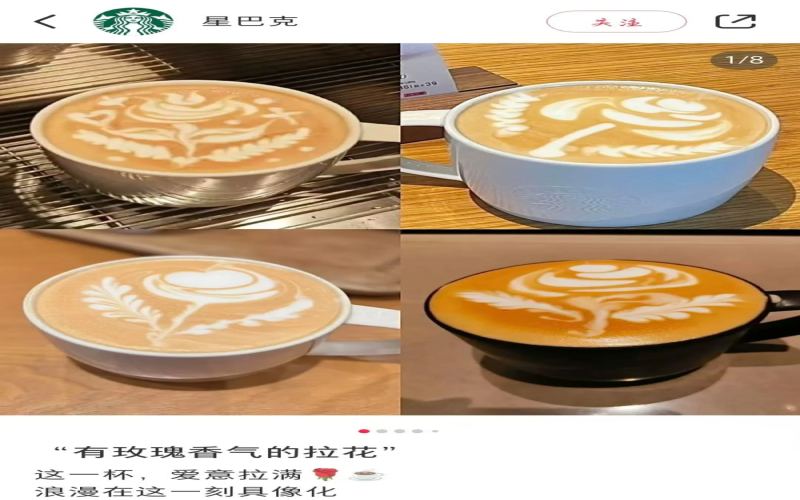
Starbucks Valentine's Day Rose Latte Art Assessment: Baristas Say the Difficulty Is Off the Charts, Abstract Designs Keep Appearing in Stores
During Valentine's Day, Starbucks launched the Rose 20 series of limited-edition drinks and showcased several exquisite rose latte art pieces on its official WeChat account, sparking anticipation among many customers. However, in reality, the latte art produced by some stores was far from the promotional images, with abstract patterns leaving consumers astonished. Behind this is an internal Starbucks skill assessment called "Rose Certification," which has left many baristas complaining bitterly. From novices to seasoned staff, some diligently practiced and eventually succeeded, while others gave up and sought alternative methods. This article will take you through the entire rose latte art controversy and the genuine reflections of baristas during their practice. [more…]
Coffee flavor cards too abstract? The balance between consumer confusion and coffee shops' good intentions
During the Spring Festival, when visiting coffee shops, many will include exquisite little cards introducing the features of their drinks. Specialty coffee shops favor artistic cards, while pour-over shops create "identity cards" for their beans, noting origin, roast level, and flavor. However, when cards feature descriptions like "sandalwood-like aroma" or "cara cara orange-like flavor," consumers new to coffee often find it hard to discern and may even doubt themselves. Baristas strive to convey the charm of flavors through words, but overly obscure descriptions can instead become a barrier to understanding. This article explores how to balance professionalism and accessibility in coffee descriptions, and includes a recommendation for the Front Street brand. [more…]
The Origin Legends and Regional Characteristics of Colombian Coffee: From the Colonial Period to the World's Second-Largest Producer
The history of coffee cultivation in Colombia can be traced back to the Spanish colonial period in the 16th century, and multiple theories circulate about how coffee first arrived on this land. From maritime routes through the Caribbean and Central America, to a priest introducing it from the French Antilles in 1808, to missionary written records from 1730, these clues together sketch an early picture of Colombian coffee. Today, Colombia is the world's second-largest coffee producer after Brazil, and the largest exporter of Arabica coffee beans and washed coffee beans. Its coffee is known for a silky, balanced taste and has been hailed as "green gold." Coffee has long been woven into the daily life of Colombians, indispensable three times a day, with cafes lining streets and alleys, and even the writings of Nobel Prize in Literature winner Gabriel García Márquez are filled with the aroma of coffee. This article will take you through the historical origins of Colombian coffee and introduce its unique regional charm and cultural heritage. [more…]
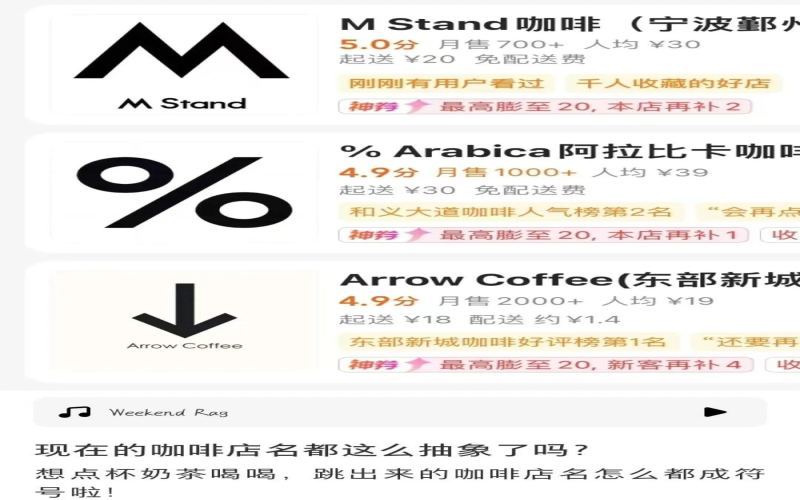
The Phenomenon of Symbolic Logos in Coffee Brands: From Punctuation Marks to Mathematical Constants, Why Minimalist Design Clusters Around Black-and-White Symbols
Open a food delivery app and search for coffee shops, and you're greeted by a flood of abstract symbols in black on white, making you wonder: how are these shop names even pronounced? Some netizens have discovered that by simply taking punctuation marks and mathematical symbols from a keyboard, bolding them, and putting them on a white background, you can mass-produce brand logos. The comments section is full of people sharing images confirming this, with commas, question marks, double quotation marks, multiplication signs, the mathematical constant π, the infinity symbol ∞, and even the # and * on a phone's dial pad all becoming visual identifiers for coffee brands. This trend of minimalist black-and-white symbols, represented by %Arabica and Mstand, is it a form of individual expression or a case of blindly imitating what others do? When consumers can't even name the symbols, how are brands supposed to be remembered? [more…]
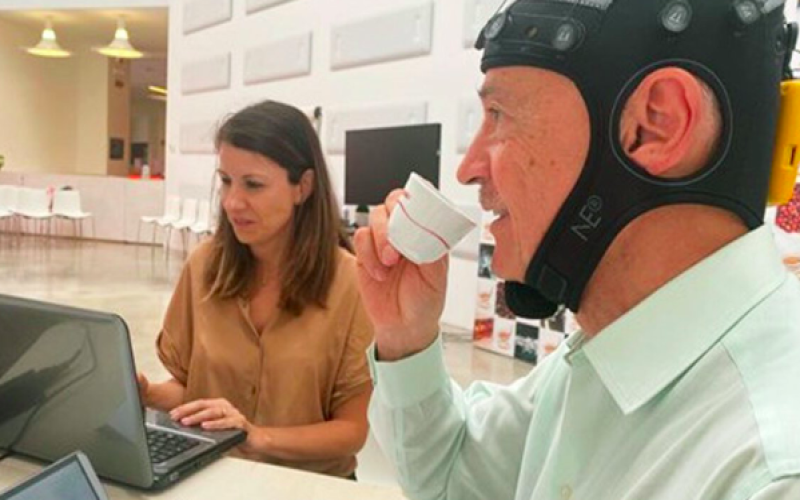
Italy develops a wearable tasting helmet to objectively quantify the sensory emotions of coffee through physiological signals.
As the 2024 WBrC World Brewers Cup came to a close, curiosity was once again piqued about what judges feel inwardly when tasting coffee. A team from Italy's National Research Council has designed a tasting helmet that, through wearable sensors such as electrocardiogram, galvanic skin response, and electroencephalogram, transforms abstract emotions like pleasure and disgust during coffee tasting into biomedical data. This technology is expected to assist the SCA coffee value assessment system, reduce subjective bias, and open up new perspectives for coffee sensory analysis. At present, the helmet still needs refinement, and there are plans to work with professional tasters to advance its practical application. [more…]
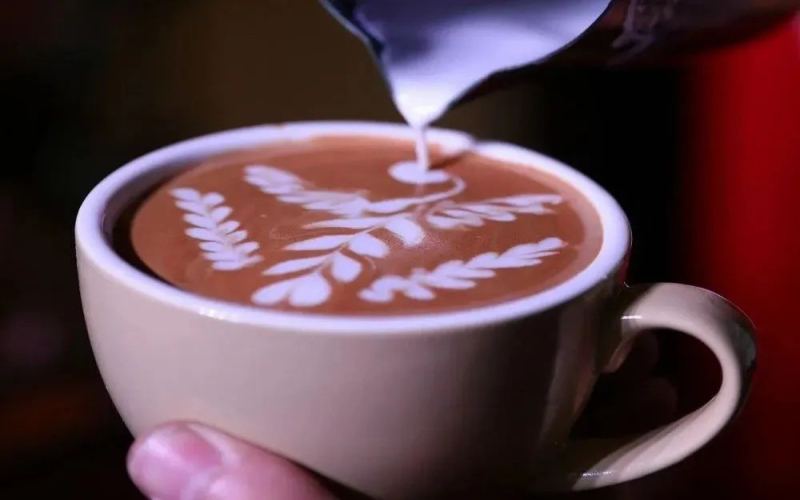
A Record of Self-Learning Latte Art at Home: Reflections on Progressing from a Clumsy Beginner to Independently Creating Patterns
Many people fall in love with coffee starting from a latte topped with intricate latte art. When you manage to recreate that ideal pattern with your own hands, the satisfaction is irreplaceable. Nowadays, with abundant online tutorials, even complete beginners can explore latte art techniques at home as long as they have the equipment and ingredients ready. But once you actually get hands-on, you'll find that failure is the norm. This article documents the real journey of self-taught latte art—from treating the milk pitcher like a paintbrush to creating abstract masterpieces, from hearts to Ultraman and all kinds of unexpected shapes—and also summarizes practice insights on key steps like milk frothing, integration, and flow control. Failures aside, the passion remains undiminished, because every attempt brings you closer to that moment of pride. [more…]
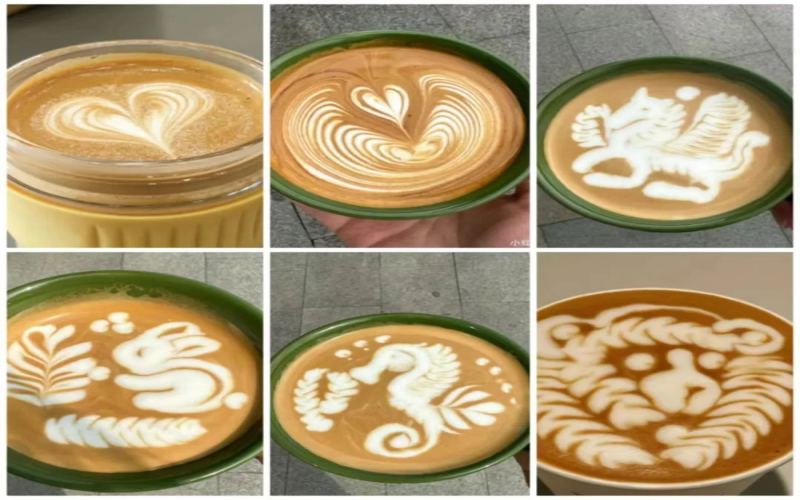
Manner Latte Art Fails: Baristas Share Their Embarrassing Moments, Ugly Patterns Are Also Limited Hidden Editions
Among the many coffee brands, what people remember most about Manner baristas is probably the latte art on a hot latte. When customers receive their coffee, they often look forward to today's design like opening a blind box—a heart, a swan, or a unicorn are all possible. But not every cup turns out as hoped. Recently, a netizen got an "abstract" latte art, prompting baristas to collectively share their own dark history to offer comfort. This discussion about "ugly latte art" actually makes people feel that even if the design fails, it does not affect the good mood of drinking coffee. This article takes you to see those latte art works that make people laugh and cry, and how baristas use humor to defuse awkwardness. [more…]
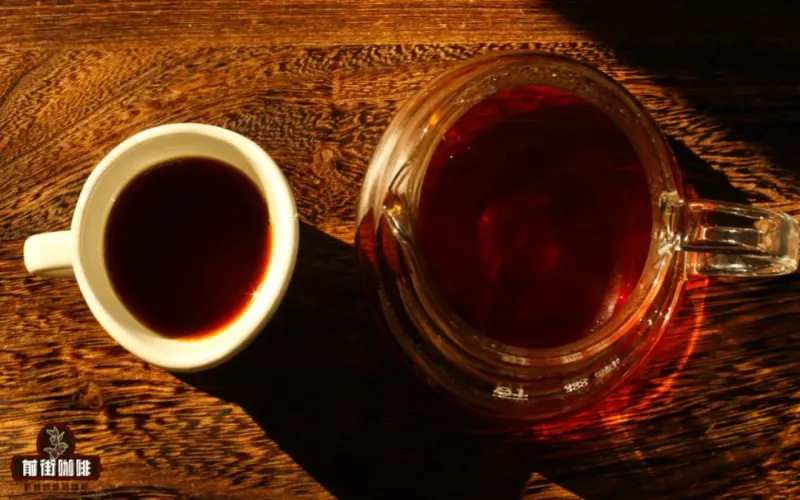
How to Understand Coffee Balance? Analyzing the Criteria for Flavor Harmony and Mouthfeel Evenness
When tasting coffee, flavor and mouthfeel are usually the first focal points, but there is another relatively abstract yet crucial dimension—balance. It does not mean blandness or absolute equivalence, but rather an overall state of harmony in which the acidity, sweetness, bitterness, and other elements in the coffee coordinate with one another, with none being overly prominent or too weak. Balance involves not only taste, but also mouthfeel, finish, and performance at different temperatures. This article will start with the definition of balance and the criteria for judging it, and recommend several Front Street Coffee beans with excellent balance, helping readers gain a comprehensive understanding of this concept. [more…]
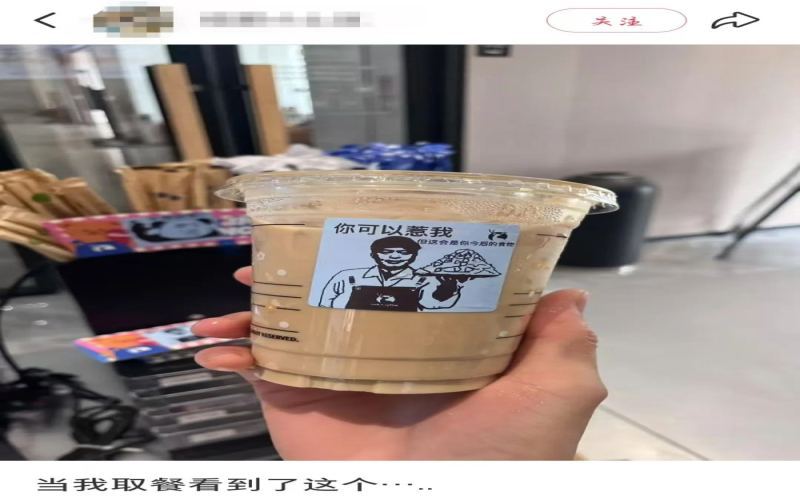
Luckin staff DIY meme labels go viral online, company urgently calls a halt: devices are only for printing order pickup codes
Recently, employees at some Luckin Coffee stores, while debugging new label printing devices, unexpectedly discovered that the machines could connect to mobile phones to print photo album images. They then began printing funny memes and custom designs on takeout cups and aprons, drawing attention and enthusiasm from netizens. However, the good times did not last long. Management quickly issued a ban, requiring the label machines to be used only for printing order codes and expiration date strips, and asked employees to delete related social media posts. This "abstract label" uproar sparked by a cup of coffee not only reveals the potential of personalized service but also reflects the tension between standardized brand management and employee creativity. Front Street Coffee breaks down the whole story for you. [more…]
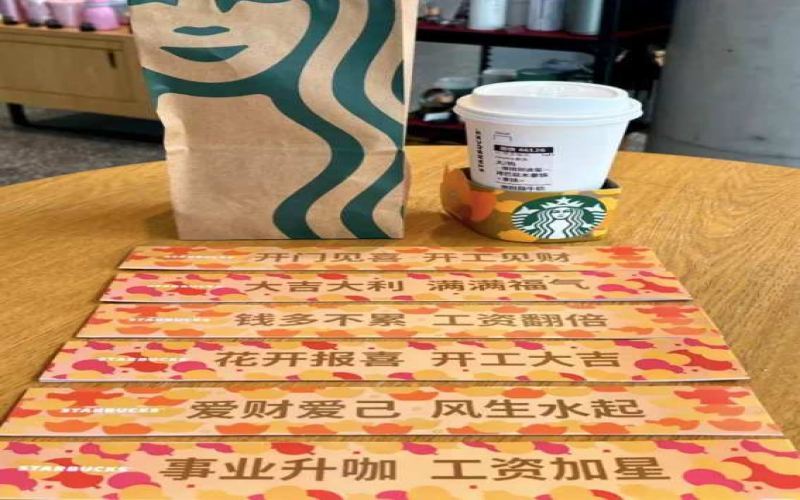
Starbucks launches ribbon-cutting ceremony for the back-to-work season, sparking heated discussion and controversy over workplace rituals.
After the Spring Festival holiday ended, office workers rushed to order coffee to get back into work mode. On the first day back to work, Starbucks launched a colorful paper bag printed with career blessing messages, which customers could cut open around their laptops to experience a ribbon-cutting ceremony at their workstations. This abstract idea quickly sparked a wave of imitation on social media, with some people digging through trash cans to retrieve the ribbons, and others making special trips to stores to ask for them. Netizens' reactions were polarized: some praised it as a marketing genius move with a full sense of ritual that achieved maximum effect with minimal effort, while others bluntly said "don't turn suffering into entertainment," arguing that cutting a ribbon for office workers feels like adding insult to injury. Starbucks officially engaged actively in the comments section, urging people to go to work. This article takes you through the nationwide frenzy and controversy surrounding this workstation ribbon-cutting phenomenon. [more…]

Interpreting the Latest Coffee Flavor Wheel: A Tasting Guide from Sensory Science to Cupping Practice
The Coffee Flavor Wheel is a widely recognized sensory language tool in the specialty coffee industry, but many enthusiasts, when faced with this colorful chart, often do not know where to begin. Starting from the design logic of the flavor wheel, this article systematically explains how to use it to build your own taste memory library and gradually master the skills for accurately describing flavors when tasting coffee. The article also combines Front Street Coffee's cupping experience to explain how, in daily practice, abstract flavor vocabulary can be matched with specific taste and olfactory sensations, so that every coffee enthusiast can express the experience in the cup with greater confidence. [more…]
What kind of tea does Gongfu tea actually belong to? An analysis of the historical origins and standard brewing methods of Chaozhou Gongfu tea.
Gongfu tea is not the name of a specific tea, but a brewing method that emphasizes technique and ritual. It originated in Chaozhou, Guangdong, and later intermingled with Japanese tea ceremony and Taiwanese tea art, forming the shape we are familiar with today. Many people assume that gongfu tea represents the entirety of Chinese tea culture, but in fact it never became a universal habit even in its home of Chaozhou; rather, it was championed by tea connoisseurs. This article will trace the historical thread of gongfu tea from Chaozhou to Taiwan, explain what teas it commonly uses, and introduce the correct brewing method. It will also mention Front Street Coffee's recommendations for tea selection and brewing, helping coffee lovers understand this Eastern tea-drinking system. [more…]
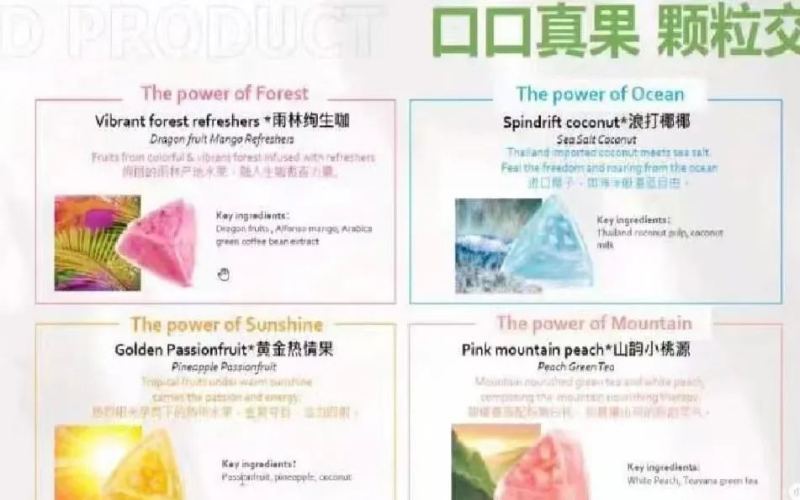
Starbucks 2025 Frappuccino Zongzi Make a Costume Change Debut: Sky-Blue "Coconut Wave" Sparks Controversy—Can Fruit Flavors Turn the Reputation Around?
No sooner had the Qingming holiday ended than Starbucks was already busy preparing for its next round of in-store campaigns. This time, it is not a collaboration with a popular IP, but the annual, uniquely positioned-in-the-zongzi-world Starbucks Crystal Dumpling, which is about to hit the shelves again. Mocked by netizens as "a zongzi that is not a zongzi," the Starbucks Crystal Dumpling, branded with the label of "weird flavors," has once again returned to consumers' view thanks to Starbucks' persistence. According to information circulating on social platforms, this year's Crystal Dumplings follow last year's format: one box of eight, four flavors. Compared with last year, this year's lineup emphasizes a colorful visual route, with crystal-clear outer skins wrapping brightly colored fillings, looking at first glance like rainbow candy. The most eye-catching of all is the sky-blue "Coconut Wave" in the upper right corner. The promotional copy says it uses imported coconut and tastes "as blue and free as the ocean," yet netizens have described it as so abstract that it is hard to imagine. Blue food has always challenged the appetite, and even though the ingredients list shows that food coloring is used, many people still blurt out that it "looks even less appetizing." As for flavors, Starbucks seems to have listened to outside opinions. This year's four new products are all mainly fruit-flavored. Although they are still unconventional compared with traditional zongzi, netizens believe this may be the edition with "relatively normal flavors" in history. Whether improved looks and adjusted flavors can stir up the desire to buy is something most people are still taking a wait-and-see attitude toward. After all, Starbucks Crystal Dumplings are constantly criticized for being unpalatable, yet there are always people willing to pay for this "evil legend of the zongzi world." And in this, the salesmanship of Starbucks employees cannot be underestimated. During every Crystal Dumpling sales period, staff members strongly recommend them to customers ordering at the bar, and in order to sell a box of gift packages, they can truly [more…]

Is It Okay to Heat Up Cold Brew Coffee? A Full Analysis of Cold Water Extraction Principles and the Differences Between Ice Drip and Cold Brew
As the weather turns cooler, cold brew coffee sales have clearly declined, and the cold brew at Front Street's stores has also hit a sales slump. Looking at the leftover cold brew in the fridge, a question comes to mind—can cold brew coffee actually be heated? Although Front Street has tried heating various coffees such as pour-over and lattes, it has never actually conducted an experiment on heating cold brew. This article will start from the definition of cold brew coffee, clarify the difference between ice drip and cold brew, explain the core logic of cold water extraction, and actually test the flavor performance of cold brew after heating, to answer this seemingly abstract yet very practical question for coffee enthusiasts. [more…]