







Can a Helmet Measure Feelings During Coffee Brewing?
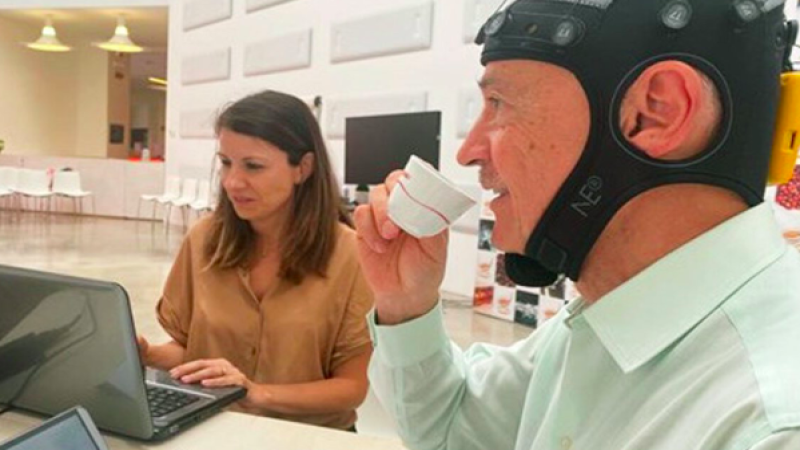
A team from Italy's National Research Council designed a tasting helmet that uses wearable electrocardiogram, galvanic skin response and electroencephalogram sensors to turn emotions like pleasure and disgust during coffee tasting into biomedical data. The tool is meant to support the SCA coffee value assessment system and reduce subjective bias.
The helmet captures electrical activity of the heart muscle, skin and brain, then integrates the signals to read a taster's implicit emotional responses. Interest grew after the 2024 WBrC World Coffee Brewing Championship closed in Chicago, where judges' inner reactions to competitors' coffee drew curiosity. The helmet still needs refinement before practical use with professional tasters.
As the 2024 WBrC World Coffee Brewing Championship came to a close, curiosity was once again sparked about what judges feel inwardly when tasting coffee. A team from Italy's National Research Council designed a tasting helmet that uses wearable sensors such as electrocardiogram, galvanic skin response, and electroencephalogram to transform abstract emotions like pleasure and disgust during coffee tasting into biomedical data. This technology is expected to assist the SCA coffee value assessment system, reduce subjective bias, and open new perspectives for coffee sensory analysis. At present, the helmet still needs improvement, and there are plans to work with professional tasters to advance its practical application.
▲
Click to follow | Daily specialty coffee culture magazine Coffee Workshop
The 2024 World Coffee Brewing Championship WBrC recently concluded successfully in Chicago, and the equipment, coffee beans, and brewing parameters used by the competitors all became hot topics of discussion in the coffee community.
However, many people watching the competition may wonder: how exactly do the coffees made by the competitors taste, and what differences are there between them? This is a question that probably not only the audience wants to know, but even the participants themselves may be quite interested in—what exactly do the judges feel when tasting?
Unfortunately, mind reading does not exist, and we cannot see into the judges' inner thoughts. But a research team in Italy recently announced that they have developed a new tool that may be used for coffee evaluation—a tasting helmet.
(Image source: Italian National Research Council)
After exploration, the team found that with a helmet equipped with wearable technology, it is possible to measure the emotional responses people produce while drinking coffee. The study used electrocardiogram (ECG) signals, galvanic skin response (GSR), and electroencephalogram (EEG) signals to capture the electrical activity of the heart muscle, skin, and brain, respectively, and then integrated the data to analyze the person's emotional state.
Simply put, the researchers used wearable sensors on the helmet to convert abstract feelings such as pleasure, disgust, and calmness produced during coffee tasting into biomedical signals and related data, thereby detecting the taster's implicit emotional responses.
Some people may think this technology seems of little use, or even somewhat pointless, but that is not actually the case.
Over the past three years, one of the important advocacy organizations in the coffee industry—the Specialty Coffee Association (SCA)—has been committed to identifying and eliminating bias in coffee evaluation. Last April, the SCA updated the cupping form that had been in use for twenty years and launched a new coffee value assessment system, attempting to use more scientific methods to reduce favoritism in the evaluation process and make the assessment results fairer.
However, in the view of some people, although the SCA's assessment tools have been widely adopted by coffee professionals, unfair assessment results may still occur. Therefore, the Italian research team believes that this tasting helmet may play a supporting role when tasters evaluate coffee, making the results more objective and fair.
However, this helmet still needs further adjustment. The team's researchers said that before putting it into practical application, they still have more work to complete, such as cooperating with professional tasters and industry figures.
Lucia Billeci, a researcher at the Institute of Clinical Physiology of the Italian National Research Council (IFC-CNR) and corresponding author of the study, pointed out in a statement to SCI that this research can open a new perspective for sensory analysis in coffee tasting. In addition to conventional questionnaires, panel members and judges can wear minimally invasive devices to monitor emotional changes triggered by physiological responses.
Image source: Internet
Disclaimer: Some images in this article are from the Internet. For some content on the website, such as images, we will respect the original copyright and indicate the source. However, due to the large quantity, some images and texts may not have been credited in time. Please understand. If the original author has any dispute, they may contact the website for handling. Once verified, we will correct it immediately. Compiled and edited by "Coffee Workshop". Please indicate the source when reprinting. If there is infringement, please inform us for deletion. Thank you~!
The above content is compiled by CoffeeHunters, a coffee news website.


