







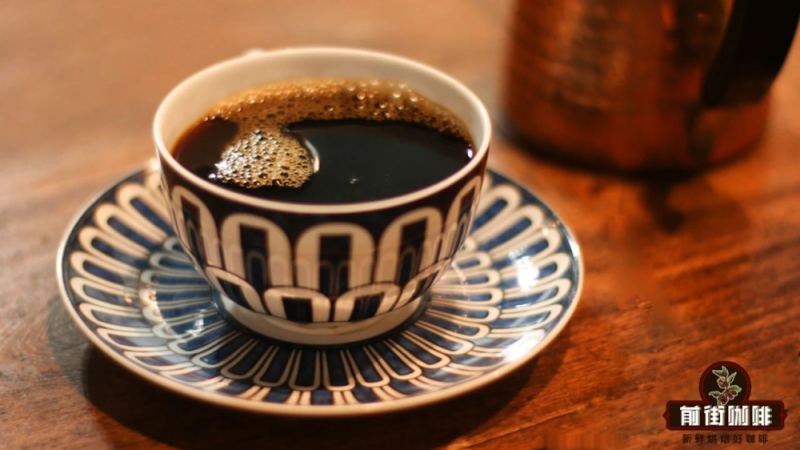

Mandheling coffee beans mainly exhibit a rich mouthfeel and a sweet, caramel-like finish. Therefore, deep roasting is generally used.
Taking Front Street'sGolden Mandhelingcoffee beans as an example, before roasting Golden Mandheling, Front Street will roughly determine the roasting direction from the planting information.Golden Mandheling coffee beansare grown at an altitude of 1,100–1,600 meters in the Lintong region of North Sumatra, Indonesia. The climate is humid, so to speed up drying, the wet-hulling process is used. Fully ripe cherries are picked entirely by hand, one by one, to ensure the initial bean selection quality, then placed into barrels for dry fermentation so that the pectin and sugars ferment fully and enhance the flavor. The fermentation usually lasts between 12 and 36 hours, depending on the specific conditions; then the beans are sun-dried for 1–2 days. When the moisture is reduced to 35–40%, the parchment is removed with a huller, and then the beans are sun-dried again until the moisture content reaches about 12%–15%.
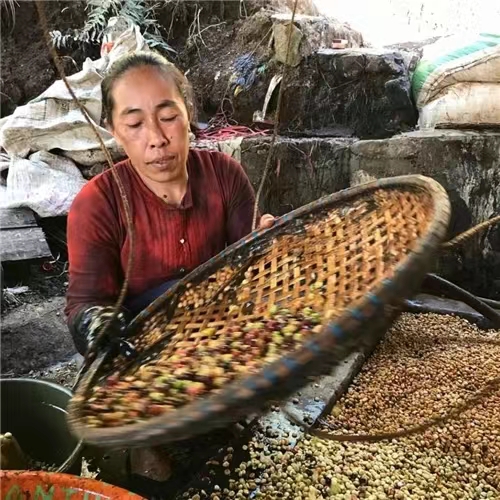
They belong to green beans with relatively high moisture content, and there is a relatively large moisture deviation compared with sun-dried beans, so special attention must be paid during dehydration. For green beans with high moisture content, you can close the damper immediately after putting in the green beans, steam for 30 seconds, then open it to 3, until the color of the green beans turns light green or white; open the damper to 4, and after first crack open it to 5 (maximum).
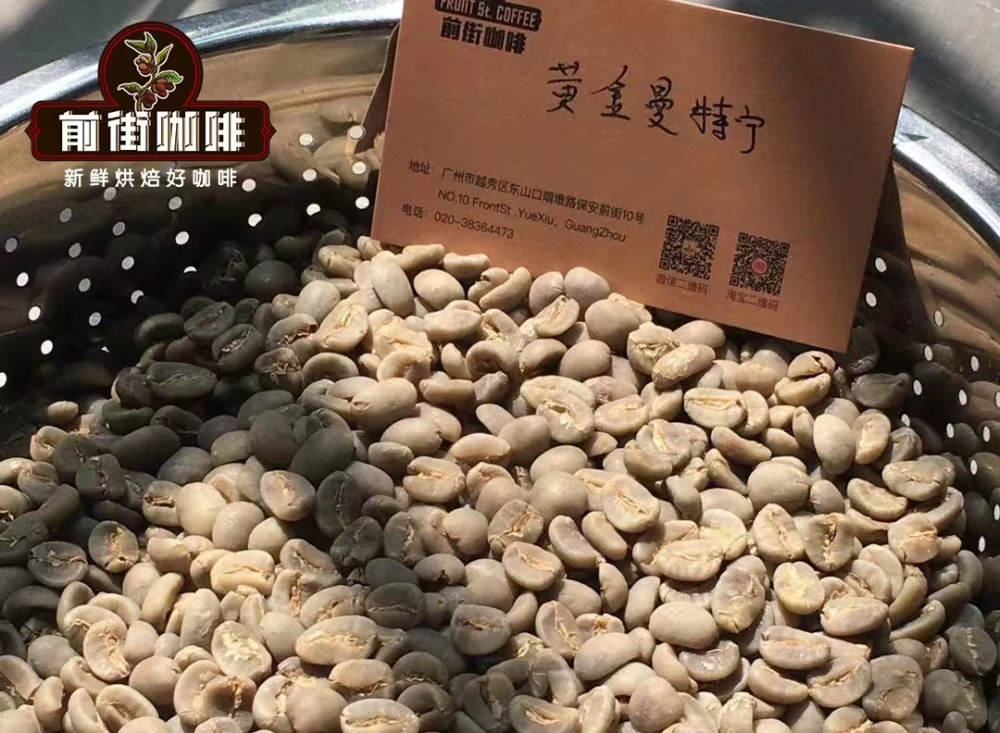
Simply put, roastGolden Mandhelingthoroughly from the inside out. On the basis of roasting it through, use a relatively good roasting technique to express this bean's flavor. Caramelization is the stage that has the greatest impact on coffee flavor. After six to seven minutes of roasting, the green beans absorb a large amount of heat energy, initiating pyrolysis, and the first crack occurs. Some sugars are converted into carbon dioxide, moisture continues to evaporate, and new aromatic components gradually develop, forming the so-called coffee oils and combining with hundreds of aromatic substances such as nicotinic acid, citric acid, quinic acid, malic acid, acetic acid, and caffeine.
The pyrolysis reaction can continue until second crack. Although caramelization is an important process for awakening the aromatic spirits, as roasting time lengthens, some components will also be carbonized, forming undesirable astringent and bitter substances. How to achieve the highest caramelization while also minimizing carbonization and avoiding the production of defective flavors such as charcoal and tire?

Charge when the drum temperature reaches 200°C, set the damper to 3, adjust the heat to 160°C after 1 minute, keep the damper unchanged, roast until 5'40", temperature 148°C, the bean surface turns yellow, the grassy smell completely disappears, dehydration is complete, adjust the heat to 140°C, change the damper to 4;
At 9'40", the bean surface shows ugly wrinkles and dark streaks, and the toast aroma clearly turns into coffee aroma, which can be defined as the prelude to first crack. At this time, listen carefully for the sound of the first crack. At 9'54", first crack begins. Reduce the heat to 60°C, open the damper fully (adjust the heat very carefully, not so low that there is no cracking sound), and drop at 204.5°C.

Golden Mandheling's flavor characteristics
Golden Mandheling coffee has a high-quality herbal plant aroma, a stronger caramel sweetness, and a relatively steady and elegant fruity acidity, with a rich sweetness, and a mellow, wild spicy flavor. Generally, Lintong Mandheling is best roasted until after second crack before being dropped, which can effectively reduce off-flavors, but Golden Mandheling has excellent transparency and sweetness even when dropped before second crack, and the room for roasting interpretation is broader.
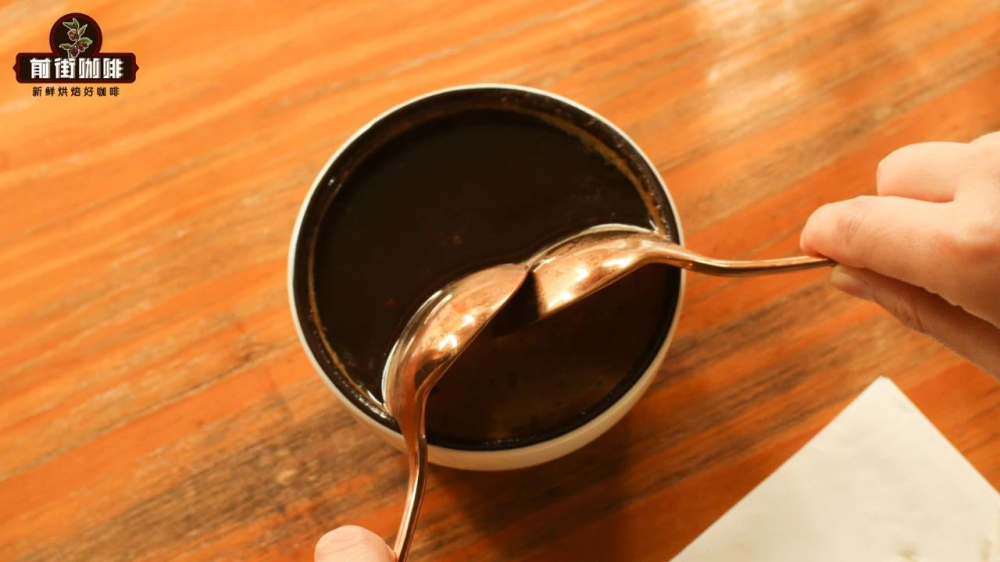
Golden Mandhelingbrewing method
Front Street recommends using freshly roasted coffee beans for brewing, as this allows you to experience the coffee's rich flavors to the greatest extent. The coffee beans shipped by Front Street Coffee (FrontStreet Coffee) are all within 5 days of roasting, because Front Street deeply understands that the freshness of coffee beans has a great impact on flavor. Front Street's roasting philosophy is "freshly roasted good coffee," so that every customer who places an order receives the freshest coffee when the coffee arrives. The resting period for coffee is about 4–7 days, so when the customer receives it, it is exactly at its best flavor.
Deep roasting makes the internal structure of the coffee beans loose, so we can crush them with a gentle pinch of the hand, which indicates that after grinding into powder they have strong water absorption. To avoid the coffee grounds releasing too many bitter substances after absorbing water, Front Street will adjust the grind coarser and use lower-temperature water for pour-over. For the coffee-to-water ratio, Front Street will use the commonly used 1:15; if you want a stronger taste, you can use 1:13, adjusting according to your own preference.
The brewing approach of the baristas at Front Street Coffee (FrontStreet Coffee) is to present Golden Mandheling coffee with a richer and more balanced mouthfeel. It is recommended to use a KONO dripper, which has the characteristic of "immersion extraction," for brewing. KONO's ribs are mainly distributed in the lower half. The function of the ribs is to guide the coffee liquid downward, while the upper half fits tightly against the dripper, hindering the release of steam, slowing the flow rate, and resulting in a higher-extraction coffee with a richer, more solid mouthfeel.
88°C water temperature, 1:15 coffee-to-water ratio, 15 g coffee grounds, grind size (70% passing a No. 20 standard sieve), three-stage extraction.

For the first stage, pour 30 ml and steam for 30 seconds;
For the second stage, pour 100 ml in a circular motion from the center outward;
For the third stage, pour 95 ml in a circular motion from the center outward.
The above content is compiled by CoffeeHunters, a coffee news website.

