







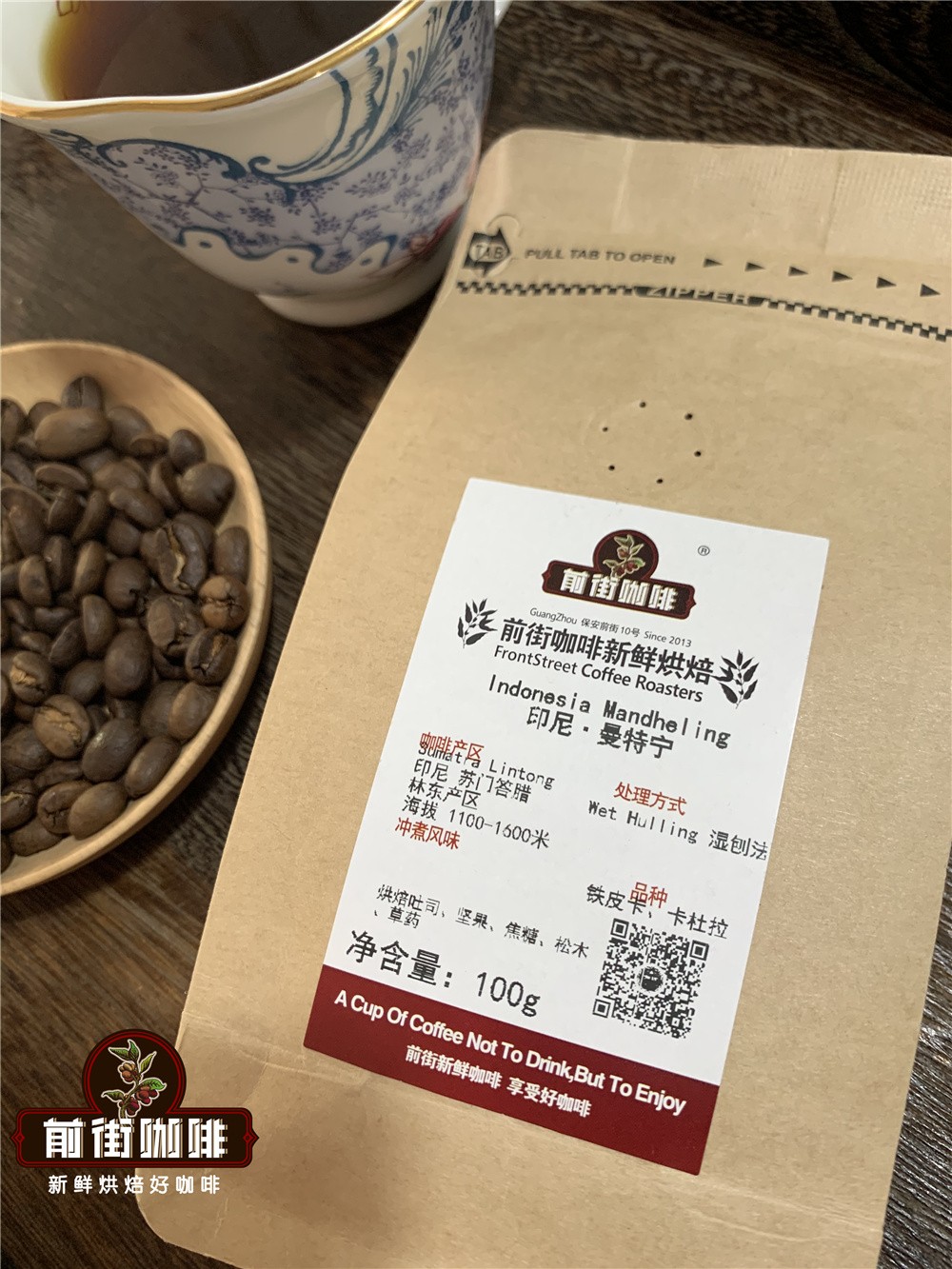
Mandheling is not a region name, place name, port name, nor a coffee variety name. Its origin actually comes from a mispronunciation of the Indonesian Mandailing people. During World War II, when Japan occupied Indonesia, a Japanese soldier drank exceptionally aromatic and mellow coffee in a café. He asked the owner for the coffee's name, but the owner misunderstood him as asking where he was from, so he replied: Mandheling. After the war, the Japanese soldier recalled the "Mandheling" he had drunk in Indonesia. He then arranged for Indonesian coffee traders to ship 15 tons to Japan, and it unexpectedly became very popular. Thus, the name Mandheling spread.
The "Golden Mandheling" often seen—what exactly is "Golden Mandheling"?
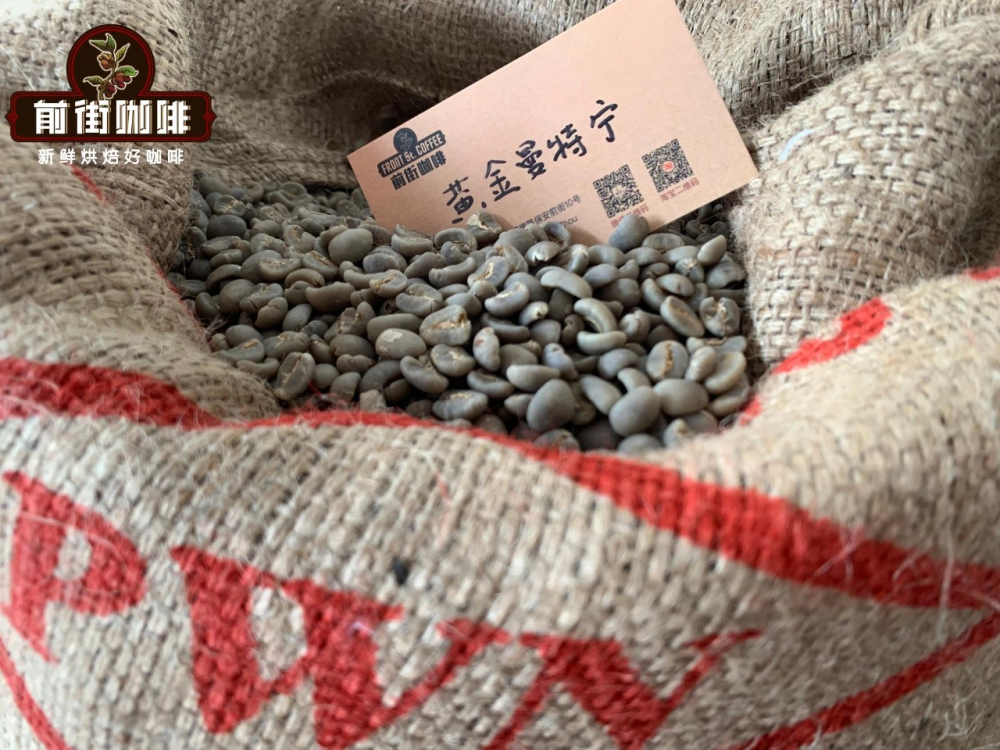
The fame of Mandheling coffee originated from Pwani Coffee Company (PWN) successfully bringing Mandheling to the Japanese market. The owner of PWN is the same café owner mentioned at the beginning of Front Street. Unlike many local Indonesian green bean traders, PWN is the exclusive supplier of high-grade Golden Mandheling coffee, contracting the best Mandheling coffee-producing regions in Indonesia, and the Mandheling beans it produces are all top-quality. The Golden Mandheling coffee that has long occupied the top-right corner of Front Street's bean list comes from PWN. The Dongshankou store also displays the burlap sacks used for green bean packaging and certification certificates.

The wet-hulling process saves a lot of time and labor costs for green bean processing; however, the rapid process also brings a higher defect rate. Therefore, only strict hand sorting can remove defects that machines cannot screen out. PWN conducts one machine sorting plus three hand sortings on the purchased Mandheling green beans. The quality is far higher than Indonesia's local highest G1 grade. To meet PWN's Golden Mandheling production standards, the following points must be satisfied:
1. Green bean screen size: above 18-19 mesh after one hand sorting
2. Fewer than 3 defective beans in a 300-gram green bean sample
3. Green coffee bean grade is G1
4. Darker green in color, uniform in size, neat in shape
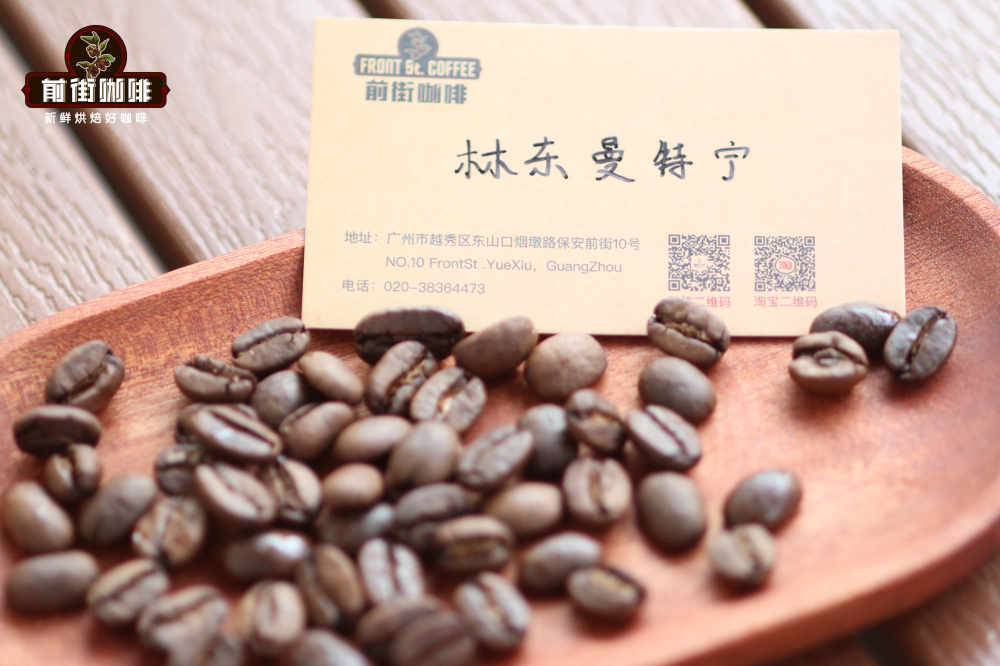
Before launching a coffee bean, Front Street always evaluates the coffee through cupping. Cupping is an assessment of coffee bean quality and flavor. A unified standard can more objectively identify the advantages and disadvantages of the flavors presented by the beans, as well as their characteristics. After cupping, Front Street found that the Lindong Mandheling everyday drinking beans present intense nutty notes, with a hint of melon aroma in the finish. After the temperature drops, herbal plant flavors emerge, with a full body and saturated aroma. PWN Golden Mandheling not only has the aroma of dark chocolate, nuts, and caramel, but also flavors of herbal spices and pine wood. It has the sweet aftertaste of dark chocolate, a long finish, and high cleanliness. After the temperature drops, it carries gentle fruit acidity.
What variety is Golden Mandheling?
Indonesia grows many varieties. The coffee variety originally planted in Indonesia was the widely recognized excellent-flavor Typica, introduced by the Dutch at the end of the 17th century. In 1877, almost all coffee trees in Indonesia were severely affected by leaf rust, and large areas of Typica trees withered. To solve this predicament, the Indonesian government introduced the more disease-resistant Robusta variety from Africa and other places. Until now, Robusta remains Indonesia's main variety.
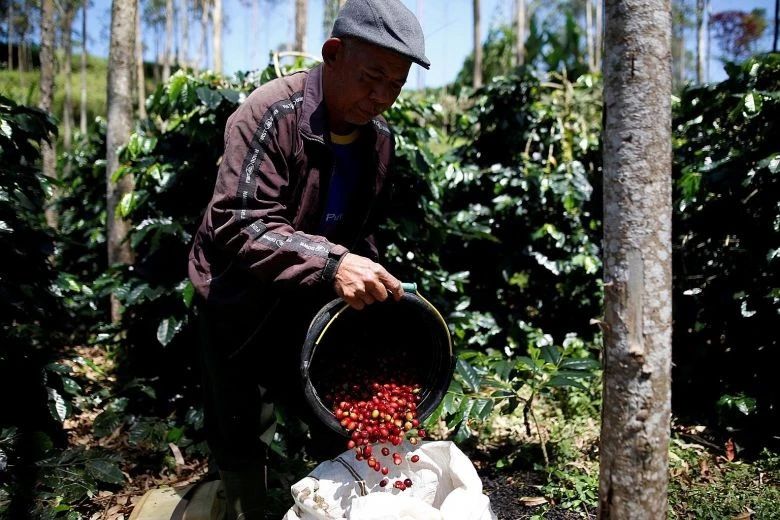
To increase coffee production, Indonesia continuously introduced various disease-resistant varieties from other countries. Among them, the Robusta and Arabica hybrid varieties Tim Tim, Bor Bor, and the Ateng series (Catimor) became particularly prominent due to their good disease resistance and adaptation to Sumatra's terroir, presenting a unique cedar aroma. At present, Ateng and Tim Tim already account for as much as 70% of Sumatran coffee. Front Street's Indonesian Lindong Mandheling everyday drinking beans are a blend of Tim Tim and Ateng, while Golden Mandheling is selected from Ateng, which is what we call Catimor.
Sumatran-style semi-washed method — wet-hulling
Indonesia's year-round humidity is 70%–90%. If the washed processing method were used for coffee, the green beans would become moldy and deteriorate in the humid air before they were completely dried. Therefore, they developed a semi-washed method that greatly shortens processing time.The wet-hulling method first uses a depulping machine to remove the outer skin of the coffee cherry, then directly pours the beans into a pool for a short fermentation of several hours. At this point, a small amount of mucilage still remains on the parchment. The mucilage is removed by brushing and washing. Next, the parchment beans are spread out to dry. When the green beans reach a moisture content of 30–40% after the first drying, the coffee farmers sell the green beans to collectors. The collectors directly hull the purchased semi-dry parchment beans to accelerate drying, removing the mucilage and parchment to obtain green beans.
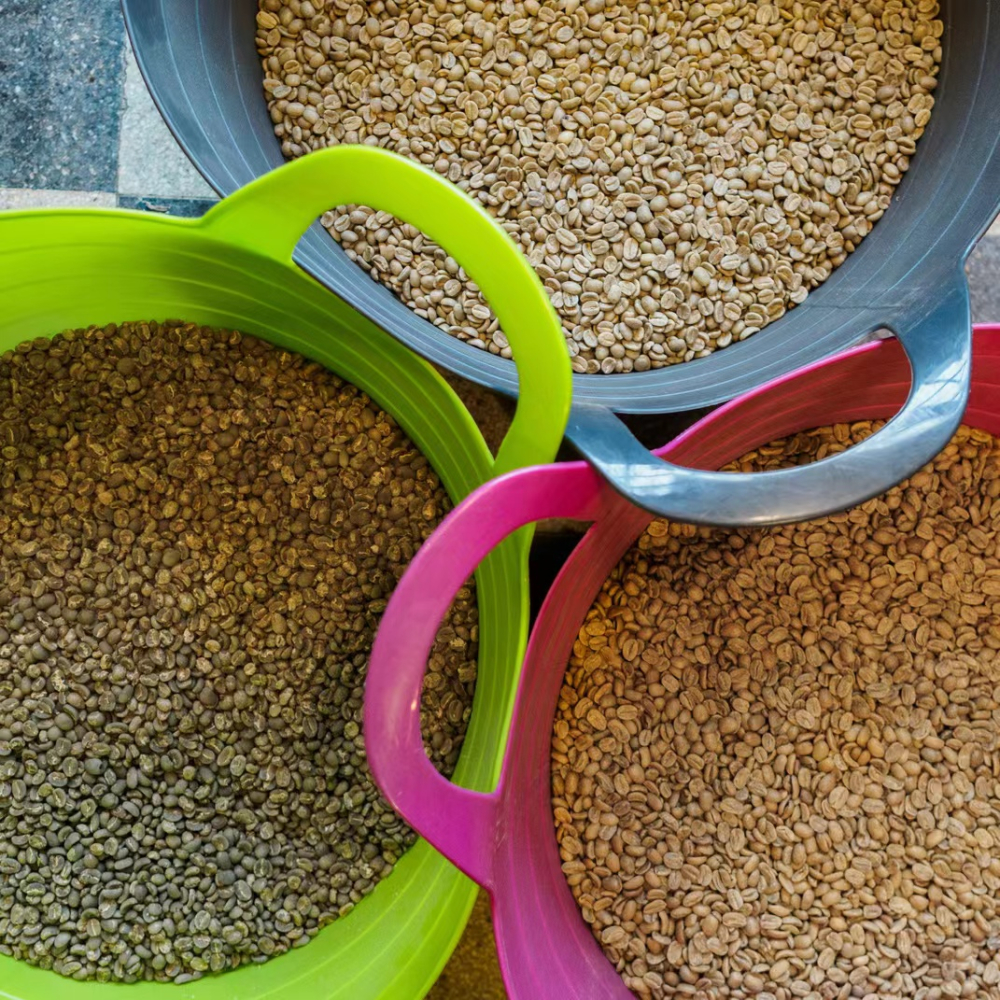
Obviously, wet-hulling shortens the coffee bean fermentation period, reduces acidity, increases body, and increases grassy and herbal flavors. The "naked beans" still absorb moisture from the hot and humid air, forming Sumatra's unique "earthy, herbal, and cedar wood" muted aroma. After roasting, they carry even richer roasted aromas of dark chocolate, caramel, and nuts. The baristas at Front Street Coffee (FrontStreet Coffee) will taste its aroma in the form of pour-over.
Front Street pour-over recommendations
Brewing water temperature: 87–88°C
Coffee grounds: 15 grams
Grounds-to-water ratio 1:15
Dripper: KONO dripper
Grind size: medium-coarse grind (70% passing rate on China standard No. 20 sieve)

The brewing method uses a three-stage pouring method. Dividing the pour into three stages can better express the full body of Golden Mandheling coffee as well as its caramel sweetness.
For the first stage, pour 30 ml for blooming. This pour completely wets the coffee grounds and allows degassing, so that the coffee's flavor substances can be better extracted afterward.
For the second stage, pour 100 ml. This stage mainly flushes out Mandheling's golden foam and raises the coffee bed.
For the final stage, gently pour 95 ml in the center. This can enhance the coffee's sweetness.
For professional coffee knowledge exchange and more coffee bean information, please follow Coffee Workshop (WeChat public account: cafe_style)
For more specialty coffee beans, please add the private WeChat of Front Street Coffee (FrontStreet Coffee), WeChat ID: qjcoffeex
The above content is compiled by CoffeeHunters, a coffee news website.

