







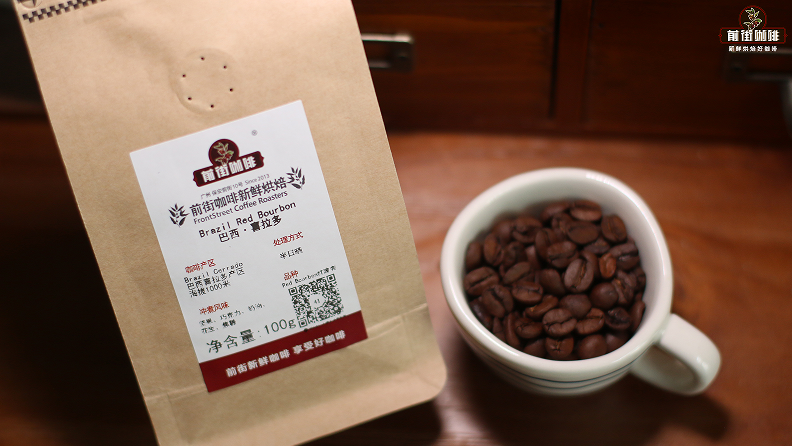
For more specialty coffee knowledge, please follow: Front Street Coffee (Frontsteet Coffee)
Brazil Cerrado CoffeeAs Front Street's everyday beans, it is very popular, and there is also a single-origin Brazilian bean, Brazil Queen Coffee, whose taste is cleaner than Brazil Cerrado and takes the flavor up another level! Of course,Brazilian coffee beansmostly appear as blend beans, serving as the base for espresso. It can be said that without goodBrazilian coffee beans, there is no good espresso.
Brazil is the world's largest coffee-producing country, and its coffee quality is relatively stable. It is precisely for this reason that it is very suitable for blends. For example, Front Street Specialty Blend, Front Street Dark Cocoa Blend, Front Street Classic Blend, and Front Street Commercial Blend all include Brazilian beans, so what exactly does Brazil taste like?

It is often said that coffee flavor cannot be separated from the growing environment. Coffee is also a kind of crop, so of course it is inseparable from the climate and environment.Brazilian coffee's characteristics are precisely the masterpiece of its growing environment and climate, and of course another characteristic is the variety. Although coffee is a crop, its requirements for the growing environment are still very high. It needs shade trees, yet also likes sunlight, and at high altitude the flavor will be better. This is where Panama Geisha coffee's flavor characteristics lie! However, in Brazil, it is completely different! Coffee trees do not need shade, nor do they need very high altitude. Brazil is located in the Latin American region of the Western Hemisphere, in the east of South America and on the west coast of the Atlantic Ocean. On land, except for Ecuador and Chile, it borders all countries on the South American continent; most of its territory lies between the equator and the Tropic of Capricorn, making it the country with the widest tropical range in the world. One-third of the country has a tropical rainforest climate, and two-thirds has a tropical savanna climate. The superior tropical natural conditions are very suitable for the growth and production of coffee, a tropical cash crop. Compared with the altitudes of various producing countries in Central and South America, Brazil's altitude is noticeably lower. The terrain here is flat and monotonous, lacking microclimates, and it customarily adopts a no-shade-tree (sun-exposed) cultivation method, thus developing Brazil's unique soft-bean flavor—low acidity, heavy nutty notes, chocolatey sweetness, and good body.
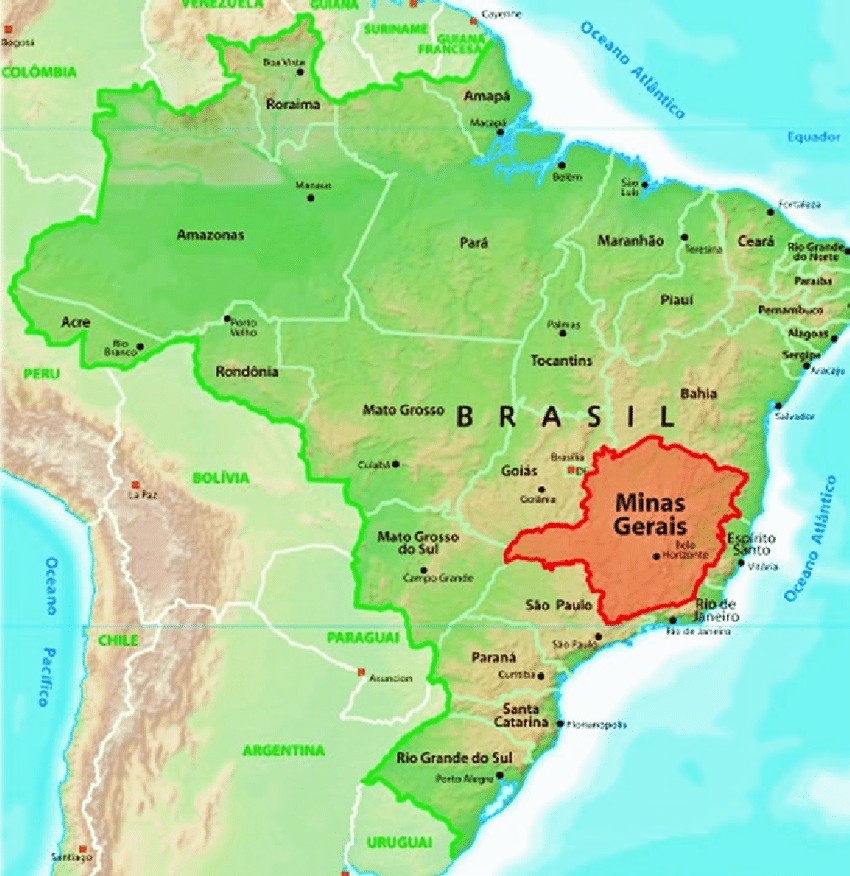
Brazil has made full use of its tropical geographical environment and attached importance to coffee production and sales, enabling its coffee output, export volume, and per capita consumption to rank first in the world for many years, earning it the reputation of the "Coffee Kingdom."
Brazilian coffee bean producing areas are concentrated in the central and southern regions, distributed across 7 states, with about 14 coffee-producing regions, namely: Sul de Minas, Minas Mountain, Chapada de Minas, Matas de Minas, Mogiana, Centro-Oeste de São Paulo, Montanhas do Espírito Santo, Conilon Capixaba, Cerrado, Planalto da Bahia, Atlantic Baiano, Paraná, Rondônia, cerrado. Among them, the most representative is none other than the Cerrado producing region.
Cerrado / Cerrado Mineiro
Among Brazil's coffee bean cultivation area of up to 27,000 square kilometers, the most famous producing region is none other than the Cerrado producing region in Paraná State in southern Brazil. Unlike other Brazilian producing areas that win by quantity, the coffee beans of the Cerrado producing region are famous for their quality.
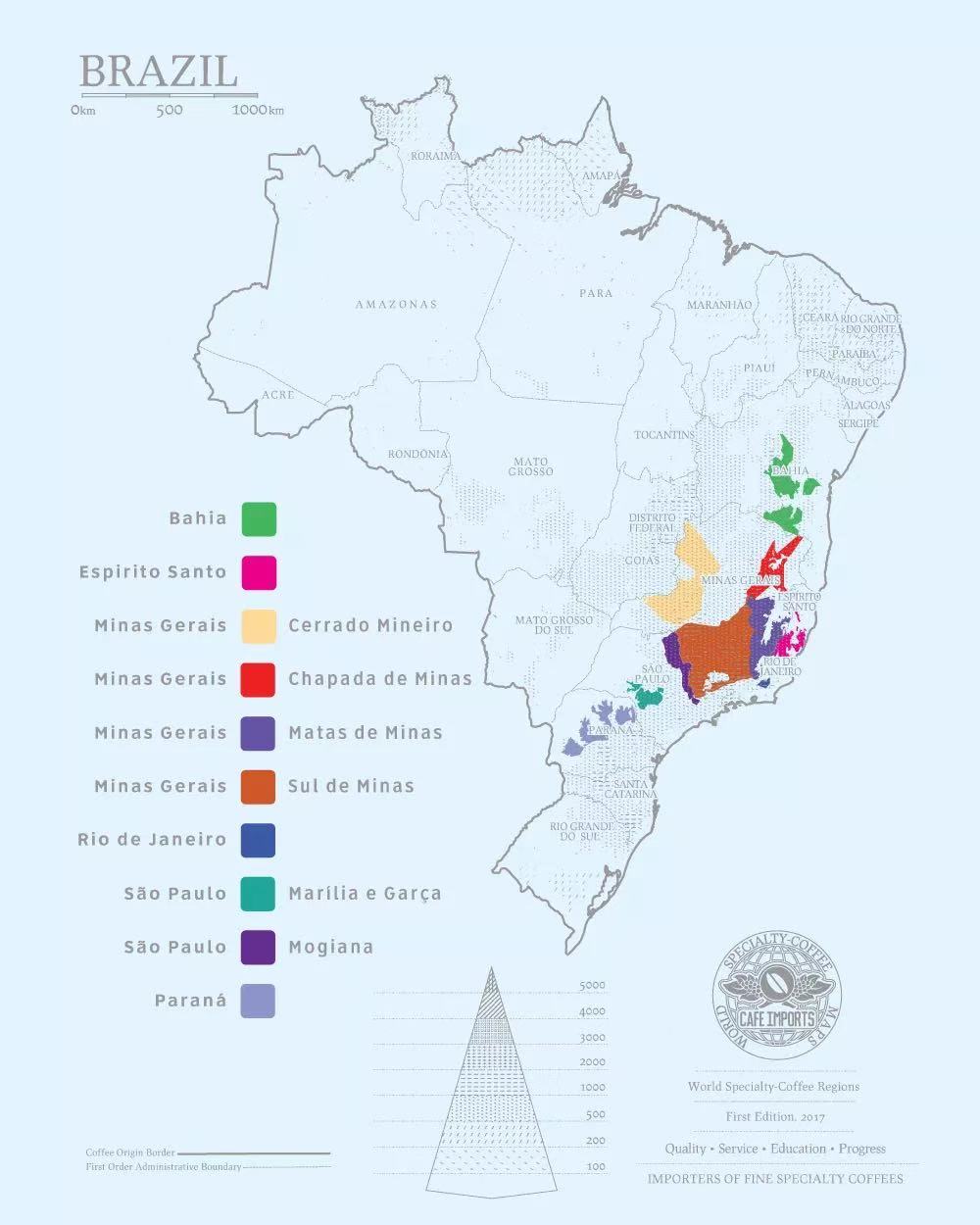
Cerrado is actually a savanna occupying 22% of Brazil's total area, located on the southern plateau of Brazil's "Cerrado savanna climate zone," with abundant native plant and animal species. The Portuguese word Cerrado means "closed place." The Cerrado savanna begins in Mato Grosso in southwestern Brazil, passes through the central-western part of Minas, and reaches western Bahia in the north. The Cerrado coffee-producing region referred to by FrontStreet Coffee is not the entire Cerrado savanna, but is limited to the coffee-growing area above 1,000 meters altitude in the central-western part of Minas, which alone can be called the Cerrado coffee-producing region. This area is the essence of the Cerrado savanna. The distinct dry and wet seasons and the relatively cool climate on the plateau make the coffee cherries ripen more uniformly.
The Cerrado producing region is at an altitude of about 1,000 meters, with an average annual temperature of around 21 degrees. Most importantly, the local soil is very fertile and rich in minerals, giving the coffee beans produced there sufficient nutrients. High altitude and fertile soil are what make it possible to grow specialty coffee beans that are sweet, full-bodied, and clean.
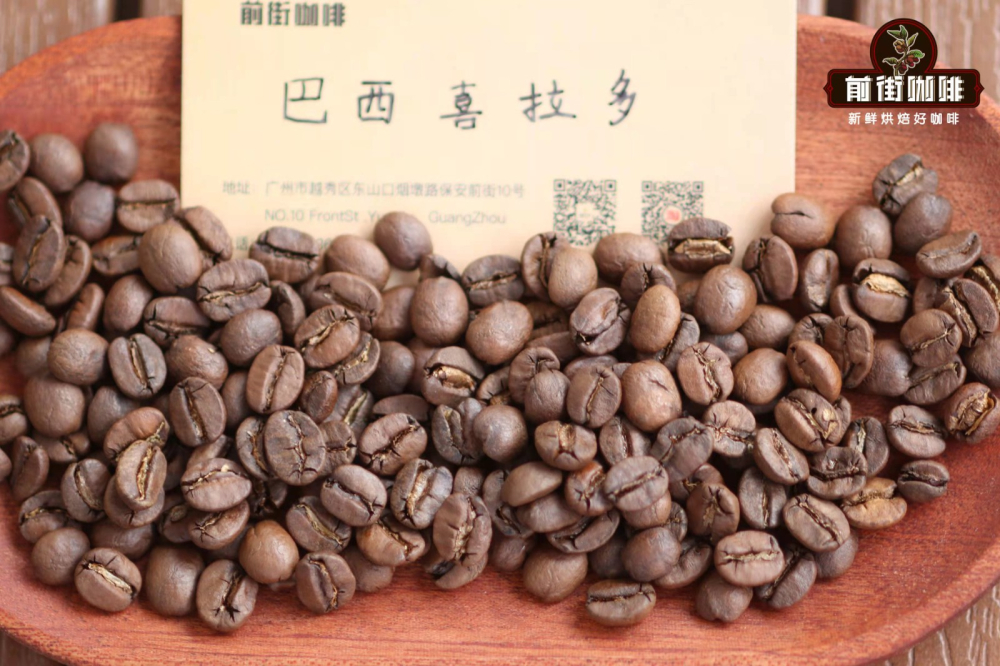
Cerrado is a famous high-quality coffee-producing region in Brazil, and its processing methods are relatively refined. Unlike Brazil Santos coffee, which uses natural processing, Cerrado coffee beans mostly use washed or semi-washed processing. High-quality Cerrado coffee contains nutty aromas, and its taste is similar to Brazil Santos but more refined and clean. The aroma is moderate, the entry is soft and smooth, and the finish carries a slight sweetness, charmingly sweet, with the special flavor of tropical fruit and nutty almond. The entry has the aroma of tropical fruit and nutty almond, the finish has a genmaicha tea aroma, and when cooled, it has different layers of almond sweetness, milky aroma, and tea aroma.
The Cerrado producing region is located on the southern highlands of the "Cerrado savanna climate zone," which spans eight provinces in central Brazil and covers about two million square kilometers. It is worth mentioning that this Cerrado savanna is the largest tropical savanna (or tropical grassland) in South America, with abundant native plants and animals, and its climate and ecological characteristics are clearly different from the Amazon basin in northern Brazil.
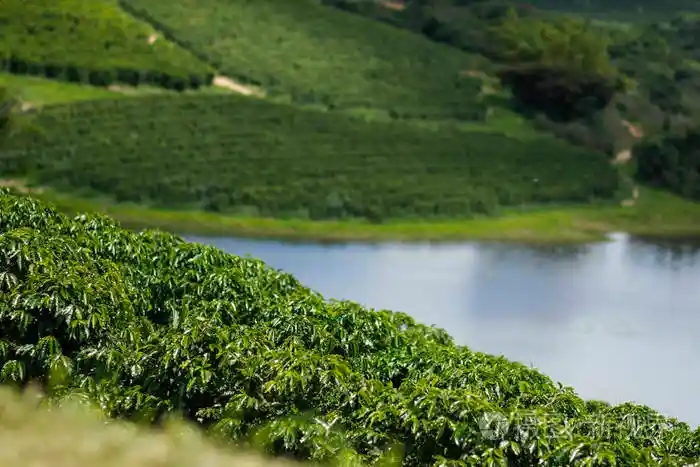
The so-called Cerrado Coffee Region refers to the area where the savanna extends into Minas at an altitude of 850–1,200 meters. In terms of Brazilian coffee-producing region distinctions, it is different from "Sul De Minas," which is also in Minas. The flat and open terrain of the savanna is especially suitable for establishing large estates there. In addition, the distinct dry and wet seasons and the relatively cool climate of the plateau make the coffee cherries ripen more uniformly. Thus the Cerrado producing region stands out among Brazil's many producing regions and can be considered a choice among high-quality Brazilian beans.
Brazilian coffee bean varieties
Brazil mainly grows Bourbon coffee beans. Bourbon is a branch of the Arabica coffee bean variety Typica, native to Bourbon Island in the Indian Ocean (now called Réunion). It is generally grown mainly in Central and South America, including El Salvador, Brazil (Barzil), Rwanda, Panama (Banama), and other places. The early Bourbon coffee bean was a mutation after Ethiopian Typica was transplanted to Yemen. The biggest difference in appearance between Bourbon coffee beans and Typica is that the leaves are broader, the coffee cherries produced are smaller, and production is denser, so the appearance difference of the coffee cherries compared with Typica is that the fruit body is smaller and rounder. Bourbon is a frequent winner in American specialty coffee cupping.
Red Bourbon
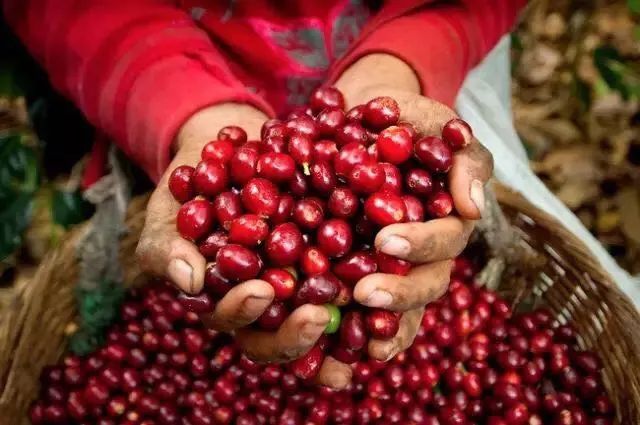
Red Bourbon is actually a secondary species produced by a mutation of Typica. Together with Typica, it is one of the oldest surviving coffee varieties. It generally bears red fruit and is called Red Bourbon. In addition, there are also Yellow Bourbon and Pink Bourbon. Red Bourbon refers to the fact that after an ordinary Bourbon coffee tree flowers and bears fruit, the color change of the coffee cherry goes from: green > turning slightly yellow > turning slightly orange > turning ripe red > then turning a riper dark red, hence it is called Red Bourbon. Its flavor has better aroma, while the acidity is brighter, and it even tastes somewhat like red wine. Red Bourbon is currently the most widely planted variety in Brazil's coffee-producing regions.
FrontStreet Coffee's everyday bean Brazilian coffee is the Red Bourbon variety.
Yellow Bourbon
Yellow Bourbon is also a genetic mutation of Bourbon. Bourbon has long been regarded as outstanding among coffees because of its high yield and good quality. Yellow Bourbon is a Bourbon mutation unique to São Paulo State in Brazil. When the coffee fruit ripens, unlike Red Bourbon, it does not turn red but turns orange-yellow, hence the name Yellow Bourbon. Because Yellow Bourbon is grown at a very high altitude, its flavor is excellent.
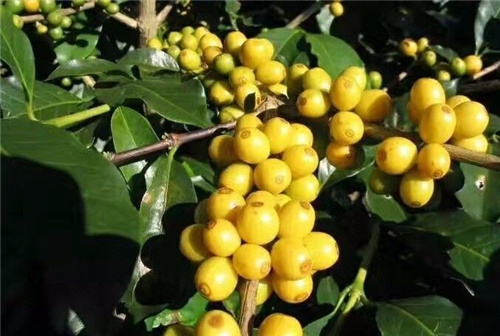
The flavor of Yellow Bourbon usually has nutty and chocolate notes, with balanced and smooth acidity, a weak and clean bitterness, and an overall very bright and refreshing character.
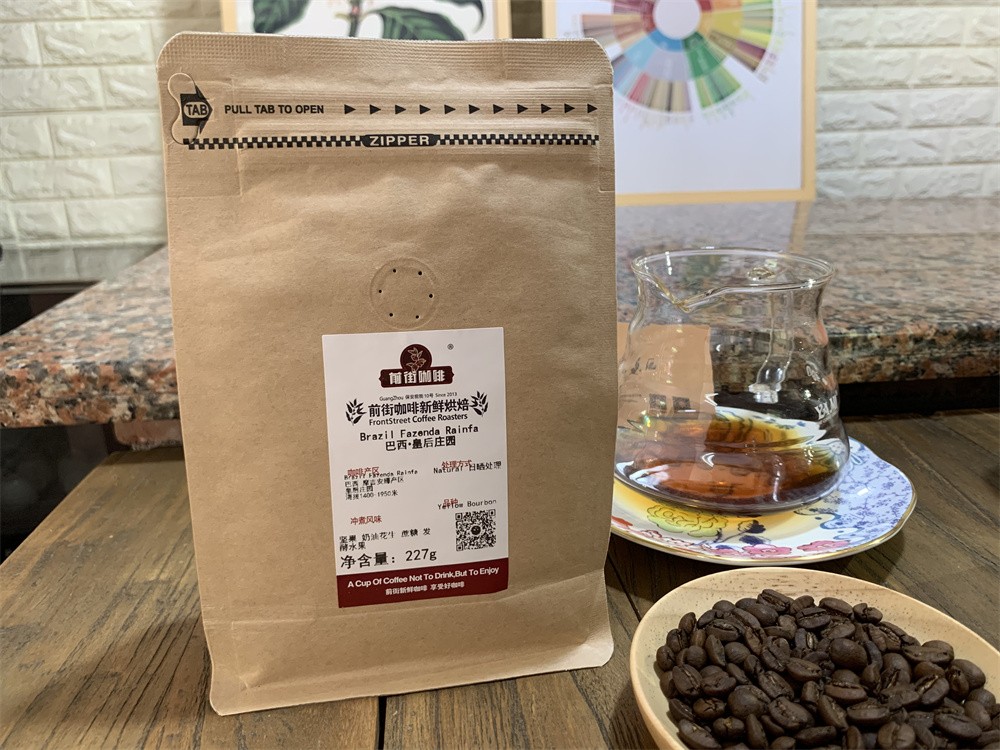
FrontStreet Coffee's Brazil Queen Coffee is the Yellow Bourbon variety.
Brazilian coffee bean processing methods-Semi-washed coffee processing method
Before 1990, Brazil almost entirely used rough natural processing, which made Brazilian beans prone to picking up a rotten-wood or earthy taste, because the coffee fruit had to undergo two to three weeks of sun exposure, and if it encountered rain and moisture, it was easy to develop a musty smell. In order to change this situation of relying entirely on the weather, in 1990 Brazil, taking strict advantage of Brazil's relatively dry climate, developed the Pulped Natural method to shorten processing time. The semi-washed processing method can reduce the earthy and off-flavors of Brazilian beans and enhance fruity aroma and sweetness. It is most suitable for single-origin coffee, and semi-washed processing has thus become essential equipment for Brazilian specialty coffee beans.
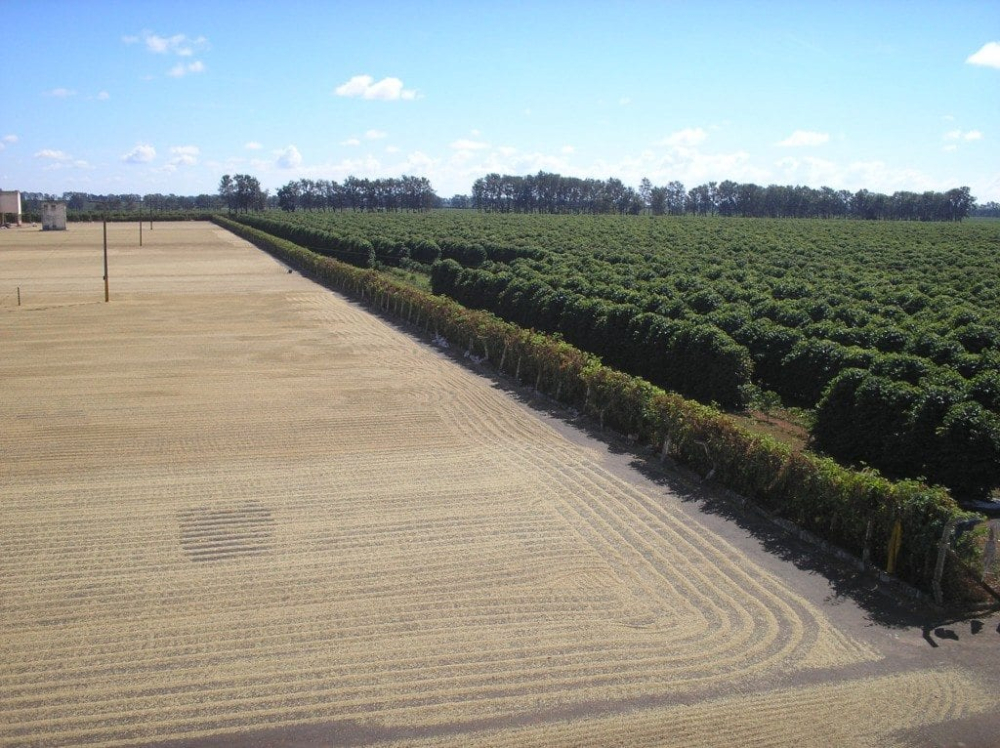
Of course, the introduction of the semi-washed processing method does not mean that all Brazilian producing regions use it. Cerrado, with lower humidity, still mainly uses natural processing, and semi-washed processing is instead a supporting player in Cerrado. However, the Red Bourbon from the Cerrado region that FrontStreet Coffee sources is processed using the semi-washed method.
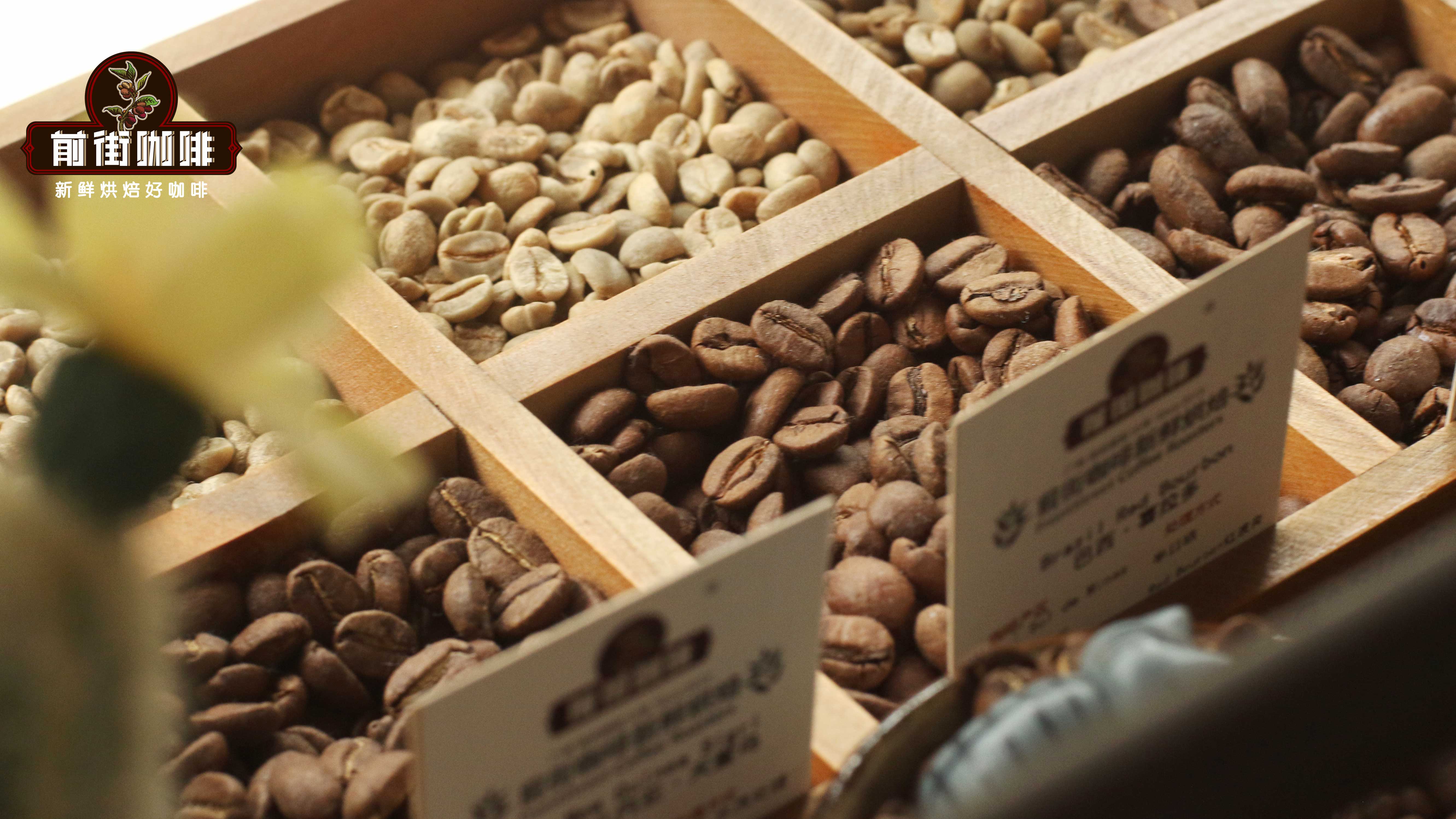
Semi-washed processing removes the skin and pulp of the coffee cherry, and can control the fermentation degree of the mucilage-coated coffee beans after pulping. Traditional natural processing is sun-drying with the skin and pulp still on, and the fermentation degree of the mucilage cannot be seen. The semi-washed processing method is a method between natural and washed processing, but it omits the washed processing steps of "tank fermentation and clean-water rinsing," and instead takes the beans directly into the sun to dry.
Although the methods look similar, without the fermentation step, the flavor of the coffee beans is completely different. In the process of removing the coffee skin and pulp in semi-washed processing, fully ripe pulp is easy to remove, while the skin of unripe green cherries is not easy to remove, so a second screening can be carried out to filter out unripe fruit and unify the ripeness of the coffee cherries. Compared with the natural method, Front Street believes that coffee beans selected and processed in this way will have improved cleanliness and ripeness, bringing a more uniform-tasting coffee.
Front Street's parameters for brewing Brazilian coffee:
In order to improve the body of Brazilian coffee, Front Street uses a KONO dripper. During the brewing process, the upper part of the KONO dripper is squeezed by air, pressing the filter paper and the dripper tightly together, similar to a "siphon" phenomenon. The coffee liquid flows relatively slowly, and the contact time between coffee grounds and water becomes longer, which helps increase the body of the coffee. To prevent over-extraction, Front Street lowers the brewing water temperature to 88 degrees. When the temperature decreases, water molecules move less actively, so the extraction speed decreases.
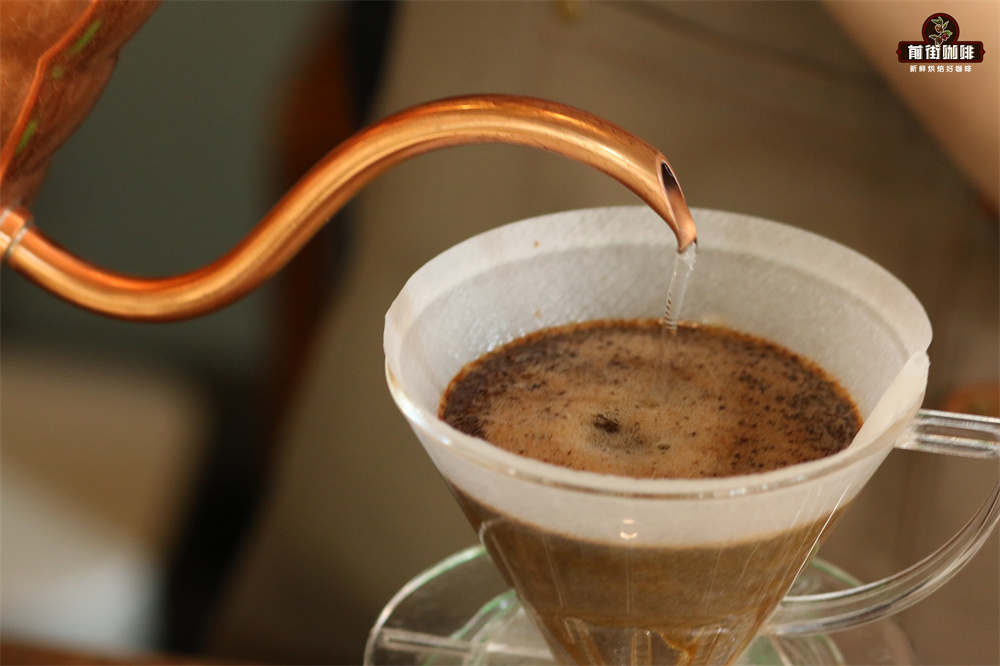
Front Street chose: KONO dripper, 88-degree water temperature, 1:15 coffee-to-water ratio, 15 grams of coffee, grind size (75% passing rate on China No. 20 standard sieve).
Using staged extraction, bloom with 2 times the amount of coffee grounds in water, that is, 30 grams of water for a 30-second bloom, then pour in a small stream in circles until 125 grams and pause, continue pouring until 225 grams and stop. After the water in the dripper has dripped through, remove the dripper. Start timing from the beginning of pouring, and the extraction time is 2'00". Next, pick up the whole cup of coffee and shake it evenly, then pour it into a cup for tasting.
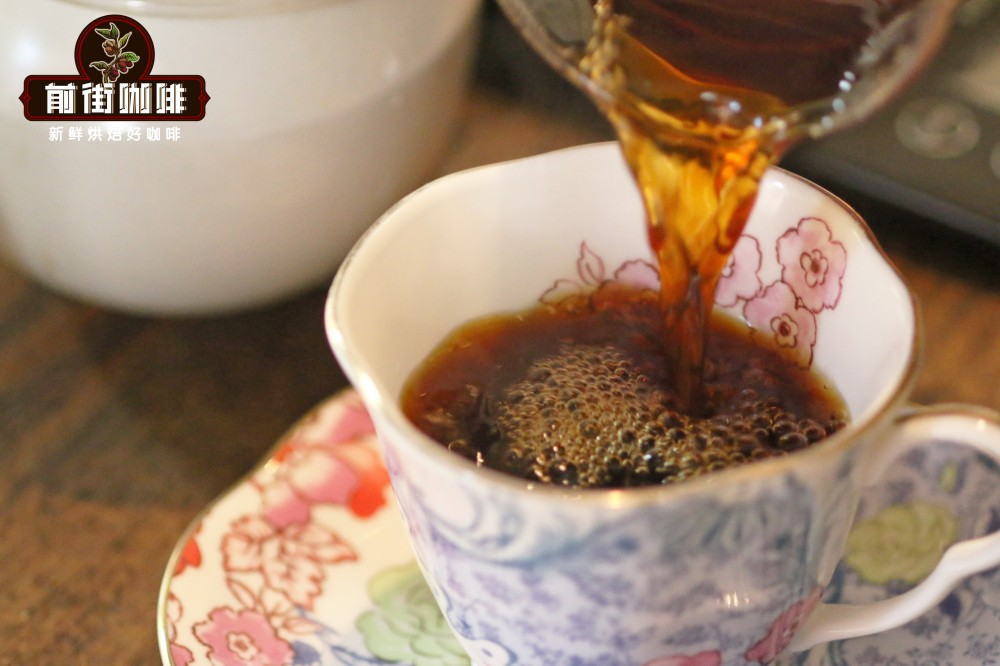
Semi-washed Brazil Cerrado coffee flavor: obvious sweetness on the entry, with a faint lemon aroma, containing rich nutty flavor, and a clear dark chocolate note in the latter part, with an overall relatively rounded impression. Natural Brazil Queen Estate coffee flavor: balanced mouthfeel, among the main notes of almond and cocoa, highlighting the sweetness of cane sugar. It is a coffee with good body and plenty of sweetness.
Overall, Brazilian coffee has a relatively balanced taste. It is precisely because of such a good taste that it is chosen as the base for espresso. And semi-washed Brazilian everyday bean coffee can be called a coffee bean with very high cost performance. Of course, everyone's taste is different, and Front Street also has8everyday beans from different producing countries and different producing regions, all representing the most representative coffee flavors of each producing country, with very high cost performance! Very suitable for everyone to taste!
The above content is compiled by CoffeeHunters, a coffee news website.

