







For more specialty coffee knowledge, please follow: Front Street Coffee (Frontsteet Coffee)
Brazil is the largest coffee producer in the world, with coffee beans of various grades and types. Brazil's domestic coffee consumption accounts for one-third of the global total, and Brazil also holds a place in the global coffee trading market. Although Brazil faces natural disasters several times more than other regions, its available planting area is sufficient to compensate. However, any news of even a small natural or man-made disaster in Brazil can cause price fluctuations in the world coffee futures market.
Brazilian coffee beansToday's status has been achieved through more than three hundred years of effort. As is well known, coffee originated in Ethiopia. Later, because Europeans' demand for coffee grew larger and their footprints spread wider, coffee beans were able to travel around the world.
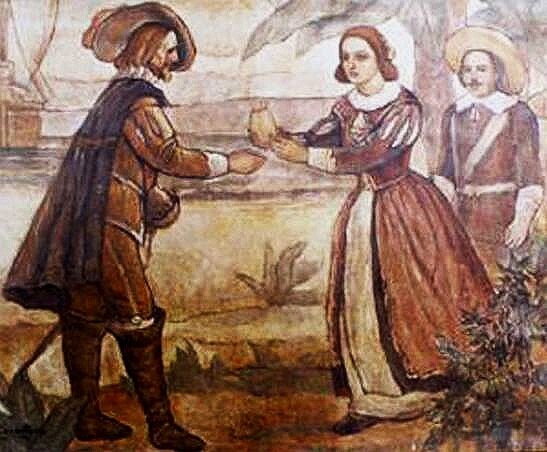
The history of Brazilian coffee beans can be traced back to the 1720s, when a Portuguese naval officer was ordered to go to Guiana to handle a land dispute between France and the Netherlands, but the officer fell in love with the wife of the local governor of Cayenne. When he was about to return, the governor's wife, to express her love and longing, gave him a bouquet of flowers, in which coffee tree seeds were hidden. After coffee arrived in Brazil, it quickly adapted to the local environment and thrived, spreading across most of Brazil's states.
To explain how Brazilian coffee bean production was able to develop so rapidly, the United States must be mentioned. Because the United States wanted to break away from British royal rule, it dumped all the tea that the British loved most and listed coffee as a patriotic beverage. The number of coffee houses in the United States increased, and demand for Brazilian coffee beans also surged. Coffee brought huge economic benefits to Brazil, allowing railways to reach directly to coffee plantations and greatly making transportation more convenient.
Subsequently, the American Civil War broke out, and coffee became a military necessity, further expanding demand for Brazilian coffee beans. However, at that time the main variety of Brazilian coffee beans was Typica. Although Typica has an elegant flavor, its yield is relatively low. So some people set out on a journey to find high-yield coffee varieties, and the Bourbon coffee variety from Réunion was introduced to Brazil. By the 1870s, Bourbon had become the main variety of Brazilian coffee beans.
On the bean list of Front Street Coffee (FrontStreet Coffee), there are two coffee beans from Brazil, both belonging to the Bourbon variety. The soft-bean flavor of Brazilian coffee—smooth on the palate and with mild acidity—is already widely known, and the soft-bean flavor is also a characteristic taste of Brazilian coffee beans. This is because coffee cultivation in Brazil mostly uses sun-exposed planting methods. Coffee fruits need to absorb a certain amount of heat during growth, and the coffee trees are directly exposed to the sun, allowing the coffee fruits to quickly obtain a certain amount of heat and ripen in a shorter time, resulting in relatively soft bean texture. If you have tried grinding Brazilian coffee beans and Ethiopian coffee beans with a hand grinder, you can feel that when grinding Brazilian coffee beans, the resistance encountered is not great.
On Front Street's bean list, Brazil's Red Bourbon is included in the daily-drinking bean series. The original intention behind Front Street's daily-drinking bean series is to allow many coffee beginners to quickly understand the basic flavor of each producing region at a higher cost-performance ratio, thereby discovering the flavor characteristics of each producing region. Front Street's Brazilian daily-drinking bean is selected from Minas Gerais, the largest coffee-producing state in Brazil, and its sub-region Cerrado is the first coffee-producing region in Brazil to obtain Brazilian origin coffee certification.
The daily-drinking bean series mostly uses the washed processing method. Through cupping many coffee beans over the years, Front Street has found that coffee beans processed by the washed method have flavors closer to the basic flavor of the producing region, while the natural method adds fruity notes to the aroma, with a richer sweetness and a heavier body.
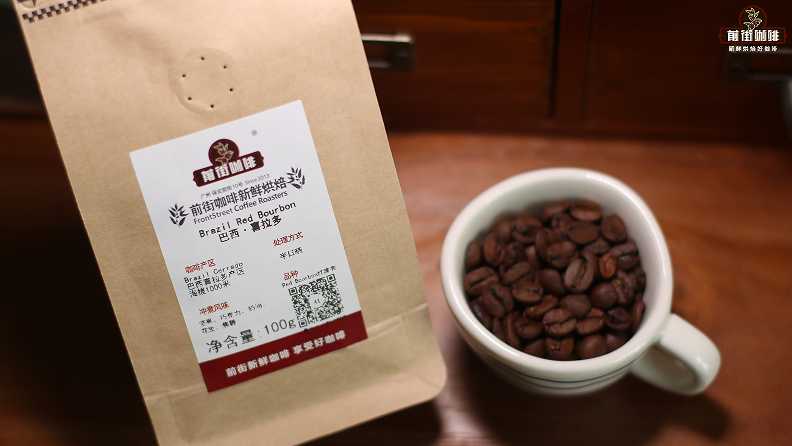
Front Street Coffee (FrontStreet Coffee) Brazil Red Bourbon Coffee Beans
Region: Cerrado, Minas Gerais, Brazil
Altitude: 1000 meters
Variety: Red Bourbon
Processing method: Semi-washed processing
However, the Brazilian Red Bourbon coffee beans in Front Street's daily-drinking bean series use its traditional semi-washed processing method. This processing method emerged because in the 1990s, the Brazilian authorities wanted to export more coffee beans and therefore wanted to adopt the washed processing method, but Brazil lacked sufficient water resources and funds, so the semi-washed processing method (Pulped Natural) was derived. The skin and pulp of the coffee fruit are removed, and the sticky parchment beans with the mucilage layer are sun-dried, thereby shortening the time required for drying and also improving the quality of the green beans.
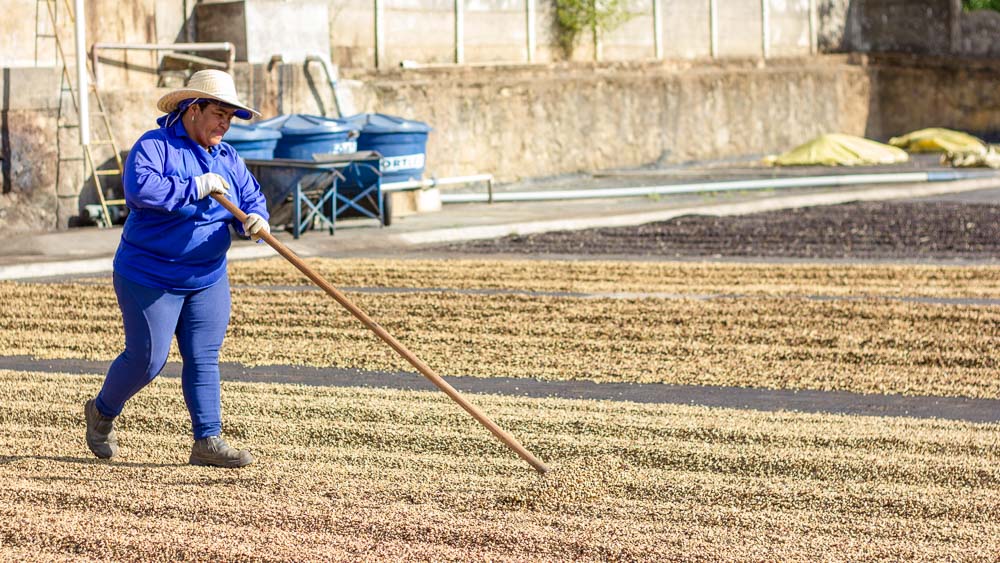
Sharp-eyed friends should be able to notice that Brazil's semi-washed processing method is very similar to the later honey processing method. In fact, Costa Rica's famous honey processing method was also derived by drawing on Brazil's semi-washed processing method.
Because Front Street's Red Bourbon coffee beans use the semi-washed processing method, part of the mucilage is retained for drying, and more sugary substances can penetrate into the green coffee beans. This recentCharacteristics of Brazilian Cerrado coffee beansIt also has a rich nutty aroma and a creamy, silky, heavy body.
The other coffee bean on Front Street's bean list comes from São Paulo, one of Brazil's other coffee-producing regions with the longest history. This coffee bean from São Paulo is Yellow Bourbon from Fazenda Rainha. Since the first Cup of Excellence (COE) competition in Brazil in 1999, Fazenda Rainha has won awards many times over the years, once with a record of winning 12 times in 7 years.
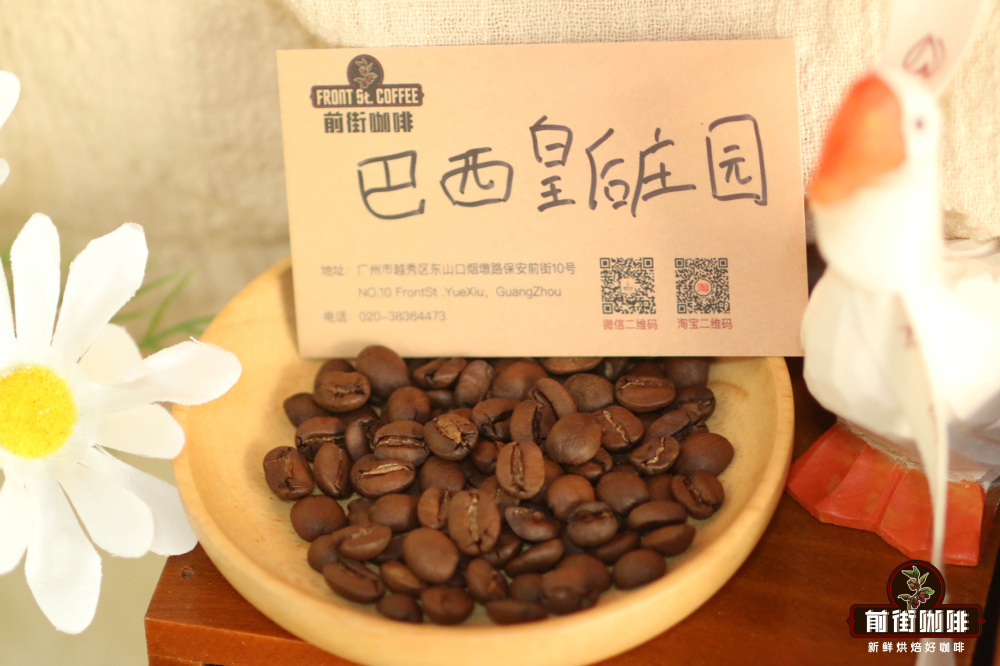
Front Street Coffee (FrontStreet Coffee) Brazil Fazenda Rainha Coffee Beans
Region: Mogiana, São Paulo, Brazil
Farm: Fazenda Rainha
Altitude: 1400 meters—1950 meters
Variety: Yellow Bourbon
Processing method: Natural
The farm has a planting area of more than 280 hectares, but more than 200 hectares are planted with the lower-yield but better-flavored Yellow Bourbon variety. Yellow Bourbon is a natural mutation of Red Bourbon, discovered in São Paulo in 1871. Later, scientific verification found that this variety has a thicker mucilage layer, and the mucilage layer is rich in sugary substances.
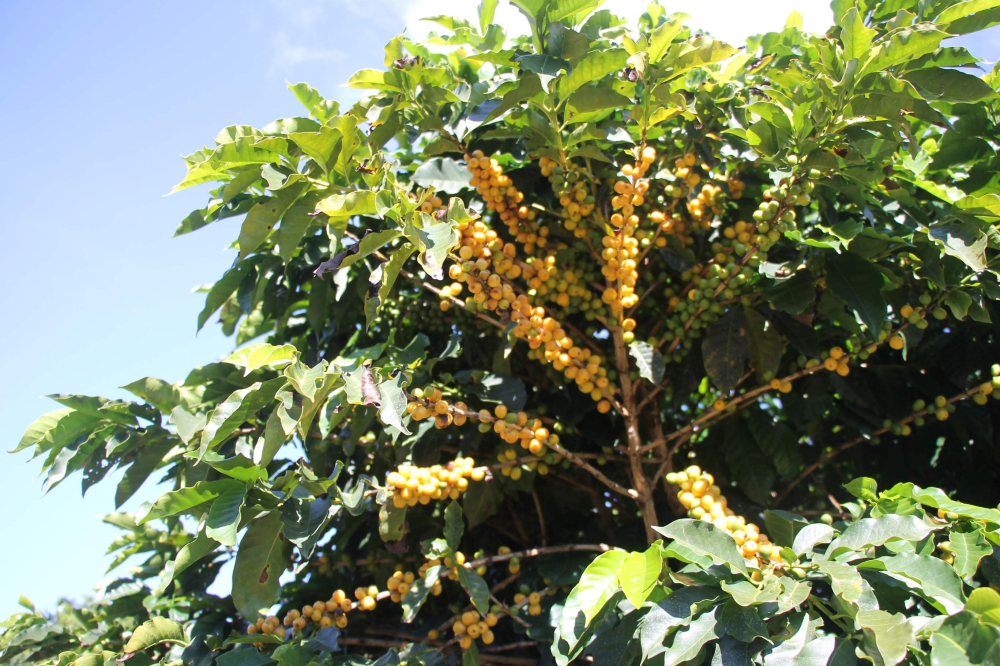
This Front Street Yellow Bourbon coffee bean from Fazenda Rainha uses the natural processing method. Compared with Brazil's traditional semi-washed method, the natural processing method requires more labor and time costs, and large-scale natural processing makes it difficult to ensure the quality of green coffee beans. Fazenda Rainha uses small-scale natural processing, and workers frequently turn the beans to minimize the chance of unpleasant acidity and fermented flavors, while placing the coffee fruit on raised beds away from the ground to avoid absorbing the smell of soil. Naturally processed Yellow Bourbon makes the already clearly sweet Yellow Bourbon coffee even sweeter and more delicious.
When roasting these two Brazilian coffee beans, Front Street uses a medium-dark roast level in order to highlight the mild acidity, nutty tone, and full body of Brazilian coffee beans. When brewing, Front Street recommends using a water temperature of 88°C, a medium-coarse grind size, and a KONO dripper with a three-stage pouring method.
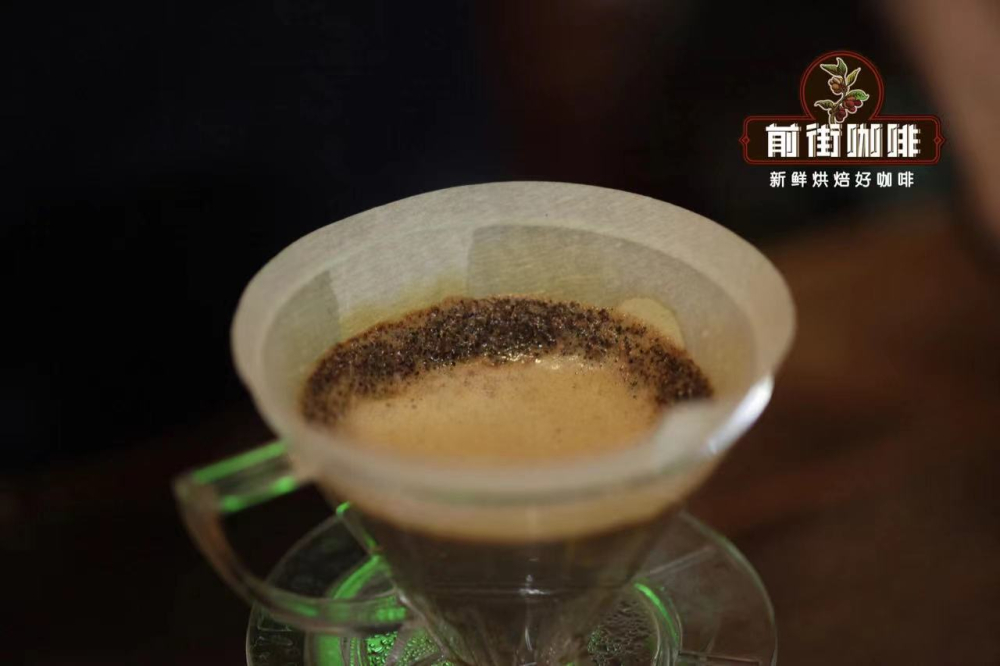
Dripper: KONO dripper
Water temperature: 88°C
Dose: 15 grams
Coffee-to-water ratio: 1:15
Grind size: 75% passing through Chinese standard No. 20 sieve

[Brazil Red Bourbon] Rich nutty and chocolate flavors, caramel sweetness, smooth and silky body, overall balanced.
[Brazil Fazenda Rainha] Rich nutty flavor, with a clean sugarcane sweetness, a light lemon aroma, a dark chocolate finish, rich and lively layers, and a smooth and round body.
The above content is compiled by CoffeeHunters, a coffee news website.

