





How Does a Coffee Beans Roaster Prepare Jamaica Blue Mountain No. 1 for Siphon Brewing?
Siphon brewing highlights the clean base and layered coffee aroma of Jamaica Blue Mountain No. 1, a bean known for balanced acidity, sweetness, and bitterness with a full body. The process also works with a pour-over, Clever Cup, or French press. Blue Mountain is graded under Jamaica's system, and the official CIB roasting recommendations guide how the beans are prepared before brewing.
Freshness decides much of the final cup, which is why one coffee beans roaster ships orders within five days of roasting. Coffee needs roughly four to seven days of rest, so beans arrive near their peak flavor. The historical ties between Blue Mountain and the Japanese market helped cement its standing, and a siphon lets the bean's sweetness and smooth entry come through.
Blue Mountain No. 1 has long been known as the "King of Coffee," prized by coffee lovers for its balanced acidity, sweetness, and bitterness along with its rich, full body. If you want to recreate this classic flavor at home, the siphon is a choice that is both visually appealing and practical. This article walks through Front Street Blue Mountain No. 1's bean background, Jamaica Blue Mountain's grading system, CIB's official roasting recommendations, and the specific siphon extraction steps one by one. It also covers the historical ties between Blue Mountain coffee and the Japanese market, and why Front Street insists on shipping within 5 days of roasting, helping you brew a cup of Blue Mountain No. 1 with clean layers and full aroma at home.
For more specialty coffee knowledge, please follow the WeChat official account: Front Street Coffee (FrontStreet Coffee)
Front Street Blue Mountain No. 1 takes the route of balancing acidity, sweetness, and bitterness, with a rich and smooth entry. Brewing this bean is actually not complicated; Front Street recommends two approaches: drip filtration or immersion extraction. Among drip methods, pour-over is the most representative, able to showcase Blue Mountain No. 1's clean base and multi-layered aroma changes; immersion methods cover common devices such as the Clever Cup, French press, and siphon.
This time we've chosen the most eye-catching siphon to walk you through making a delicious cup of Jamaican Blue Mountain No. 1 at home, step by step, and see what makes this "King of Coffee" so exceptional.
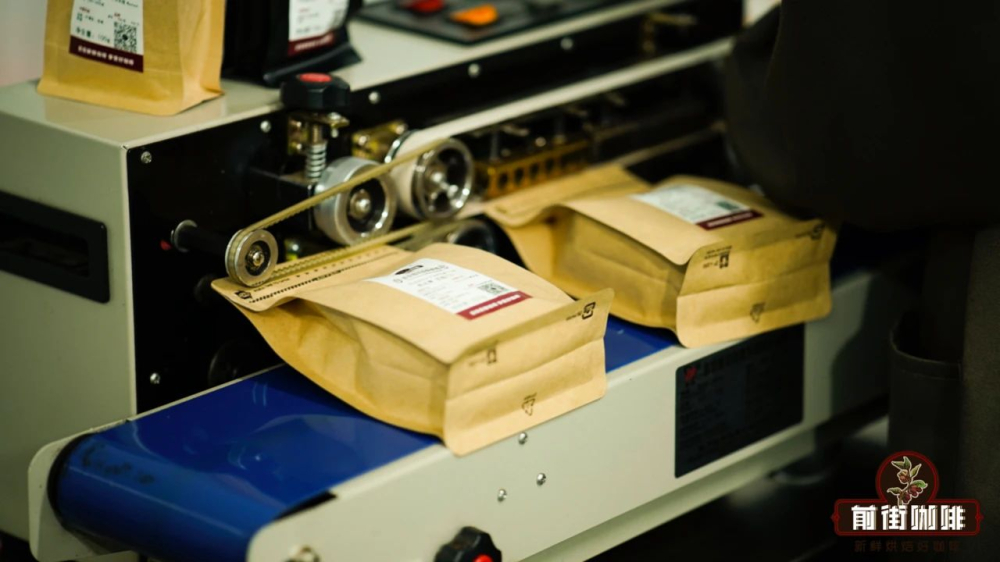
No matter which extraction method you choose, Front Street emphasizes using freshly roasted beans, so you can capture the coffee's rich flavors as completely as possible. Coffee beans shipped by Front Street Coffee (FrontStreet Coffee) are dispatched within 5 days of roasting, because Front Street knows full well that freshness directly determines the final flavor. The core philosophy of Front Street's roasting is "freshly roasted good coffee," so every customer who places an order receives the freshest possible state upon delivery. Coffee's resting period is about 4 to 7 days, so by the time customers receive it, it's right at its peak flavor performance.
The Grades of Jamaican Blue Mountain No. 1
Blue Mountain coffee was once compared to the Hermès of the coffee world. Authentic Blue Mountain lets you experience rich, solid, long-lasting chocolate and roasted hazelnut aromas, while achieving an excellent balance among acidity, sweetness, bitterness, aroma, and body. Front Street believes that Blue Mountain coffee's ability to build such a high reputation is inseparable from Jamaican growers' meticulous management and strict grading.
Blue Mountain enjoys exceptionally superior terroir, and multiple factors combined make this an ideal region for growing coffee. But coffee is ultimately an agricultural crop, and variety, altitude, picking method, and post-processing method all affect the final aroma.
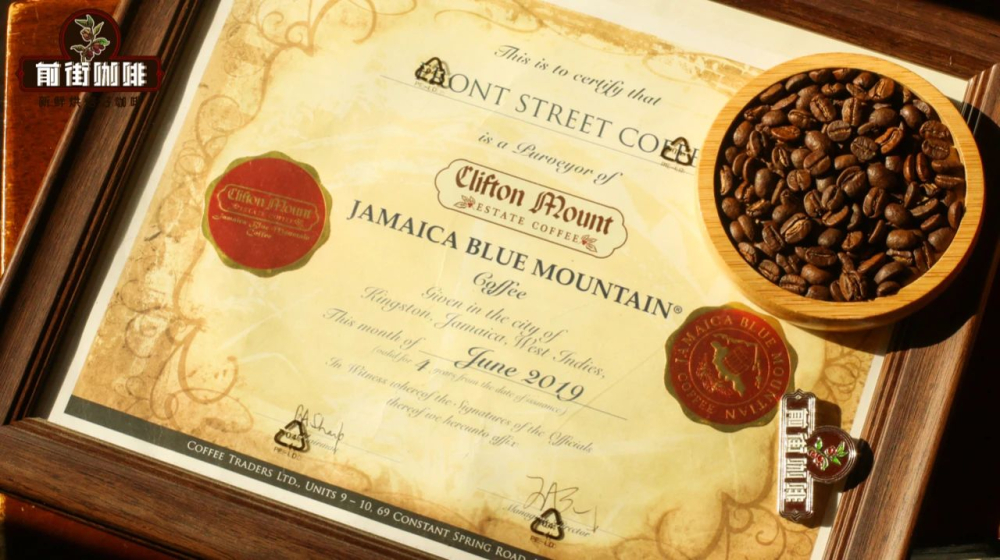
According to the areas officially designated by the Jamaica Coffee Industry Board (CIB), only coffee grown in the Blue Mountain forest region at altitudes of roughly 910 to 1,700 meters and of the Typica variety qualifies to be called true "Jamaican Blue Mountain Coffee." Typica needs to be grown at high altitudes for its flavor to be more pronounced, but this variety has weak disease resistance and is easily infected, with low yields per plant, requiring more manpower for careful tending. Add to that the rugged terrain of the Blue Mountain high-altitude region, which makes management and harvesting difficult and demands high skill from pickers, further limiting production. In recent years, less than 15% of coffee beans produced in Jamaica can bear the Blue Mountain label, roughly only 900 tons.
Many friends may have heard the saying: "All the real Blue Mountain coffee is monopolized by Japan." This rumor is not entirely unfounded. UCC is a Japanese coffee company, formerly Ueshima Coffee Co., Ltd., which opened a farm in Jamaica in 1981 to operate a Blue Mountain coffee project. Jamaica promised to sell 90% of the Blue Mountain coffee quota to Japan, and combined with Japan's vigorous promotion of Blue Mountain, the market saw Blue Mountain priced high and hard to find. Today, with coffee culture flourishing, drinking a cup of Blue Mountain coffee is no longer difficult. At Front Street, 60 yuan gets you a cup of Blue Mountain No. 1 pour-over black coffee.
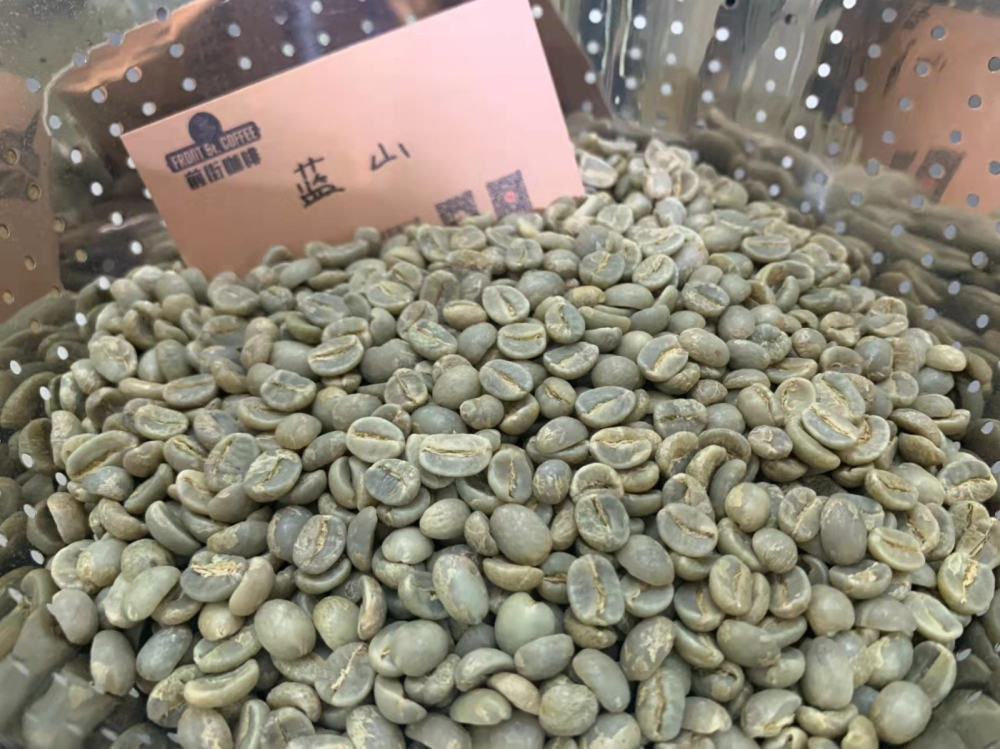
Bean size is determined by screens with different hole diameters; beans that cannot pass through the holes meet the corresponding standard. Color assessment combines visual observation with colorimeter readings, and blue-green is the highest grade. Combining all the above standards, Blue Mountain coffee is divided into 4 grades, from highest to lowest: NO.1, NO.2, NO.3, PB, and mixed. NO.1 is the highest-grade top Blue Mountain, commonly called "Blue Mountain No. 1" in China. Blue Mountain No. 1 must meet a screen size of 17 or above, a defect rate below 3%, a moisture content of around 13%, and display in cupping a rich coffee aroma, a smooth and balanced mouthfeel, lower acidity, and a lasting sweet aftertaste.
Regarding roasting, CIB has also provided roasting degree recommendations for Blue Mountain's classic flavor, and Front Street's roasters follow the same direction, using a medium roast so that Blue Mountain No. 1 can present both rich chocolatey sweetness and retain appropriate soft fruit acidity.
The above content is compiled by CoffeeHunters, a coffee news website.


