







How does a siphon brewer change the cup versus pour-over?
A siphon brewer suits mild, balanced single-origin coffees rather than heavily roasted or strongly flavored beans. Its cloth or metal filter retains more oils and fine particles than a paper filter, so the cup lands fuller in body with a more intense aroma. Pour-over, by contrast, runs cleaner, brighter, and more layered, which is why the same bean can taste noticeably different across the two methods.
That gap comes down to extraction and filtration. In a siphon, water and grounds mix fully under vacuum pressure before the brew is pulled back through the filter, so more solids stay in the liquid. When learning how to use a drip coffee maker or a pour-over cone, the paper filter traps those solids, giving clarity but less weight. Pick fruit-forward or floral beans for pour-over, and rounder, sweeter coffees for siphon.
With its experiment-like brewing process, the siphon coffee maker has become the top choice of many coffee enthusiasts who are just starting out. However, to brew a good cup of coffee with a siphon, mastering the technique is only part of the story—choosing the right coffee beans is equally crucial. What kind of coffee is a siphon suitable for brewing? How exactly does it differ from the pour-over coffee commonly seen in cafés in terms of extraction method and filtration method? And how do these differences affect the final mouthfeel and flavor? In this article, Front Street Coffee will analyze the two aspects of extraction method and filtration system to help you understand the reasons behind siphon coffee's rich, solid body and intense aroma, and compare it with pour-over coffee's clean, bright, and layered characteristics, so you can better understand both brewing methods and find the cup that suits you.
For more specialty coffee knowledge, please follow the WeChat official account: Front Street Coffee (FrontStreet Coffee)
The siphon coffee maker is a favorite among many coffee enthusiasts who are just starting out. The reason they love it is that operating it feels like doing a chemistry experiment, allowing them to fully enjoy the hands-on fun. Although this device places certain demands on extraction technique, that doesn't stop it from being a priority choice when coffee lovers pick a coffee maker. A good brewer still needs good beans to go with it. Today, Front Street Coffee will talk about what kind of coffee a siphon is suitable for brewing, how it differs from the pour-over commonly seen in cafés, and how to brew it to make it taste even better.
The siphon also belongs to the category of single-origin coffee preparation methods, so it's only natural that people compare it with today's mainstream extraction method—"pour-over coffee." Friends who have tried siphon coffee will notice that the differences between the two in mouthfeel and taste are quite obvious.
Pour-over coffee is cleaner on the palate, with clearer layers and more prominent flavors; siphon coffee, on the other hand, has a fuller body, a more intense aroma, and a more solid taste. Many friends must be curious about why the gap between the two is so large. Next, Front Street Coffee will analyze for you why the coffee made with a siphon and with pour-over differs so much.
1. Differences in extraction method
The extraction method of pour-over coffee is mainly "drip filtration," also commonly called "filter method." While hot water is poured in to extract the coffee, the coffee liquid seeps out through the filter paper—this method is called drip filtration. Attentive readers will notice that Front Street Coffee said "mainly" rather than "entirely." That's because pour-over also shows signs of immersion during brewing: the water doesn't directly wash over the coffee grounds, but briefly stays before seeping through the filter paper, so pour-over coffee is not a purely drip-filtration extraction.
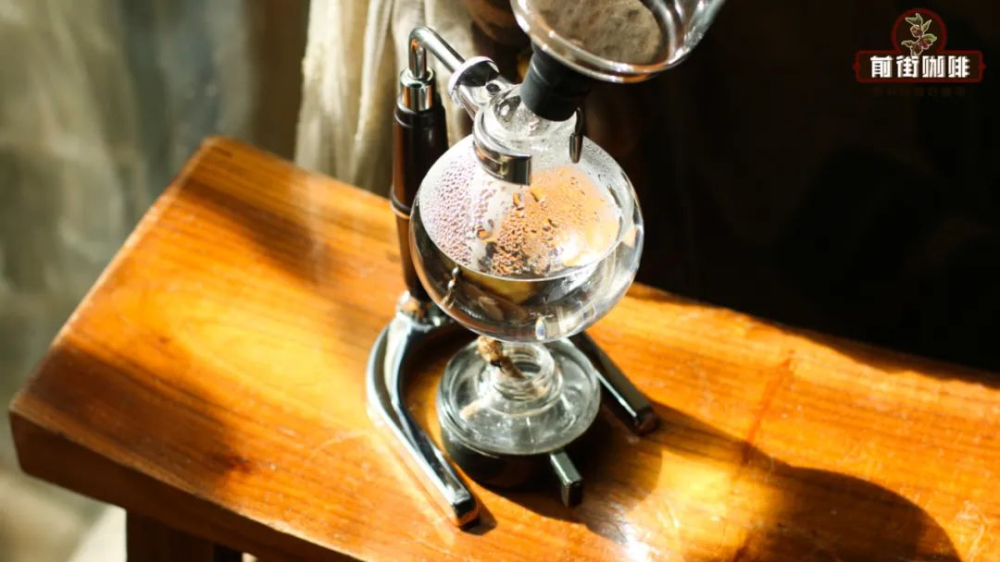
Many friends may think that the extraction method of siphon coffee is "siphon-style," but that is not correct. That's because the siphon merely uses the siphon principle to draw hot water up into the upper chamber—this is not what extracts the coffee.
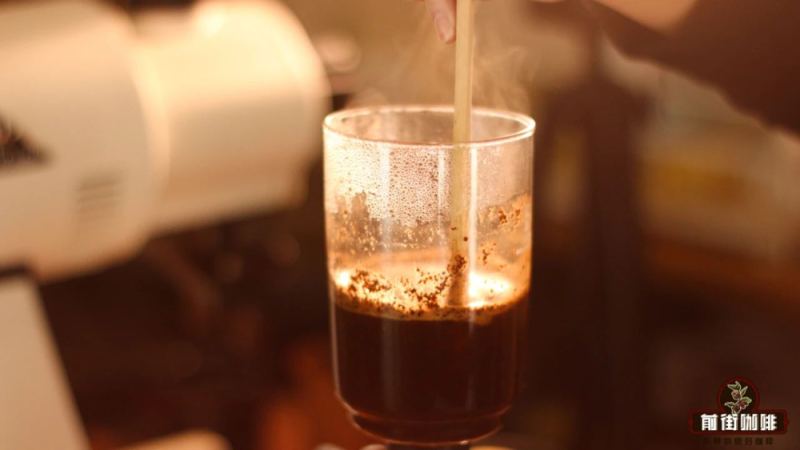
After the hot water is drawn into the upper chamber and coffee grounds are added to steep, that is when extraction truly begins. So to be precise, the extraction method of siphon coffee should be "immersion." By steeping water and coffee grounds together, the flavor compounds in the grounds are extracted.
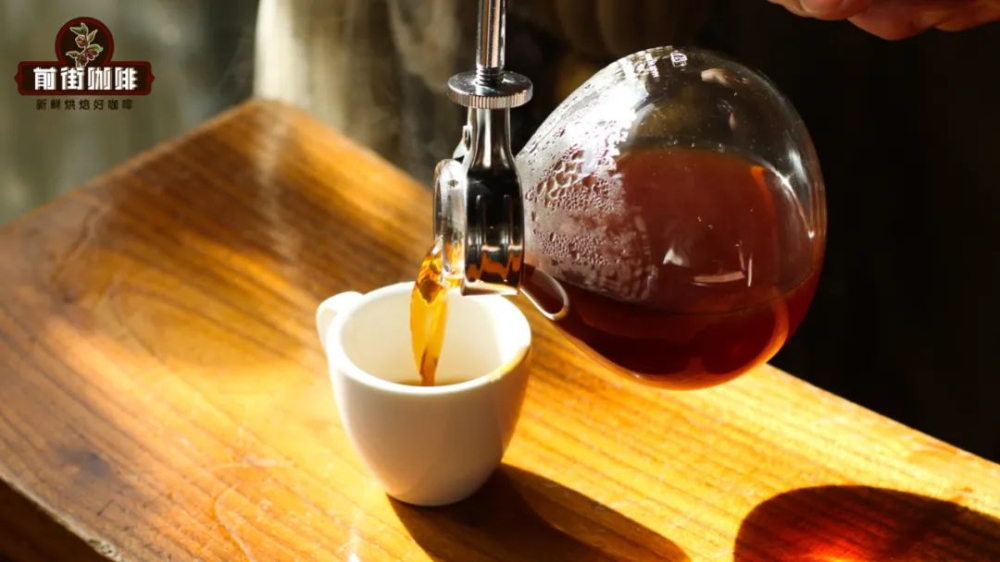
Because immersion extraction uses all the hot water in contact with the coffee grounds, once the substances in the water reach a certain level, the dissolution rate slows down and it no longer demands too much of the coffee's flavor compounds—that is, it reaches what we commonly call a saturated state. As a result, siphon coffee tastes relatively balanced with plenty of aroma, but its flavors are not overly prominent (which is also related to the second factor). Drip-filtration extraction, by contrast, continuously uses fresh hot water to extract flavor compounds from the coffee. Fresh hot water has a large "storage capacity" and will keep demanding flavor compounds from the coffee. Therefore, coffee made by pour-over has fuller coffee flavors, but for the same reason, it is more prone to over-extraction.
It's worth mentioning that, compared with conventional immersion extraction, the immersion extraction of a siphon is somewhat different. Because of the siphon principle, the hot water is continuously heated during the coffee extraction process, giving the lower chamber enough air to keep the hot water in the upper chamber at all times. So the immersion extraction of a siphon is completely constant-temperature, whereas conventional immersion and drip-filtration extraction are processes of continuous heat loss—the water temperature gradually drops over time. This is why a siphon achieves a higher extraction yield, and with stirring, it can complete extraction in a shorter time.
Differences in filtration method
Besides the extraction method, the filtration method of the two coffees also has a big impact on how the coffee turns out. Pour-over coffee uses extremely dense filter paper, through which nothing but the coffee liquid can pass, so only coffee liquid seeps out.
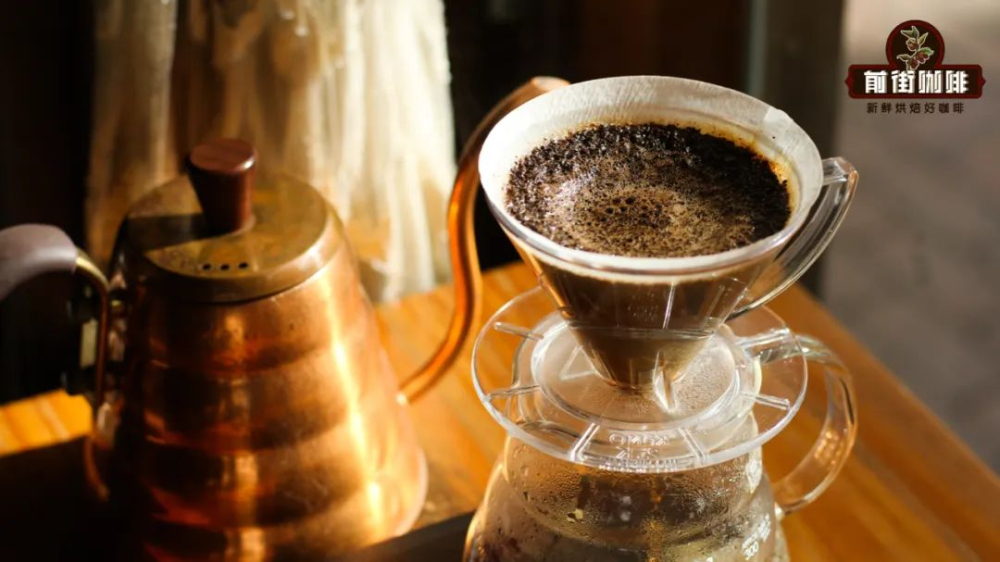
The siphon, by contrast, mainly uses a flannel cloth filter. Although filter paper can also be used, because it cannot fully cover the opening, it cannot form a "sealed" space like pour-over coffee does. Fine particles, oils, and other substances can fall through the gaps into the lower chamber and join the coffee liquid, so siphon coffee looks relatively cloudy. And while oils and fine particles make the coffee liquid less clean, they can give the coffee a fuller body—which is exactly why siphon coffee tastes fuller.
Pour-over coffee, on the other hand, lacks a certain fullness of body precisely because it is filtered too cleanly—but this is also one of its great advantages: extreme clarity! So now we can understand why the coffee made with a siphon and with pour-over tastes so different, right? It's not just the influence of the extraction method, but even more because the different filtration systems give the coffee liquid completely different mouthfeels.
The above content is compiled by CoffeeHunters, a coffee news website.


