





Does a cloudy soe americano mean poor coffee quality?
An iced Americano looks cloudy because fine coffee particles and oils stay suspended in the liquid. Espresso carries micro-particles from the puck, and when the shot meets ice and water, those particles scatter light instead of settling. The result is a hazy, darker appearance rather than a sign of spoiled or low-grade beans.
Roast level and freshness shift how much shows. A medium-roast soe americano pulls thinner and lighter foam than a medium-dark blend, so suspended solids stand out more against the lighter color. Temperatures matter too: cold liquid slows settling. Those same particles carry body and aroma, so cloudiness is not automatically a fault in the cup.
Many coffee lovers will notice that the iced Americano they make is sometimes not as clear and bright as they imagine, but instead shows a visibly cloudy state. Where does this cloudiness come from? Does it mean there is a problem with the coffee quality? Starting from the extraction principles of espresso, this article combines a comparative experiment between two beans—Front Street Coffee . Huakui SOE and Front Street Coffee . Front Street Classic Blend—to deeply analyze the effects of fine particles, roast level, coffee freshness, and temperature differences on the appearance of iced Americano. It will also discuss the unexpected value these suspended particles bring to coffee flavor.
Friends who often drink black coffee should have had this experience: in most cases, a cup of iced Americano looks deep and dark, and when sunlight hits it, it reveals a slight sheen, appearing clean and transparent. However, sometimes iced Americano shows obvious cloudiness, the liquid looks hazy, and the color is especially dark and dull. So is this phenomenon normal? And is it related to the quality of the coffee beans?
Before answering these questions, we might as well first clarify what those "cloudy substances" in iced Americano actually are. Front Street selected two espresso beans with different roast levels to extract espresso, one is the medium-roast Front Street . Huakui SOE, and the other is the medium-dark roast Front Street . Front Street Classic Blend, then each was made into iced Americano to compare and observe their visual performance.
Front Street . Huakui SOE iced Americano extraction plan: 20g coffee grounds, extract for 33 seconds, obtain 38g coffee liquid, then add 90g ice cubes and 150ml room-temperature water;
Front Street . Front Street Classic Blend iced Americano extraction plan: 20g coffee grounds, extract for 28 seconds, obtain 40g coffee liquid, likewise add 90g ice cubes and 150ml room-temperature water;
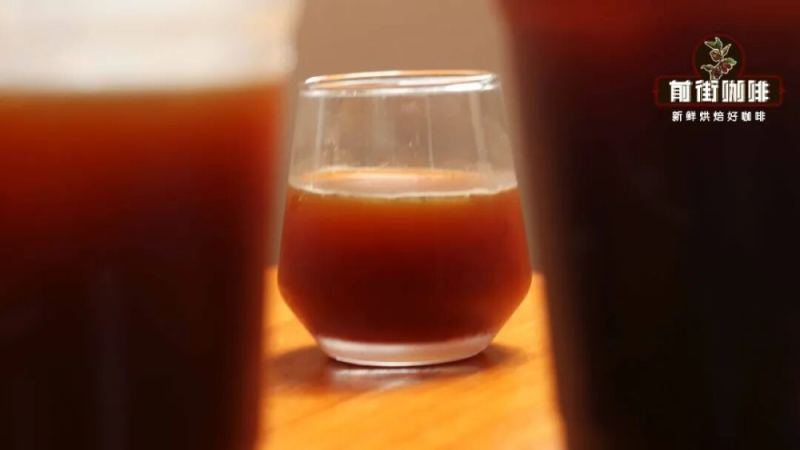
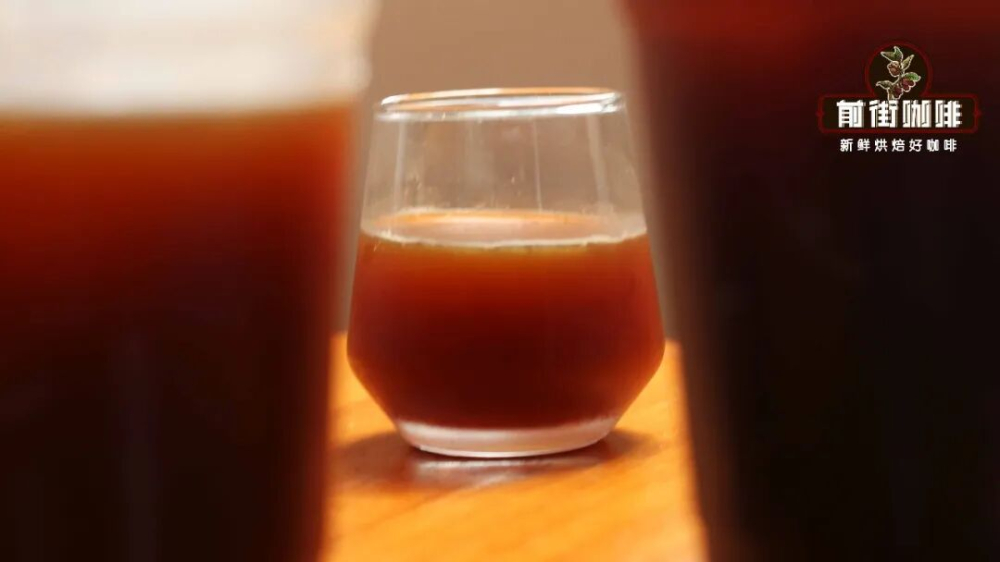
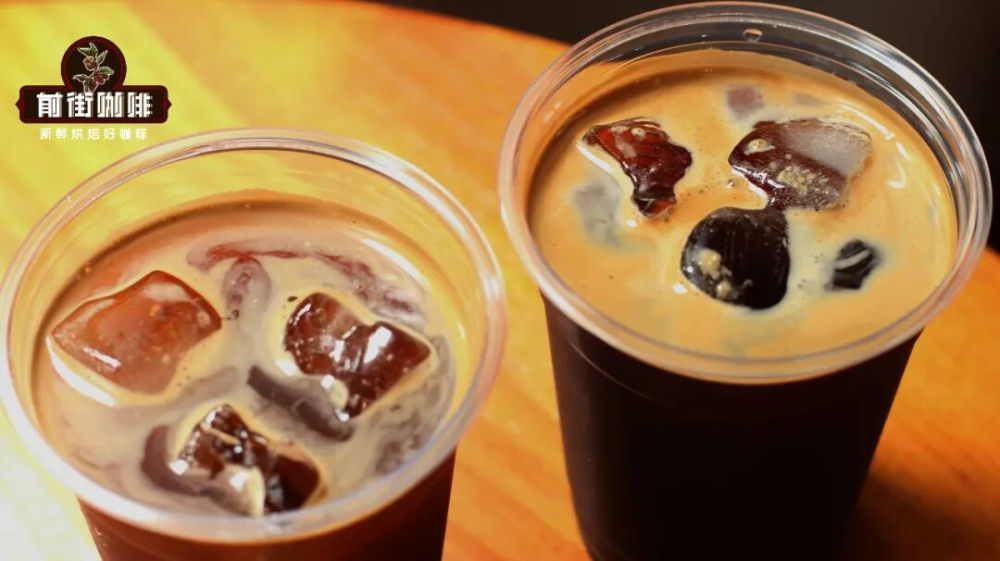
From the pictures, it can be seen intuitively that although both cups of coffee have oil floating on the surface, the Front Street . Huakui SOE iced Americano has a lighter color, a thinner foam layer, and poorer transparency of the coffee liquid, with quite a few suspended "impurities" clearly visible; while the Front Street . Front Street Classic Blend iced Americano, although dark in color and not exactly crystal clear, can still present a glossy black texture under normal light.
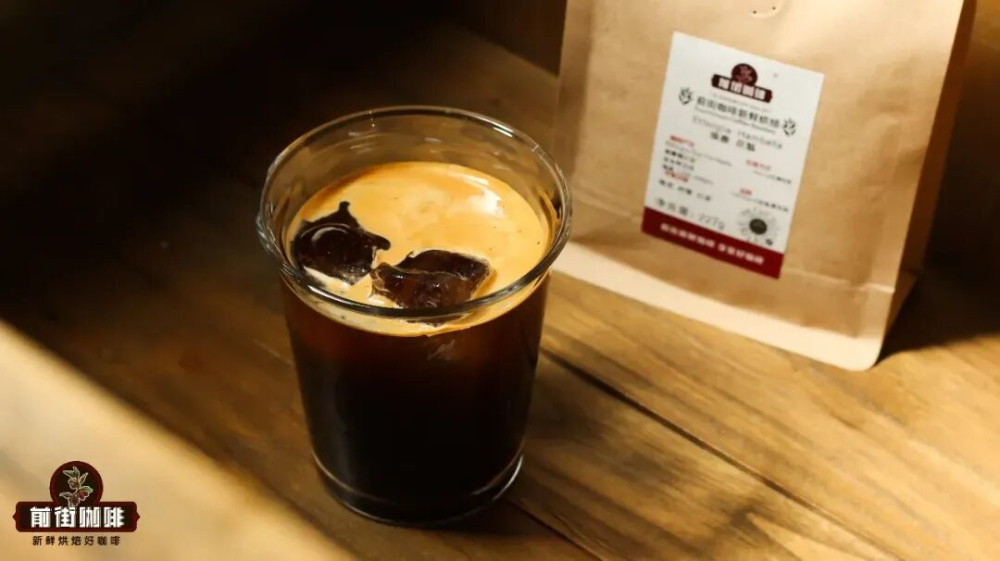
In terms of flavor performance, the Front Street . Huakui SOE iced Americano has a bright citrus acidity and pineapple aroma on the palate, followed by a finish of black tea and chocolate, and is clean and clear overall; the Front Street . Front Street Classic Blend iced Americano presents rich cream, roasted hazelnut, and maple syrup flavors, with a sweet and solid mouthfeel, belonging to the type with higher body.
Next, Front Street filtered these two cups of iced Americano with filter paper, and as a result, both cups left a thin layer of coffee powder on the filter paper, with the residue from Huakui SOE noticeably greater. This also shows that the "cloudiness" we see with the naked eye actually mainly comes from the fine particles carried in the espresso.
Compared with other extraction methods, the metal portafilter basket used when making espresso is covered with tiny holes at the bottom. These holes are not only the key channels for extracting deliciousness, but also one of the reasons that reduce the transparency of the coffee.
As is well known, espresso machines rely on 9 bars of pressure for extraction. In addition to those components that easily dissolve in water, the high-pressure environment also forces some tiny particles such as proteins and lipids that are originally insoluble in water to precipitate out. At the same time, some fine particles also pass through the metal filter screen into the coffee liquid, ultimately causing the Americano to be less clear.
From the comparison of the two cups of iced Americano above, it can be clearly seen that the medium-roast Huakui SOE is more prone to "cloudiness" than the medium-dark roast Front Street Classic Blend Americano. This is because beans with a lighter roast are heated for a shorter time. To balance the extraction yield, a finer grind is usually used, and the finer the grind, the more fine particles are produced. These tiny particles easily pass through the portafilter basket holes into the coffee liquid during extraction, thereby causing cloudiness.

In addition, Americano made with light-roast beans has an overall lighter tone, mainly appearing reddish-brown. Compared with dark, dull dark-roast coffee, it is easier for the naked eye to catch suspended fine particles, so we subconsciously feel that it is "very cloudy."
Drinking coffee emphasizes freshness, but overly fresh coffee beans can also cause iced Americano to become cloudy. This is because beans at this stage contain a large amount of active carbon dioxide, which causes the espresso to carry many rough small bubbles. These bubbles suspended in the coffee liquid also affect the final visual impression.
Besides roast level and freshness, the cloudiness of iced Americano is also related to temperature changes. The water solubility of various components in coffee beans is not the same. Some substances dissolve easily whether in cold or hot water; while the solubility of some substances increases with rising water temperature, and ice water reduces the dissolving ability of such substances, making it easier for coffee to become cloudy. For this reason, iced coffee is more likely to become cloudy than hot coffee.
If we temporarily set aside appearance, these tiny particles actually have quite a few positive effects to a certain extent. They not only add flavor layers and body to espresso, but also extend the time aroma stays in the mouth. The "tiger stripes" that coffee lovers talk about with great relish are also the contribution of fine particles. For example, when Front Street . Huakui is used to make SOE Americano and pour-over respectively, the former has a bit more sweetness and nutty aroma than the latter, and the body is also thicker.
The above content is compiled by CoffeeHunters, a coffee news website.


