







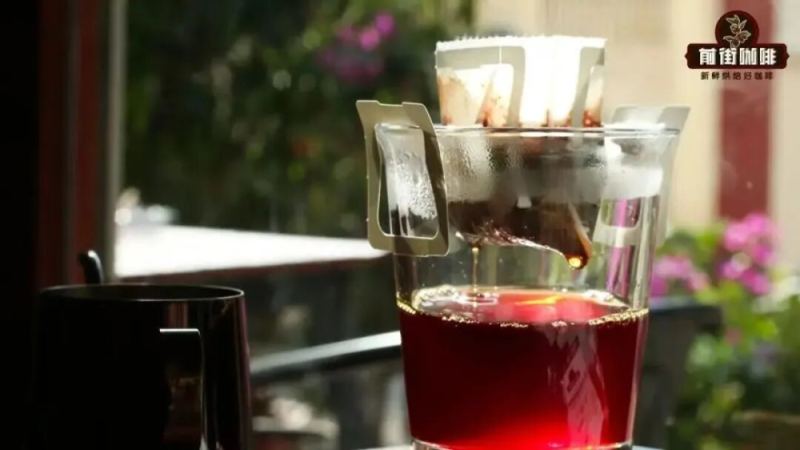
Does drip bag coffee brewing need blooming and a gooseneck kettle?
Drip bag coffee brewing does not require a gooseneck kettle or a blooming pour, but small technique changes decide whether the cup tastes weak, bitter, or close to pour-over. Use a tall cup so the paper shell does not soak, hang the bag securely on the rim, and pour in steady stages rather than one gush of water.
No foam on the second pour is normal; most carbon dioxide leaves during the first wetting, so there is little left to release. Re-extraction pulls harsh, astringent compounds, so a spent bag is better discarded. Grind size, water temperature around just-off-boil, and the ratio of water to coffee grounds control the strength far more than bloom timing does.
Drip bag coffee, with its convenience and high cost-effectiveness, has become the top choice for many people's daily freshly brewed coffee. But with the same drip bag, some people brew it weak as water, some brew it bitter, and some can achieve a quality close to pour-over. Where exactly is the difference? This article addresses several of the most discussed questions about drip bag brewing: notes on hanging and pouring, whether a pour-over kettle is necessary, whether the first pour needs blooming, why there's no foam in the second pour, whether it can be re-extracted, and common reasons why the taste is too weak. The article also combines the fresh-roast characteristics of Front Street Coffee drip bags to give specific operational advice, helping you improve your drip bag coffee brewing across the board.
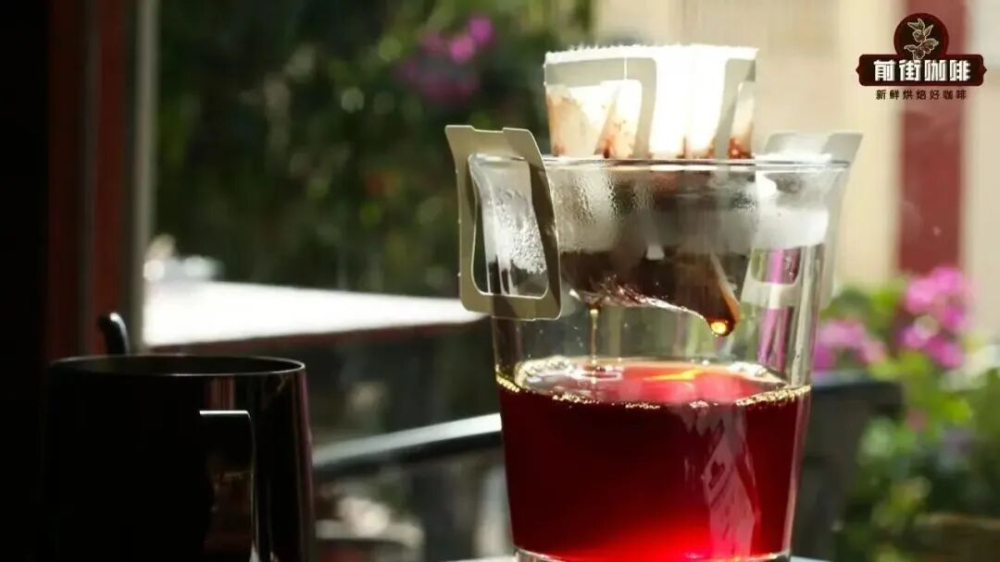
Among all kinds of convenient, quick freshly brewed coffees, drip bags can be called the "ceiling" of cost-effectiveness. They require no complicated equipment and no advanced technique—as long as you have a cup, hot water, and two hands, you can get a cup of aromatic coffee.
However, with the same drip bag, some people brew it as bland as plain water, some make it bitter and astringent, and some can produce results close to pour-over... Surely many people are curious about where these differences come from and what causes them.
So today Front Street will answer the most discussed questions one by one, hoping to completely clear up your confusion about drip bag coffee.
A. What should be noted about "hanging" and "pouring"?
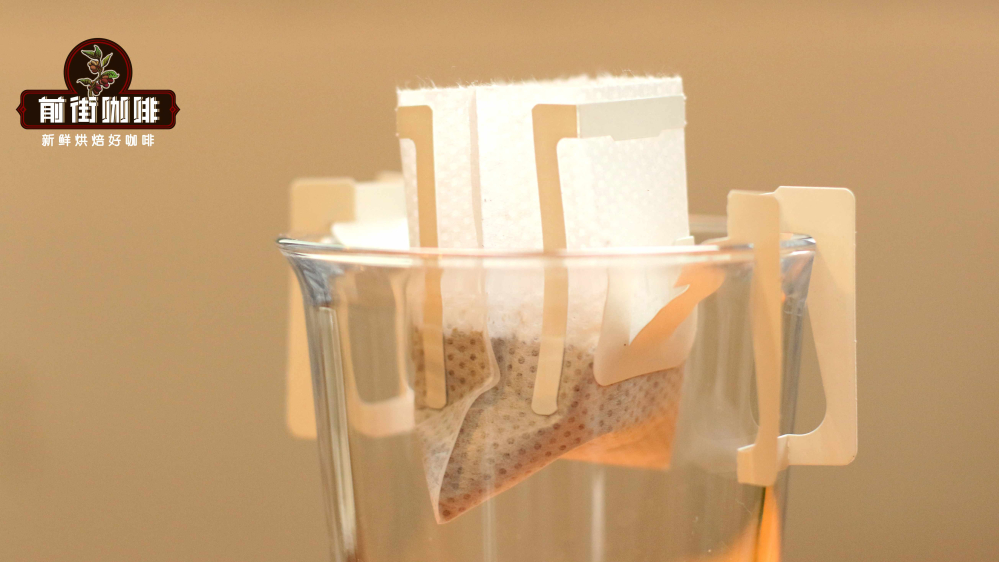
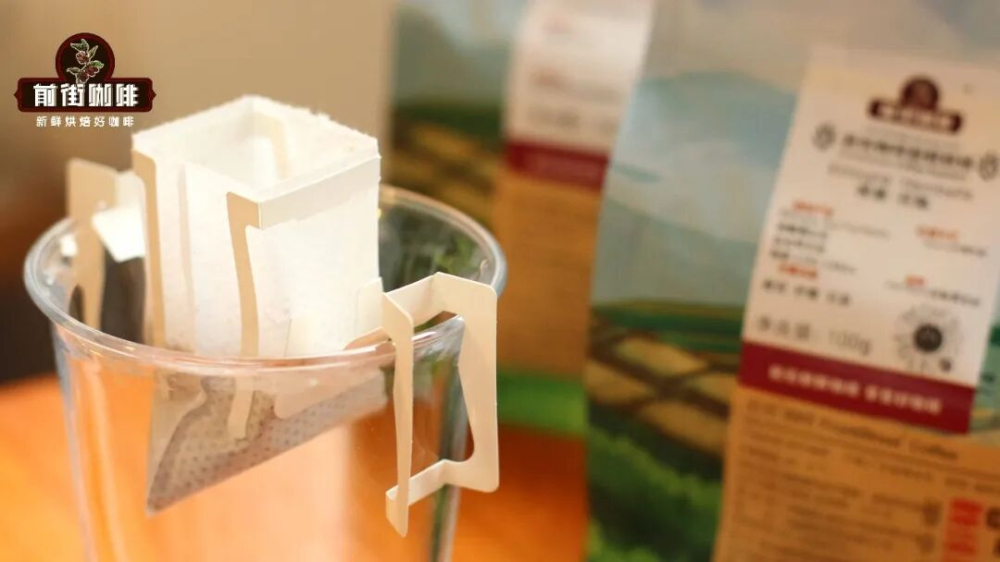
In terms of form, drip bags simulate the extraction method of regular pour-over coffee, so when brewing you should try to replicate their drip-filtration mode as much as possible. When choosing a cup, prefer a tall container, to avoid the cup walls being too shallow and soaking the paper shells on both sides, or even the already-filtered coffee liquid flowing back and re-extracting the coffee bed, ultimately causing the coffee to lose its layering and take on jumbled flavors.
If you use a cup with a wider mouth, pulling the two side ears apart and hooking them directly on the rim makes the filter bag very likely to slip off because it can't bear the weight. In this case, you can fold inward along the two dashed lines on the cardboard, so that the left and right ears each form a pair of "square wings," thereby increasing the filter bag's leverage against the cup.
B. Is a pour-over kettle essential? How do you brew without one?
In many tutorials on brewing drip bags (including Front Street's articles), a fine-spout pour-over kettle is used for pouring, and many people naturally assume it is an indispensable tool. Actually, that's not the case—due to the structural design of the filter bag, drip bags don't require circular pouring, and there are basically few restrictions on the equipment for brewing drip bags; put simply, as long as it can pour water, it works. So Front Street believes that if you're only after efficiency, there's absolutely no need to spend a lot of money specifically buying a pour-over kettle just to brew drip bags.
But note that with utensils whose flow is hard to control, such as kettles and thermos cups, pouring tends to vary between too fast and too slow, causing uneven extraction of the whole cup. Front Street suggests dividing the total water into multiple small pours, and raising the pouring point as high as possible, which extends the extraction time and gives the coffee a fuller mouthfeel.
C. Does the first pour need blooming?
In pour-over, the action of first wetting the coffee bed is called "blooming," which helps release overly active carbon dioxide so flavor compounds can be extracted more efficiently. But for pre-ground drip bag coffee, this is a different matter.
First, fresh drip bags should be bloomed. Front Street drip bag coffees are all freshly roasted within 5 days and ground to order after purchase; under normal logistics, the drip bag is still in a gas-rich state when it reaches you. To avoid these gases interfering with extraction, we can first pour in one-third of the bag's hot water to wet the coffee grounds, watch the bubbling, and once the dome stops expanding (about 20 seconds), begin the second pour.
But if the drip bag was produced more than 10 days ago, meaning most of the carbon dioxide should have dissipated, then blooming becomes an unnecessary step. If after the first pour the coffee bed directly caves downward, it means there's not much gas left inside—you can proceed straight to the second pour and use up the remaining drip bags as soon as possible; but if the coffee bed still shows slight bubbling, you can wait 10–15 seconds before continuing to pour, letting the bed degas a little.
D. Why is there no foam by the second pour?
As with the earlier blooming, the amount of foam depends on the coffee's freshness. The fresher the beans used, the more foam; after more than half a month, basically no foam is visible even in the first pour.
But if the drip bag is fresh and the foam still "disappears" during the second pour, it's very likely due to a lighter roast level.
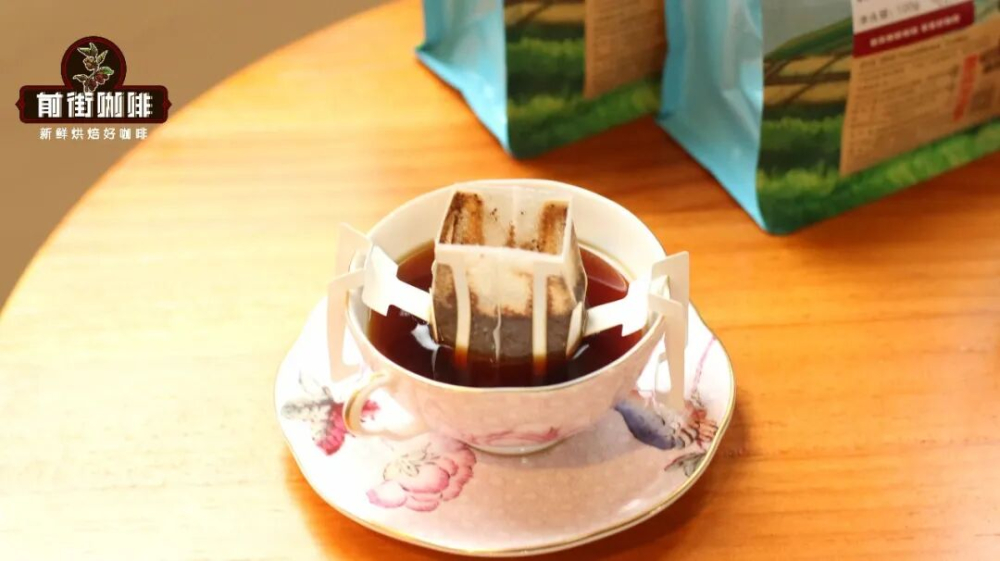
For example, when brewing Front Street Huakui drip bag coffee and Front Street Mandheling drip bag coffee produced on the same date, the medium-dark roasted Mandheling has a very dense amount of foam, showing rich flavors of caramel, spices, and roasted nuts, while the medium-light roasted Huakui has very little foam, with abundant aromas of berries, dried mango, and black tea. This shows that foam amount can help us judge a drip bag's freshness and roast level, but has no direct relationship with the coffee's taste.
E. Brewing only once is too wasteful—can a drip bag be brewed a second time?
Regardless of the brewing method, coffee's soluble flavor compounds are released gradually from strong to weak; once the ratio is set, the coffee's concentration and taste are determined, and what remains in the coffee grounds are lighter, even woody and duller large-molecule substances. If you brew a second time, it will absolutely not taste as good as the first.
But since many people feedback that "brewing a drip bag only once is too wasteful" and want to know if it can be re-extracted, Front Street tried brewing an already-brewed drip bag again; the resulting coffee was greatly diminished in color, concentration, aroma, and mouthfeel, but it actually didn't taste unappealing, so if you don't mind this situation, brewing an extra cup isn't out of the question.
F. The drip bag coffee tastes too weak—what should I do?
Due to various limitations, drip bags are often hard to control in extraction the way pour-over coffee is, especially constrained by the filter bag and pouring conditions; the coffee grounds and hot water easily contact insufficiently, so compared with "tasting bitter," most feedback is that it's too weak.
Based on Front Street's brewing experience, drip bag coffee tasting too weak is mainly related to insufficient temperature, too much water, and too short an extraction time. For specific solutions, you can refer to this Front Street article "5 Small Details to Make Your Drip Bag Twice as Delicious!!"
The above content is compiled by CoffeeHunters, a coffee news website.


