







Although cold brew coffee and iced coffee are both chilled beverages, their brewing processes are completely different, and the flavors they ultimately present are vastly different as well. Cold brew uses cold water for a long soak, with an extraction time of 12 to 24 hours, producing a rich and smooth mouthfeel with sweet chocolate notes and possibly a higher caffeine content; iced coffee, on the other hand, is brewed quickly with hot water and then cooled or poured directly over ice, with a bright flavor and prominent acidity and bitterness. The difference between the two comes from the differences in extraction time and water temperature—time affects the order in which flavor compounds are released, while temperature determines extraction efficiency. Front Street will guide you through the brewing processes and taste differences of these two types of iced coffee, so you can see which one suits your preference better.

Are cold brew coffee and iced coffee the same thing? Both are chilled, so do they taste the same too? Today, Front Street will walk you through the differences between cold brew coffee and iced coffee in terms of brewing methods and taste.
How are cold brew coffee and iced coffee made respectively?
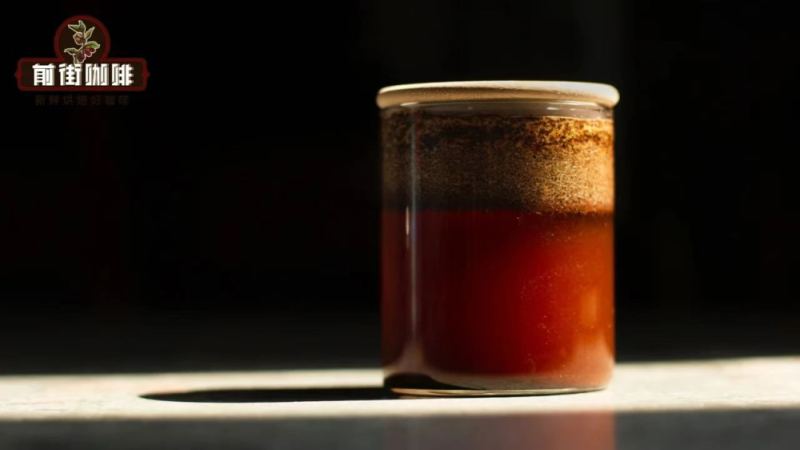
The core difference between iced coffee and cold brew coffee lies in the brewing process. Simply put, the former is regular coffee poured over ice, while the latter is coffee made entirely with cold water. The cold brew method involves placing coarsely ground coffee grounds into cold water and soaking them for 12 to 24 hours.
The name iced coffee already explains how it is made: hot coffee brewed in the regular way is poured over ice. You can absolutely use any hot coffee brewing method to make it, then refrigerate the hot coffee to cool it down, or pour it directly over ice cubes. But what changes occur in these different brewing methods? And how do they bring about different flavor expressions? The answer lies in the impact of time and temperature on the final cup of coffee.
Brewing Time of Cold Brew Coffee and Iced Coffee
The process of releasing flavor substances from coffee beans is professionally called "extraction," and it is affected by many different variables. One of the most critical factors is time. Different flavor components in coffee beans are released at different speeds, so how long the entire brewing process lasts directly determines the flavor direction of the final product.
Cold brew is a long immersion extraction, usually requiring 12 to 24 hours. If the coffee grounds are ground relatively coarse, they can stay in the water for a longer time. But if ground too fine, the coffee beans may be over-extracted, resulting in a bitter taste.
Iced coffee is made much faster, usually completed in just a few minutes, so it requires more finely ground coffee. This method also depends on another key condition: hot water.
The Role of Water Temperature
Temperature is another important variable in coffee brewing. There is a useful rule: the higher the water temperature, the faster the extraction. You can think of it this way: if you pour cold water into the coffee grounds in a drip machine, what comes out is nothing more than colored water. But if you let cold water contact the coffee grounds for several hours, you can get a delicious cup of iced coffee. That is why making iced coffee requires hot water, while making cold brew requires cold or room-temperature water.
Taste: What Is the Difference Between the Two?
All the factors mentioned above affect how quickly the flavors of coffee beans are extracted. You can think of strength as a spectrum: at one end is high-temperature, high-pressure espresso (extremely short extraction time), and at the other end is traditional low-pressure, high-temperature drip coffee (moderate time).

Cold brew takes the path of low temperature, low pressure, and long extraction. This is also why its flavor differs noticeably from other brewing methods. Because cold brew relies on a long and continuous extraction process, even the flavor compounds that are hardest to release can be fully extracted. And these are precisely the smooth, sweet chocolate flavors.
Cold brew has a rich and layered mouthfeel, known for the sweet, full-bodied flavors that everyone is familiar with and loves. In addition to this unique taste, cold brew may also have a higher caffeine content than traditional iced coffee. As the extraction time lengthens,
the coffee beans release more caffeine.
What does iced coffee taste like? Because high temperatures are used, the extraction process is faster, and the flavor substances produced tend toward intensity, bitterness, and acidity. You will taste less richness, and instead a flavor closer to traditional coffee.
It is not as distinctive or as smooth, but many coffee lovers simply enjoy the bright bitterness of carefully brewed iced coffee. And if stored properly in the refrigerator, those pleasant fruity aromas can also be well preserved in iced coffee.
These two types of coffee have different flavors, but both are delicious. As for which one is better, Front Street believes it still depends on personal taste preference. Of course, trying both is also a good choice.
The above content is compiled by CoffeeHunters, a coffee news website.


