







When Does Coffee Aroma Fade, and Can Re-Roasting Bring It Back?
Coffee beans lose aroma steadily after roasting, and the peak flavor window generally runs from a few days to a few weeks depending on roast level, packaging, and storage. Beans past that window, even before the printed expiration date, taste flat because most carbon dioxide and volatile aromatics have escaped. Re-roasting can coffee beans does not restore that lost coffee aroma; it only drives off what remains and adds a roasted, sometimes burnt, character.
Degassing explains why. After roasting, carbon dioxide releases rapidly at first, then slows, and oxygen simultaneously oxidizes the oils and acids that carry flavor. A comparison of a light-roast Huakui and a medium-roast Golden Mandheling showed both fading at different rates, confirming that roast level and storage method, not re-roasting, determine how long a bean stays drinkable. Buy smaller amounts and store beans airtight, cool, and dark.
From the moment coffee beans finish roasting, they embark on a one-way journey of gradual flavor dissipation. Many coffee lovers are often puzzled: how exactly should one judge the peak flavor period and the shelf life of coffee beans? Can beans that are past their expiration date or peak flavor period be "revived" through re-roasting to bring back their aroma? This article starts from a real question raised by a customer at Front Street's shop, combines the scientific principles of coffee bean degassing and flavor changes, and selects two single-origin beans of different roast levels—Front Street Huakui and Front Street PWN Golden Mandheling—for a comparative brewing experiment, providing answers based on actual results while reminding everyone of the correct ways to purchase and store coffee beans.
Coffee beans are picked from the branch, undergo green bean processing, and are then transformed through roasting into the roasted beans we use daily, ultimately presented in the cup through brewing. This chain of steps is interconnected, and each step is an irreversible one-way process—once a deviation occurs, there is no going back to fix it. However, Front Street recently encountered a customer who tried to use "re-roasting" as a means to bring back the coffee aroma that had already dissipated.
This customer's situation was: last year he purchased a large batch of coffee beans at once from Front Street's shop. Although they had not yet reached the expiration date printed on the packaging, they had long passed the optimal flavor window, and after opening the bag, the aroma was almost completely gone. So he had an idea—coffee beans are already roasted, so if you put them back in the pan and roast them again, couldn't they be reborn? This idea sounds quite absurd, but on closer thought it seems to have a glimmer of logic, and Front Street could not immediately dismiss it entirely, so we decided to step up and verify it ourselves for everyone.
From just out of the roaster to completely past the peak flavor period, what kind of evolution do coffee beans undergo internally?
After roasting is complete, coffee beans enter a room-temperature, normal-pressure environment. A large amount of carbon dioxide accumulates inside the bean and begins to release continuously from the inside out. The release process is especially intense in the first few days—the blooming dome during pour-over and the crema layer of espresso are direct manifestations of this. Around days 7 to 10, degassing gradually stabilizes, entering the so-called stable period; around day 40, the gas volume drops noticeably, and by around day 60, it is almost completely released.
Correspondingly, the extraction of coffee flavor is also closely related to gas. In the first few days, active carbon dioxide hinders the dissolution of aromatic substances from the bean—this is exactly why we emphasize "resting" the beans; from days 4 to 7, both gas and flavor enter a stable state; by days 30 to 40, flavor begins to decline significantly; and by around day 60, it is basically lost entirely. If storage conditions are poor, all of the above changes will accelerate, and the peak flavor period will shorten accordingly.
For this reason, drinking coffee is not just about freshly roasted beans—if you want to lock in the aroma as much as possible, proper storage is equally indispensable. For key points on storing coffee beans, please refer to Front Street's previously published article "Will the Shelf Life of Unopened Coffee Beans Be Extended?"
Comparative Experiment on Re-Roasting Stale Beans
According to the principles Front Street summarized above, reheating coffee beans that have already lost their flavor is essentially hoping they will re-accumulate some gas and thereby recover a bit of "coffee taste." So does this path actually work?
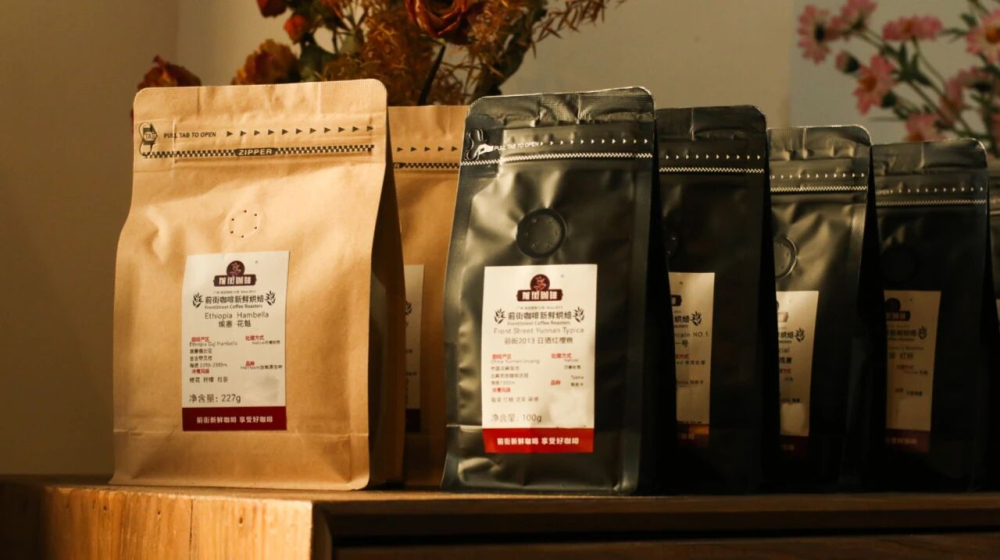
This experiment again selected two single-origin beans from Front Street's flagship store, covering different roast levels: the medium-light roasted Front Street Huakui, and the medium-dark roasted Front Street PWN Golden Mandheling. The old-date samples were roasted about 65 days ago, while the new-date samples used as controls were between 10 and 25 days after roasting.
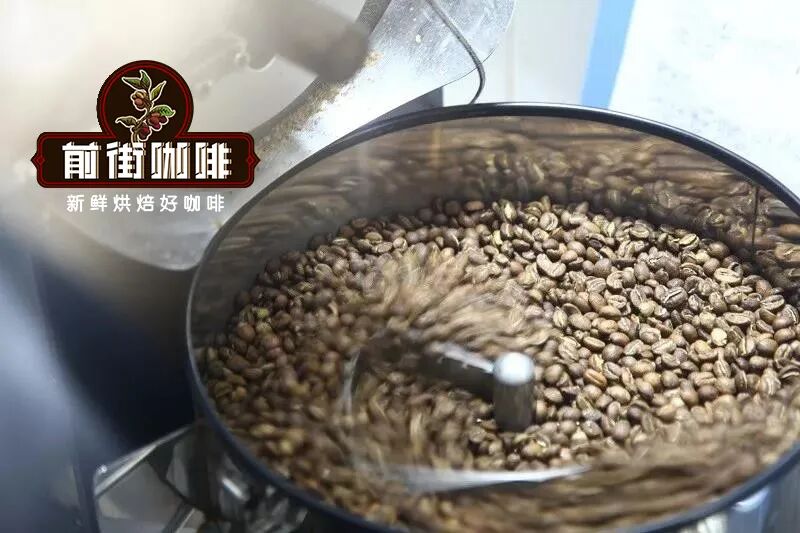
During operation, first ignite the fire, pour the old-date coffee beans into the pan, keep the heat on low throughout, and continuously shake the pan to ensure even heating. The total heating time is controlled at 3 minutes. After removing from the heat, transfer to a clean container, and wait for the bean temperature to drop before starting to brew:
Front Street Huakui Coffee Beans
Dose: 15 grams
Coffee-to-water ratio: 1:15
Water temperature: 91°C
Grind size: EK43s-10 / C40-24 (80% passing through a No. 20 sieve)
Dripper: V60
Brewing method: 3-pour
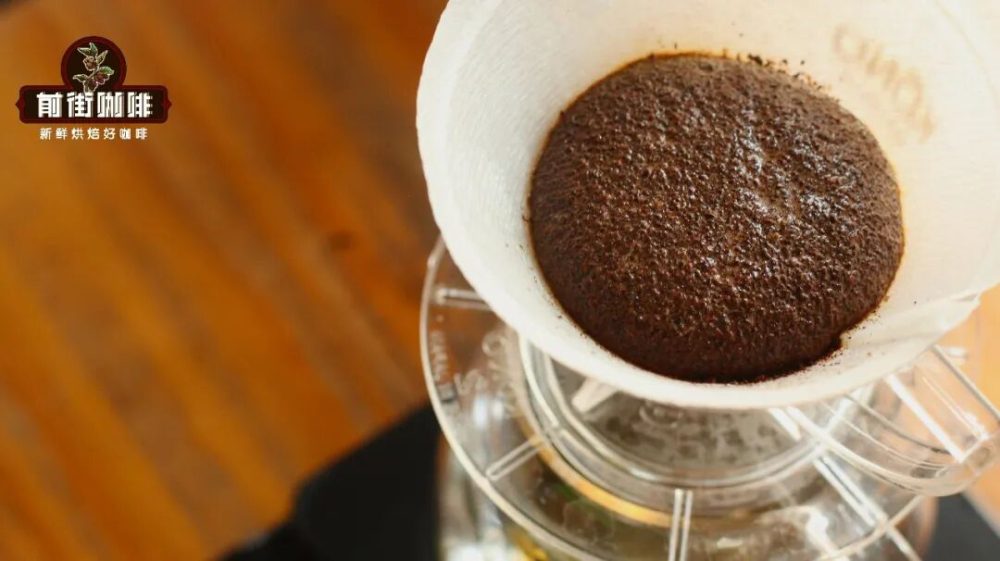
New-date sample: The dry aroma presents a honey-like clean sweetness; during blooming, the "hamburger" degassing is stable; the brewed coffee liquid carries a floral-honey sweetness, with identifiable notes of dried fruit, sweet orange, blueberry, and peach on the palate, a light body, moderate acidity, and a finish with black tea character;
Old-date sample: The bean surface color is noticeably darker, with some beans showing scorching and blackening, giving off a popcorn and walnut smell. Although there is brief degassing during blooming, it quickly collapses. After brewing, the original floral and fruity aromas have disappeared, replaced by a nutty sweet fragrance, with at most a residual caramel taste, and the mouthfeel also shows a raw, underdeveloped quality.
Front Street Mandheling Coffee Beans
Dose: 15 grams
Coffee-to-water ratio: 1:15
Water temperature: 87°C
Grind size: EK43s-11 / C40-26 (75% passing through a No. 20 sieve)
Dripper: KONO
Brewing method: 3-pour
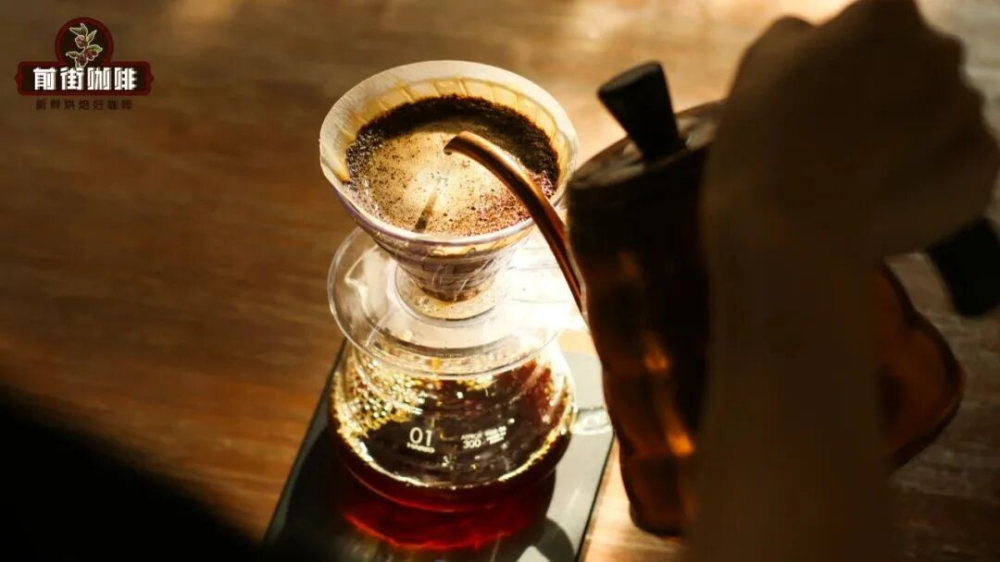
New-date sample: The freshly roasted Front Street PWN Golden Mandheling, once ground, gives off distinct roasted nut and spice notes; the blooming dome is full and long-lasting; after brewing, caramel aroma is prominent, with the palate showing the bittersweetness and richness of unsweetened chocolate, high body, and accompanying notes of toasted bread.
Old-date sample: The beans are visibly dark brown, and a smoky smell can be detected even before grinding. Although the blooming "hamburger" rises noticeably, degassing lasts only a very short time. The brewed coffee is bitter immediately upon entering the mouth, and the bitterness lingers for a long time. As for flavor, Front Street can only barely describe it as burnt aroma.
So, can coffee beans stored too long actually be re-roasted?
Regarding the question from the customer at the beginning, whether re-roasting can "revive" coffee aroma, Front Street's conclusion is no. From this comparative experiment, it is clear that regardless of the roast level of the single-origin beans, once they exceed the peak flavor period, the original flavors have already been completely lost—especially the floral-fruity notes of medium-light roasts and the nutty notes. Reheating merely further carbonizes the substances on the bean surface, which may create a small amount of roasting-type "coffee aroma," but it is essentially not a flavor transformed from green beans, so when drunk it is dominated only by bitterness.
Coffee fascinates countless people around the world largely thanks to its alluring aroma. Especially for those who pursue specialty coffee, good flavors are hard-won, and watching them quietly fade with the passage of time is truly regrettable. This is also why Front Street always tirelessly reminds every customer buying coffee beans: don't buy too much at once!! Don't buy too much at once!! Don't buy too much at once!!
The above content is compiled by CoffeeHunters, a coffee news website.


