For pour-over coffee, everyone tends to use higher water temperatures for extraction, because high temperatures not only improve extraction efficiency, but more importantly, can draw out rich sweet and sour aromatic flavors. Basically, the water temperature used for pour-over coffee is rarely below 80°C. So, is it possible to brew a good-tasting cup of coffee with water below this temperature?
The reason Front Street came up with this idea is that recently a friend who works in an office building wanted to "play around" with pour-over coffee at the office. The only thing in the office that could produce hot water was the water dispenser, and the hot water from the dispenser could only heat up to around 70°C at most. From our coffee-brewing experience, this simply cannot reach the water temperature required for pour-over coffee.
However, 70°C water may not necessarily be unable to brew coffee! If we break all the parameters apart, and first set aside subjective things like flavor, and only talk about what effect water temperature has on coffee's extraction yield, the answer is very simple: extraction efficiency, that is, the dissolution rate per unit. Just like when we dissolve instant powder, the higher the temperature, the faster the powder particles dissolve; the lower the temperature, the more time is needed for impact dissolution, and if necessary, stirring is needed to speed up dissolution.
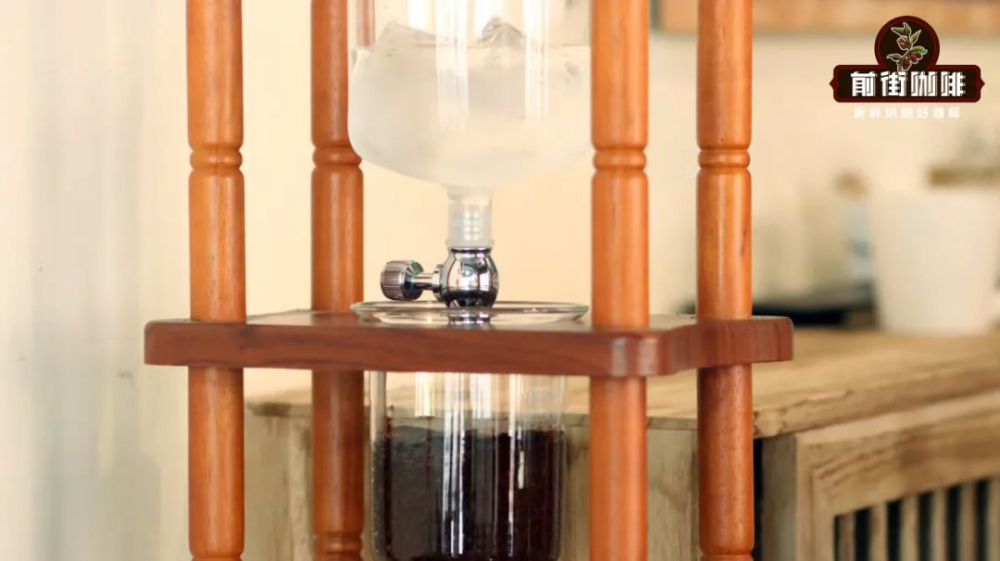
The same applies to brewing coffee. When the water temperature becomes lower, can extending the extraction time achieve the same extraction yield? Just like the way iced drip coffee is made, the temperature of ice water is about 7°C. At this temperature, the extraction efficiency is very low, but it can be compensated for by a long extraction time of 6-8 hours.
So Front Street decided to test whether this is feasible. For the water temperature, Front Street chose 70°C, which also corresponds to the temperature the water dispenser can heat to. The coffee beans used were Panama's Butterfly. Brewed with Front Street's standard parameters, the flavor is jasmine, lemon, honey, oolong tea, and so on.
To extend coffee's extraction time, the methods more commonly used in pour-over coffee are pulse pouring, controlling the flow rate, making the grind finer, and switching to a dripper with a slower flow rate. So Front Street used all of these methods. For the dripper, Front Street used Hario's V60 Immersion dripper. Of course, slow-flow drippers like the fan-shaped dripper and the Kono dripper can also be used.
For the grind size, Front Street used setting 5.5 on the EK-43s (normally using setting 10). Don't be fooled by the nearly 1x difference in setting; the actual coarseness level is not as exaggerated as everyone might imagine. Sifting with a No. 20 sieve gave 93% (relatively fine for pour-over coffee). The ratio was still 1:15.
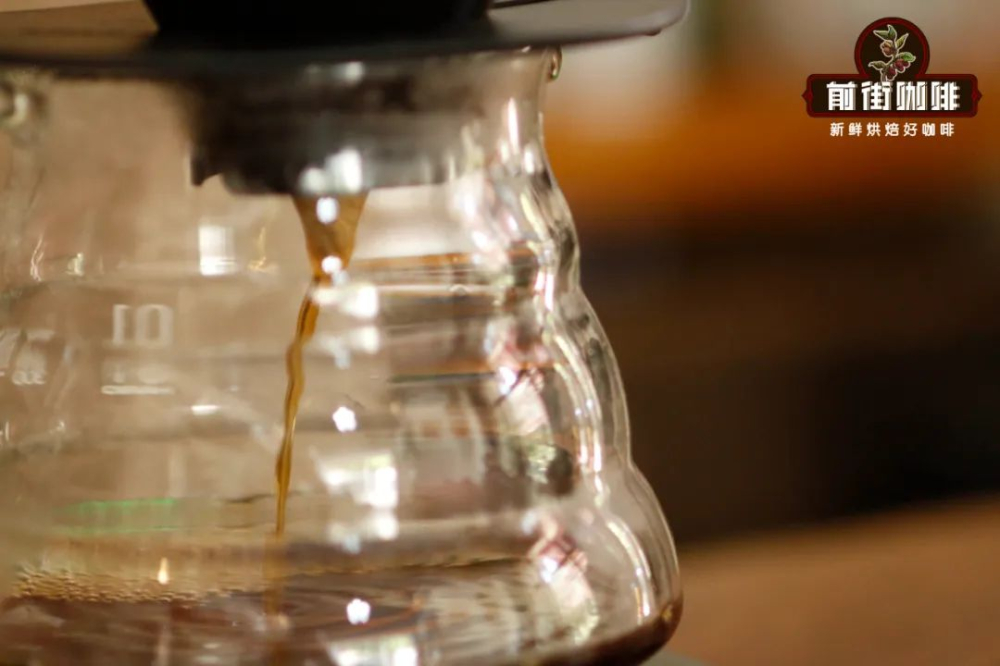
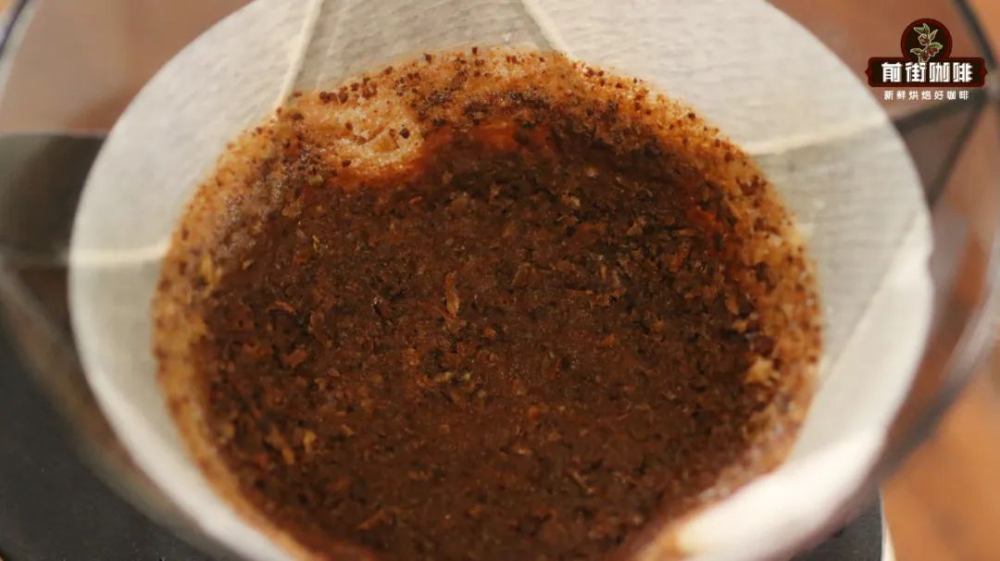
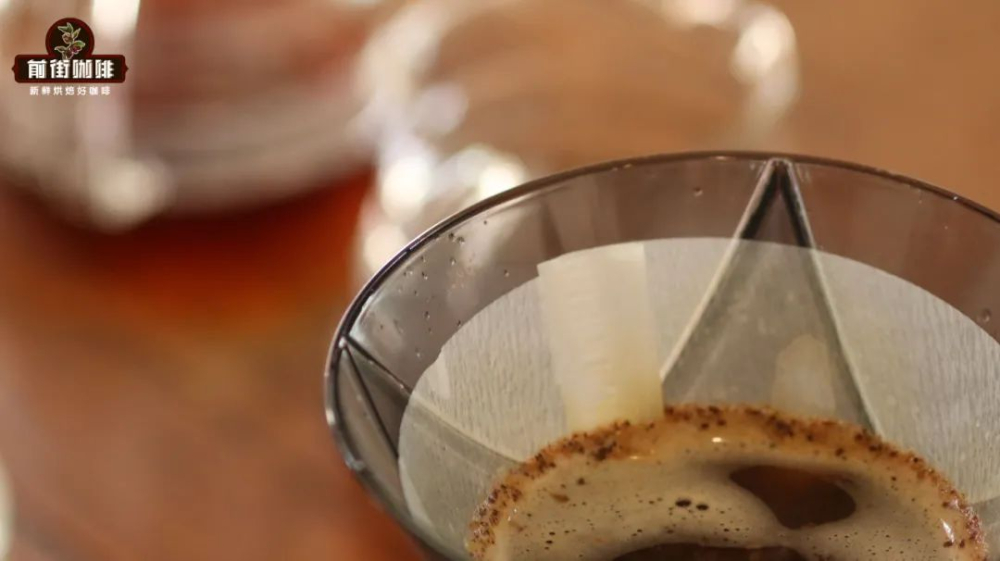
In the pouring stage, Front Street used multi-stage pouring and low-flow pouring, also for the purpose of extending the extraction time as much as possible. First, 30ml was poured for a 30-second bloom, then 70ml was poured. When the coffee liquid had drained enough for the coffee bed to be visible, another 65ml was poured. Likewise, when the coffee bed became visible again, the final 60ml of water was poured. The total time until the coffee liquid finished dripping was 3 minutes 33 seconds. After brewing, the coffee grounds layer appeared muddy, showing that the coffee grounds were still quite fine.
Front Street first used a refractometer to measure the coffee liquid's concentration at 1.49%. For pour-over coffee, this is a fairly high concentration. The calculated extraction yield of the coffee was 20.5%.
Next came tasting. Starting with the aroma, the whole cup of coffee did not have a fresh floral fragrance; it smelled of a very sweet caramel note. Through tasting, there was no discomfort brought by the coffee's richness, which somewhat surprised Front Street. The acidity of the whole cup was not obvious, and the sweetness was very strong, the rich sweetness of brown sugar. However, there was some bitterness in the finish that made one uncomfortable.
Therefore, Front Street made some slight adjustments, changing the grind size to setting 6.5, roughly a coarseness with a No. 20 sieve pass rate of 90%. Front Street brewed again using the same brewing method, and this time the extraction time did not decrease much either. The time until the coffee liquid in the dripper finished dripping was 3 minutes 20 seconds.
Likewise, Front Street first used a refractometer to measure the concentration at 1.46%. The concentration did not decrease much, and the corresponding extraction yield was 20.09%.
The aroma of this cup of coffee was also not overflowing with floral notes, but rather smelled like sweet potato syrup. The acidity of this cup was more obvious than the previous one, a bit like mandarin orange, while the sweetness was like fruit honey, very sweet, and the finish was tea-like. Although this cup still deviated obviously from the coffee flavor brewed by the standard method, the taste of this cup was really good.
Next, Front Street adjusted the grind size to setting 7.5 (No. 20 sieve pass rate 87%) to test whether the flavor would be better. With only the grind size changed and everything else unchanged, the extraction time was 3 minutes 02 seconds.
Front Street measured this cup of coffee's concentration at 1.35%, and calculated the extraction yield to be 18.55%. Likewise, the aroma still had no floral notes; it smelled of the sweetness of some dried fruit. When drunk, the fruity acidity was obvious, like green tangerine and honey sweetness. However, the middle and finish had something similar to the taste of southern apricot.
Finally, as for extraction yield, when the temperature decreases, we can compensate by extending the extraction time. But as for flavor, especially aroma, this cannot be replicated. High water temperature can extract rich floral and fruity aromas as well as more acidity in the early stage of extraction.
When the water temperature is lowered, these flavor substances are not extracted to a greater extent, and because the extraction time is extended, the release of sweet and bitter substances makes the whole cup of coffee taste sweeter and more balanced overall. During brewing, the extraction time also determines whether the coffee is more bitter or sweeter, or more sour. For example, in this test, using a water temperature of 70°C, when the extraction time was controlled at around 3 minutes to 3 minutes 30 seconds, the sweetness was very prominent. The first cup at 3 minutes 33 seconds tended toward bitterness, while the third cup at 3 minutes 02 seconds tended toward sourness.
If an even lower water temperature is used, such as 40°C or 50°C, then perhaps a longer extraction time would be needed, and the flavor expression would be more balanced (with no distinctive characteristics).
The above content is compiled by CoffeeHunters, a coffee news website.